Search & find:
Media, press releases, events for your editorial coverage

Bosch and Veniam ensure seamless vehicle-to- everything connectivity

05.12.2018

Press release

Connected mobility

Bosch and Veniam ensure seamless vehicle-to- everything connectivity

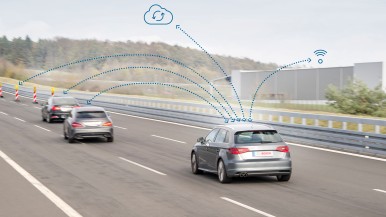
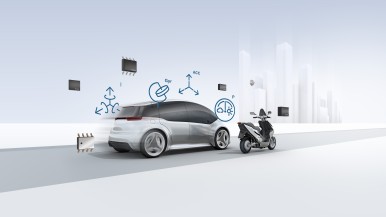
Hildesheim, Germany / Mountain View, USA – What is true for people is also true for cars: communication works best with a common language and a good connection. To enable connected and automated driving in the future, vehicles must be able to easily communicate with one another as well as with their surroundings. There is currently no globally standardized technical basis for this exchange of data, which is known as vehicle-to-everything communication, or V2X. Instead, vehicles will in future communicate using the wide variety of different standards implemented by countries and vehicle manufacturers around the world. “Bosch is taking a multi-standard approach when it comes to V2X. We have developed a universal connectivity unit capable of communicating using all of the transmission standards implemented in connected automobiles,” says Dr. Dirk Hoheisel, Member of the Board of Management at Robert Bosch GmbH. Bosch is taking a multi-standard approach when it comes to V2X. We have developed a universal connectivity unit capable of communicating using all of the transmission standards implemented in connected automobiles....Dr. Dirk Hoheisel, Member of the Board of Management at Robert Bosch GmbH The neat thing here is that Bosch has combined connectivity units and telematics units, which – individually – are only capable of a single transmission technology, to create an all-in-one central control unit for V2X data communication. Cars can then use the Wi-Fi networks available in cities, while elsewhere they can communicate using, for instance, cellular networks. The complex task of managing these diverse communication options is handled by a software solution from the Silicon Valley-based start-up Veniam. It continuously searches for the best transmission technology that suits the particular requirements and switches automatically between the available alternatives. The software therefore maintains continuous and seamless vehicle connectivity, ensuring cars can, for example, reliably alert one another to accidents and passengers can enjoy uninterrupted music streaming. Bosch develops a connectivity unit for all standards It is expected that the number of connected vehicles on the roads in Europe, the United States, and China alone will exceed 470 million by 2025 (source: PwC). Initially, most vehicles will connect directly to the cloud; but, thanks to V2X, increasing numbers of vehicles will in future also be able to communicate directly with one another as well as with traffic signals, road construction sites, pedestrian crossings, and buildings, etc. They will then be able to alert one another to potential hazards like the approaching tail end of a traffic jam, accidents, and icy conditions. Vehicles will also be able to take advantage of the green wave, because they will know when the next set of traffic lights is going to turn green. The vehicles can then adjust their speed accordingly. This ensures the traffic, particularly in cities, flows more smoothly. There is, however, no globally harmonized standard for V2X communication currently on the horizon. While China primarily uses Cellular-V2X technology (C-V2X), which is based on mobile communications, Europe and the United States are planning to additionally introduce transmission standards based on Wi-Fi (DSRC and ITS- G5) alongside C-V2X. A mishmash of standards is therefore emerging internationally, which may lead to vehicle communication issues. However, that will not be the case in the future when cars are equipped with the universal connectivity unit from Bosch. Equipped vehicles will be able to communicate with one another as well as with their surroundings regardless of the vehicle make or the country in which they are used. This will make V2X communication even more secure and reliable. “Thanks to Bosch’s all-in-one principle for connected vehicles, as many drivers as possible around the world can benefit from the added safety, comfort, and convenience provided by V2X,” says Dirk Hoheisel. The unique combination of Veniam’s smart networking software and Bosch’s connectivity unit boosts the vehicle’s data-handling capacities dramatically, paving the way for innovative cloud services and much safer future mobility....João Barros, founder and CEO of Veniam Software ensures the best connection The software from Veniam is the connection enhancer for the connectivity unit from Bosch. As well as keeping an eye on which V2X communication technologies are currently available for use, the software also closely monitors the costs and data transmission latency of each alternative connection option, since not every technology is suitable in every situation. For example, when it comes to alerting a driver to another vehicle that is about to pull out in front of them from a side street, every millisecond counts. This kind of critical information must be communicated in real time using highly reliable technology that is always ready for use – even if that means the resulting data transmission costs are greater. Software updates from the cloud or a navigation system map update, on the other hand, can be put on hold in that sort of situation until a low-cost stationary Wi-Fi network becomes available. Large volumes of data can be transmitted via Wi-Fi in a short space of time, though a downside is that public or home Wi-Fi hotspots are not always available. Veniam’s software is familiar with the pros and cons of each of the communication types and always establishes the optimal connection. “The unique combination of Veniam’s smart networking software and Bosch’s connectivity unit boosts the vehicle’s data-handling capacities dramatically, paving the way for innovative cloud services and much safer future mobility,” says João Barros, founder and CEO of Veniam. On the occasion of the world’s biggest consumer electronics trade show, CES 2019 in Las Vegas, Bosch and Veniam have been selected as CES 2019 Innovation Award Honorees in the “Vehicle Intelligence and Self-Driving Technology” category for their jointly developed solution. Bosch tests V2X in Europe, the United States, and China In the biggest European field trial to date (simTD, Safe Intelligent Mobility – Test Field Germany), V2X communication has proven its suitability for daily use under everyday conditions and in lab simulations. Bosch has played a significant role in this joint project. Since February 2017, Bosch and Vodafone have been performing trials of the V2X communication with the first 5G test modules − the first companies in Europe to do so. The A9 freeway in Bavaria north of Munich is the location for the field tests, which focus on real-time warning systems during lane changing maneuvers on the freeway or in case the vehicle in front brakes suddenly. V2X will also be able to make driver assistance functions even more comfortable, like adaptive cruise control (ACC). In the summer of 2018, Bosch tested secure, direct communication between vehicles and roadside infrastructure, cameras, and sensors in Detroit. The test showcased Wi-Fi- based DSRC technology, where equipped vehicles were provided with in-vehicle notifications about the status of traffic signals ahead and pedestrians crossing the street – functions designed to enhance safety in city traffic. ESCRYPT, a subsidiary in the Bosch Group, provided the cybersecurity technologies behind these V2X demonstrations. In China, Bosch is testing ad hoc communication using Wi-Fi as well as cellular technology. The tests are focusing on alerts that help the driver when overtaking or negotiating complex intersections.


Versatile semiconductors: Bosch launches new automotive system-ICs at electronic ...

05.11.2018

Press release

Connected mobility

Versatile semiconductors: Bosch launches new automotive system-ICs at electronic ...

Munich and Reutlingen, Germany – System ICs are application-specific integrated circuits (ASICs) designed to meet special requirements in vehicle systems. They are integrated on a single silicon chip measuring only a few square millimeters, and house complex circuits with up to several million individual electronic functions. At electronica 2018, the world’s leading trade show for electronics, Bosch introduces four new system-ICs. A new chip for electric vehicles will shut off the power in the event of an accident, ensuring safety for driver and passengers and enable rescuers to work without being put in danger.Semiconductors make electric cars safer in an accident Pure electric or hybrid vehicles are equipped with special batteries that provide power to the electric motor at high voltages of 400 to 800 volts. For safety reasons, these high-voltage batteries, power electronics and their electrical wiring are designed to be highly robust. Nevertheless, the question of how secure a high-voltage battery is in the event of an accident is of vital concern to both the vehicle's occupants as well as any rescue workers. To prevent these persons from coming into contact with high voltage, while at the same time eliminating the risk of a vehicle fire, it must be possible to completely isolate the battery from the vehicle’s electrical system. During an accident, so-called "pyro fuses" blow out sections of the electrical wiring to the high-voltage battery by means of a small explosive charge, so that the circuit is interrupted quickly and effectively. Here, Bosch semiconductors play a crucial role: The integrated circuit CG912 can, as a part of the battery management, fire up to four pyro fuses in the battery wiring in the event of an accident,. This mitigates the risk of electrical shock when touching the vehicle’s chassis. In addition, this special IC can also provide power to the battery management. Bosch’s CG912 was originally developed for deploying airbags and has been proven in the field a million times over. New system ICs at electronica 2018 System ICs are truly versatile. They provide stable supply voltages, read sensor data, process information and drive actuators – in real time. The new oxygen sensor evaluation IC CJ138 offers, in comparison to its predecessors, extended options for adapting an engine control unit to a wide range of oxygen sensors, as well as accurate sensor cable diagnostic for short circuit or interruption. The highly integrated transmission IC CG270 precisely controls up to ten hydraulic valves in automatic transmissions and allows the design of more compact control units for modern multi-stage transmissions. CG135 is a transmission IC that monitors the supply voltages in a transmission control unit and prevents the transmission from being damaged in the event of a fault.

Bosch MEMS sensors now enable faster airbag deployment

05.11.2018

Press release

Connected mobility

Bosch MEMS sensors now enable faster airbag deployment

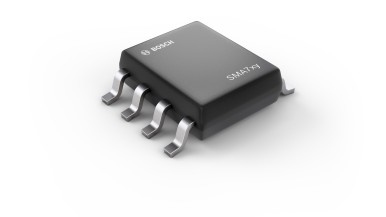
Munich and Reutlingen, Germany – Precision meets speed. At electronica, the world’s leading trade fair for electronics, Bosch announces a new generation of high-g acceleration sensors. The SMA7xy sensor family improves safety for car drivers and passengers. When the acceleration sensors detect a collision, the passive safety systems such as airbags can now be deployed earlier, and the restraining effect can be precisely set for the given accident scenario. In this way, the consequences of accidents can be further mitigated. The new SMA7xy family comprises of multiple sensors for airbag systems based on Bosch's market leading MEMS technology.Universally applicable, very fast crash sensors The sensors from the new SMA7xy product family enable extremely fast signal processing. Compared to the sensors of the preceding generation, Bosch has doubled the bandwidth, and thereby increased crash signal processing speeds by one hundred percent. The acceleration sensors are located either directly in the airbag ECU or in satellites located at the A- B- or C-pillar or at the front bumper. The sensors detect impact or a car rollover event within fractions of a second and send this information to the airbag ECU, which then deploys the vehicle's passive safety systems in time. One of the sensors from the SMA7xy family, the SMA760 precisely detects front and side impacts. A second sensor, the SMA720 contains one x and one z channel to measure acceleration along the vertical axis. This makes the SMA720 an ideal companion to the SMI860 for vehicle rollover detection. Both sensors support the SafeSPI communication interface standard. All sensors from the SMA7xy family conform to the ASIL D safety level of ISO 26262 and meet the VDA AK-LV27 specification. The PSI5 sensor versions, designed specifically for use along the periphery, offer a wide acceleration range: 30g, 60g, 120g, 240g, or 480g. For improved design flexibility Bosch offers a number of variants, for example an upright face mount option with a smaller footprint. Flexible options providing design freedom The peripheral-type sensors of the SMA7xy family are available in many variants, with two package options, four sensor axis configurations, several measurement range options and well over 80 different PSI5 modes – there is a suitable sensor to meet every requirement. One package option is the SOIC8, a well-established housing that is widely used and exceptionally robust, whilst the LGA System-in-package (SiP) houses integrated passive components.

MEMS sensors from Bosch make driving safer, more fun, and more relaxed

05.11.2018

Press release

Connected mobility

MEMS sensors from Bosch make driving safer, more fun, and more relaxed

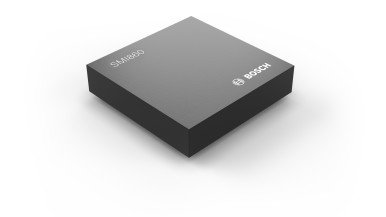
Munich and Reutlingen, Germany – Stable vehicle handling under all weather conditions and traffic situations makes car driving not only safer and more comfortable but also delivers a higher degree of enjoyment and dynamics to the driving experience. At the electronica exhibition in Munich, Bosch reveals for the first time its SMI860 five-axis inertial sensor. This extremely robust MEMS sensor enables a safe and natural driving experience – both in everyday as well as demanding situations – noticeably improving driving safety, comfort and dynamics.Car driving becoming even safer The intelligent SMI860 MEMS sensor provides important support for active safety and driver assistance systems inside the vehicle. For example, the ESP electronic stability control system (anti-skidding system), greatly increases traffic safety and has, to date, saved more than 8,500 lives in Europe alone. Necessary dynamic driving state data is delivered to the anti-skid system also from the SMI860. It recognizes whether the vehicle is travelling in the direction in which the steering wheel is turned. In the event that these values diverge, the skid protection system is activated. In addition, this new sensor can precisely determine the position of the vehicle, which can be utilized in precise vehicle heading applications. The SMI860 is the first example of a package from Bosch containing five inertial data measuring elements in a single sensor for active safety applications. The package includes two 16-bit gyroscopes for measuring yaw rate and roll rate, and three 16-bit acceleration sensors. Algorithms are used to calculate the dynamic driving state and position of the vehicle based on the received signals. Compact, robust, reliable, and temperature-tolerant This intelligent sensor is built on Bosch’s proven market-leading MEMS technology. Compared to its predecessor, it is better protected against vibrations and its exceptionally high offset stability will deliver reliable long-term operation. It has been developed according to ISO26262 for use in systems up to ASIL D. Thanks to its small bias instability, the SMI860 delivers low noise performance, thereby further improving its accuracy. Noise (rms) is just ±0.1 °/s for the gyroscope and 4 mg (x and y axes) and 6 mg (z axis) for the accelerometer. A signal conditioning ASIC provides on-chip processing and low-pass filtering, and an industry-standard SafeSPI interface is included for communication with other devices. To save space, the SMI860 is housed in a compact BGA package, measuring just 7mm x 7mm x 1.5mm. Required supply current for the sensor does not exceed 28mA. Its operating temperature range of -40ºC to +125ºC enables it to be installed in practically any location.

Semiconductors – market of the future: Bosch is growing faster than the market

05.11.2018

Press release

Connected mobility

Semiconductors – market of the future: Bosch is growing faster than the market

Reutlingen, Germany – Every car nowadays makes use of semiconductors, and that has been true for quite a while. A key technology in today’s modern world, these chips are core components of electrical systems – including those in vehicles. They regulate the powertrain and vehicle handling, tell the navigational system which way the vehicle is going, and signal the airbag to deploy when needed. Having been making semiconductors for more than 45 years, Bosch today is one of the world’s leading manufacturers of chips for mobility applications. “Semiconductors may have been around for a long time, but we have yet to realize their full potential. These components are key to modern-day mobility, and it is impossible to imagine cars today without them,” says Jens Fabrowsky, member of the executive management of Bosch’s Automotive Electronics division. In 2016, every vehicle newly registered worldwide had an average of more than nine Bosch chips on board. “When it comes to semiconductors for cars, we have a singular advantage: Bosch is the only company equally at home in both the automotive and semiconductor industries,” Fabrowsky says. In 2018, every new vehicle featured semiconductors worth 370 dollars (source: ZVEI), and thanks to increasing electrification and automation, demand for chips in vehicles is expected to rise further over the next few years. Semiconductors may have been around for a long time, but we have yet to realize their full potential. These components are key to modern-day mobility, and it is impossible to imagine cars today without them....Jens Fabrowsky, member of the executive management of Bosch’s Automotive Electronics division The ultimate discipline: semiconductors for the auto industry The global semiconductor market is worth billions: the market research company Gartner expects global semiconductor sales to reach 451 billion dollars in 2018. By 2019 alone, the market will have grown at an annual growth rate of more than 5 percent (source: PwC). “The Bosch semiconductor business is growing faster than the market,” Fabrowsky says. In the semiconductor market, the ultimate discipline is making chips for vehicles. Bosch has been making vehicles smart since the 1970s, when it started equipping them with its application-specific integrated circuits (ASICs). In a car, chips are exposed to strong vibrations and extreme temperatures that range from far below zero to far above 100 degrees Celsius. This requires higher standards for the toughness of these special components. Developing semiconductors that can withstand these stresses for a vehicle’s entire lifetime is an intensive process. Here is where Bosch leverages its special dual role: while other companies can process the information collected from semiconductors, Bosch can also apply its deep understanding of the physical principles at work in the chips, and of how to gather the data and ultimately integrate it into the vehicle systems. “Our comprehensive expertise in semiconductors helps us to both develop new automotive functions and steadily improve the chips themselves,” Fabrowsky says. Bosch holds over 1,500 patents and patent applications for engineering and manufacturing its semiconductors. Progress in microelectronics is what made development of assistance systems and automated driving possible in the first place....Jens Fabrowsky, member of the executive management of Bosch’s Automotive Electronics division Electromobility and driver assistance systems boost demand Bosch’s current semiconductor portfolio focuses on microelectromechanical systems (MEMS), ASICs for vehicle ECUs, and power semiconductors. Without the latter, there would be no hybrid or electric vehicles, as they regulate the electric motor and make sure that the battery is being used as efficiently as possible. “Power electronics for hybrid and electric vehicles are a growth driver for Bosch,” Fabrowsky says. Besides electrification, continued strong growth in demand for driver assistance systems is ensuring that more semiconductors with more and more functions are finding their way into cars. Chips with built-in “intelligence,” known as ASICs, are tailored to a particular application; for instance, signaling to airbags in a vehicle when they should deploy. These chips control handling to ensure a consistently safe journey. They also boost the measured signal from radar sensors, so that the proximity warning always functions reliably. “Progress in microelectronics is what made development of assistance systems and automated driving possible in the first place,” Fabrowsky says. Bosch microelectromechanical systems, or MEMS for short, are the sensory organs of modern vehicles. They supply a vehicle’s ECUs with important information regarding its handling, such as if the vehicle is braking or accelerating, or if it is skidding on a smooth road surface. The ESP electronic stability program uses this information to keeps cars, trucks, and even motorcycles safely on track and in their lanes. MEMS sensors tell runners how many calories they are burning As a key technology for the internet of things (IoT), Bosch semiconductors have applications that extend far beyond the world of vehicles. The company’s sensors can be found in more than half the world’s smartphones, and are indispensable for fitness trackers, drones, game consoles, and smart home applications. When it comes to MEMS sensors, Bosch is both a pioneer and the world’s leading manufacturer. More than 20 years ago, the supplier of technology and services itself developed the microfabrication technique, known worldwide as the “Bosch process,” used to make these semiconductors. One billion euros for one of Europe’s most advanced wafer fabs Bosch is underpinning its growth strategy for semiconductors with the single largest investment in the company’s history: it is putting some one billion euros into a new wafer fab in Dresden, which will manufacture 300 mm wafers. Following a rollout phase, pilot manufacturing operations are expected to start at the end of 2021. Compared with conventional 150 and 200 mm wafers, 300 mm wafer technology offers greater economies of scale. Up to 700 associates will be involved in the highly automated chip manufacturing process, working to plan, manage, and monitor production. After Reutlingen, the Dresden plant will be Bosch’s second wafer fab in Germany. With it, the company aims to expand its manufacturing capacity, and thus to further boost its competitive edge in global markets.

MEMS sensors from Bosch enable cars to navigate without GPS

05.11.2018

Press release

Connected mobility

MEMS sensors from Bosch enable cars to navigate without GPS

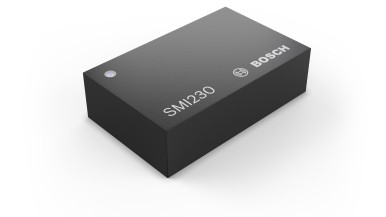
Munich and Reutlingen, Germany – The loss of a GPS signal has brought many relaxing car trips to an abrupt end. At Munich's world-renowned electronics exhibition: electronica, Bosch today announced the new SMI230 six-axis inertial sensor. With this sensor onboard, navigation systems will not take their eye off the destination – even when the GPS signal is interrupted. The SMI230 from Bosch provides the navigation system with motion data, enabling the current position of the travelling vehicle to be determined even when the GPS signal is weak or nonexistent. Navigation systems will become even more precise and reliable.No longer travelling blind when without GPS Millions of car drivers today rely on GPS navigation. If a satellite signal is weak, distorted or interrupted, e.g. due to mountains, tall buildings or even tunnels, then the navigation system will lose its direction. That is when the SMI230 MEMS sensor from Bosch comes into play: it precisely measures the yaw rate and acceleration of the vehicle. In this way the onboard navigation system continuously calculates the travel direction and position while the car is moving. The navigation is not disrupted when inside a tunnel or an 'urban canyon'. The capabilities of the sensor improve not only navigation but also find their niche in fleet management, toll systems and car alarm installations. Here too, precise determination of position is essential. Versatility brings flexibility The SMI230 conveniently combines one three-axis MEMS accelerometer with one three-axis MEMS gyroscope in a single compact package. Both sensors run digitally in 16-bit mode based on proven MEMS technology from Bosch. Adding to this already powerful combination is the fact that the gyroscope and accelerometer can either be operated individually or interconnected for data synchronization purposes. Accurate, stable and power efficient The SMI230 delivers high accuracy – the prerequisite for the best-possible precision in navigation: noise is only 0.02°/s/√Hz (rms) for the gyroscope and 0.12 mg/√Hz (rms) for the accelerometer. Also, the accelerometer has rock-solid temperature stability, with a low temperature coefficient offset (TCO) of typically below 0.2 mg/K and temperature coefficient sensitivity (TCS) of only 0.002 %/K. Typical bias instability of the gyroscope is well below 2°/h. Power consumption plays a decisive role in many applications. Therefore, the SMI230 supports three power saving modes - accelerometer: suspend mode; gyroscope: suspend mode and deep suspend mode. Backward compatible to accelerate the development cycle The SMI230 is pin-for-pin compatible with Bosch’s SMI130, and offers an identical gyroscope programming interface, making it fast and easy to integrate into existing platforms without any time-consuming layout re-work. The new sensor is housed in an ultra-compact 16-pin standard LGA package, measuring just 3 mm x 4.5 mm x 0.95 mm. The sensor will be available in May 2019.