Search & find:
Media, press releases, events for your editorial coverage

Bosch Hemoglobin Monitor: Early detection of anemia without blood tests

11.01.2021

Press release

Business/economy

Bosch Hemoglobin Monitor: Early detection of anemia without blood tests

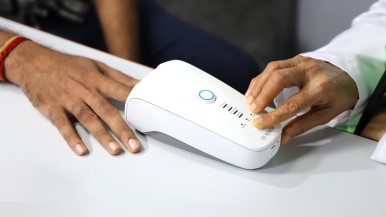
Bengaluru, India / Waiblingen, Germany – According to estimations by the WHO 1.6 billion people suffer from Anemia, a condition resulting from the reduced hemoglobin concentration in the blood. This has prompted the WHO to define the fight against anemia as one of its critical sustainable development goals for 2025. Bosch has developed a portable Hemoglobin Monitor Solution (HMS) especially for regions where routine access to medical care tends to be difficult. This HMS allows a large number of people to be screened for anemia rapidly, safely, using a non-invasive approach. The solution has been named a CES Innovation Award Honoree in the “Health and Wellness” category. “Bosch has developed the non-invasive Hemoglobin monitor as an innovative solution and as an alternative to traditional methods for the early detection of anemia. This should offer people better diagnosis options even in resource constrained conditions. The use of artificial intelligence is revolutionizing anemia management, specifically in point-of-care setups and closer to the patient”, explains Dattatri Salagame, President and Managing Director of Robert Bosch Engineering and Business Solutions Private Limited (RBEI). Bosch has developed the non-invasive Hemoglobin monitor as an innovative solution and as an alternative to traditional methods for the early detection of anemia. This should offer people better diagnosis options even in resource constrained conditions. The use of artificial intelligence is revolutionizing anemia management, specifically in point-of-care setups and closer to the patient....Dattatri Salagame, President and Managing Director of Robert Bosch Engineering and Business Solutions Private Limited (RBEI) Hemoglobin is a protein found in red blood cells and is responsible for carrying oxygen and carbon dioxide throughout the body. People with a low hemoglobin count may experience symptoms such as general fatigue, weakness, pale skin, and even serious illnesses. Anemia particularly affects women, even more so when they are pregnant, and also people suffering from malnutrition. In cancer patients undergoing chemotherapy or in palliative care, hemoglobin levels should be checked regularly. Hemoglobin results in 30 seconds using a non-invasive AI measurement The intelligent solution by Bosch is designed for use directly at the point-of-care and is completely pain-free with no need for a blood test, as the value is determined by a finger scanner using multi-wavelength spectrophotometry on the surface of the skin. The system uses an optical sensor to precisely and reliably measure the photoplethysmogram (PPG) signals. Photoplethysmography, or PPG, is an optical technique used to detect volumetric changes in blood in peripheral circulation. The device provides a reliable result within 30 seconds even for low hemoglobin concentrations. This is where machine learning comes in: the device’s algorithm monitors the wavelength of the light and uses 27 different characteristics to determine and classify the hemoglobin value. The algorithm has been trained with more than 10,000 anemia data points. These clinically collected data along with the corresponding ground truth data, are the basis for the machine learning algorithm. The more validated data sets are put into the continuously learning algorithm, the more precise the results will be. Lab-free results without risk of infection A laboratory analysis is not necessary and there is no risk of infection from contaminated needles. Participants receive their test results quickly at the point of care. The device is battery operated, does not need subsequent calibration, and is extremely easy to use. It is intended for use in outlying and remote regions by healthcare professionals. Location-based reporting ensures easy clinical traceability. Organizations that operate multiple devices can draw conclusions through heat maps about specific regions. Patient data remains anonymous. Market release in India is expected by mid-2021.

Bosch Rexroth achieves stable sales at previous year's record level in 2019

16.04.2020

Press release

Business/economy

Bosch Rexroth achieves stable sales at previous year's record level in 2019

Lohr am Main, Germany – Bosch Rexroth held up well in 2019 in a difficult environment and despite a sharp drop in incoming orders. At 6.2 billion euros, sales remained stable at the previous year’s record level. The company benefited from a solid core business in hydraulics and the further expansion of its product range in factory automation as an important door opener for new markets. “We draw a positive conclusion for 2019," says Rolf Najork, member of the Board of Management of Robert Bosch GmbH, responsible for the Industrial Technology division and Chairman of the board of Bosch Rexroth AG. "In view of the volatile markets and the noticeable economic slowdown, this very good result was anything but certain. It shows that our broad positioning with different divisions is a great advantage and that we have set the right course with our structural adjustments.” In 2019, Bosch Rexroth was able to match the success of the previous year in all regions. The core markets of Germany and Europe remained the strongest. Sales in Germany dropped by 4.1 percent to 1.4 billion euros. In the remaining European markets (excluding Germany), sales declined by 0.3 percent to 2.1 billion euros compared to the previous year. In the growth markets in the Asia-Pacific / Africa region, Bosch Rexroth achieved sales of 1.6 billion euros, which equals a slight increase of 0.6 percent. The region North and South America recorded a 5.3 percent rise to 1.1 billion euros. At the end of the fiscal year (December 31, 2019), the company employed around 31,000 people worldwide.Economic environment and COVID-19 pandemic cloud prospects for 2020 Bosch Rexroth expects business to decline in all regions and sectors in the current fiscal year 2020 due to the general economic weakness and the structural change in customer sectors closely linked to the automotive industry. Order intake declined by 20.3 percent in the course of 2019. Additionally, the global COVID-19 pandemic is currently clouding business expectations for 2020. Hence, the systematic implementation of measures to improve competitiveness in all areas is particularly important for Bosch Rexroth. "We are very much concerned with the current developments regarding COVID-19. We have taken extensive measures during the past weeks to protect our employees, customers and partners while ensuring the best possible supply," says Najork, "Safety is our top priority throughout. We want to be a reliable and responsible partner for our customers, also and especially in such global crises". Focus on innovations and new markets Bosch Rexroth remains one of the most significant innovation drivers and pioneer for new technologies in its markets. For example, the company invested some 348 million euros in research and development in fiscal year 2019 – an increase of 6.2 percent over the previous year. The company continues to focus on developing connected and fully automated solutions in the two major areas of hydraulics and factory automation. All divisions contributed to the success of Bosch Rexroth in 2019. While the core business with industrial and mobile hydraulics proved to be a solid foundation, the factory automation division with its focus on Industry 4.0 and the vision of the fully connected factory of the future, developed into an important door opener for new markets and customers.Machinery Applications and Engineering: connected and intelligent hydraulics Bosch Rexroth is actively driving change in its traditional core business of industrial hydraulics: smart hydraulic components and systems such as the compact hydraulic unit CytroBox can be quickly and easily integrated into connected manufacturing facilities. They are Industry 4.0 ready and offer services for the Internet of Things (IoT), for example for condition monitoring of machines and plants.Mobile Hydraulics: Smart Solutions for the mobile work machine of the future Despite the tense market environment, Bosch Rexroth was able to further expand its market share in mobile hydraulics in 2019. New activities in the fields of automation and driver assistance systems, electrification and IoT are future key topics. With BODAS Connect, Bosch Rexroth offers an open, scalable end-to-end solution to connect mobile work machines with each other. It enables customers to retrieve and analyze data from the mobile application. At the 2019 BAUMA trade fair for construction machinery, the company also presented the first components of a future range of electrification systems for work machines. These solutions support customers in reducing emissions, while further increasing performance. Here, Bosch Rexroth benefits from the long-standing Bosch expertise in electromobility. Factory Automation: new standards for connected manufacturing Connected assembly and intralogistics remain an important strategic focus for Bosch Rexroth’s factory automation division. The spotlight is on the vision of the factory of the future with software-based, automated and connected solutions. The company was able to further strengthen its position as an innovation driver in 2019, amongst others with the open ctrlX AUTOMATION platform. As the first 5G-capable automation platform from Bosch Rexroth, ctrlX AUTOMATION connects a wide range of devices with the new communication standard and ensures consistent connectivity in factories. Existing machines can be upgraded with the new technology via retrofit solutions. The Active Shuttle, which was also introduced in 2019, ensures greater flexibility and higher productivity in the automated factory. The autonomous transport system sets new standards in intralogistics, transports loads of up to 260 kilograms and is loaded and unloaded fully automatically using an integrated lifting platform."GoGreen" project: targets for energy and CO₂ savings exceeded In 2019, Bosch Rexroth was also able to record important achievements in CO2 neutrality: as part of the Bosch Group, the supplier of drive and control technologies has set itself ambitious goals to reduce energy consumption and CO₂ emissions. In the scope of the Bosch Rexroth project “GoGreen”, energy efficiency is being systematically improved in all plants and at customers' sites since 2011 – with an extremely positive outcome: by the end of fiscal 2019, Bosch Rexroth had saved 620 million kilowatt hours of electricity and gas worldwide thanks to "GoGreen," corresponding to more than 265,000 tons of CO₂. This equals the annual energy consumption of a city with some 80,000 inhabitants. Energy consumption at the Bosch Rexroth locations was reduced by 20 to 50 percent. Since the end of 2019, Bosch Rexroth has achieved a CO2-neutral “footprint” in Germany.


Bosch puts 5G machines in pole position

26.11.2019

Press release

Business/economy

Bosch puts 5G machines in pole position

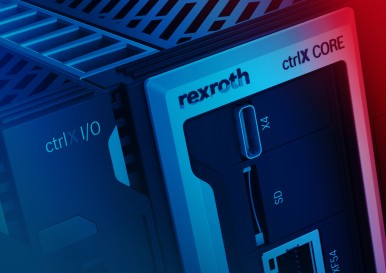
Stuttgart, Germany – 5G is coming. The new communications standard accelerates the internet of things and boosts Industry 4.0. Control systems and sensors of the kind built into facilities, machinery, and logistics chains stand to gain from this fast, reliable real-time wireless data transfer. Preparing machines for state-of-the-art communication involves making them 5G-capable. Now Bosch has the solution: Bosch Rexroth’s new ctrlX AUTOMATION control technology comes with 5G built in and can connect a wide range of industrial devices with the new communications standard. ctrlX AUTOMATION will be showcased at the SPS trade fair in Nuremberg.Bosch opens the door to a new industrial age 5G is set to turbocharge manufacturing. Our new 5G-capable automation platform lays the groundwork and opens the door to a new industrial age,...says Rolf Najork, the member of the Bosch board of management responsible for industrial technology. 5G is the first communications standard designed to enable connectivity for people as well as for the internet of things. The new standard has impressive characteristics: it is up to 20 times faster than 4G, transfers data virtually instantaneously with a latency of one millisecond, and is up to 99.9999 percent reliable – making the receipt of a “digital shipment” as certain as with transmission through a wire. "5G is a revolution and an important building block for the factory of the future", Najork says. Engineers and designers now face the challenges of integrating 5G into their machines and products. Bosch is introducing the solution that meets their needs: the new automation platform’s hardware can be fitted with a 5G module. The operating system and software for ctrlX AUTOMATION are 5G-capable from the outset and support rapid commissioning. Retrofit solutions are also available for adding the new technology to existing machinery. Bosch Rexroth’s new automation platform is scheduled to have its market launch in 2020. 5G will be a competitive factor for connected industry Experts estimate that there will be up to 70 billion connected devices worldwide by 2025. Many of them will be in manufacturing, meaning that 5G will become a competitive factor. The new communications standard will enable applications that require high-power, extremely reliable wireless connections to be integrated securely and efficiently into manufacturing facilities. These include mobile robotics, autonomous transport vehicles, and human-machine interactions. For instance, workers wearing augmented reality glasses can access additional information in their field of vision, optimizing how they monitor and maintain machinery. Combining tasks in the virtual world with those in the real world calls for real-time data flows. And that’s what 5G promises. "This new form of communication eclipses everything we’ve had until now. 5G is the first wireless protocol to truly meet the needs of the manufacturing industry", Najork says. Bosch takes on leadership role in Industry 4.0 and 5G Bosch is developing the factory of the future. In this endeavor, the company is relying on Industry 4.0 . The company first tests and validates products in-house before they are available on the market. Bosch is taking this approach with 5G, too. The company presented its first 5G-capable autonomous transport system, ActiveShuttle , at the Hannover Messe. To support the further development of its factories, Bosch has applied to the German Federal Network Agency for 5G licenses with which to set up local campus networks. Moreover, Bosch has taken on the chair of the global 5G Alliance for Connected Industries and Automation (5G-ACIA) with the aim of shaping the new mobile standard so that it meets the needs of the manufacturing industry from the outset.

Bosch and CATL collaborate on battery cells

05.09.2019

Press release

Business/economy

Bosch and CATL collaborate on battery cells

Stuttgart, Germany: Bosch and Contemporary Amperex Technology Co. Limited (CATL) have concluded a long-term strategic cooperation agreement. The partners are going to jointly specify high-performance battery cells. CATL will then design, develop, and manufacture these cells in accordance with Bosch requirements. The cells are to be used in the 48-volt battery developed by Bosch. This battery is the core element of 48-volt hybrid powertrain systems, whose efficiency is making them globally ever more important. In joining this alliance, the supplier of technology and services is also securing its long-term sourcing for battery cells. “We have to understand battery cells, but we do not have to make them ourselves,” says Dr. Stefan Hartung, member of the board of management and chairman of the Mobility Solutions business sector. “With CATL, we have brought an established cell specialist for lithium-ion batteries on board as a partner. In combination with our systems know-how and expertise in battery management, we will extend our strong position in the 48-volt battery market.” CATL, one of the world's leading experts of lithium-ion battery is currently building a battery factory in Erfurt, Germany. For Bosch, this alliance is another step on the path to market leadership in electromobility. Numerous global automakers already use Bosch’s 48-volt battery. This 48-volt hybridization is sure to be the minimum standard in tomorrow’s automotive market....Dr. Stefan Hartung, member of the board of management and chairman of the Mobility Solutions business sector 48-volt system destined to be the minimum standard in tomorrow’s automotive market Bosch’s portfolio for 48-volt systems extends beyond the 48-volt battery to encompass other system components such as DC/DC converters and electrical machines. With this technology, Bosch aims to gear up all classes of vehicles for future emissions requirements and offer affordable hybridization. Its 48-volt electrification augments the combustion engine with an electric motor. This motor is powered by the 48-volt battery, which in turn is charged by recovering energy expended during braking. This can cut fuel consumption by as much as 15 percent. If we want to improve efficiency, we can no longer afford to let brake energy dissipate unused,” Hartung says. “This 48-volt hybridization is sure to be the minimum standard in tomorrow’s automotive market.” The market for 48-volt solutions is growing worldwide. Bosch expects that by 2025, nearly 20 percent of new cars sold annually around the globe will have a 48-volt system and matching battery on board. Demand for 48-volt systems is rising, especially in Europe and China. Cost-effective and easy to integrate – the Bosch 48-volt battery The Bosch plant in Wuxi, China, started making the first generation of the 48-volt battery late last year. The USP of the latest version of this product is that the battery is compact and cooled passively. This means automakers can simply integrate it into their vehicle models, and do not require any additional cooling units. In addition, they can dispense with the long and costly effort of proprietary engineering work. “We are confident that our 48-volt battery will achieve a leading position in the market, and make the 48-volt hybrid affordable for the mass market,” Hartung says. Expertise across the e-mobility ecosystem Bosch is more broadly positioned in e-mobility than any other company. It aims to take the lead in the mass e-mobility market that will emerge in 2020 and beyond. The company is planning to increase its sales in this area more than tenfold by 2025, to five billion euros. Bosch electrical powertrain components already feature in more than a million vehicles around the world. The supplier of technology and services has carried out powertrain projects for 50 electric-vehicle platforms. It is the market leader in China, the world’s biggest and fastest-growing electric-vehicle market. Bosch technology can be found in practically every class of vehicle, from electric baby buggies, bicycles, and scooters to passenger cars and commercial vehicles. The company’s expertise thus extends across the entire e-mobility ecosystem. Bosch is partnering with various automakers to give e-vehicle drivers app-based access to some 40,000 charge spots in eight European countries.

Bosch and NIO sign strategic partnership agreement

09.07.2018

Press release

Business/economy

Bosch and NIO sign strategic partnership agreement

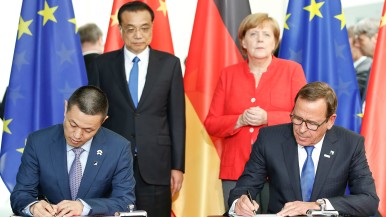
Berlin, Germany – The Bosch Group and electric vehicle company NIO signed a strategic cooperation agreement focused on sensor technology, automated driving, electric motor controls, and intelligent transport systems. The signing ceremony took place in Berlin in the presence of German Chancellor Dr. Angela Merkel and Chinese Premier Li Keqiang. NIO began delivering its 7-seat high performance electric SUV, ES8, to its users in China in June. The vehicle contains key components from Bosch, such as driver assistance systems, control units, sensors and the iBooster electromechanical brake booster. The components will be further developed for NIO’s future models.About Bosch in China Bosch has been present in China since 1909 and is active in all of its business sectors today. In the Mobility Solutions sector, the supplier of technology and services works together with international and local manufacturers as well as startups in China. Today, Bosch employs more than 60,000 associates at 60 locations in China and achieved sales of 14.9 billion euros on the Chinese market in 2017 – a double-digit growth year on year . Bosch focuses on strong localization in China. In addition to local partnerships, the focus is on local manufacturing, research and development for the Chinese market. In total, Bosch has invested more than 4.8 billion euros in its Chinese locations over the past ten years – in 2017 alone, the sum was almost 840 million euros. In Wuxi, the company has begun construction of a new mobility solutions facility, which will be the world’s first manufacturing facility for 48-volt batteries for electric cars. In November 2018, the first Bosch iBooster manufacturing site in Asia Pacific will be officially inaugurated in Nanjing to fulfill the increasing demand for electrified and autonomous solutions in China. Also this year, the second phase of the automotive electronics plant in Wujin, Changzhou, will be completed. Additionally, it is planned to open a center for artificial intelligence in China in 2018. About NIO NIO’s mission is to shape a joyful lifestyle by offering smart, premium electric vehicles and providing the best user experience. NIO was founded in November 2014 as a global electric vehicle company, with world-class research and development, design and manufacturing centers in Shanghai, Beijing, San Jose, Munich, London and nine other locations. Headed by Kris Tomasson, Vice President of Design, NIO’s global brand and product design is being developed in Germany. In November 2017, NIO’s German branch, NIO GmbH, was given an innovative leader award by the Chinese Chamber of Commerce in Germany. The NIO Formula E Team secured the inaugural Drivers’ Championship title in 2015. In 2016, NIO unveiled one of the fastest electric cars in the world, the EP9. The EP9 set the lap record for an electric vehicle at the Nürburgring Nordschleife and three other world-renowned tracks. In 2017, NIO unveiled its vision car EVE. NIO officially began deliveries of the ES8, a seven-seat high performance electric SUV, on June 28, 2018.

Bosch scores big in Japan with clever technology

07.06.2018

Press release

Business/economy

Bosch scores big in Japan with clever technology

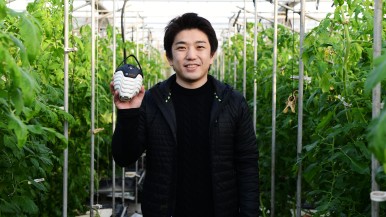
Tokyo – The Bosch Group is scoring big in Japan thanks to its innovative and intelligent solutions for the local market as well as for the global Japanese automotive industry. “Bosch has made impressive progress in Japan. We are working with Japanese automakers to drive forward the automation, electrification, and connectivity of mobility. In addition, we are increasingly focusing on IoT solutions, such as smart agriculture,” says Klaus Meder, the president of Bosch Japan. Last year, the leading supplier of technology and services recorded sales of 2.3 billion euros in Japan, an increase of roughly 10 percent over the previous year. Bosch Japan also made a good start to 2018, mainly due to strong growth for the Mobility Solutions business sector, which generates a significant share of the company’s sales in Japan. In 2017, the company grew twice as fast in this area as the local market. The Industrial Technology business sector also performed well. Bosch has been operating in Japan since 1911 and currently employs some 6,600 people in the country.Business with Japanese automakers sees double-digit growth In 2017, Bosch’s global sales to Japanese automakers rose year-on-year by around 11 percent, which makes it the sixth year in a row these have posted double-digit growth. Looking ahead, Bosch expects this trend to continue over the medium term. Bosch not only supplies Japanese automakers locally, but also works closely with them around the globe. In the ASEAN region, for example, Japanese automakers enjoy a market share of around 90 percent. Accordingly, the region is a focus of investment for the Bosch Group. For instance, at the end of 2017, the company opened its second plant for mobility solutions in Thailand, representing a total investment of 80 million euros. The new smart factory in Hemaraj manufactures components including injection valves, interconnect technology, and knock sensors. The site also houses a research and development center at which around 60 associates work on the further refinement of gasoline injection systems. Bosch is also expanding its manufacturing operations in Vietnam. Since 2008, the company has been producing push belts for continuously variable automatic transmissions in Dong Nai, which is located about 40 km east of Ho Chi Minh City. Bosch is currently investing around 60 million euros to convert this plant into a smart factory and increase its production capacity. By the end of 2018, total investment in the site will have exceed 320 million euros since 2011. Expanding IoT business: smart farming solutions In addition to its mobility solutions business, Bosch is also focusing on developing connected solutions in Japan, for which it is drawing on the country's high degree of innovative strength. Last year, for example, saw the launch of Plantec, a smart system for optimizing tomato cultivation in Japanese greenhouses. The solution is tailored to the local market, as greenhouse cultivation is particularly widespread in the country. Plantec uses sensors to measure humidity, temperature, carbon dioxide levels, and sunlight. These environmental parameters are crucial for plant growth and data on them is collected and sent via a gateway to a cloud server. There, a system analyzes the data and takes into account additional important agricultural parameters as well as the weather forecast. The results of the analysis are displayed in an app. The system can analyze the risk of infection and use artificial intelligence to plan the use of pesticides in advance. It can thus help farmers minimize crop loss. Work on this project is being carried out in conjunction with the Bosch Center for Artificial Intelligence (BCAI). At the end of 2018, the company plans to expand this service to strawberry and cucumber cultivation. Bosch's goal is to supply around 10 percent of Japan's greenhouses by 2020.