Search & find:
Media, press releases, events for your editorial coverage

Kilometre by kilometre, the eBike learns more

02.07.2024

Press release

Electrified mobility

Kilometre by kilometre, the eBike learns more

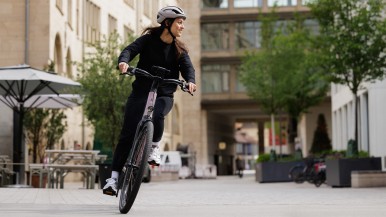
Stuttgart/Reutlingen – AI solutions are increasingly being used to make a variety of everyday tasks easier. They impress with personalised applications by analysing individual needs and continuously learning from them. Thanks to Connected Biking, the physical riding experience merges with the digital world. Consequently, the eBike has long become an intelligent companion. Connected via the eBike Flow app, it forms part of a modern, digital lifestyle and always remains up-to-date. Bosch eBike Systems integrates AI-based solutions into the smart system, which recognise user behaviour, learn from it and enable, for example, smarter route planning and navigation. We’re confident that Connected Biking is the future. Only by merging the physical riding experience with the digital world can the full potential of our eBike systems be realised....explains Gregor Dasbach, Vice President Digital Business at Bosch eBike Systems. “With the integration of AI, we are taking the next logical step in developing and creating priceless added value for eBikers: Kilometre by kilometre, the eBike learns more and unnoticed, becomes a smart and connected companion along the way.” Range Control: AI ensures greater reliability when it comes to range on the eBike The new, AI-based “Range Control” feature makes planning rides easier: eBikers no longer need to worry about their battery range. When you plan a route in the eBike Flow app, it immediately indicates the percent of battery charge remaining when you reach your destination. To display the most accurate range possible, the smart system gathers various information, including the system weight, the elevation profile of the route and your personal riding behaviour during your recent rides. Its predictions become increasingly precise: once the first activities have been recorded, the system is able to determine the battery status on arrival much more accurately than on the first journey. The predicted battery level is also updated during the journey and the current riding style is taken into account. This means that riders can concentrate fully on their eBike experience. To rule out every last worry about range during the journey, you can even set the desired minimum battery level at destination. The smart system takes care of the rest – extremely practical if, for example, charging isn’t possible before the return journey or the next ride. If required, eBikers can enable this additional feature via a toggle button in the eBike Flow app. A slider can then be used to precisely set the desired battery level at destination. Depending on the selection, the app indicates whether the route can be travelled with full, low or very low support. During the journey, the smart system then adjusts the motor support as necessary. This ensures that you arrive with the predetermined battery level. With this new development, wondering whether the battery will last to the destination is now a thing of the past for eBikes with a smart system from Bosch. Personalised arrival time and route planning The smart system also uses other AI features for personalised planning. The expected arrival time, for example, can be calculated and displayed before a ride. An analysis of previous riding behaviour on similar routes helps here. eBikers also benefit from personalised route suggestions: The smart system knows, for example, which road types, which surfaces and which gradients and speeds are preferred, and makes a corresponding route recommendation. Current charge level for easy planning and detailed maps for Kiox displays Further new functions make navigation and planning even easier. With the “current charge level” feature , users can track the battery status live during the charging process on the eBike Flow app and view it anytime and anywhere. So you can plan your next tour or onward journey at home on the couch or in a cosy café. The “extended navigation” feature enhances the navigation display on the Kiox 300 and Kiox 500 displays. This no longer only shows the planned route and junctions, but also all side roads. These new, additional map details ensure the best possible orientation and intuitive navigation. “Extended navigation” and “current charge level” are part of the Flow+ subscription service. New insights on completed journeys Bosch also presents numerous innovations in terms of the ride statistics. This means that all riders who have a Bosch eBike ABS installed on their eBike can view the percentage of braking manoeuvres with and without ABS as a direct comparison in the eBike Flow app. During the ride, the number of braking manoeuvres where ABS was activated is also displayed. The “riding mode usage” display is no longer only available during the ride, but also as a statistic afterwards. A clear pie chart shows the ratios of the riding modes used (including Off mode). The same applies to the “power share” screen. The “power share” screen provides insights into the average rider power compared to the average power of the drive unit, based on current activity and the selected riding mode. This information helps eBikers to improve their fitness level and optimise their training. Display of riding mode usage and power share after the ride are both part of Flow+. New Eco+ mode enables long ranges In addition to the digital features, Bosch is also introducing a new riding mode for the smart system. The new Eco+ mode blurs the boundaries between eBiking and normal cycling, saves energy and enables particularly long ranges. It is particularly suitable for eBikers who enjoy pedalling without support on flat terrain, but do not want to do without a motor on climbs or when overtaking, for example. Depending on the rider performance, the motor remains completely switched off until an activation threshold that can be customised in the eBike Flow app is exceeded. This is ideal for lightweight eBikes, but also for eSUVs and eTrekking bikes. When support is no longer required, the motor switches off automatically. This makes it easy to save energy and extend the range, making even lengthy tours possible without charging or replacing the battery. The Eco+ mode is available for all drive units with the smart system from Bosch eBike Systems and can be installed on your own eBike using the eBike Flow app. Even more customisation: display configuration on the Purion 200 The networking of components creates new possibilities for customisation. Like the Kiox 300 and Kiox 500 displays, the display of the Purion 200 control unit can now also be customised according to your own preferences: eBikers can sort, add or delete content in the eBike Flow app. You prefer the speed to be displayed on the left and always want the heart rate on the right? No problem, because two tiles per screen can be freely assigned. The screen order can also be redefined.

10 years of Connected Biking at Bosch eBike Systems

02.07.2024

Press release

Electrified mobility

10 years of Connected Biking at Bosch eBike Systems

Stuttgart/Reutlingen – Over the past decade, eBiking has become an integral part of mobility. In some European countries such as Germany and the Netherlands, every second bike sold is already an eBike – and the trend is upwards. Since its introduction, the eBike has undergone numerous stages of development – and has evolved into a fully connected product over the past ten years.Ten years ago, Bosch eBike Systems laid the foundations for the dawn of the eBike future. Since 2014, Connected Biking has stood for the further development of eBiking with a continuous stream of new features and complements the physical experience with the world of digital life. With Nyon, Bosch launched the first connected, all-in-one on-board computer in the bicycle industry onto the market. Together with an online portal and a phone app, it combined an eBike control unit, navigation system, fitness trainer and access to the online world in a single device. The next important step towards the digitalisation of eBikes soon followed. With the acquisition of COBI.Bike, Bosch eBike Systems expanded its product and expertise portfolio to include phone-based solutions for the first time in 2017. Further innovations such as the Kiox display (2019) and the first integration of an anti-theft protection feature (2019) soon followed. Smart system milestone: the eBike Flow app as a digital assistant A particularly important milestone in this development and the start of a new, connected eBiking future was the launch of the smart system in 2021. With this system generation from Bosch eBike Systems, all components – such as the drive unit, battery, display and phone – are fully connected, can communicate with one another and exchange data. Since then, eBike riders have been offered an intuitive and convenient eBike experience with a wealth of new options. The centrepiece is the eBike Flow app, which is trusted by more than one million eBikers worldwide, with an average app store rating of 4.3 out of 5 stars. It enables access to additional digital functions, personal settings, analysis and display of riding data, navigation, updates and much more. The eBike makes everyday life and leisure activities easier. Bosch is continuously improving the smart system with ongoing updates and new functions in the four areas of theft protection, navigation, personalisation and update & service. Additional theft protection: parking the eBike with complete confidence Whether a quick stop at a café or an extended break on a sporty tour: anyone parking their eBike for a brief or lengthy period of time wants to do so with peace of mind. The digital theft protection functions of the smart system offer additional security and are the ideal complement to the mechanical lock. Thanks to the “eBike Lock”, the phone or display becomes a digital key that prevents the motor support from being enabled. The “eBike Alarm” function shows the current location and status of the eBike. In the event of attempted theft, the eBike emits an audible and visual alarm and sends a notification to the phone. If the eBike nevertheless does get stolen, automatic tracking starts – including location tracing for the police. To explore means to experience: next-generation navigation features So that every kilometre becomes an experience, the smart system offers route planning, navigation and activity tracking via the Flow app. Tours can be planned with maximum freedom and efficiency before setting off. The AI-based “Range Control” feature helps out here. When eBikers put together a route in the eBike Flow app, it immediately shows them what percentage of battery power is likely to remain when they reach their destination. To rule out every last worry about range during the journey, it’s even possible to set the desired minimum battery level at destination and the smart system takes care of the rest. Other AI-based functions recognise user behaviour, learn from previous journeys and can offer customised routes with a precisely calculated arrival time. Routes planned in advance with komoot can also be automatically imported. During the ride, clear display of the route and precise turn-by-turn directions ensure a modern navigation experience – whether using a display, phone on the handlebar or via voice-based navigation. If desired, all important data such as speed, battery level, elevation graph or (in conjunction with a heart rate monitor), the current heart rate can be viewed at all times. Thanks to Activity Tracking, all tour and performance data is recorded – synchronised with Strava or Apple Health if desired – and can be analysed, exported as a GPX file or in FIT format and shared with the user’s community after the ride. Personalisation: adapting the eBike to individual preferences Whether City eBike, Trekking eBike or eMTB: eBikes are as diverse as the requirements of eBikers are varied. The topic of personalisation is therefore becoming increasingly important. The eBike is increasingly adapting to individual lifestyles – fully in keeping the with personal use habits. Thanks to the connectivity of the individual components, the eBike can be customised to the rider’s needs via the eBike Flow app. The display screen layout, for example, can be customised with over 30 different options and shows the information relevant to the current riding situation and route. The riding modes can also be customised to suit personal preferences: dynamic on the trail, energy-saving on tour or relaxed in city traffic. Update and service: the eBike always keeps up with the times With updates , improvements and new features are continuously being introduced in the smart system. This means that the eBike remains up to date and always feels like new. Here again, a great deal has changed in the ten years since the beginnings of Connected Biking. Whereas the specialist dealer used to install the latest version, updates simply take place over-the-air via the eBike Flow app. Particularly clever: the eBike Flow app also serves as a digital service booklet. Outlook: connected eBikes will be the standard in the future The future of the eBike will be characterised by additional digital functions and even more customisation options that can be installed via software updates. Non-connected eBikes will be the exception in the future – the topic of Connected Biking will therefore continue to play a central role for Bosch eBikes Systems in the coming years. In addition to greater flexibility and extra functions, eBike connectivity is also playing a decisive role on the road to the mobility of tomorrow. It forms the basis for networked communication between eBikes and the relevant infrastructure, such as bicycle traffic lights or other road users and providers of smart services, as is being discussed by science, industry and politics in the Smart City context of the Bike2X concept.

More comfortable gear shifting for eBikes

02.07.2024

Press release

Electrified mobility

More comfortable gear shifting for eBikes

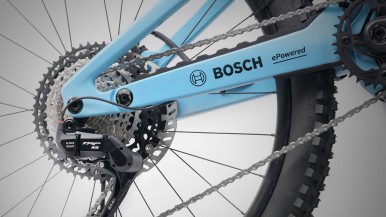
Stuttgart/Reutlingen – Focusing on eBiking, always shifting gears at the perfect time – or not having to think about shifting gears at all? Bosch eBike Systems presented the first eShift solutions for electronic shifting back in 2014 and has since further developed them together with shifting system partners. Bosch is now expanding its eShift portfolio in the smart system, providing more choice, more comfort and more riding fun. Depending on the system, electronic gear shifting offers two major advantages for eBikers: When shifting manually, eShift ensures optimal gear changes at the ideal time. Motor support is interrupted for fractions of a second in the process. The gear changes are rendered smooth and silent. A positive side effect here is that material wear on the drive is also reduced. Alternatively, eShift can change gears fully automatically: The shifting system then automatically adapts the gear to a pre-set cadence. This means that eBikers always ride in the correct gear ratio and the riding experience is much more relaxed and comfortable – wrong gear changes become a thing of the past. Our electronic eShift gear shifting solution offers numerous advantages. More comfort, more riding fun and reduced material wear....says Claus Fleischer, CEO of Bosch eBike Systems. In addition to the previously available eShift solutions from Rohloff, 3X3 and enviolo, Bosch is now integrating new shifting systems from TRP and Shimano into the smart system. "Our electronic eShift gear shifting solution offers numerous advantages. More comfort, more riding fun and reduced material wear: eBikers benefit from this technology in a wide range of applications – on eMTBs as well as in the city. In collaboration with TRP and Shimano, we’re expanding our portfolio and integrating derailleur solutions for eBikes into the smart system for the first time," says Claus Fleischer, CEO of Bosch eBike Systems. For sporty eBikers: automatic derailleur system now available in the smart system for the first time Sporty riders have always appreciated the advantages of derailleur systems: They are lightweight and their fine gear ratio increments ensure efficient pedalling. eBikers can now benefit from the first automatic derailleur solution in the smart system. The TRP E.A.S.I. A12 has been specially designed for eMTBs and Gravel eBikes and is available as an eShift solution exclusively in conjunction with the Bosch Performance Line CX and Performance Line SX motors. During automatic gear shifting, the correct gear is automatically selected according to a previously defined individual cadence. This means less focus on the correct shifting torque and more fun on the road. The "RollShift" feature also ensures additional flow: the rear derailleur automatically shifts to the appropriate gear when slowing down or accelerating during coasting phases without pedalling. This ensures a particularly smooth transition when stepping into the pedals again. Those who prefer shifting gears themselves in certain riding situations can switch to manual mode at any time at the press of a button on the shifter while riding. The Kiox and Purion displays or the Ride screen on the phone indicate the current mode and the engaged gear at all times. The appropriate gear can also be engaged during the coasting phase before starting to pedal again when shifting manually. For a modern and sleek appearance, the shifter is wirelessly connected to the rear derailleur and the battery required is simple to replace. For commuters and everyday riding: Shimano CUES Di2 With Shimano's new CUES Di2, Bosch is integrating a further eShift solution for derailleur solutions into the smart system. This makes gear changes particularly quiet, smooth and cuts down wear on the materials. This is made possible by reducing the motor support for a fraction of a second during gear changes. In the manual variant, the system provides a shift recommendation on the display or on the Ride screen in the eBike Flow app. Commuters benefit from this as they ride through the city, as do eBikers on trekking tours in the countryside. For the city and on trekking tours: Shimano NEXUS Di2 The Shimano NEXUS Di2 hub gear system with eShift makes particularly smooth and comfortable gear changes possible when riding the eBike. The big advantage here is that eBike riders with hub gear systems normally have to stop pedalling to change gears. With the eShift solution, they can just keep on pedalling. The solution assists with manual shifting and always changes gear at the ideal time, depending on the pedal position. A suitable shift recommendation is also indicated on the Kiox and Purion displays or on the Ride screen in the eBike Flow app. Moreover, riding off in an excessively hard gear is a thing of the past – because gear changes are possible even when stationary. For riding off easily after a stop, auto-downshift can be customised in the eBike Flow app The auto-downshift function automatically shifts to a lower gear when coming to a stop to make riding off easier. This helps eBikers on hills as well as riders of heavy Cargo eBikes at traffic lights. But which is the right gear? You can now set this individually for yourself in the eBike Flow app – according to your personal taste. This feature can now also be enabled or disabled as required. Auto-downshift will be available from autumn 2024 in conjunction with the already familiar eShift partner solutions from 3X3 and Rohloff.

The journey to a more sustainable future

02.07.2024

Press release

Electrified mobility

The journey to a more sustainable future

Stuttgart/Reutlingen – The eBike is an important building block for the mobility revolution. It helps to reduce traffic and its impact on the environment, takes up little space and does not cause noise or local emissions 1 . Compared to cars, eBikes are not only cheaper, but also more environmentally friendly, space-saving and often faster in city traffic. They offer an important alternative to the car, especially for short distances of up to around 5 to 10 kilometers 2 . In an international study conducted by Bosch eBike Systems this year, 49 percent of eBike users surveyed stated that half of the journeys they used to make by car are now made by eBike 3 . This active form of mobility not only helps to reduce CO₂ emissions in cities, but also benefits each and every individual: Travelling by bike or eBike is good for your health and is also fun!As an evaluation by the Federal Environment Agency shows, the eBike is one of the lowest-emission means of transport. When using an eBike, the electricity consumption results in average CO₂ emissions of 3 g CO₂/person-kilometer (pkm), depending on the electricity mix. In comparison, a motor vehicle with an internal combustion engine emits about 166 g CO₂/pkm, while public transport emits between 58 and 93 g CO₂/pkm 4 . eBikers using the smart system from Bosch can now view their CO₂ savings compared to a car after every ride via the activity tracking function of the eBike Flow app 5 . "Bosch eBike systems are already driving a society in which people are travelling more sustainably. With our products and solutions, we make a contribution to future-proof mobility. It is also important to us to continue to improve our eBike systems in terms of sustainability throughout the entire product life cycle," explains Claus Fleischer, CEO of Bosch eBike Systems. "Because sustainability is not an additional task, but an integral part of our corporate culture." From vision to realisation: Bosch eBike Systems focuses on three pillars of sustainability Bosch eBike Systems has defined three pillars of sustainability and firmly anchored them in its strategy: The "Carbon footprint" pillar aims to measure, identify and reduce CO₂ emissions at company, product and material level. The "Responsibility in the supply chain" pillar defines measures to ensure that all materials and primary products are selected sustainably and responsibly and that social standards are adhered to. The "Circular economy" pillar is concerned with the goal of extending the service life of products, i.e. reusing raw materials and further increasing recycling efficiency, for example. For Bosch eBike Systems, the pillars are strategic guard rails that contribute to a common goal: to make eBike systems even more future-proof. To achieve this goal, the company derives specific measures that are implemented both internally and externally in collaboration with partners and suppliers. CO₂ analysis focusing on savings potential To intensify efforts to reduce emissions, Bosch eBike Systems, together with TÜV Rheinland, conducted a holistic analysis of the eBike's carbon footprint in 2022 and refined and updated it in 2024. Using the results of the analysis, the company has calculated the carbon footprint for each product in its portfolio. The aim of the analysis was to identify and evaluate the greatest CO₂ savings potential that can be found both in the system components and in the entire supply chain. Around 79 percent of an eBike's CO2 emissions are caused by the materials used and in production, and 13 percent through use. The remaining eight percent is accounted for by transport, packaging and recycling. Overall, an eBike has an average carbon footprint of 263 kg of CO₂ equivalents over its entire life cycle. If the eBike components are considered individually with approximately 84 kg of CO₂ equivalents, approx. 50 percent of the emissions are attributable to the battery, 48 percent to the drive unit and 2 percent to the display. If you ride around 515 kilometers on an eBike instead of using a motor vehicle with an internal combustion engine, the Bosch eBike system will have already paid for itself in terms of CO₂ consumption. The CO₂ savings potential identified in the display are the electronic components (53 percent) and the screen (41 percent). In the drive unit, the housing accounts for the largest share of CO₂ at 55 percent, followed by the electronic components at 17 percent. In the battery, the greatest savings potential comes from the cells, which account for 73 percent of the CO₂ emissions, followed by the housing at 12 percent and the cell holder at four percent. Reducing emissions along the entire supply chain In the purchasing process, the carbon footprint is an important decision-making criterion when it comes to supplier selection, alongside other sustainability criteria. For this purpose, the CO₂ emissions of the materials used and purchased parts are requested from suppliers. Claus Fleischer emphasises: "The joint analysis with TÜV Rheinland has shown us which areas we can and will prioritise to further reduce the carbon footprint of our eBike systems. Our measures focus on optimising materials and reducing emissions in production and the supply chain. Together with our partners and suppliers, we are making enormous efforts here, which are gradually paying off." In the production of the new Bosch CompactTube 400, for example, the company uses alternative materials for the cell holders, which make up the largest plastic parts within the PowerTubes, in order to reduce the carbon footprint. For this purpose, a plastic is used whose emission factor is 64 percent lower than that of the plastic previously used. This material change will in future become the standard for all Bosch eBike Systems batteries integrated within the frame. Beyond material and product level, Bosch eBike Systems also focuses on the corporate carbon footprint of its direct suppliers and makes this an important decision-making criterion in the purchasing process. By participating in the global system for the disclosure of environmental data provided by the non-profit organisation CDP, the company can record and assess the efforts of its direct suppliers to take climate protection measures. The aim is to make climate protection the standard: Suppliers that have a low CDP ranking and do not commit to the goals of the Paris Climate Agreement through an SBTi voluntary commitment 6 will be given a lower rating in the purchasing process. Suppliers that disclose via the CDP currently account for 97 percent of the purchasing volume of Bosch eBike Systems – this figure is set to rise to 100 percent by 2025. An important factor for reducing CO₂ is the use of green electricity. Bosch eBike Systems expects its suppliers to switch their production to electricity from renewable sources in order to reduce their emissions. Responsibility and transparency as selection criteria in the purchasing process Bosch eBike Systems places great value on the transparency and traceability of its supply chain, particularly with regard to batteries. In doing so, Bosch eBike Systems goes beyond the legal obligations stipulated by the Supply Chain Act and not only checks and qualifies its direct suppliers, but also endeavours to understand the entire supply chain in order to avoid potential risks in the procurement of raw materials. This applies in particular to the raw materials in the battery cells, which are comprehensively traced back to the mines. This approach will also be extended to the drive unit and displays in the future. With regard to environmental protection, Bosch eBike Systems expects its suppliers to set up and develop an environmental management system in accordance with ISO 14001. As of this year, 100 percent of our direct suppliers have appropriate certification. Circular economy: Remanufacturing & recycling at the end of the product life cycle For Bosch eBike Systems, the high quality, safety and long service life of its products are paramount. The useful life of an eBike and the number of journeys with other modes of transport it replaces make a significant contribution to reducing the impact on the environment. Nevertheless, it is inevitable that the products will reach the end of their lifetime at some point. This is where the circular strategy comes in, with which Bosch eBike Systems aims to improve the sustainability of products throughout their entire life cycle. This includes the procurement, production, utilisation, return, reprocessing and recycling of materials. Since 2014, Bosch eBike Systems has been investing specifically in the recycling of its drive units through remanufacturing. Defective Bosch eBike drive units that qualify after testing are subjected to a detailed reconditioning process. They undergo a complete technical overhaul and are made available to dealers with full functionality after a final test. "With our commitment to remanufacturing, we are sending a clear signal of our commitment to protecting the environment and promoting sustainable mobility – and have been doing so for over 10 years now," says Claus Fleischer. Further drive units will be added to the remanufacturing portfolio this year. To be able to reuse valuable raw materials at the end of their lifetime, batteries need to be recycled properly. Bosch eBike Systems supports new and sustainable recycling methods worldwide. The efficiency of recovery depends on the recycling process. In the processes used by the German GRS industry solution, almost 71 percent of many valuable raw materials can be recovered 7 and can be reused for new products. In future, Bosch eBike Systems will increasingly focus on the use of recyclates in its circular economy. In all sales countries where it is legally possible, Bosch eBike Systems voluntarily assumes responsibility for recycling obligations and the associated costs through local service partners. In countries where recycling solutions are not yet available or existing recycling solutions are inadequate, Bosch eBike Systems works closely with its partners, promotes pilot projects and supports the development of industry solutions. The company currently supports battery collection systems in 18 countries, including the Czech Republic and the United Kingdom as of this year. Moving forward together Through its measures, Bosch eBike Systems contributes to the overarching sustainability goals of the Bosch Group. With more than 400 locations worldwide, the Bosch Group has been carbon-neutral overall since 2020 (Scope 1 & 2) 8 . At the same time, the company intends to shape climate protection beyond its direct sphere of influence and also systematically reduce upstream and downstream emissions – the aim is to reduce emissions by 15 percent by 2030 (Scope 3). "We are aware that we still face a number of challenges on our path to a sustainable future. Responsible and sustainable behaviour is very important to us as a company and is already daily practice in many areas at Bosch eBike Systems. Both small and large improvements have already had a positive impact – and we want to achieve more and more of these in the future," says Claus Fleischer.Sources 1 World Health Organization (2022): "Walking and cycling: latest evidence to support policy-making and practice", p. 1, https://apps.who.int/iris/rest/bitstreams/1426622/retrieve (retrieved on 30 May 2024). 2 Federal Environment Agency (2023): "Welche Umwelttipps Sie bei Elektrofahrrädern beachten sollten" (Environmental tips to consider when using electric bikes), https://www.umweltbundesamt.de/umwelttipps-fuer-den-alltag/mobilitaet-reisen/e-bike-pedelec#gewusst-wie (retrieved on 30 April 2024). 3 Bosch eBike Systems, n= 4,200, countries: Denmark, Netherlands, USA, UK, Poland, Switzerland, Germany, Austria, Italy, field time: 30 November 2023 – 29 December 2023 4 Federal Environment Agency (2022): "Vergleich der durchschnittlichen Emissionen einzelner Verkehrsmittel des Linien- und Individualverkehrs im Personenverkehr in Deutschland 2022" (Comparison of the average emissions of individual means of regular and private passenger transport in Germany in 2022), https://www.umweltbundesamt.de/bild/vergleich-der-durchschnittlichen-emissionen-0 (retrieved on 30 April 2024) 5 The emissions saved relate to the use phase. The calculation is based on the Federal Environment Agency's assumption (2022): Car = 166 g CO₂/pkm, eBike = 3 g CO₂/pkm 6 The SBTi voluntary commitment allows companies to set science-based targets for reducing greenhouse gas emissions. Through this voluntary commitment, companies demonstrate their willingness to actively contribute to climate protection and align their business practices with the goals of the Paris Agreement. 7 Gemeinsames Rücknahmesystem Servicegesellschaft mbH (2023): "Nachhaltigkeit durch Rücknahme von Altbatterien aus E-Bikes und anderen elektrischen Kleinfahrzeugen steigern" (Increasing sustainability by taking back used batteries from eBikes and other small electric vehicles), presented at Eurobike 2023 8 Since 2020, the Bosch Group with its more than 400 locations worldwide has been carbon-neutral overall (Scope 1 & 2 according to Greenhouse Gas Protocol Corporate Accounting and Reporting Standard ). Bosch uses four levers to achieve this: increasing energy efficiency, generating its own energy from renewable sources, purchasing green electricity and offsetting remaining CO₂ emissions with carbon credits. Further information on the Bosch Group's sustainability strategy can be found at nachhaltigkeit.bosch.com


Bosch eBike Systems expands digital offerings for eBike manufacturers

02.07.2024

Press release

Electrified mobility

Bosch eBike Systems expands digital offerings for eBike manufacturers

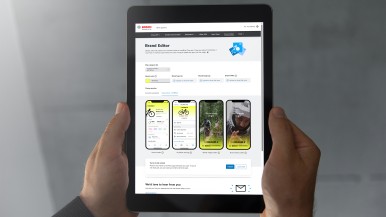
Stuttgart/Reutlingen – With the smart system and the associated eBike Flow app, Bosch eBike Systems is merging the physical and digital eBike experience for end customers. Now, eBike manufacturers have additional options to further expand their digital offering and thus address their customers even more individually with a customised variant of the eBike Flow app on the one hand, and with useful tools for manufacturers who offer their customers their own apps on the other. Bosch eBike Systems also offers further interfaces, enabling digital services and offerings from third-party providers to be seamlessly integrated into the brand ecosystem.eBike Flow app as offered by Bosch or customised The eBike Flow app is at the heart of the smart system and is offered together with the Bosch eBike system. eBike manufacturers can choose whether the app is displayed to their customers as a standard version or as a customised brand variant. Thanks to the digital services of Bosch eBike Systems, it is now possible to prominently place own-brand content there. Gregor Dasbach, Head of Digital Business at Bosch eBike Systems, explains: “Many manufacturers want to provide their customers with customised, brand-specific offers and interact directly with users. Our digital services offer various options that can be used to display specific content. Information on the respective connected eBike model can also be stored there.” What does the customised Flow app include? Design elements can be used to modify the user interface of the app and thus integrate the manufacturer’s own brand. Images or videos – with branding, manufacturers can bring the user experience to life for end customers in a variety of ways. With the Content Card, they can create their own content with little effort and communicate directly with their customers, who then receive customised content. Other services available in both the standard version and the customised eBike Flow app include the eBike Specs , i.e. the exact specifications of the bike, and also the digital operating instructions ( eBike Manuals ), which can be viewed via the Help Center. The services help eBike manufacturers to increase the visibility of their own brand and enhance customer loyalty. End users have all relevant data on their eBikes clearly stored in the eBike Flow app. Construction kit for digital applications from eBike manufacturers With the eBike SDK (Software Development Kit) and Cloud APIs (Application Programming Interface), Bosch eBike Systems provides manufacturers with digital tools that they can use to create their own apps and broaden their digital footprint. They also generate real added value for users thanks to the eBike data available from Bosch. This is made possible with the eBike SDK, which allows manufacturers to read out data such as speed or range thanks to the intelligence of the smart system (LED Remote, System Controller) and integrate it into their apps. The development tools it contains, such as the eBike simulator app for macOS, are also useful for manufacturers. Developers can use this to simulate eBike values such as speed, cadence and motor power, without having to physically ride an eBike. This allows them to work efficiently with the data. Using Cloud APIs, manufacturers can access Bosch data sets and integrate them into their own mobile apps. This provides them with valuable information, such as eBike profiles or rider activities, which they can use in their own app and make available to end customers. In technical terms, Cloud APIs are the interfaces that allow data to flow between Bosch hardware, such as the ConnectModule (BCM) and the DiagnosticTool, or Bosch software, such as the eBike Flow app, and eBike manufacturers' own applications. What does this mean in practice? eBike master data and usage-related data, for example, can be called up in the "eBike profiles" data set. This allows manufacturers to integrate bike profiles, maintenance, etc. into their own app. A further option is the "Activity Records" data set, which can be used to call up detailed rider activities. eBike manufacturers, for instance, receive a variety of information relating to rider activities, such as location or battery status, for their own mobile app via Cloud APIs. Both the eBike SDK and the data sets that can be accessed via the Cloud APIs and are being successively developed further to offer manufacturers a wide range of digital options – always in the interests of the optimum eBike experience. Prepared for the eBike experience of tomorrow The smart system transmits eBike data via the eBike Flow app to a digital platform, the Bosch eBike Cloud, provided users give their consent. eBike manufacturers can now access this digital platform and use the corresponding services for the benefit of eBike riders. This allows them to tailor their digital offerings more closely to the needs of end customers, further develop their own solutions and be ready for the eBike experience of tomorrow. Gregor Dasbach comments: "Our platform offers a wide range of digital services for manufacturers. This also includes solutions from third-party providers. Partnerships with insurance companies are already in place in selected countries. In future, it is conceivable that leasing providers, fleets, cities and aftermarket services can also be integrated. We are looking forward to seeing what potential there will be beyond the bicycle industry in the future."

Bosch Rexroth achieves stable sales at previous year's record level in 2019

16.04.2020

Press release

Business/economy

Bosch Rexroth achieves stable sales at previous year's record level in 2019

Lohr am Main, Germany – Bosch Rexroth held up well in 2019 in a difficult environment and despite a sharp drop in incoming orders. At 6.2 billion euros, sales remained stable at the previous year’s record level. The company benefited from a solid core business in hydraulics and the further expansion of its product range in factory automation as an important door opener for new markets. “We draw a positive conclusion for 2019," says Rolf Najork, member of the Board of Management of Robert Bosch GmbH, responsible for the Industrial Technology division and Chairman of the board of Bosch Rexroth AG. "In view of the volatile markets and the noticeable economic slowdown, this very good result was anything but certain. It shows that our broad positioning with different divisions is a great advantage and that we have set the right course with our structural adjustments.” In 2019, Bosch Rexroth was able to match the success of the previous year in all regions. The core markets of Germany and Europe remained the strongest. Sales in Germany dropped by 4.1 percent to 1.4 billion euros. In the remaining European markets (excluding Germany), sales declined by 0.3 percent to 2.1 billion euros compared to the previous year. In the growth markets in the Asia-Pacific / Africa region, Bosch Rexroth achieved sales of 1.6 billion euros, which equals a slight increase of 0.6 percent. The region North and South America recorded a 5.3 percent rise to 1.1 billion euros. At the end of the fiscal year (December 31, 2019), the company employed around 31,000 people worldwide.Economic environment and COVID-19 pandemic cloud prospects for 2020 Bosch Rexroth expects business to decline in all regions and sectors in the current fiscal year 2020 due to the general economic weakness and the structural change in customer sectors closely linked to the automotive industry. Order intake declined by 20.3 percent in the course of 2019. Additionally, the global COVID-19 pandemic is currently clouding business expectations for 2020. Hence, the systematic implementation of measures to improve competitiveness in all areas is particularly important for Bosch Rexroth. "We are very much concerned with the current developments regarding COVID-19. We have taken extensive measures during the past weeks to protect our employees, customers and partners while ensuring the best possible supply," says Najork, "Safety is our top priority throughout. We want to be a reliable and responsible partner for our customers, also and especially in such global crises". Focus on innovations and new markets Bosch Rexroth remains one of the most significant innovation drivers and pioneer for new technologies in its markets. For example, the company invested some 348 million euros in research and development in fiscal year 2019 – an increase of 6.2 percent over the previous year. The company continues to focus on developing connected and fully automated solutions in the two major areas of hydraulics and factory automation. All divisions contributed to the success of Bosch Rexroth in 2019. While the core business with industrial and mobile hydraulics proved to be a solid foundation, the factory automation division with its focus on Industry 4.0 and the vision of the fully connected factory of the future, developed into an important door opener for new markets and customers.Machinery Applications and Engineering: connected and intelligent hydraulics Bosch Rexroth is actively driving change in its traditional core business of industrial hydraulics: smart hydraulic components and systems such as the compact hydraulic unit CytroBox can be quickly and easily integrated into connected manufacturing facilities. They are Industry 4.0 ready and offer services for the Internet of Things (IoT), for example for condition monitoring of machines and plants.Mobile Hydraulics: Smart Solutions for the mobile work machine of the future Despite the tense market environment, Bosch Rexroth was able to further expand its market share in mobile hydraulics in 2019. New activities in the fields of automation and driver assistance systems, electrification and IoT are future key topics. With BODAS Connect, Bosch Rexroth offers an open, scalable end-to-end solution to connect mobile work machines with each other. It enables customers to retrieve and analyze data from the mobile application. At the 2019 BAUMA trade fair for construction machinery, the company also presented the first components of a future range of electrification systems for work machines. These solutions support customers in reducing emissions, while further increasing performance. Here, Bosch Rexroth benefits from the long-standing Bosch expertise in electromobility. Factory Automation: new standards for connected manufacturing Connected assembly and intralogistics remain an important strategic focus for Bosch Rexroth’s factory automation division. The spotlight is on the vision of the factory of the future with software-based, automated and connected solutions. The company was able to further strengthen its position as an innovation driver in 2019, amongst others with the open ctrlX AUTOMATION platform. As the first 5G-capable automation platform from Bosch Rexroth, ctrlX AUTOMATION connects a wide range of devices with the new communication standard and ensures consistent connectivity in factories. Existing machines can be upgraded with the new technology via retrofit solutions. The Active Shuttle, which was also introduced in 2019, ensures greater flexibility and higher productivity in the automated factory. The autonomous transport system sets new standards in intralogistics, transports loads of up to 260 kilograms and is loaded and unloaded fully automatically using an integrated lifting platform."GoGreen" project: targets for energy and CO₂ savings exceeded In 2019, Bosch Rexroth was also able to record important achievements in CO2 neutrality: as part of the Bosch Group, the supplier of drive and control technologies has set itself ambitious goals to reduce energy consumption and CO₂ emissions. In the scope of the Bosch Rexroth project “GoGreen”, energy efficiency is being systematically improved in all plants and at customers' sites since 2011 – with an extremely positive outcome: by the end of fiscal 2019, Bosch Rexroth had saved 620 million kilowatt hours of electricity and gas worldwide thanks to "GoGreen," corresponding to more than 265,000 tons of CO₂. This equals the annual energy consumption of a city with some 80,000 inhabitants. Energy consumption at the Bosch Rexroth locations was reduced by 20 to 50 percent. Since the end of 2019, Bosch Rexroth has achieved a CO2-neutral “footprint” in Germany.

Bosch puts 5G machines in pole position

26.11.2019

Press release

Business/economy

Bosch puts 5G machines in pole position

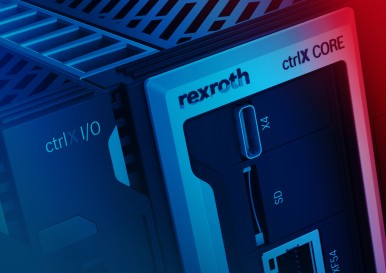
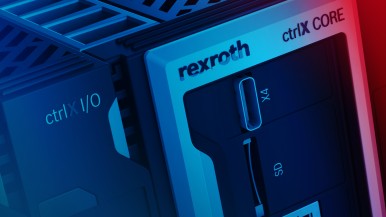
Stuttgart, Germany – 5G is coming. The new communications standard accelerates the internet of things and boosts Industry 4.0. Control systems and sensors of the kind built into facilities, machinery, and logistics chains stand to gain from this fast, reliable real-time wireless data transfer. Preparing machines for state-of-the-art communication involves making them 5G-capable. Now Bosch has the solution: Bosch Rexroth’s new ctrlX AUTOMATION control technology comes with 5G built in and can connect a wide range of industrial devices with the new communications standard. ctrlX AUTOMATION will be showcased at the SPS trade fair in Nuremberg.Bosch opens the door to a new industrial age 5G is set to turbocharge manufacturing. Our new 5G-capable automation platform lays the groundwork and opens the door to a new industrial age,...says Rolf Najork, the member of the Bosch board of management responsible for industrial technology. 5G is the first communications standard designed to enable connectivity for people as well as for the internet of things. The new standard has impressive characteristics: it is up to 20 times faster than 4G, transfers data virtually instantaneously with a latency of one millisecond, and is up to 99.9999 percent reliable – making the receipt of a “digital shipment” as certain as with transmission through a wire. "5G is a revolution and an important building block for the factory of the future", Najork says. Engineers and designers now face the challenges of integrating 5G into their machines and products. Bosch is introducing the solution that meets their needs: the new automation platform’s hardware can be fitted with a 5G module. The operating system and software for ctrlX AUTOMATION are 5G-capable from the outset and support rapid commissioning. Retrofit solutions are also available for adding the new technology to existing machinery. Bosch Rexroth’s new automation platform is scheduled to have its market launch in 2020. 5G will be a competitive factor for connected industry Experts estimate that there will be up to 70 billion connected devices worldwide by 2025. Many of them will be in manufacturing, meaning that 5G will become a competitive factor. The new communications standard will enable applications that require high-power, extremely reliable wireless connections to be integrated securely and efficiently into manufacturing facilities. These include mobile robotics, autonomous transport vehicles, and human-machine interactions. For instance, workers wearing augmented reality glasses can access additional information in their field of vision, optimizing how they monitor and maintain machinery. Combining tasks in the virtual world with those in the real world calls for real-time data flows. And that’s what 5G promises. "This new form of communication eclipses everything we’ve had until now. 5G is the first wireless protocol to truly meet the needs of the manufacturing industry", Najork says. Bosch takes on leadership role in Industry 4.0 and 5G Bosch is developing the factory of the future. In this endeavor, the company is relying on Industry 4.0 . The company first tests and validates products in-house before they are available on the market. Bosch is taking this approach with 5G, too. The company presented its first 5G-capable autonomous transport system, ActiveShuttle , at the Hannover Messe. To support the further development of its factories, Bosch has applied to the German Federal Network Agency for 5G licenses with which to set up local campus networks. Moreover, Bosch has taken on the chair of the global 5G Alliance for Connected Industries and Automation (5G-ACIA) with the aim of shaping the new mobile standard so that it meets the needs of the manufacturing industry from the outset.

Bosch presents tomorrow’s mobility today

12.12.2018

Press release

Mobility

Bosch presents tomorrow’s mobility today

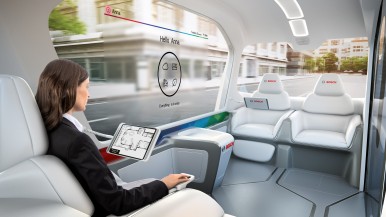
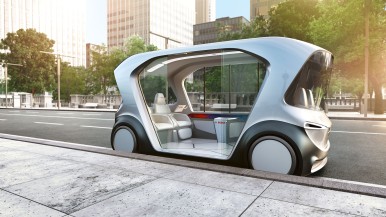
Stuttgart, Germany – A light, airy, minimalistic design, a futuristic outer shell made of display screens and glass, and a spacious interior – that is how architects might describe a novel structure, but in actuality the description also fits a completely new class of vehicle and a new kind of mobility: driverless electric shuttles that glide almost silently through city centers and are seamlessly connected with their environment. These will soon be a common sight on our city streets – whether they are transporting goods or people. Bosch provides components and systems for automating, connecting, and electrifying the shuttles, but shuttle mobility won’t be possible without mobility services. In the future, the company will offer these services too, bundling them into a smart, seamlessly connected ecosystem. That will include booking, sharing, and networking platforms, parking and charging services, and software solutions for managing and maintaining the vehicles, as well as infotainment during the journey. “Bosch is developing a unique package of hardware, software, and mobility services for shuttle mobility of the future,” says Dr. Markus Heyn, member of the board of management of Robert Bosch GmbH. At CES 2019 in Las Vegas, the world’s biggest electronics show, Bosch will be presenting its solutions for this area of transportation with a concept shuttle, and visitors will be able to experience its full range of services. Bosch is developing a unique package of hardware, software, and mobility services for shuttle mobility of the future....Dr. Markus Heyn, member of the board of management of Robert Bosch GmbH Bosch services for users and shuttle operators The emergence of the shuttle segment is a result of rising demand for ridesharing services: in Europe, the U.S., and China alone, about one million such on-demand shuttle buses will be on the roads as early as the year 2020, growing to 2.5 million by 2025 (source: Roland Berger ). Many of these vehicles, available 24/7, will be fully electric, and they will also be completely autonomous by the middle of the next decade at the latest. That’s why Bosch has packed every square centimeter of its concept shuttle with the appropriate technology – from electric powertrains and 360-degree surround sensors to connectivity management and vehicle computers. Yet these components and systems go only part of the way towards shuttle mobility. To make on-demand vehicles suitable for flexible everyday use, they must be connected to mobility services. “In the future, every vehicle on the road will make use of Bosch digital services,” Heyn says. These services allow users to book the vehicles, share rides with other passengers, and pay for the journey. Charging, repairing, and maintaining the vehicles, plus route planning and administrative activities, also call for services that Bosch will offer shuttle fleet operators in a seamlessly connected ecosystem. In the future, every vehicle on the road will make use of Bosch digital services....Dr. Markus Heyn, member of the board of management of Robert Bosch GmbH Booking and sharing Users can easily book a shuttle via smartphone, regardless of whether they’re relaxing on the sofa or sitting at their desk at work. Working behind the scenes, an algorithm identifies the vehicle closest to the requested location and finds other users who wish to travel a similar route. The more passengers a single shuttle can transport, the cheaper the journey for everyone. This approach also reduces the amount of traffic in cities and mitigates the impact on the environment. Bosch is developing the necessary software platforms to make this a reality. When the shuttle pulls up to the requested pick-up point, users again use their smartphones to identify themselves – thanks to Bosch’s Perfectly Keyless digital access service. It recognizes the owner’s smartphone as unmistakably as a digital fingerprint and opens the vehicle only for them. Every passenger always gets the seat that they reserved. Moving forward: electrified and automated Bosch’s electric axle drive makes the shuttles especially efficient yet affordable as they wend their way through the city. And the company’s Convenience Charging service knows just how long the battery charge will last and where to recharge the vehicle. This service means that even today, drivers no longer need to worry about being stranded with a dead battery. It also links vehicle information, such as the current state of battery charge or how much energy the heating and air-conditioning systems are consuming, with environmental data such as congestion and weather forecasts, so as to predict vehicle range with particular accuracy. Furthermore, Convenience Charging finds the ideal charging station and can reserve it in advance. And thanks to a standardized access and payment system, charging is easier than ever. Driverless e-shuttles provide users with transportation that is not only nearly emissions-free, but also very safe. For automation, Bosch develops and makes its own radar, video, and ultrasonic sensors, braking control systems, and power steering, to name a few examples. Smart digital services are indispensable here, too: Bosch predictive road-condition services let automated vehicles know in advance what environmental conditions to expect. They can thus adapt their driving style as needed so as to ensure maximum safety throughout the journey. The Bosch road signature is a map-based localization service with which automated vehicles can accurately determine their position in the lane down to a few centimeters – another crucial prerequisite for the safety of automated shuttles. Comfortable interior Bosch has designed the interior of its concept vehicle to provide space for four passengers, seating them across from one another to maximize legroom and comfort. Infotainment is provided on screens that can be used either by each passenger individually or in groups; for example, a family can watch a movie together as they travel somewhere for the weekend, or colleagues can work on a presentation on their way to the office. Smartphones use the on-board Wi-Fi and can integrate seamlessly with the infotainment system, thanks to Bosch connectivity technology. Its concierge service turns the shuttle into a personal assistant. With all kinds of information at its disposal, the shuttle can provide passengers with recommendations, advance bookings, weather reports, and travel tips at any time. Once the shuttle has arrived at its destination, the passengers can pay for their journey with Bosch’s e-payment service. Maintenance and administrative activities But Bosch services do not end when a rideshare journey is over: the company’s camera-based system for the vehicle interior checks whether anyone has forgotten their phone or handbag. If a passenger does forget something, the shuttle informs them directly via smartphone. The cameras can also detect gum on the seat or an overturned coffee cup – in other words, whether the shuttle needs cleaning – and can make the necessary arrangements immediately. This is so every passenger can start their journey in a clean shuttle. Bosch’s service for over-the-air updates can determine whether the driverless shuttles have the latest software version. The service detects software updates as soon as they are available and executes them in the vehicle securely and reliably. Thanks to sensors installed in the vehicle, predictive diagnostics can monitor the condition of key components and notify the shuttle before a fault actually occurs, so it has enough time to drive itself to a repair shop. This prevents the car from suddenly breaking down, which is a boon to operators. In the future, Bosch will pool updates from the data cloud and predictive diagnostics into a comprehensive connectivity platform . This will give vehicle manufacturers and shuttle service operators a constant overview of the condition of their fleets, so they can ensure that their shuttles are always ready for action. And finally, the Bosch subsidiary ESCRYPT’s security solutions handle vehicle security – whether for keyless access systems, data connectivity with the outside world, or software updates.

Bosch and Veniam ensure seamless vehicle-to- everything connectivity

05.12.2018

Press release

Connected mobility

Bosch and Veniam ensure seamless vehicle-to- everything connectivity

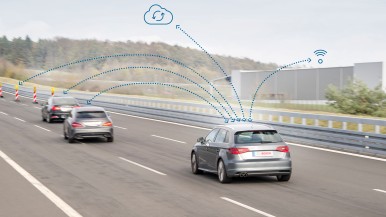
Hildesheim, Germany / Mountain View, USA – What is true for people is also true for cars: communication works best with a common language and a good connection. To enable connected and automated driving in the future, vehicles must be able to easily communicate with one another as well as with their surroundings. There is currently no globally standardized technical basis for this exchange of data, which is known as vehicle-to-everything communication, or V2X. Instead, vehicles will in future communicate using the wide variety of different standards implemented by countries and vehicle manufacturers around the world. “Bosch is taking a multi-standard approach when it comes to V2X. We have developed a universal connectivity unit capable of communicating using all of the transmission standards implemented in connected automobiles,” says Dr. Dirk Hoheisel, Member of the Board of Management at Robert Bosch GmbH. Bosch is taking a multi-standard approach when it comes to V2X. We have developed a universal connectivity unit capable of communicating using all of the transmission standards implemented in connected automobiles....Dr. Dirk Hoheisel, Member of the Board of Management at Robert Bosch GmbH The neat thing here is that Bosch has combined connectivity units and telematics units, which – individually – are only capable of a single transmission technology, to create an all-in-one central control unit for V2X data communication. Cars can then use the Wi-Fi networks available in cities, while elsewhere they can communicate using, for instance, cellular networks. The complex task of managing these diverse communication options is handled by a software solution from the Silicon Valley-based start-up Veniam. It continuously searches for the best transmission technology that suits the particular requirements and switches automatically between the available alternatives. The software therefore maintains continuous and seamless vehicle connectivity, ensuring cars can, for example, reliably alert one another to accidents and passengers can enjoy uninterrupted music streaming. Bosch develops a connectivity unit for all standards It is expected that the number of connected vehicles on the roads in Europe, the United States, and China alone will exceed 470 million by 2025 (source: PwC). Initially, most vehicles will connect directly to the cloud; but, thanks to V2X, increasing numbers of vehicles will in future also be able to communicate directly with one another as well as with traffic signals, road construction sites, pedestrian crossings, and buildings, etc. They will then be able to alert one another to potential hazards like the approaching tail end of a traffic jam, accidents, and icy conditions. Vehicles will also be able to take advantage of the green wave, because they will know when the next set of traffic lights is going to turn green. The vehicles can then adjust their speed accordingly. This ensures the traffic, particularly in cities, flows more smoothly. There is, however, no globally harmonized standard for V2X communication currently on the horizon. While China primarily uses Cellular-V2X technology (C-V2X), which is based on mobile communications, Europe and the United States are planning to additionally introduce transmission standards based on Wi-Fi (DSRC and ITS- G5) alongside C-V2X. A mishmash of standards is therefore emerging internationally, which may lead to vehicle communication issues. However, that will not be the case in the future when cars are equipped with the universal connectivity unit from Bosch. Equipped vehicles will be able to communicate with one another as well as with their surroundings regardless of the vehicle make or the country in which they are used. This will make V2X communication even more secure and reliable. “Thanks to Bosch’s all-in-one principle for connected vehicles, as many drivers as possible around the world can benefit from the added safety, comfort, and convenience provided by V2X,” says Dirk Hoheisel. The unique combination of Veniam’s smart networking software and Bosch’s connectivity unit boosts the vehicle’s data-handling capacities dramatically, paving the way for innovative cloud services and much safer future mobility....João Barros, founder and CEO of Veniam Software ensures the best connection The software from Veniam is the connection enhancer for the connectivity unit from Bosch. As well as keeping an eye on which V2X communication technologies are currently available for use, the software also closely monitors the costs and data transmission latency of each alternative connection option, since not every technology is suitable in every situation. For example, when it comes to alerting a driver to another vehicle that is about to pull out in front of them from a side street, every millisecond counts. This kind of critical information must be communicated in real time using highly reliable technology that is always ready for use – even if that means the resulting data transmission costs are greater. Software updates from the cloud or a navigation system map update, on the other hand, can be put on hold in that sort of situation until a low-cost stationary Wi-Fi network becomes available. Large volumes of data can be transmitted via Wi-Fi in a short space of time, though a downside is that public or home Wi-Fi hotspots are not always available. Veniam’s software is familiar with the pros and cons of each of the communication types and always establishes the optimal connection. “The unique combination of Veniam’s smart networking software and Bosch’s connectivity unit boosts the vehicle’s data-handling capacities dramatically, paving the way for innovative cloud services and much safer future mobility,” says João Barros, founder and CEO of Veniam. On the occasion of the world’s biggest consumer electronics trade show, CES 2019 in Las Vegas, Bosch and Veniam have been selected as CES 2019 Innovation Award Honorees in the “Vehicle Intelligence and Self-Driving Technology” category for their jointly developed solution. Bosch tests V2X in Europe, the United States, and China In the biggest European field trial to date (simTD, Safe Intelligent Mobility – Test Field Germany), V2X communication has proven its suitability for daily use under everyday conditions and in lab simulations. Bosch has played a significant role in this joint project. Since February 2017, Bosch and Vodafone have been performing trials of the V2X communication with the first 5G test modules − the first companies in Europe to do so. The A9 freeway in Bavaria north of Munich is the location for the field tests, which focus on real-time warning systems during lane changing maneuvers on the freeway or in case the vehicle in front brakes suddenly. V2X will also be able to make driver assistance functions even more comfortable, like adaptive cruise control (ACC). In the summer of 2018, Bosch tested secure, direct communication between vehicles and roadside infrastructure, cameras, and sensors in Detroit. The test showcased Wi-Fi- based DSRC technology, where equipped vehicles were provided with in-vehicle notifications about the status of traffic signals ahead and pedestrians crossing the street – functions designed to enhance safety in city traffic. ESCRYPT, a subsidiary in the Bosch Group, provided the cybersecurity technologies behind these V2X demonstrations. In China, Bosch is testing ad hoc communication using Wi-Fi as well as cellular technology. The tests are focusing on alerts that help the driver when overtaking or negotiating complex intersections.

Bosch strengthens its operations in Africa with acquisition in industrial technology

01.03.2018

Press release

Business/economy

Bosch strengthens its operations in Africa with acquisition in industrial technology

Stuttgart, Germany, and Johannesburg, South Africa – The Bosch Group is strengthening its business in Africa and further expanding its industrial technology portfolio on the continent. Effective February 28, 2018, Bosch Rexroth AG has acquired all shares in Hytec Holdings (Pty.) Ltd., Johannesburg, South Africa. Hytec specializes in the marketing of hydraulic and automation solutions, and is the leading company in the field in sub-Saharan Africa. In 2017, the company and its roughly 770 associates generated sales of some 86 million euros. Hytec has about 40 branch operations, not only in South Africa, but also in Mozambique, Namibia, Zambia, Botswana, Ghana, and Kenya. In a first phase, Bosch Rexroth acquired a 50 percent stake in its marketing partner Hytec in 2014.“For Bosch, Africa has a lot of potential as a strategic market of the future,” says Uwe Raschke, the Bosch management board member responsible for Europe, the Middle East, and Africa. “In the years ahead, we want to significantly increase our sales in Africa,” Raschke adds. Considerable opportunities are offered by the heavy investments being made in infrastructure projects in areas such as construction and power generation. “Together with Hytec, we can take better advantage of the market opportunities in the African growth industries,” says Rolf Najork, the managing director of Bosch Rexroth. The region is characterized by a lot of end-user business, such as servicing and spare parts for users of machinery. With its new subsidiary, Bosch Rexroth hopes to further expand this business. Hytec has a well-established marketing network in sub-Saharan Africa, and its associates are well familiarized with what local customers want. “We are combining this high level of regional marketing knowledge with Bosch Rexroth’s product expertise and technological prowess. This will be a significant boost to our business on the continent,” Najork says. Hytec will continue to market the products of other manufacturers. Its portfolio includes roughly 30 brands. It will also continue to do business as Hytec, since this is a strong, well-known brand in southern Africa. For Bosch, Africa has a lot of potential as a strategic market of the future....Bosch board member Uwe Raschke Rapid population growth and urbanization are leading to increased demand Africa’s population is growing at a rapid pace, and according to the United Nations is expected to double to 2.5 billion people by 2050. The continent also has the fastest rate of urbanization in the world. Within the next ten years, it is expected that 187 million Africans – equivalent to half the U.S. population – will live in cities. This means growing demand for drive and control solutions for industrial machinery, for mobile machinery such as construction vehicles, and for major construction projects. Even today, Bosch Rexroth and its marketing partner Hytec are successfully collaborating to serve the African market in areas such as power engineering. In one major project, for example, the two companies renewed the entire hydraulic equipment of the Roseires Dam in Sudan. At 1,800 megawatts, the output of this dam on the Blue Nile is comparable with that of a nuclear power station. Bosch has been working with its marketing partner Hytec for more than 50 years. “The complete acquisition of Hytec gives us a welcome opportunity to extend this successful collaboration and to grow further in Africa,” says Tillmann Olsen, general manager of Bosch Rexroth in South Africa. In May 2018, Bosch Rexroth and its new subsidiary Hytec will move into new joint premises in Johannesburg. The premises will include new marketing and administration offices, as well as an assembly line, a service center, and a training center for courses in hydraulics and automation technology. Bosch in Africa In recent years, the Bosch Group has systematically expanded its presence on the African continent. Today, it is represented in ten African countries. The company’s focus is on affordable solutions and services for local requirements. These include training programs for tradespeople in Kenya, for example, or auto mechanics in Nigeria. According to preliminary figures, the company generated sales of some 460 million euros in Africa in 2017. Including the Hytec workforce, Bosch currently employs more than 1,500 associates on the continent. Bosch has been present in Africa since 1906. All four Bosch business sectors – Mobility Solutions, Industrial Technology, Consumer Goods, and Energy and Building Technology – are active there. In South Africa, the company produces automotive components at its production site in Brits. Bosch also actively promotes talented young people in sub-Saharan Africa. In 2008, it was one of the initiators of “Afrika kommt!”, an initiative of German industry for junior managers from sub-Saharan Africa.