Search & find:
Media, press releases, events for your editorial coverage

Commercial vehicle innovation enabler: Bosch brings advanced solutions to the ne ...

17.04.2019

Press release

Connected mobility

Commercial vehicle innovation enabler: Bosch brings advanced solutions to the ne ...

Scottsdale, Arizona – Nikola Motor Company showcased its hydrogen-electric powered semi-truck, the Nikola Two, live in action for the first time to the general public at its Nikola World event. Bosch technology and expertise helped Nikola to realize the fully functional Nikola Two hydrogen-electric truck with industry-ready heavy-duty truck components and systems. The technology and system approach is adaptable for use in Nikola’s full line of vehicles, including the Nikola One Sleeper Cab and the Nikola Tre, a hydrogen-electric truck for European markets. Bosch has been our innovation partner to help make our vision a reality....Trevor Milton, Nikola founder and CEO The Nikola trucks feature innovations in automation, connectivity and electrification enabled with Bosch’s assistance. The supplier of technology and services offers solutions for commercial vehicles to improve efficiency and safety in logistics. To enable the distinctive Nikola approach, engineering teams from Bosch locations in the United States and Germany contributed more than 220,000 hours into the development of the Nikola trucks. “This has been a two-and-a-half year cooperation targeted at implementing advanced technology into a totally new and unique approach to trucking with the highest levels of engineering excellence,” said Jason Roycht, vice president and regional business unit leader, Commercial Vehicles & Off-Road for Bosch in North America. “We’ve learned from each other and together pushed ourselves to achieve what seemed to everyone else to be impossible. The Nikola Two is not just a simple evolution of today’s heavy duty truck. It’s a revolution in both sophisticated control and design.” “Bosch has been our innovation partner to help make our vision a reality,” said Trevor Milton, founder and CEO of Nikola Motor Company. “We look for partners who provide us expertise and world-class solutions, but also ones that are willing to dream alongside us.” This has been a two-and-a-half year cooperation targeted at implementing advanced technology into a totally new and unique approach to trucking with the highest levels of engineering excellence....Jason Roycht, vice president and regional business unit leader, Commercial Vehicles & Off-Road for Bosch in North America The brain of the future – engineered by Nikola and Bosch The Nikola truck is more than just a fuel cell vehicle; it’s a rolling super computer. Bosch systems, software and engineering expertise have helped Nikola to build the brains of its Nikola Two super truck. One of the key elements of Nikola’s advanced system is the Bosch Vehicle Control Unit (VCU) , which provides higher computing power for advanced functions while reducing the number of standalone units. The VCU enables future innovations by providing a scalable platform for the highly complex electric/electronic (E/E) architecture needed to support the advanced features of the Nikola truck. The Nikola family of trucks will be connected with an advanced and secure operating system that provides real-time, over-the-air updates and monitoring. The commercial vehicle powertrain reimagined The essence of the Nikola truck lineup is a new commercial vehicle powertrain achieved thanks to a development partnership between Nikola and Bosch. The two organizations have reimagined the powertrain – and the vehicle chassis integrated together with it – from the ground up. The fuel-cell system designed to deliver benchmark vehicle range was custom-designed together by Nikola and Bosch. The two organizations also worked in tandem to develop the first true dual-motor commercial-vehicle eAxle for a long-haul truck. The eAxle features Bosch rotors and stators, and Bosch has also contributed functional safety efforts throughout the truck. Mirrorless and keyless - Bosch technology pervades the Nikola trucks Bosch technology is also prevalent in other areas of the Nikola trucks. Nikola’s vehicles will be missing one standard feature of previous class-8 trucks: side mirrors. In the place of the conventional main and wide-angle mirrors is a camera system, known as Mirror Cam System , which offers drivers a digital side and rear view from the truck cab. Two cameras, fitted left and right in place of traditional mirrors, feed real-time images to high-resolution displays mounted inside the cab. The system, developed by Bosch and Mekra Lang, adjusts the monitor display to match the driving situation digitally. It captures both rear-view fields of vision of a CV mirror with just one camera lens on each side of the vehicle cab. In addition to increasing safety, compact digital cameras instead of mirrors offer aerodynamic advantages as the cameras are considerably smaller than mirrors and therefore reduce drag. Fleet operators will be able to digitally manage vehicle keys for the Nikola trucks in their fleet thanks to the Perfectly Keyless system from Bosch. Freight and commercial vehicle rental companies can use a smartphone app to give their drivers access to specific fleet vehicles and to flexibly manage who has access and when. Sensors on the Nikola vehicles will connect with an app on a driver’s smartphone so that when the driver approaches the vehicle, Perfectly Keyless recognizes the smartphone, identifies the unique security key assigned to the driver’s phone, and unlocks the door. As soon as the driver moves away from the truck again, the vehicle is automatically securely locked. Nikola’s trucks are equipped for driver assistance and future automation thanks in part to the Bosch Servotwi n electrohydraulic steering system. The steering system will enable driver assistance systems that actively support the driver to enhance driving comfort and improve safety. On the Nikola vehicles, the Servotwin will help to enable features such as lane-keeping assistance, side-wind compensation and traffic jam assist. The system also provides a key building block for the rollout of automated features in the future.

CES 2019: Bosch extends its position as a leading IoT company

07.01.2019

Press release

Smart Home

CES 2019: Bosch extends its position as a leading IoT company

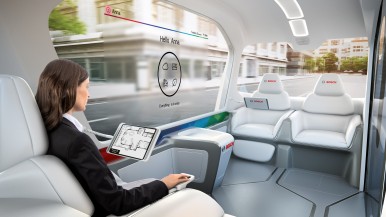
Las Vegas, NV – More and more, the internet of things (IoT) is changing our world. At CES 2019 in Las Vegas, Bosch is showing what it is already capable of today. From a concept for a shuttle vehicle that makes a new kind of mobility tangible, to fridges with connectivity that give advice on food storage, to smart lawn mowers that learn by doing – the spectrum of solutions Bosch is presenting at the world’s largest consumer electronics show is huge. “Bosch recognized the huge opportunities of the IoT early on. We have been actively shaping the connected world for nearly ten years now,” says the Bosch board of management member Dr. Markus Heyn. “Today, we are a leading IoT company. Step by step, we have extended our software and IT expertise.” Using its own IoT cloud, the company has already carried out more than 270 projects in field such as mobility, smart homes, smart cities, and agriculture. The number of sensors and devices connected over the Bosch IoT Suite has risen nearly 40 percent since last year, and now stands at 8.5 million.One of the keys to further growth and new business opportunities on the internet of things is artificial intelligence (AI). This is also a field in which Bosch is playing a decisive part in driving developments. “We will best be able to unlock the potential of the IoT if we combine it with AI, and take our IoT and AI activities forward in parallel,” Heyn says. In his view, the relationship between the two fields is complementary: “The IoT needs intelligence. The use of connected things to gather data can be a decisive boost for the development of AI. It is only through AI that connected things become intelligent and learn to draw their own conclusions. Above all, we aim to achieve concrete improvements in people’s real, everyday lives – things such as more time, more security, more efficiency, and more convenience.” Here, Heyn cites the example of video-based fire detection: by using intelligent image analysis, security cameras are able to identify fires within a few seconds, even before the system’s sensors detect heat and smoke. In this way, fires can be detected considerably earlier than with conventional fire or smoke alarm systems. This saves valuable minutes in which lives can be saved.A second key to success on the path to the IoT age is partnerships. Here, Bosch is opting for a mix of traditional and new players. The alliance recently agreed with the Canadian platform provider Mojio has already resulted in the first integrated IoT platform for connected vehicles: in the event of an accident, a special Bosch algorithm can identify where and when the accident happened, and how severe it is. Via the Mojio cloud, the data are transmitted without any delay to the Bosch emergency service center, which automatically sends an emergency call to local rescue services. At the same time, a message is sent to a predetermined list of recipients, either as a text message or via the Mojio app. “Together with Mojio, we are connecting vehicles directly with the cloud. This means rescue services can get to the scene of an accident even faster than before,” says Mike Mansuetti, the president of Bosch North America. From the middle of next year, the IoT emergency solution will be available for nearly a million drivers in North America and Europe. IoT on the roads: Bosch presents connected mobility of the future With the concept shuttle vehicle it developed in-house, Bosch is celebrating a world first at CES. In this vehicle, the company is its presenting solutions for the automation, connectivity, and electrification of vehicles, and is giving visitors the chance to experience at first hand a new kind of mobility: driverless shuttles, which will soon be a feature on the streets of the world’s cities. “This will pay into our vision of mobility that is as emissions-free, accident-free, and stress-free as possible,” Heyn says. For shuttle-based mobility such as this, Bosch will be supplying not only components and systems, but also a complete range of mobility services, such as reservation, sharing, and connectivity platforms, as well as parking and recharging services. Bosch believes that such connected services are essential for the shuttle-based mobility of the future. The forecast market volume for these services is also high: while it was 47 billion euros in 2017, it is estimated that it will be as much as 140 billion euros by 2022 (source: PwC). Bosch also wants to have a share in this, and aims for significant double-digit growth with the solutions it offers. For Heyn, there is no doubt: “In the future, every vehicle on the road will make use of Bosch digital services. We will consolidate them into a smart, seamlessly connected ecosystem.”One of the final obstacles for putting shuttle-based mobility into practice is the automation of vehicles in complex urban environments. Here, Bosch believes partnerships are the answer: In the second half of this year, San José in California’s Silicon Valley is set to become the pilot city for testing a fully automated, driverless ridesharing service provided by Bosch and Daimler. The three parties have already signed a letter of intent to this effect. With their development alliance, Bosch and Daimler want to improve urban traffic flows, enhance road safety, and provide an important building block for the traffic of the future. Their aim is to develop a driving system for fully automated driverless driving (SAE level 4/5) that is ready for production by the beginning of the next decade. IoT in the home: connected appliances make home owners’ lives noticeably easier It’s not just on the roads that connected products and services that make user’s lives easier are in demand. “We’re working on the idea of a connected home, and on appliances that think autonomously and understand what users want,” Heyn says. At CES, for example, the company is presenting a new function for web-enabled fridges that can recognize types of food and provide recommendations on storage. The interior camera automatically recognizes some 60 kinds of fruits and vegetables and suggests the ideal place to store them by means of an app. As a result, food is stored in the best possible way, stays fresh for longer, and doesn’t have to be thrown away so often. Another new development is the PAI projector, which can project a virtual user interface onto a kitchen counter top. An integrated 3D sensor captures any hand movements, allowing touch-screen operation of the interface. In this way, users can conveniently call up recipes online and make phone calls over the internet while they are cooking and baking. Designed especially for the kitchen environment, PAI does not have to be used with as much care as a smartphone or tablet. Even with sticky fingers, the projector can still be controlled perfectly. PAI is set to debut in China in February 2019, to be followed by market launch in the United States. Bosch is also presenting the Indego S+, its new robot lawn mower with internet connectivity, at CES. It is one of the first robot lawn mowers in the market to offer voice control by Amazon Alexa. It is also the only robot lawn mower that can use weather forecasts on the web to automatically decide when best to mow the lawn again. Bosch is using artificial intelligence to improve the way its robot lawn mower recognizes obstacles on the lawn by evaluating data such as motor flow, acceleration, motor speed, and direction. “We are using AI to make lawn care even easier and more convenient. Our vision is an Indego that adapts to its garden in order to mow the lawn perfectly every time,” Heyn says. IoT #LikeABosch: Bosch launches digital IoT campaign Bosch is also using CES 2019 to premiere its new IoT image campaign. The main plank of the campaign is a hip-hop video clip featuring a protagonist who is a savvy IoT user. Bosch is entering new territory with its “Like a Bosch” campaign; the decidedly different approach and tone marks a new departure for the company, which was founded in 1886.This PR move capitalizes on a rash of “like a boss” videos and memes that have gone viral on the internet, attracting tens of millions of clicks. These videos feature everyday people who stage bizarre stunts or find their way out of predicaments with technical finesse. The IoT image campaign changes a few letters in order to put a fresh spin on this internet phenomenon. The protagonist in the Bosch video is a young man who is always on top of things, thanks to connected solutions from Bosch. Smartphone in hand, he operates his car, lawn mower, or coffee machine in a cool, smart, and confident way – he’s in charge of things “like a Bosch.”

Bosch and Veniam ensure seamless vehicle-to- everything connectivity

05.12.2018

Press release

Connected mobility

Bosch and Veniam ensure seamless vehicle-to- everything connectivity

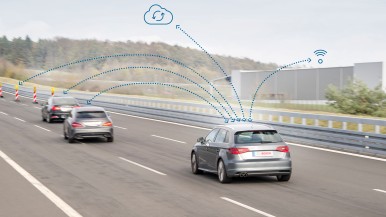
Hildesheim, Germany / Mountain View, USA – What is true for people is also true for cars: communication works best with a common language and a good connection. To enable connected and automated driving in the future, vehicles must be able to easily communicate with one another as well as with their surroundings. There is currently no globally standardized technical basis for this exchange of data, which is known as vehicle-to-everything communication, or V2X. Instead, vehicles will in future communicate using the wide variety of different standards implemented by countries and vehicle manufacturers around the world. “Bosch is taking a multi-standard approach when it comes to V2X. We have developed a universal connectivity unit capable of communicating using all of the transmission standards implemented in connected automobiles,” says Dr. Dirk Hoheisel, Member of the Board of Management at Robert Bosch GmbH. Bosch is taking a multi-standard approach when it comes to V2X. We have developed a universal connectivity unit capable of communicating using all of the transmission standards implemented in connected automobiles....Dr. Dirk Hoheisel, Member of the Board of Management at Robert Bosch GmbH The neat thing here is that Bosch has combined connectivity units and telematics units, which – individually – are only capable of a single transmission technology, to create an all-in-one central control unit for V2X data communication. Cars can then use the Wi-Fi networks available in cities, while elsewhere they can communicate using, for instance, cellular networks. The complex task of managing these diverse communication options is handled by a software solution from the Silicon Valley-based start-up Veniam. It continuously searches for the best transmission technology that suits the particular requirements and switches automatically between the available alternatives. The software therefore maintains continuous and seamless vehicle connectivity, ensuring cars can, for example, reliably alert one another to accidents and passengers can enjoy uninterrupted music streaming. Bosch develops a connectivity unit for all standards It is expected that the number of connected vehicles on the roads in Europe, the United States, and China alone will exceed 470 million by 2025 (source: PwC). Initially, most vehicles will connect directly to the cloud; but, thanks to V2X, increasing numbers of vehicles will in future also be able to communicate directly with one another as well as with traffic signals, road construction sites, pedestrian crossings, and buildings, etc. They will then be able to alert one another to potential hazards like the approaching tail end of a traffic jam, accidents, and icy conditions. Vehicles will also be able to take advantage of the green wave, because they will know when the next set of traffic lights is going to turn green. The vehicles can then adjust their speed accordingly. This ensures the traffic, particularly in cities, flows more smoothly. There is, however, no globally harmonized standard for V2X communication currently on the horizon. While China primarily uses Cellular-V2X technology (C-V2X), which is based on mobile communications, Europe and the United States are planning to additionally introduce transmission standards based on Wi-Fi (DSRC and ITS- G5) alongside C-V2X. A mishmash of standards is therefore emerging internationally, which may lead to vehicle communication issues. However, that will not be the case in the future when cars are equipped with the universal connectivity unit from Bosch. Equipped vehicles will be able to communicate with one another as well as with their surroundings regardless of the vehicle make or the country in which they are used. This will make V2X communication even more secure and reliable. “Thanks to Bosch’s all-in-one principle for connected vehicles, as many drivers as possible around the world can benefit from the added safety, comfort, and convenience provided by V2X,” says Dirk Hoheisel. The unique combination of Veniam’s smart networking software and Bosch’s connectivity unit boosts the vehicle’s data-handling capacities dramatically, paving the way for innovative cloud services and much safer future mobility....João Barros, founder and CEO of Veniam Software ensures the best connection The software from Veniam is the connection enhancer for the connectivity unit from Bosch. As well as keeping an eye on which V2X communication technologies are currently available for use, the software also closely monitors the costs and data transmission latency of each alternative connection option, since not every technology is suitable in every situation. For example, when it comes to alerting a driver to another vehicle that is about to pull out in front of them from a side street, every millisecond counts. This kind of critical information must be communicated in real time using highly reliable technology that is always ready for use – even if that means the resulting data transmission costs are greater. Software updates from the cloud or a navigation system map update, on the other hand, can be put on hold in that sort of situation until a low-cost stationary Wi-Fi network becomes available. Large volumes of data can be transmitted via Wi-Fi in a short space of time, though a downside is that public or home Wi-Fi hotspots are not always available. Veniam’s software is familiar with the pros and cons of each of the communication types and always establishes the optimal connection. “The unique combination of Veniam’s smart networking software and Bosch’s connectivity unit boosts the vehicle’s data-handling capacities dramatically, paving the way for innovative cloud services and much safer future mobility,” says João Barros, founder and CEO of Veniam. On the occasion of the world’s biggest consumer electronics trade show, CES 2019 in Las Vegas, Bosch and Veniam have been selected as CES 2019 Innovation Award Honorees in the “Vehicle Intelligence and Self-Driving Technology” category for their jointly developed solution. Bosch tests V2X in Europe, the United States, and China In the biggest European field trial to date (simTD, Safe Intelligent Mobility – Test Field Germany), V2X communication has proven its suitability for daily use under everyday conditions and in lab simulations. Bosch has played a significant role in this joint project. Since February 2017, Bosch and Vodafone have been performing trials of the V2X communication with the first 5G test modules − the first companies in Europe to do so. The A9 freeway in Bavaria north of Munich is the location for the field tests, which focus on real-time warning systems during lane changing maneuvers on the freeway or in case the vehicle in front brakes suddenly. V2X will also be able to make driver assistance functions even more comfortable, like adaptive cruise control (ACC). In the summer of 2018, Bosch tested secure, direct communication between vehicles and roadside infrastructure, cameras, and sensors in Detroit. The test showcased Wi-Fi- based DSRC technology, where equipped vehicles were provided with in-vehicle notifications about the status of traffic signals ahead and pedestrians crossing the street – functions designed to enhance safety in city traffic. ESCRYPT, a subsidiary in the Bosch Group, provided the cybersecurity technologies behind these V2X demonstrations. In China, Bosch is testing ad hoc communication using Wi-Fi as well as cellular technology. The tests are focusing on alerts that help the driver when overtaking or negotiating complex intersections.

Versatile semiconductors: Bosch launches new automotive system-ICs at electronic ...

05.11.2018

Press release

Connected mobility

Versatile semiconductors: Bosch launches new automotive system-ICs at electronic ...

Munich and Reutlingen, Germany – System ICs are application-specific integrated circuits (ASICs) designed to meet special requirements in vehicle systems. They are integrated on a single silicon chip measuring only a few square millimeters, and house complex circuits with up to several million individual electronic functions. At electronica 2018, the world’s leading trade show for electronics, Bosch introduces four new system-ICs. A new chip for electric vehicles will shut off the power in the event of an accident, ensuring safety for driver and passengers and enable rescuers to work without being put in danger.Semiconductors make electric cars safer in an accident Pure electric or hybrid vehicles are equipped with special batteries that provide power to the electric motor at high voltages of 400 to 800 volts. For safety reasons, these high-voltage batteries, power electronics and their electrical wiring are designed to be highly robust. Nevertheless, the question of how secure a high-voltage battery is in the event of an accident is of vital concern to both the vehicle's occupants as well as any rescue workers. To prevent these persons from coming into contact with high voltage, while at the same time eliminating the risk of a vehicle fire, it must be possible to completely isolate the battery from the vehicle’s electrical system. During an accident, so-called "pyro fuses" blow out sections of the electrical wiring to the high-voltage battery by means of a small explosive charge, so that the circuit is interrupted quickly and effectively. Here, Bosch semiconductors play a crucial role: The integrated circuit CG912 can, as a part of the battery management, fire up to four pyro fuses in the battery wiring in the event of an accident,. This mitigates the risk of electrical shock when touching the vehicle’s chassis. In addition, this special IC can also provide power to the battery management. Bosch’s CG912 was originally developed for deploying airbags and has been proven in the field a million times over. New system ICs at electronica 2018 System ICs are truly versatile. They provide stable supply voltages, read sensor data, process information and drive actuators – in real time. The new oxygen sensor evaluation IC CJ138 offers, in comparison to its predecessors, extended options for adapting an engine control unit to a wide range of oxygen sensors, as well as accurate sensor cable diagnostic for short circuit or interruption. The highly integrated transmission IC CG270 precisely controls up to ten hydraulic valves in automatic transmissions and allows the design of more compact control units for modern multi-stage transmissions. CG135 is a transmission IC that monitors the supply voltages in a transmission control unit and prevents the transmission from being damaged in the event of a fault.

Semiconductors – market of the future: Bosch is growing faster than the market

05.11.2018

Press release

Connected mobility

Semiconductors – market of the future: Bosch is growing faster than the market

Reutlingen, Germany – Every car nowadays makes use of semiconductors, and that has been true for quite a while. A key technology in today’s modern world, these chips are core components of electrical systems – including those in vehicles. They regulate the powertrain and vehicle handling, tell the navigational system which way the vehicle is going, and signal the airbag to deploy when needed. Having been making semiconductors for more than 45 years, Bosch today is one of the world’s leading manufacturers of chips for mobility applications. “Semiconductors may have been around for a long time, but we have yet to realize their full potential. These components are key to modern-day mobility, and it is impossible to imagine cars today without them,” says Jens Fabrowsky, member of the executive management of Bosch’s Automotive Electronics division. In 2016, every vehicle newly registered worldwide had an average of more than nine Bosch chips on board. “When it comes to semiconductors for cars, we have a singular advantage: Bosch is the only company equally at home in both the automotive and semiconductor industries,” Fabrowsky says. In 2018, every new vehicle featured semiconductors worth 370 dollars (source: ZVEI), and thanks to increasing electrification and automation, demand for chips in vehicles is expected to rise further over the next few years. Semiconductors may have been around for a long time, but we have yet to realize their full potential. These components are key to modern-day mobility, and it is impossible to imagine cars today without them....Jens Fabrowsky, member of the executive management of Bosch’s Automotive Electronics division The ultimate discipline: semiconductors for the auto industry The global semiconductor market is worth billions: the market research company Gartner expects global semiconductor sales to reach 451 billion dollars in 2018. By 2019 alone, the market will have grown at an annual growth rate of more than 5 percent (source: PwC). “The Bosch semiconductor business is growing faster than the market,” Fabrowsky says. In the semiconductor market, the ultimate discipline is making chips for vehicles. Bosch has been making vehicles smart since the 1970s, when it started equipping them with its application-specific integrated circuits (ASICs). In a car, chips are exposed to strong vibrations and extreme temperatures that range from far below zero to far above 100 degrees Celsius. This requires higher standards for the toughness of these special components. Developing semiconductors that can withstand these stresses for a vehicle’s entire lifetime is an intensive process. Here is where Bosch leverages its special dual role: while other companies can process the information collected from semiconductors, Bosch can also apply its deep understanding of the physical principles at work in the chips, and of how to gather the data and ultimately integrate it into the vehicle systems. “Our comprehensive expertise in semiconductors helps us to both develop new automotive functions and steadily improve the chips themselves,” Fabrowsky says. Bosch holds over 1,500 patents and patent applications for engineering and manufacturing its semiconductors. Progress in microelectronics is what made development of assistance systems and automated driving possible in the first place....Jens Fabrowsky, member of the executive management of Bosch’s Automotive Electronics division Electromobility and driver assistance systems boost demand Bosch’s current semiconductor portfolio focuses on microelectromechanical systems (MEMS), ASICs for vehicle ECUs, and power semiconductors. Without the latter, there would be no hybrid or electric vehicles, as they regulate the electric motor and make sure that the battery is being used as efficiently as possible. “Power electronics for hybrid and electric vehicles are a growth driver for Bosch,” Fabrowsky says. Besides electrification, continued strong growth in demand for driver assistance systems is ensuring that more semiconductors with more and more functions are finding their way into cars. Chips with built-in “intelligence,” known as ASICs, are tailored to a particular application; for instance, signaling to airbags in a vehicle when they should deploy. These chips control handling to ensure a consistently safe journey. They also boost the measured signal from radar sensors, so that the proximity warning always functions reliably. “Progress in microelectronics is what made development of assistance systems and automated driving possible in the first place,” Fabrowsky says. Bosch microelectromechanical systems, or MEMS for short, are the sensory organs of modern vehicles. They supply a vehicle’s ECUs with important information regarding its handling, such as if the vehicle is braking or accelerating, or if it is skidding on a smooth road surface. The ESP electronic stability program uses this information to keeps cars, trucks, and even motorcycles safely on track and in their lanes. MEMS sensors tell runners how many calories they are burning As a key technology for the internet of things (IoT), Bosch semiconductors have applications that extend far beyond the world of vehicles. The company’s sensors can be found in more than half the world’s smartphones, and are indispensable for fitness trackers, drones, game consoles, and smart home applications. When it comes to MEMS sensors, Bosch is both a pioneer and the world’s leading manufacturer. More than 20 years ago, the supplier of technology and services itself developed the microfabrication technique, known worldwide as the “Bosch process,” used to make these semiconductors. One billion euros for one of Europe’s most advanced wafer fabs Bosch is underpinning its growth strategy for semiconductors with the single largest investment in the company’s history: it is putting some one billion euros into a new wafer fab in Dresden, which will manufacture 300 mm wafers. Following a rollout phase, pilot manufacturing operations are expected to start at the end of 2021. Compared with conventional 150 and 200 mm wafers, 300 mm wafer technology offers greater economies of scale. Up to 700 associates will be involved in the highly automated chip manufacturing process, working to plan, manage, and monitor production. After Reutlingen, the Dresden plant will be Bosch’s second wafer fab in Germany. With it, the company aims to expand its manufacturing capacity, and thus to further boost its competitive edge in global markets.

Manufacturing hub Mexico: Bosch plans smart plant for electronic components

17.04.2018

Press release

Business/economy

Manufacturing hub Mexico: Bosch plans smart plant for electronic components

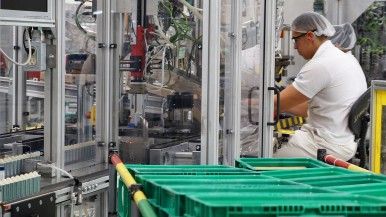
Mexico City, Mexico, and Stuttgart, Germany – Bosch, a leading global provider of technology and services, is investing 100 million euros (120 million U.S. dollars) in a new plant in Celaya. The company plans to build a new smart factory for electronic components in the central Mexican city by 2020. The investment underlines the importance of this year's HANNOVER MESSE partner country for the company: “Bosch is committed to Mexico. The country is and will remain an important market and a hub for our global manufacturing and development network,” said Stefan Hartung , member of the Bosch board of management, ahead of the international industrial trade fair. The goal is to create more than 1,200 additional jobs at the new location in Celaya in the coming years. In total, the Bosch Group employs around 16,000 associates and is active with all four of its business divisions in Mexico. In 2016, the company generated sales of 1.1 billion euros in the country Bosch is committed to Mexico. The country is and will remain an important market and a hub for our global manufacturing and development network....Stefan Hartung, member of the Bosch board of management Industry 4.0 as a competitive advantage in Mexico The Latin American emerging market has become highly industrialized in recent years, driven mainly by the automotive industry. In 2017 alone, nearly 3.8 million vehicles were manufactured in Mexico. In order to increase efficiency and competitiveness as a leading global manufacturing location, Mexico is increasingly focusing on the use of Industry 4.0. Bosch is playing a part in this. “We are planning to make the new manufacturing facility in Celaya a smart factory with state-of-the-art, intelligent production lines,” Hartung said. For example, the plant will employ a manufacturing execution system (MES), which automatically collects data and shares production information in real time. This makes possible both preventive maintenance of machinery and higher product quality. The system also digitally connects the plant to the Bosch Group’s global manufacturing network. “By mid-2019, manufacturing at nearly all Bosch plants in Mexico will be equipped with our intelligent control system,” said René Schlegel, president of the Bosch Group in Mexico. In total, Bosch currently operates ten manufacturing locations around the country and has already introduced the use of smart technologies, for example at its Mobility Solutions sites in Toluca and Juárez. As a leading provider of Industry 4.0 solutions, the Bosch Group also sees local business opportunities in Mexico. Increasing demand for connected mobility The new approximately 21,000-square-meter facility in Celaya, which is located in the state of Guanajuato, will manufacture electronic control units (ECUs) for the American market. These are key components for connected mobility. Alongside Juárez, Celaya will be home to the Automotive Electronics division’s second plant in Mexico. “With the new location, we are responding to the increasing demand for electronic components in the American market,” René Schlegel said. With a total surface area of 170,000 square meters, the site will have capacity for further expansion in the future. In addition, the plan is to build a logistics center for Mexico on the adjacent property, which will also serve as a warehouse for the new plant. Bosch strengthens presence in North America With the investment in a new location, Bosch is continuing its long-term expansion in North America. Over the past five years, a total of around 2.6 billion euros has been spent on strengthening the company’s local presence. In Mexico, where Bosch has been active since 1955, the company opened a new manufacturing facility for driving safety systems in Aguascalientes in 2016. At the end of 2017, a plant for steering systems in Querétaro went into operation. The country is also gaining in significance as a development location: since 2014, Bosch has been operating a center for software development and engineering services for the American market in Guadalajara. A large proportion of the investment sum also went to the U.S. There, the Mobility Solutions plants in Charleston and Anderson are currently being expanded, and at the beginning of this month, Bosch opened a new research center in Sunnyvale in California’s Silicon Valley. Bosch at HANNOVER MESSE: the factory of the future – today! What will the factory of the future look like? How can people, robots, and machines work together? What role do 5G, data, software, and services play? Where can artificial intelligence (AI) be put to use? At Hannover Messe 2018 (hall 17, booth A40), Bosch is bringing the factory of the future to life – today. Entitled “Now, next, beyond: factory of the future,” the technology company’s 1,300-square-meter showcase demonstrates what it offers today (now), and what solutions it is developing for tomorrow (next) and the future (beyond). The main attractions are 1.5-meter-tall mobile robotic figures that give a Pixar-like face to Bosch’s connected-factory assistants. Another highlight is a football table that improves its soccer abilities with every game and every new opponent – thanks to AI.

CES 2018: Bosch sees future in smart-city business

08.01.2018

Press release

Business/economy

CES 2018: Bosch sees future in smart-city business

Las Vegas, NV – Urban populations are growing: according to the United Nations , roughly two-thirds of the global population will live in conurbations by 2050. In 2014, this figure was just one-half. Urbanization is increasing, and with it the challenges cities have to solve. Even today, therefore, there is a considerable need for smart solutions. Speaking at CES in Las Vegas, the Bosch management board member Stefan Hartung said: “We need a new conception of the city. One key factor here is technologies that make cities smart and worth living in. In the long run, cities without intelligence will not survive, but succumb to gridlock.”Bosch is working to equip cities and neighborhoods for the future, offering smart mobility, better air quality, more convenience, greater security, and many new services. In short, the aim is significantly better quality of life in cities and neighborhoods. “When it comes to smart cities, few other companies can match Bosch’s comprehensive portfolio, cross-domain knowledge, and outstanding expertise in sensors, software, and services – and all this from a single source,” Hartung said. From January 9 to 12, the supplier of technology and services will be presenting many new solutions that make cities smart at CES 2018, the world’s largest electronics show. These range from a new compact unit that measures and analyzes air quality in real time, to a system that digitally monitors river water levels and gives early warning of flood risks, to a completely automatic parking space service that makes drivers’ lives easier. For more business: the smart-city market is booming Some of the world’s major metropolises are already synonymous with the term “smart,” among them Barcelona, Seoul, and London. Across the globe, cities large and small are investing in smart-city technologies. According to a study on behalf of Bosch, the smart-city market will grow 19 percent each year between now and 2020, reaching a volume of 800 billion dollars (680 billion euros). Bosch believes this is a great business opportunity: “For a long time, the smart city was a vision. We’re helping make it reality. Bosch is in an excellent position to make the connected city a technological and commercial success,” Hartung said. The company is currently involved in 14 extensive smart-city projects in places such as San Francisco, Singapore, Tianjin, Berlin, and Stuttgart. Others are planned to follow. Within the past two years, the company has doubled its sales from cross-domain projects to nearly one billion euros, and this figure is set to rise further. For a long time, the smart city was a vision. We’re helping make it reality. Bosch is in an excellent position to make the connected city a technological and commercial success....Stefan Hartung, Bosch management board member In the Bay Area city of San Leandro, for example, the company has equipped roughly 5,000 streetlights with LEDs and supplied a system for remote management of the city’s street lighting. In this way, the lights are only switched on when they are actually needed. With this solution, San Leandro will be able to save roughly 8 million dollars over the next 15 years. At the Bosch CES press conference, Mike Mansuetti, the president of Bosch North America, said: “Whether cities are big or small, our smart solutions will help them save energy, and money too.” In the case of San Leandro and its 100,000 inhabitants, sensors can be used to measure and analyze air quality, and cameras can automatically re-route traffic in the event of congestion. For more connectivity: IoT and artificial intelligence The internet of things (IoT) has laid one of the main foundations for the connected city. The IoT is finding its way into all walks of life: a Gartner study predicts that some 230 million homes worldwide – roughly 15 percent of all homes – will be intelligently connected by 2020. Here as well, the potential is huge, with market volume estimated to reach 250 billion dollars annually by 2020. By the same year, more than 20 billion devices worldwide will be connected with each other – smoke detectors, burglar alarms, electricity meters, home appliances, and many more. “Bosch recognized this potential early on,” Hartung said. “Even now, more than half our electronic product classes are web-enabled – and the aim is for this to be 100 percent by 2020. Not only that: for each of our products, we want to offer accompanying services.” Another driver of the rapid development of smart cities is artificial intelligence (AI). Bosch intends to further expand its research in this field. Last year, the company opened a research center for artificial intelligence, which now employs some 100 associates in Renningen, Germany, Palo Alto, CA, and Bengaluru, India. By 2021, Bosch will invest some 300 million euros in expanding the center. The company anticipates that, ten years from now, scarcely any product will be conceivable without AI. For better air quality: Climo creates basis for targeted action Air quality is one of the greatest challenges cities face. Thanks to smart technologies, cities can take faster and more targeted action to improve it. However, this depends on accurate measurements. At CES 2018, Bosch is presenting a new solution that it developed together with Intel – the Climo microclimate monitoring system. Climo measures and analyzes 12 parameters that are important for air quality, including carbon dioxide, nitrogen oxide, temperature, and relative humidity. The appliance is one-hundredth the size of conventional systems – and one-tenth the cost. Climo won a CES Honoree Innovation Award in the “smart cities” category. For early warning: digital monitoring of rivers In many regions, climate change is resulting in unpredictable weather. Researchers expect that heavier rainfall will result in more frequent flash flooding. Up to now, mechanical devices have been used to measure river water levels. Hours may pass before these measurements become available for others. However, the flood monitoring system changes all this. In real time, it monitors the water level in rivers and other bodies of water close to cities, and warns of an impending flood. In a pilot project, Bosch is testing the new system on the Neckar river near Ludwigsburg, Germany. Ultrasonic sensor probes and cameras track changes in water level, speed, and throughput. The data is sent to the Bosch IoT Cloud for processing. Should critical thresholds be exceeded, the affected municipalities, residents, and business owners are alerted well in advance by text message. This gives them enough time to take precautions against flooding and flood-related damage. Among those interested in the solution are a number of Indian and South American municipalities that frequently have to combat flooding. For more time: connected parking Urban traffic will increase by roughly one-third by 2050 . Bosch is working to make tomorrow’s mobility free of accidents, stress, and emissions. At CES 2018, the company is presenting many solutions that lead toward this goal. Urban traffic plays a role in roughly half the smart-city projects Bosch is involved in. Parking is a particular focal point. U.S. drivers now spend more than 40 hours a year stuck in congestion, wasting some 160 billion dollars in the process. Of this time, roughly one-third is wasted on the search for parking alone. This is where Bosch can help: with its community-based parking, the company simplifies the search for a suitable space. As they drive by, cars automatically recognize and measure the size of the gaps between parked cars, transmitting the data in real time to a digital map. In this way, drivers can have themselves guided directly to free parking spaces. Bosch is already testing this service in German cities, including Stuttgart. This year, as many as 20 U.S. cities will follow, including Los Angeles, Miami, and Boston. In early 2018, moreover, Bosch and Daimler will be launching a new automated valet parking service. Cars in the Mercedes-Benz Museum parking garage in Stuttgart will look for a parking space and park themselves, without a driver. This cuts out stress, and makes more efficient use of parking lots – the same amount of space can accommodate up to 20 percent more vehicles. One factor making fully automated parking a reality is smart parking-garage infrastructure, which connects with the vehicle’s on-board software. Bosch recently won a Frost & Sullivan’s 2017 Technology Innovation Award for this driverless parking solution. For energy and cost savings: Bosch DC microgrids According to the International Panel on Climate Change (IPCC) , cities account for roughly 75 percent of total global energy consumption. Forty percent of this is attributable to buildings alone. And the BP Energy Outlook 2035 estimates that global energy consumption will rise 30 percent by 2035. Bosch has many smart energy management solutions that can reduce power consumption. One of these is the Bosch DC (direct current) microgrid, which can be used to supply power to large buildings or building complexes. Since microgrids are generally fed by renewable sources, they are especially eco-friendly. DC microgrids consume up to 10 percent less energy than conventional power plants. Another major advantage is their self-sufficiency, which makes them a reliable source of power when a weather- or security-related outage affects the broader grid. Bosch at CES 2018: PRESS CONFERENCE: In Ballrooms B, C, and D, Mandalay Bay Hotel, Las Vegas South Convention Center, Level 2 , from 8:00 to 8:45 a.m. local time on Monday, Jan 8 . BOOTH: Tuesday to Friday, Jan 9–12 , in the Central Hall, booth #14028 FOLLOW the Bosch CES 2018 highlights on Twitter: #BoschCES PANELS WITH BOSCH EXPERTS: Tuesday, January 9, 1:30 – 3:15 p.m. (local time): “ Connect2Car: Next-Gen Automobility ” session with Kay Stepper, Vice President of Bosch in North America, head of driver assistance and automated driving, Las Vegas, Convention Center, North Hall, N256 Wednesday, Jan 10, 1:45–2:30 p.m. (local time): “ Connected Vehicles in Connected Ecosystems ” session with Mike Mansuetti, President Bosch North America, Smart Cities Conference, Westgate. Thursday, Jan 11, 11:30 a.m to 12:30 p.m. (local time): “ The Future of Robots at Work and Home ” session with Phil Roan, Senior Engineer Robotics, BSH Hausgeräte GmbH, Las Vegas Convention Center, North Hall, N258

Simply.Connected. in your neighborhood: How Bosch is boosting the IQ of cities t ...

08.01.2018

Presentations

Business/economy

Simply.Connected. in your neighborhood: How Bosch is boosting the IQ of cities t ...

Introduction [Stefan Hartung] Good morning, everyone. A very warm welcome to all of you, and thank you for joining our press conference. This is the first time I have the honor of representing Bosch at CES. I’m thrilled to finally have this opportunity because I’m probably one of the biggest techies on the Bosch board of management and have been following this event for several years. When we entered the smart home business, I made a point of personally trying out as much of our technology as I could in my own house. Some of my neighbors thought I had gone off the deep end when they saw me installing cameras everywhere and sensors in the doors and windows. [Mike Mansuetti] For all of us, the quality of the environment we live in is very important. And this is particularly true for those who live in cities. That’s why we want to show you today how we’re using our technical strengths to make a mark on cities around the globe. Let me start with a question – what do you imagine when you hear the term “connected” or “smart” cities? [Stefan Hartung] For my part, I think of cities in which we as citizens are more engaged and empowered, thanks to technologies that take care of things for us and save us time, and allow us to move, breathe, and actually LIVE better. Cities that utilize connectivity to help optimize traffic and reduce congestion. Cities in which we can minimize our ecological footprint because energy needs are met primarily by renewable sources. Cities that are full of smart homes that we can operate from anywhere, and buildings that arrange their own maintenance and repair before we even need to care. Cities that employ technology to reduce pollution and fight crime. In short, cities that are intelligent and sustainable, and offer us a safe, energy-efficient, and all-around great place to live. Sounds almost too good to be true, right? You might even say utopian. But it’s not. In fact, technologies to create this kind of urban environment exist, and many are already in use – perhaps even in your neighborhood. Step by step, cities and communities around the world are boosting their IQ. And we know this because we at Bosch are helping them do it. As one of the companies with the broadest and most comprehensive portfolios of smart-city solutions, as well as decades of cross-domain expertise, there’s no one better equipped for this job. [Mike Mansuetti] Market potential of smart cities Globally, the smart city market is booming. Sales are expected to grow by 19 percent each year, reaching as much as 800 billion dollars worldwide by 2020. By 2025, at least 80 urban areas worldwide will be smart. Some places are already synonymous with smart-city initiatives: Barcelona, Seoul, London… or Columbus, Ohio, which as you may know, was the winner of the U.S. Department of Transportation Smart City Challenge. Around the globe, cities of all sizes are investing in and reaping the benefits of these technologies. In fact, the city of Las Vegas recently announced a 500 million dollar investment in smart city infrastructure over the next seven years. [Stefan Hartung] About the smart city market: one reason it’s taking off now is because we have the right technology. The arrival of the IoT a few years ago, with its innovations in sensors, artificial intelligence, big data, and predictive analytics, means that many smart city initiatives are for the first time not only possible, but also economically viable. Perhaps more importantly, though, cities are realizing that technological solutions could hold the key to solving many of today’s pressing urban problems – as well as tomorrow’s. The fact is that our world is becoming increasingly urbanized: by 2025, 34 cities worldwide will have a population of more than 10 million people. By 2050 at the latest, two-thirds of the world’s population will be living in these megacities, putting a tremendous amount of pressure on local infrastructure and the environment – and ultimately on our quality of life, whether the air we breathe, the time we waste in traffic, the energy we consume, or our safety. Smart city technologies offer a way of confronting these challenges, and of mitigating their impact. Above all, they help make cities – and towns, and neighborhoods – better places to live. We’re pursuing exactly this aim in 14 smart-city beacon projects around the world, for example in Tianjin, China, Berlin, Germany, and San Francisco, California. Sensors, software, and services Smart cities begin and end with connectivity. Our solutions not only encompass connected mobility, energy, building, and industrial technology, they enable connectivity at the most fundamental level. Nearly 50 years ago, we introduced semiconductor technology for automotive applications. Today we’re the leading global producer of micromechanical sensors, shipping more than four million a day. [Mike Mansuetti] You could say that our sensors are the eyes and ears of the connected city. In this case, its brain is our software. Of Bosch’s nearly 400,000 associates worldwide, more than 20,000 are software engineers, nearly 20 percent of whom are working exclusively on the IoT. We supply an open software platform called the Bosch IoT Suite, which offers all the functions necessary to connect devices, users, and companies. And we’re increasingly bringing artificial intelligence into play here as well – at the start of last year we even opened a dedicated AI research center, which employs some 100 experts at three locations, one of them in Silicon Valley. Since 2016, we’ve been operating our own IoT cloud in Germany. Over the past 18 months, we have implemented some 100 IoT projects and connected one-point-five million vehicles with our IoT software. Later this spring, we plan to launch the Bosch cloud on this side of the Atlantic. In fact, we intend to make all the electronic products in our portfolio web-enabled by 2020, and offer them with a corresponding service package. Sensors, software, services – these three S’s are not only the building blocks of smart cities, at Bosch they are our core competencies. [Stefan Hartung] And they’re also the basis of our smart city solutions, which I’d like to tell you about now in more detail. What’s important to understand here is that there is no switch that gets flipped to make a city smart. Instead, intelligence comes in stages, as cities start implementing technology to overcome the four major challenges they face, one step at a time. Challenge 1: air quality The first challenge, and one of the biggest currently faced by cities around the globe, is air quality. The importance of this cannot be overstated – it’s fundamental to our mental and physical well-being, wherever in the world we live. We at Bosch believe that there is no single magic bullet that will solve this problem. Instead, what will have a lasting impact on air quality is an array of measures working in parallel. Where mobility is concerned, these include state-of-the-art combustion engines, hybrid solutions, and pure electromobility, as well as connectivity that goes beyond individual vehicles. Another key piece of the puzzle is climate monitoring systems. These gather data about air quality in a particular region which can be used to develop targeted measures for reducing pollution. Here at CES, we’re presenting our innovative new microclimate monitoring system which is flexible, affordable, and easy to deploy. [Mike Mansuetti] And it has a name you can easily remember – Climo. To give you some context, most microclimate monitoring stations are usually roughly the size of shipping containers – not to mention expensive. We’ve packaged ours into this little box, 1/100th of the conventional size, and 1/10th of the cost. In addition to pollution, it also measures humidity and pollen levels in real time – a great advantage for local residents. For cities, the data provided can be utilized in a variety of ways, such as for traffic flow management and as the basis for future policy and planning decisions. The Consumer Technology Association was so impressed with Climo that they gave it one of the coveted CES Innovation Awards in the smart city category – one of three awards we received this year. We recently provided the city of Las Vegas with several Climo systems. During CES, Bosch will be monitoring the local air quality in real time. [Stefan Hartung] Challenge 2: mobility Let’s move on to the second challenge, and another major focus of smart city initiatives – mobility. It’s no wonder: growing populations mean more traffic. In fact, urban traffic is predicted to triple by 2050. To help cities and their inhabitants cope with this, Bosch is developing a wide variety of solutions for the transportation of people and goods. Our vision is to create an urban environment that is free of emissions, stress, and accidents. This is tied to three technological developments: automation, electrification, and connectivity. Today, half of our 14 smart city projects include urban mobility solutions such as connected parking, automated driving, fleet management, multimodal transport, and electromobility. Let’s start with parking, one of the most common frustrations of city life. [Mike Mansuetti] In the U.S., we currently spend over 40 hours a year stuck in traffic, wasting more than 160 billion dollars in time and fuel. The search for parking accounts for more than a third of this wasted time. You have personal experience with this, right? I know I certainly do. Our solutions for connected and automated parking save fuel and time while reducing stress. In one of these solutions, community-based parking, we at Bosch are taking over the search for a parking spot. It works by cars automatically reporting vacant spaces to the cloud as they drive past. After a successful pilot phase, we’re currently planning to launch community-based parking in 20 U.S. cities this year. In places such as L.A., Miami, and Boston, we’ll make real-time information about on-street parking available to car manufacturers. Drivers will be able to see on their navigation systems where there’s a free space and drive directly to it – which will save them time, fuel, and stress, while reducing congestion and pollution in downtown areas. [Stefan Hartung] Our latest innovation is called automated valet parking. We recently won a Frost & Sullivan's 2017 Technology Innovation Award for this solution. It works like this: cars drive themselves into parking garages and find their own spaces at the touch of a button – while you, the driver, can attend to more important things. In cooperation with Daimler, we recently demonstrated this futuristic solution live at the Mercedes-Benz museum in Stuttgart. Speaking about automated mobility, Bosch has over 3,000 engineers worldwide working to make this a reality. In one of our projects, we’re again collaborating with Daimler to bring self-driving robocabs to city streets by the start of the next decade. This will open up new horizons in particular for people with limited mobility – such as the elderly, or those with disabilities. We’re also taking steps to realize another requirement for self-driving cars, namely high definition maps. To this end, we recently acquired a stake in the map provider HERE Technologies, and together with them, we’re working on a manufacturer-independent solution for cars to share traffic information collected by their sensors, which can be used to update maps in real time. We’ll also be working together on applications for this technology beyond the automotive domain – for example in connected industry, where high-definition indoor maps could be used to automate and streamline flows of goods all the way to the production line. [Mike Mansuetti] But to return to mobility: smart cities will also rely heavily on multimodal transportation – in other words, getting from A to B on four wheels, two wheels, or by rail. One way Bosch is facilitating this is with innovative shared mobility services. A great example is our Coup e-scooter sharing service, which we’ve so far successfully launched in Berlin and Paris. We know there is an increasing population of people who want to remain mobile without owning a car, and this kind of service offers them that opportunity. According to Gartner, 250 million cars around the world will be connected by 2020. Along with this development, automotive services are also gaining in importance. Come to our booth to see what we call our connected vehicle platform – it brings together the numerous vehicle services we now offer. From wrong-way driver alert and preventive diagnostics to stolen vehicle tracking and smart-home control from behind the wheel, we’re not only making driving easier, safer, and more convenient than it’s ever been before, we’re turning the car into a new, fully-connected living environment. Our new Telematics eCall Plug is enabling another kind of service that combines safety with savings. The device itself is a plug which fits into a standard 12 volt outlet in any passenger vehicle. In addition to offering our lifesaving eCall emergency accident notification, the plug now also has a sensor that monitors driving behavior. An insurance company could use this information to offer you lower rates when you’re a careful driver. [Stefan Hartung] Challenge 3: energy Energy use presents the third major challenge for cities. Cities already account for some 75 percent of power consumption around the world, with 40 percent going to buildings alone. Smart city technology can not only help reduce consumption, but also make the use of renewables a more viable prospect. This means that ultimately it can help people save money and reduce their ecological footprint – good for cities, and good for their inhabitants. At Bosch, our energy solutions include virtual power plants, which store power or feed it into the grid as needed, and stationary energy storage systems – essentially massive batteries that can store enough energy to power dozens of homes. [Mike Mansuetti] We’re also at the forefront of microgrid technology. Without getting too technical, microgrids are relatively small, independently controlled energy-management systems. Think of them as miniature versions of municipal grids, generating and distributing electricity on a much smaller scale. Their ability to run on a variety of fuel sources, including renewables, means they have excellent ecological credentials. Another major advantage is increased self-sufficiency – microgrids can provide power for local residents and critical facilities if an outage affects the larger grid. In 2015, we outfitted a facility at Fort Bragg in North Carolina with a solar-based microgrid solution that supplies cost-effective, eco-friendly electricity. [Stefan Hartung] Challenge 4: safety and security That brings me to the final challenge, safety and security. Anyone who lives in a city knows that these are already major concerns, and growing populations will only make the situation more acute. At Bosch, we also have a full portfolio of solutions designed to keep individuals and communities safe. For example, our connected surveillance cameras can be used to fight crime, and they can also identify where help is needed in the event of a catastrophe. Another security solution we’re debuting here is our new flood monitoring system. This provides early warning about potential flooding by digitally monitoring water levels in real time. Up to now, such measurements have been made using mechanical means, which means several hours can pass before a warning is issued. Our system uses a combination of ultrasonic sensor probes and cameras to monitor changes to water level, speed, and throughput, and immediately sends out notifications when critical thresholds have been surpassed. A local municipality could install our system on bridges and allow residents to access data and receive alarms, for instance, or a business owner could set up a private system to protect their premises. We currently have a test system in place on the Neckar river near the Bosch headquarters in Stuttgart. Smart homes and buildings will unlock potential of smart cities Looking beyond these major challenges, we believe that in order to unlock the full potential of smart cities, the homes and buildings inside them will need to be intelligent as well. Smart home technologies offer countless benefits: they can take care of time-consuming chores for us, enable us to save energy and money, and make our living spaces more secure. At Bosch, we have been on the forefront of smart-home technology for years. In addition to our ever-growing range of connected appliances, lighting, and indoor climate systems, which by the way, can now be controlled with Amazon’s Alexa, we’re constantly expanding the scope of the smart home’s capabilities. For instance, we have a new robotic vacuum cleaner equipped with AI that can memorize your floor plan, and save you up to 40 hours of work each year. We also received a CES Innovation Award this year for a new acceleration sensor that is small and powerful, yet extremely energy-efficient. Among other things, the sensor can recognize whether windows are open or closed, and automatically adapt heating and cooling systems accordingly. Isn’t that smart? This saves money and power. [Mike Mansuetti] On a public scale, we’re helping to make all types of buildings smart – among them hospitals. For example, sensor-based video technology, lighting, and motion detectors can be used in hospitals to boost safety and security. Connected solutions also provide greater convenience and efficiency for both patients and administrators. Our U.S. subsidiary Climatec is a longstanding partner of the nonprofit provider Banner Health. We currently supply building automation, security, and fire detection equipment for 15 Banner facilities. In the years ahead, we expect continued growth with our global building technology business, and plan to increase our revenue in this sector by more than 20 percent. Beacon projects: SF Shipyard and San Leandro Before we wrap up, I’d like to tell you about a couple of the smart-city projects we’re involved in. Two of them are, in fact, right next door in California. The first is a partnership with the city of San Leandro, in the Bay Area. There, we’ve outfitted 5,000 streetlights with smart LED lighting that will switch on only when needed. The city estimates that this alone will save them more than 8 million dollars over the next 15 years. We’ve also equipped the streetlights with sensors that measure air quality and intelligent cameras that monitor traffic and automatically redirect cars in case of congestion. So besides enhancing quality of life, smart city technology can also save you – and cities – money. The other partnership is in San Francisco. This waterfront site is comprised of two neighborhoods – the former Hunters Point Navy Shipyard and Candlestick Park, where the 49ers used to play. Together, The SF Shipyard and Candlestick are entitled for up to 12,000 homes, five million sf of commercial space and one million sf of retail, all of which are being developed by FivePoint. At The SF Shipyard, we’re providing residents with a state-of-the-art surveillance system. We do this with our intelligent cameras and on-site monitoring systems. Both of these are connected to our smart community app. This app contributes to creating a sense of community and enhances the quality of the neighborhood by helping residents find local business information, check real-time transportation schedules and share information with other community members. A number of other cost-effective and eco-friendly solutions, including a DC microgrid powered by solar energy, are currently being explored. [Stefan Hartung] Conclusion: focusing on the bigger picture As you can see, we have no shortage of cutting-edge solutions for smart cities. With all this talk about technology, though, we shouldn’t lose sight of the bigger picture. We at Bosch are committed to helping make cities smart not just because it makes good business sense, but because it actually improves people’s lives. Smart cities facilitate civic engagement. They allow the use of finite resources to be reduced and renewables to be increased. They enable the elderly and people with disabilities to enjoy more independence. They help protect people’s health and make streets safer. And they take the stress out of many everyday activities. This is what we mean when we say our technology is “Invented for life.” Ladies and gentlemen, in closing let me repeat that the smart city of the future is no utopian vision: it’s already here, and communities around the globe are reaping the benefits. At the same time, though, the challenges faced by cities are formidable. Overcoming them will require pulling out all the stops, both technologically and politically. This is exactly where Bosch has the advantage: not only do we have a truly comprehensive portfolio and cross-domain expertise, we have experience working with municipalities to supply exactly the solutions they need. Solutions that will make life tangibly better for you, me, and everyone living in our neighborhoods. But don’t just take our word for it. Come and visit our booth in Central Hall this week, and experience for yourself Bosch’s connected and life-enhancing solutions for the smart cities of tomorrow – and today. Thank you.


Bosch unclutters vehicle cockpit

08.01.2018

Press release

Connected mobility

Bosch unclutters vehicle cockpit

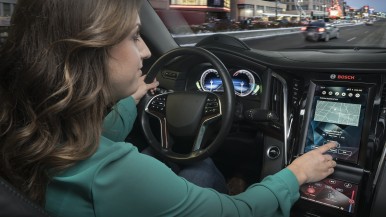
Hildesheim, Las Vegas – For years, touchscreens, handwriting recognition, and gesture control have been gradually replacing conventional mechanical buttons and switches in the car – to the detriment of road safety. After all, controlling the navigation system, the on-board computer menu, or the radio is a distraction. At CES 2018, in Las Vegas, Bosch is showcasing smart cockpit technology that lets drivers concentrate on driving. Eyes can be kept where they should be: on the road. “We are uncluttering the cockpit. The more complex the technology in modern vehicles, the simpler and more intuitive control systems need to be,” says Dr. Steffen Berns, the president of Bosch Car Multimedia. Artificial intelligence helps transform the human-machine interface (HMI) into a command center that thinks ahead. “Initial functionalities with artificial intelligence feed valuable information into the HMI about the driver, the vehicle, and the surroundings. That enables proactive adjustment of displays and controls to any given driving situation,” Berns says. Bosch also draws on this information for the development of automated driving. Here too, HMI is the core element that allows optimal interplay between people and vehicles. We are uncluttering the cockpit. The more complex the technology in modern vehicles, the simpler and more intuitive control systems need to be....Dr. Steffen Berns, the president of Bosch Car Multimedia Artificial intelligence helps transform the human-machine interface (HMI) into a command center that thinks ahead. “Initial functionalities with artificial intelligence feed valuable information into the HMI about the driver, the vehicle, and the surroundings. That enables proactive adjustment of displays and controls to any given driving situation,” Berns says. Bosch also draws on this information for the development of automated driving. Here too, HMI is the core element that allows optimal interplay between people and vehicles. Operating HMI, without getting distracted According to Allianz Center for Technology, 63 percent of drivers in Germany operate their navigation systems while driving, 61 percent switch through radio stations, and 43 percent browse through complicated menus on their on-board computers. Distractions like these are among the most frequent causes of accidents. “Our job is to make HMI a reliable companion in every situation,” Berns says. At the heart of the HMI is a voice-controlled assistant that responds to natural speech and can even understand dialects. Thanks to natural language understanding (NLU), drivers can talk to the assistant Casey as they would with a passenger. Another virtue of Casey is her ability to think ahead. Drawing on artificial intelligence, she can learn to predict likely destinations depending on the time of the day; or if she is asked to switch on the radio, she knows the driver’s preferences, such as listening to the news in the mornings and music in the evenings. Digital displays make driving safer We perceive 90 percent of our sensory input through our eyesight. That means that, as drivers, we have to have important information directly in our field of vision at the right time. Digital displays are taking over the cockpit. Today, this means more than simply keeping an eye on speed, rpm, and driving range. Smart algorithms capable of learning filter and prioritize content. If the roads are slippery, drivers immediately get a warning signal directly in their field of vision, while less important information, such as the current radio station, is switched to another display. That helps keep the driver concentrated on the road. When it comes to operating infotainment, air conditioning, and radio, touchscreens and central controllers have a decisive drawback: the driver has to look to enter commands accurately. At a speed of 50 kph, the car will travel 30 meters while the driver’s eyes are taken off the road for two seconds; at 120 kph on the freeway, the distance increases to more than 60 meters – driving blind. “Car displays with haptic feedback are going to catch on. They allow easier operation of all manner of functionalities – for example radio and phone functions – faster, simpler, and, most importantly, safer,” Berns says. The keys displayed on the touchscreen feel just like real buttons. The haptic display thus conveys the feeling that the user is adjusting the volume using a real slide control. As a result, drivers can keep their eyes on the road for longer. A central cockpit computer controls the HMI Displays, infotainment, voice control: one consequence of the advanced cockpit technology is the increased demands on processing power, wiring, and the architecture of on-board networks. In current production vehicles, 5, 10, or as many as 15 electronic control units run displays and electronic devices. More processing power is needed to show coordinated information on all displays. In the future, Bosch will run the entire HMI through a cockpit computer and will integrate more functionalities in a single central processor. That will enable the convergence and synchronization of the infotainment system, the instrument cluster, and other displays so that any given information can be orchestrated, managed, and displayed anywhere in the vehicle at any given time. “It gives car drivers and passengers virtually unlimited possibilities for adjusting the air conditioning, controlling the navigation system, or changing radio stations, from anywhere in the vehicle,” Berns says. In addition, reducing the number of control units also frees up valuable installation space, lowers vehicle weight, and shortens the time needed for the development of new vehicles. And, in the future, over-the-air updates will ensure that the cockpit computer and hence the entire HMI is kept up to date with the same simple process used for smartphones. Bosch at CES 2018: PRESS CONFERENCE: In Ballrooms B, C, and D, Mandalay Bay Hotel, Las Vegas South Convention Center, Level 2 , from 8:00 to 8:45 a.m. local time on Monday, Jan 8 . BOOTH: Tuesday to Friday, Jan 9–12 , in the Central Hall, booth #14028 FOLLOW the Bosch CES 2018 highlights on Twitter: #BoschCES PANELS WITH BOSCH EXPERTS: Tuesday, January 9, 1:30 – 3:15 p.m. (local time): “ Connect2Car: Next-Gen Automobility ” session with Kay Stepper, Vice President of Bosch in North America, head of driver assistance and automated driving, Las Vegas, Convention Center, North Hall, N256 Wednesday, Jan 10, 1:45–2:30 p.m. (local time): “ Connected Vehicles in Connected Ecosystems ” session with Mike Mansuetti, President Bosch North America, Smart Cities Conference, Westgate. Thursday, Jan 11, 11:30 a.m to 12:30 p.m. (local time): “ The Future of Robots at Work and Home ” session with Phil Roan, Senior Engineer Robotics, BSH Hausgeräte GmbH, Las Vegas Convention Center, North Hall, N258