Search & find:
media, releases and events to support your reporting about the Bosch Group.

Bosch at the IAA Mobility: Safe, emissions-free, and exciting mobility - now and ...

19.08.2021

Press release

Connected mobility

Bosch at the IAA Mobility: Safe, emissions-free, and exciting mobility - now and ...

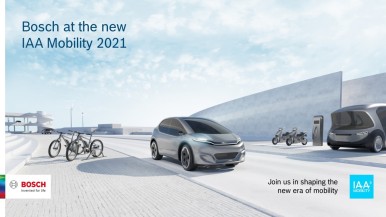
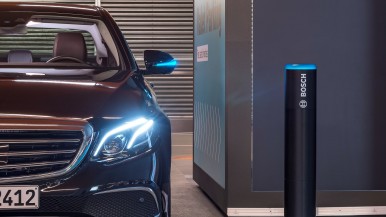
Munich, Germany - Cars, e-bikes, motorcycles, scooters, electric race cars: Bosch is rolling out mobility solutions for all types of vehicles, and is even making smartphones and people's homes an integral part of mobility. At IAA Mobility 2021 in Munich, the supplier of technology and services will be showcasing its solutions for personalized, automated, connected, and electrified mobility. Bosch will be in exhibition hall B3 at booth C30 and in the bike area, in the Messe West parking garage, and downtown at Königsplatz and Odeonsplatz.At the trade fair and downtown - get in, get on, try it out Bosch show car: In the future, more and more vehicles will be electrically powered. They will increasingly be connected with other road users and their surroundings, assume more and more of the driving task themselves, and provide personalized services for their occupants. Bosch technology for automated, electrified, personalized, and connected mobility is paving the way for this future vision of mobility. The company has the systems know-how and comprehensive software and hardware expertise that this requires. For example, Bosch is developing central computers for the electronics architecture of the future. These vehicle computers are used for assisted and automated driving, controlling vehicle motion, as well as for cockpit functions and body electronics. (Trade fair: Hall B3, booth C30) Driverless parking: Bosch and nine project partners will present the future of parking in a live demonstration. In the automated valet parking system developed jointly by Bosch and Mercedes-Benz, a smartphone command directs cars automatically to their assigned parking bays without the need for driver supervision. Interplay between the intelligent parking garage infrastructure and the vehicle technology makes this possible. Sensors in the parking garage monitor the driving aisle and its surroundings while guiding the vehicle. The in-car technology converts the commands from the infrastructure into safe driving maneuvers. A joint project with the association of the German automotive industry (VDA) shows how vehicles from different manufacturers will be able to communicate with infrastructure technology from various suppliers in the future. Against this backdrop, the project partners are also working on an international standard (ISO 23374). (Live demonstrations several times a day in the Messe West parking garage) An enhanced cycling experience: E-bikes are the best-selling electric vehicle in Europe. Riding an electrically assisted bike is good for people's health and the environment - as well as a lot of fun. Connected products and services enhance the cycling experience and connect e-bikers with the digital world. Bosch will be showcasing new connected-biking solutions and allowing visitors to see for themselves just how much fun power-assisted cycling can be. (Trade fair: Hall B3, booth C30; bike area B5, Blue Lane Micromobility: Brienner Strasse; open space: Königsplatz and Odeonsplatz) Bosch is electrifying mobility and helping mitigate global warming Bosch wants to be a key player in climate-neutral mobility. The company has set itself the goal of making all vehicle classes ready for upcoming emissions requirements. As an innovation leader, Bosch has a broader electric driving portfolio than any other company - from e-bikes to passenger cars to heavy trucks. Battery-electric power for two- and four-wheeled vehicles: From powertrains to steering systems to brakes, Bosch's portfolio includes all the building blocks for the electrification of passenger cars. One component is the e-axle , which combines the power electronics, electric motor, and transmission in a single unit. And with its pre- integrated system solutions for vehicle platforms, Bosch helps automakers bring electric vehicles to market faster than before. The key is the optimized interaction of the powertrain, steering, braking, and vehicle control in the advanced driving module , which is combined with partner solutions to form a complete axle module for the front and rear axles. Alongside efficient powertrains, Bosch also uses thermal management to increase the range of electric and hybrid vehicles. Precise control of currents of hot and cold air improves the efficiency of the battery and ensures that all components are working within their optimum temperature range. Bosch also offers drives and control units for electric two-wheelers . Integrated in a compact system, the two components ensure precise control of the motor, reliable riding performance, and optimum torque development. Fuel-cell system: Mobile fuel cells offer long ranges and short refueling times. Where they really come into their own is on long-haul routes and in commercial vehicles. With green hydrogen, fuel cells enable vehicles to be operated CO2-free. Bosch develops all the key system components to production readiness - including complete systems. For the stack, which converts hydrogen and ambient oxygen into electrical energy, the company is working with the Swedish specialist Powercell. Large-scale manufacturing of the stack is set to begin in 2022, and the launch of the complete fuel-cell system - the Bosch fuel-cell power module - is scheduled for 2023. Services for electromobility: Bosch's Battery in the Cloud prolongs the life of electric car batteries. Smart software functions in the cloud continually analyze battery status and take appropriate action to prevent or slow cell aging. The tamper-proof "usage certificate" documents the condition of the battery throughout its entire service life, thus giving a better picture of the battery's residual value if the car is sold. With charging services such as Convenience Charging , Bosch makes it easy and straightforward for drivers of electric cars to find - and pay at - publicly accessible charging stations. In addition, the integrated recharging and navigation solution allows for a precise range forecast and route planning that includes recharging stops - and comes with the option to set personal preferences, such as charging stations next to restaurants. High-speed electromobility: For everyday life and for the racetrack - Bosch is committed to becoming the leading supplier of electrified powertrain solutions, both in electromobility for production vehicles and in electrified motorsports. The company has entered into a long-term technology and development partnership with the DRAGON/PENSKE AUTOSPORT Formula E Team. And those who want to experience driving the racing series courses virtually and compete with others for the best time can do just that in two simulators. (Open space: Königsplatz) Recharging at home: Bosch's intelligent energy manager makes it possible for homeowners to reduce CO2 emissions and save energy costs. Serving as an interface between a Bosch heat pump and a photovoltaic system, it optimizes the use of home-generated solar energy and distributes it intelligently throughout the building. Alongside heating and hot water, it will also be possible to integrate electric cars into the Bosch energy management system in the future. Compatible wallboxes can then be deployed to recharge vehicles using as much home-generated electricity as possible. Bosch is automating driving and making roads safer Less stress, smoother traffic flows, greater safety - vehicles that assume more driving tasks themselves are a key building block for tomorrow's mobility. An automated vehicle must be able to do everything a human driver can: perceive its surroundings, make decisions, and accelerate, brake, and steer. Step by step, Bosch is laying the technical foundations for automated driving. With its driver assistance systems, it is already paving the way for all levels of automation. Surround sensing for all traffic situations: Sensor technology forms the basis for assisted and increasingly automated driving. To drive safely, the vehicle must be able to reliably recognize objects, people, and other road users. Bosch's multi-purpose camera combines traditional image-processing algorithms with artificial intelligence (AI) methods. Using AI, the camera understands and interprets what it sees, ensuring reliable object recognition and good surround sensing. In addition to camera, radar, and ultrasonic sensors, Bosch is also developing a long-range lidar, for which it employs various sensor principles. The more complex the driving task, the more important their interaction. Localization technology for exact positioning: Automated vehicles need to know exactly where they are at all times. Bosch offers a comprehensive package of hardware, software, and services that allows automated vehicles to precisely determine their own location. The VMPS (vehicle motion and position sensor) uses satellite navigation signals to identify the exact position, augmented by data from a correction service and information from the steering-angle and wheel-speed sensors. The Bosch road signature cloud-based map service uses data from radar and video sensors as well as vehicle motion data to create additional layers for high-resolution maps. Volkswagen Golf 8 vehicles are currently collecting this information on Europe's roads. Redundant braking and steering systems for safe and energy-saving driving maneuvers: Better safe than sorry - this holds especially true for safety-relevant functions in automated driving. Thanks to multiple redundancy, Bosch's electric steering system offers additional safety. In the rare event of a malfunction, the system is still capable of retaining 50 percent of its electric steering functionality. Bosch has also integrated a redundant architecture into the design of its braking systems : should either the iBooster (the electromechanical brake booster) or the ESP electronic stability program fail, the other component can brake the vehicle. A second braking unit serves as a backup for the integrated power brake system, which combines brake boosting technology and ESP functionality. This is an especially important requirement in automated vehicles. In addition, Bosch's regenerative braking systems help save CO2: in a very smooth process, which is unnoticeable for the driver, they make it possible to switch between generator and friction braking, thus enabling braking energy to be converted back into electrical energy and fed back into the battery every time the vehicle is braked. Services for automated driving: Bosch's predictive road-condition services raise the alert in the event of potential hazards long before critical situations develop. They provide real-time information about road conditions and risks such as aquaplaning, ice, and snow. This enables automated vehicles to correctly anticipate road conditions, adapt their driving behavior to the conditions, choose a different route, or even ask the driver to take control. Bosch connects vehicles with each other and with their surroundings: Vehicles that warn each other of danger, keep a protective eye on their occupants, and communicate with the smart home - Bosch connects systems, components, and services inside and outside the vehicle, making mobility more efficient, safer, and more relaxed. Users, vehicles, and surroundings are seamlessly connected, making driving more enjoyable and providing a personalized mobility experience. Smart car meets smart home: Bosch is turning cars into the command centers for smart homes: using Mercedes-Benz's MBUX infotainment system, Bosch Smart Home applications can be controlled by voice command from the vehicle. In addition to shutters and heating thermostats, the system can also be used to control light switches and smart adapters, and to check the status of motion detectors and door/window contacts. Using voice commands allows the driver to stay focused on the road. Guardian angel for all areas of life: In the shape of Help Connect , Bosch has developed a digitally connected emergency call system for motorcycles and other vehicles. A smart crash algorithm added to the acceleration sensors in the Bosch MSC motorcycle stability control system allows accidents to be detected. A smartphone app transmits information about the accident scene and the rider to a service center, and from there to the emergency services. If the motorcycle has no permanently installed accident detection system, the sensor data from the smartphone can be used to initiate the emergency response. Bosch Help Connect can also provide assistance at home, in the gym, or when out cycling. Indoor monitoring for better occupant protection: Bosch has developed a system comprising cameras and AI that can increase the safety of vehicle occupants. The interior monitoring system detects driver drowsiness and distraction, or if occupants are in an unsafe seating position. It warns inattentive drivers, recommends a break if they are getting tired, and can reduce vehicle speed - depending on the automaker's wishes and legal requirements. The system also enhances convenience by automatically adjusting the seat, mirrors, and steering wheel height in line with individual preferences as well as enabling gesture control of the infotainment system. Wrong-way driver alert: Bosch's cloud-based wrong-way driver warning system warns both the wrong-way driver and all road users at risk of the impending danger within seconds - much faster than traffic news on the radio. In early 2021, SKODA became the first automaker worldwide to opt for Bosch's digital guardian angel. The lifesaving warning is flashed up directly on the display in the vehicle cockpit. As an app solution for smartphones, this service already has 2.5 million active users in 20 European countries. Smartphones as car keys: With Perfectly Keyless , sensors in the car recognize the owner's smartphone as securely as a fingerprint and open the vehicle only at their request. The cell phone thus displaces the conventional car key. Thanks to ultra- wideband technology, the system also offers other practical everyday advantages: it is even easier to maneuver the car into tight parking spaces by remote control or to open the trunk remotely so that package handlers can deposit deliveries in it. For large parking lots where it is difficult to locate vehicles, Perfectly Keyless helps find the way to the car and illuminates the path by switching on the headlights, providing extra safety in the dark.

Camera-based life-saver: Bosch helps cars keep an eye on their passengers

10.01.2020

Press release

Connected mobility

Camera-based life-saver: Bosch helps cars keep an eye on their passengers

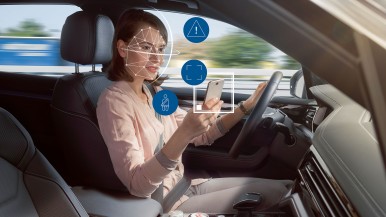
Stuttgart, Germany – Microsleep, distraction, a seatbelt left undone – many things that happen inside a vehicle can have far-reaching consequences. To avert critical driving situations and possibly also accidents, it is planned that cars will in the future use their sensors not simply to monitor the road but also the driver and other passengers. For this purpose, Bosch has developed a new interior monitoring system featuring cameras and artificial intelligence (AI). “If the car knows what its driver and occupants are doing, driving will become safer and more convenient,” says Harald Kroeger, a member of the Robert Bosch GmbH board of management. The Bosch system may go into production in 2022. In that year, the EU will make safety technology that for example warns drivers of drowsiness and distraction a standard feature in new vehicles. The EU Commission expects that, by 2038, their new safety requirements for vehicles will save more than 25,000 lives and help prevent at least 140,000 severe injuries. By keeping an eye on what is happening inside the car, it is hoped that a fundamental problem of self-driving cars will be solved. If responsibility for driving is to be transferred to the driver again following an automated drive on the freeway, say, the car needs to be sure that the driver is neither sleeping, nor reading the newspaper, nor writing e-mails on their smartphone.A smart camera constantly monitors the driver At 50 kph, a vehicle will cover 42 meters completely unsupervised if the driver dozes off or looks at their smartphone for just three seconds. Many people underestimate the associated risk. International studies state that nearly one in ten accidents are caused by distraction or drowsiness. This has prompted Bosch to develop an interior monitoring system that detects and alerts to this danger and provides driving assistance. A camera integrated in the steering wheel detects when drivers’ eyelids are getting heavy, when they are distracted, and when they turn their head toward their passenger or the rear seats. Thanks to AI, the system draws the right conclusions from this information: it warns inattentive drivers, recommends a break if they are getting tired, or even reduces the speed of the vehicles – depending on the automaker’s wishes, and also on legal requirements. “Cameras and AI will turn the vehicle into a life-saver,” Kroeger says. To achieve this, Bosch engineers have used intelligent image-processing algorithms and machine learning to teach the system to understand what the person in the driving seat is actually doing. To take the example of driver drowsiness, the system is trained using recordings of real driving situations and, on the basis of recordings of eyelid position and eye-blink rate, learns how tired the driver really is. This allows it to give an alert that is appropriate to the situation, and to use the driver assistance systems to intervene. Warning systems that sound the alert in the case of distraction and drowsiness will be so important in the future that NCAP, the European New Car Assessment Program, will include them in the roadmap for the Euro NCAP assessment for vehicle safety by 2025. On the subject of monitoring, only the software in the vehicle itself evaluates the information provided by the interior monitoring system – the information is neither saved nor passed on to third parties. Like a relay race: responsibility for steering passes from car to driver and back At the latest when cars start driving automatically, it is obvious how important it is that they understand their drivers. Once driving is automated, cars will drive along freeways without driver intervention. However, they will also have to be able to hand back control to their drivers in tricky situations such as construction zones, or when the exit ramp is drawing near. Drivers have to be able to safely take the wheel again at any time during the automated driving phase, and the camera makes sure they don’t fall asleep. If their eyes remain closed for a prolonged period, an alarm is sounded. The system also interprets camera recordings to establish what drivers are currently doing, and how ready they are to respond. The transfer of driving responsibility is then timed accordingly. “Bosch driver observation will be essential for safe automated driving,” Kroeger says. When the car keeps its camera eyes open But the new Bosch system keeps its eye not only on the driver, but also on all the other passengers, whether next to or behind the driver. For this purpose, a camera mounted above or below the rear-view mirror monitors the entire passenger compartment. It notices whether children on the rear seats have carelessly unfastened their seat belts, and warns the driver. If someone sitting in the back is leaning too far forward, at an angle, or with their feet up on the seat next to them, the airbags and belt tensioner will not be able to protect them properly in an accident. The interior monitoring camera can tell what position they are sitting in and set the airbags and belt tensioner to ensure the best possible protection. The interior monitoring system also prevents the passenger-seat airbag from being deployed if a baby’s carrycot is on the seat. On the subject of children, it is a sad fact that parked vehicles can be a death trap for them. In the United States in 2018, they claimed the lives of more than 50 children (source: KidsAndCars.org), either because they had been left in the car for a short while or had clambered in unnoticed. The new Bosch system can recognizes this danger, and warn parents in a flash by sending a message to their smartphone. In an emergency, it also can alert the emergency services. As the Hot Cars Act currently being debated in the United States shows, legislators are interested in technology solutions to address this challenge. A camera for more convenience The new Bosch system also means more driving convenience. The interior monitoring camera can tell who is about to drive and adjust the rear-view mirror, seating position, steering-wheel height, and infotainment system to preset personal preferences. And the camera can also be used for eye- and handgesture control of the infotainment system. Bosch at CES 2020: • PRESS CONFERENCE: In Ballrooms B, C, and D, Mandalay Bay Hotel, Las Vegas South Convention Center, Level 2, from 9:00 to 10:30 a.m. local time on Monday, January 6, 2020 . • BOOTH: Tuesday to Friday, January 7–10, 2020 , in the Central Hall, booth #12401 • FOLLOW the Bosch CES 2020 highlights on Twitter: #BoschCES • PANELS WITH BOSCH EXPERTS: Wednesday, January 8, 2020, 10:15 to 11:15 (local time) Event on the subject of “Growth of Apprenticeships for ‘New Collar’ Jobs” with Charlie Ackerman, Senior Vice President of Human Resources, Las Vegas, South Convention Center

Safe eyes save lives: How Bosch engineers are innovating the 95-year-old sun visor

06.01.2020

Press release

Connected mobility

Safe eyes save lives: How Bosch engineers are innovating the 95-year-old sun visor

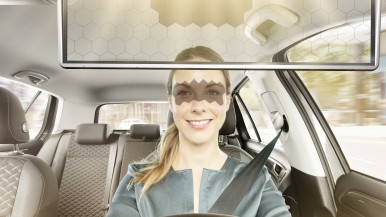
Farmington Hills, Michigan – Bosch is rethinking driver safety and comfort, bringing one of the most overlooked interior components into the spotlight, the sun visor. The sun causes twice as many car accidents as any other weather-related condition due to temporary blindness. The National Highway Traffic Safety Administration reports thousands sun glare-related car accidents each year, and another study indicates the risk of a car crash is 16 percent higher during bright sunlight than normal weather. The traditional sun visor is not equipped to adequately address this safety concern. At best, it blocks some of the sun from your eyes but along with it, some of your view is blocked as well Bosch is offering a solution with the revolutionary Virtual Visor, a transparent LCD and intuitive camera, which replaces the traditional vehicle sun visor completely. As the first reimagined visor in nearly a century, Bosch’s technology utilizes intelligent algorithms to intuitively block the sun’s glare and not the view of the road ahead. “For most drivers around the world, the visor component as we know it is not enough to avoid hazardous sun glare – especially at dawn and dusk when the sun can greatly decrease drivers’ vision,” said Dr. Steffen Berns, president of Bosch Car Multimedia. “Some of the simplest innovations make the greatest impact, and Virtual Visor changes the way drivers see the road.”The Virtual Visor, which was honored as a Best of Innovation in the CES 2020 Innovation Awards, will debut at CES 2020 in Las Vegas. The Virtual Visor was also named as an honoree in the awards competition, which recognizes products across 28 categories. Virtual Visor received the Best of Innovation for the In-Vehicle Entertainment & Safety category, as it received the highest ratings from a panel of judges that includes designers, engineers and members of the tech media. A sun visor fit for the future Virtual Visor links an LCD panel with a driver or occupant-monitoring camera to track the sun’s casted shadow on the driver’s face. The system uses artificial intelligence to locate the driver within the image from the driver-facing camera. It also utilizes AI to determine the landmarks on the face ‒ including where the eyes, nose and mouth are located ‒ so that it can identify shadows on the face. The algorithm analyzes the driver’s view, darkening only the section of the display through which light hits the driver’s eyes. The rest of the display remains transparent, no longer obscuring a large section of the driver’s field of vision. “We discovered early in the development that users adjust their traditional sun visors to always cast a shadow on their own eyes,” said Jason Zink, technical expert for Bosch in North America and one of the co-creators of the Virtual Visor. “This realization was profound in helping simplify the product concept and fuel the design of the technology.” The creative use of liquid crystal technology to block a specific light source decreases dangerous sun glare, driver discomfort and accident risk; it also increases driver visibility, comfort and safety. Innovation from the recycling bin From the original ideation and concept phase to testing and prototyping, Virtual Visor is a bottom-up solution made possible through the innovation culture established at Bosch. Employees are encouraged to apply lean startup methodologies to confirm customer benefits, market potential and feasibility for new ideas, which are then validated by peers and approved for development. “We’ve built a culture around empowering our associates by putting them in the driver’s seat,” said Mike Mansuetti, president of Bosch in North America. The Virtual Visor was developed by a team in North America as part of Bosch internal innovation activities. “As a leading global technology provider, we understand that innovation can come from any level of an organization, and we want to see that grow.” A group of three powertrain engineers, led by Zink, developed the idea for Virtual Visor and created prototypes in their free time in order to secure internal funding for the project concept. “Like many early-stage ideas, we were working with limited capital and resources,” said Zink. “The original prototype, we used to first pitch the concept, was made from an old LCD monitor we recovered from a recycling bin.” The Virtual Visor team received mentorship from Bosch executives as they sought funding and developed additional versions of the product. Ultimately the product was transitioned into the Bosch Car Multimedia division. Bosch at CES 2020: • PRESS CONFERENCE: From 9:00 to 10:30 a.m. local time on Monday, January 6, 2020 in Ballrooms B, C, and D, Mandalay Bay Hotel, Las Vegas South Convention Center, Level 2 • BOOTH: Tuesday to Friday, January 7–10, 2020 , in the Central Hall, booth #12401 • FOLLOW the Bosch CES 2020 highlights on Twitter: #BoschCES • PANELS WITH BOSCH EXPERTS : Wednesday, January 8, 2020, 10:15 to 11:15 a.m. (local time) Growth of Apprenticeships for “New Collar” Jobs session with Charlie Ackerman, Senior Vice President of Human Resources, Las Vegas South Convention Center

World first: Bosch and Daimler obtain approval for driverless parking without hu ...

24.07.2019

Press release

Connected mobility

World first: Bosch and Daimler obtain approval for driverless parking without hu ...

Bosch and Daimler have reached a milestone on the way to automated driving: the two companies have now obtained approval from the relevant authorities in Baden-Württemberg for their automated parking system in the Mercedes-Benz Museum parking garage in Stuttgart. The automated valet parking service is accessed via a smartphone app and requires no safety driver. This makes it the world’s first fully automated driverless SAE Level 4 parking function to be officially approved for everyday use.“This decision by the authorities shows that innovations like automated valet parking are possible in Germany first,” says Dr. Markus Heyn, member of the board of management of Robert Bosch GmbH. “Driverless driving and parking are important building blocks for tomorrow’s mobility. The automated parking system shows just how far we have already progressed along this development path.” “This approval from the Baden-Württemberg authorities sets a precedent for obtaining approval in the future for the parking service in parking garages around the world,” says Dr. Michael Hafner, the head of drive technologies and automated driving at Daimler AG. “As a pioneer in automated driving, our project paves the way for automated valet parking to go into mass production in the future.” Playing it safe: two partners with a common objective From the very beginning, Bosch and Daimler’s top priority for the driverless parking service was safety. Since there is as yet no official approval process for automated driving functions that do not require a driver, the local authorities – the Stuttgart regional administrative authority and the state of Baden-Württemberg’s transportation ministry – oversaw the project along with experts from the German technical inspection service TÜV Rheinland from the outset. Their aim was to assess the operating safety of the automotive and parking-garage technology. The result is a comprehensive safety concept with appropriate testing and approval criteria that can be applied beyond this pilot project. In the concept, the developers defined how the driverless vehicle detects pedestrians and other cars in its path and reliably comes to a halt when it encounters an obstacle. They also set up secure communications between all system components and took steps to ensure the reliable activation of the parking maneuver. The technology behind driverless parking Drive in to the parking garage, get out, and send the car to a parking space just by tapping on a smartphone screen – automated valet parking has no need for a driver. Once the driver has left the parking garage to go about their business, the car drives itself to an assigned space and parks. Later, the car returns to the drop-off point in exactly the same way. This process relies on the interplay between the intelligent parking garage infrastructure supplied by Bosch and Mercedes-Benz automotive technology. Bosch sensors in the parking garage monitor the driving corridor and its surroundings and provide the information needed to guide the vehicle. The technology in the car converts the commands from the infrastructure into driving maneuvers. This way, cars can even drive themselves up and down ramps to move between stories in the parking garage. If the infrastructure sensors detect an obstacle, the vehicle stops immediately. Project milestones Bosch and Daimler started developing fully automated driverless parking in 2015, and in the summer of 2017, their pilot solution in the Mercedes-Benz Museum parking garage in Stuttgart reached an important milestone: automated valet parking in real conditions, with and without drivers at the wheel, was presented to the public for the first time. This premiere was followed by an intensive testing and start-up phase. Starting in 2018, museum visitors could use the parking service live, accompanied by trained safety personnel, and share their experience. One aspect of the pilot project involved testing lighting concepts on the vehicles. Turquoise lighting indicates that a vehicle is in automated driving mode and informs passers-by and other road users that the vehicle is driving itself. The insights from these tests are reflected in the recently issued SAE standard 3134. Obtaining final approval from the authorities is a further major milestone for Bosch and Daimler: soon, interested parties will be able to experience the innovative valet parking service live in daily operation in the Mercedes-Benz Museum parking garage without additional supervision from a safety driver.

Bosch technology teaches cars to fly

29.05.2019

Press release

Connected mobility

Bosch technology teaches cars to fly

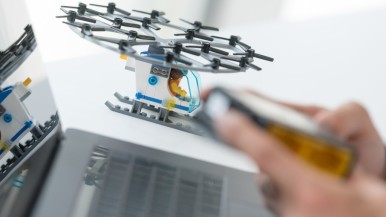
Stuttgart, Germany – With traffic jams a common occurrence in the world’s cities, frustrated drivers sometimes find themselves looking to the heavens for a little help from above. A few years from now, the skies could in fact offer a tangible solution. The Boston Consulting Group predicts that people around the world will take 1 billion flights in air taxis in 2030, once sharing services have also established a presence on fixed routes above the ground. What is more, most of those air taxis will be capable of operating without a pilot. Bosch is working on state-of-the-art sensor technology to make these flights especially safe, comfortable, and convenient. “The first flying taxis are set to take off in major cities starting in 2023, at the latest. Bosch plans to play a leading role in shaping this future market,” says Harald Kröger, president of the Bosch Automotive Electronics division. To help it achieve this goal, Bosch has discovered a gap in the market. Conventional aerospace technology is too expensive, bulky, and heavy to be used in autonomous flying taxis. However, modern sensors that are also used for automated driving or in the ESP anti-skid system could have the potential to bridge this gap. That is why a team of engineers has combined dozens of sensors to create a universal control unit for flying taxis.Bosch technology for flying taxis Featuring Bosch sensors already in use in production vehicles, the universal control unit is designed to ensure the ability to determine the position of the flying taxis at all times, allowing them to be controlled with precision and safety. Acceleration and yaw-rate sensors that accurately measure the flying vehicles’ movements and angle of attack, for example, provide the necessary data. Unlike current sensor systems in the aerospace sector, some of which cost tens of thousands or even several hundred thousand euros, Bosch can make use of its solution for a fraction of the cost. That is because the company uses production- tested sensors that Bosch has already been developing and manufacturing for the automotive industry for many years. “Through our Bosch solution, we aim to make civil aviation with flying taxis affordable for a wide range of providers,” says Marcus Parentis, the head of the technology team at Bosch in charge of the control units behind the electric light aircraft. What is more, the Bosch sensors are especially small and lightweight. Flying taxi manufacturers can easily install the Bosch sensor box into their air vehicles using the plug-and-play principle. Shared mobility in the air: 1 billion flights in flying taxis in 2030 The market for flights using electric air taxis in cities is set to see substantial growth in the years ahead. Test flights are scheduled to begin in cities such as Dubai, Los Angeles, Dallas, and Singapore in 2020. Experts expect commercial operations to begin in 2023. Although pilots will probably be on board at first, the light aircraft could start flying autonomously over the roofs of major cities as early as 2025, controlled by staff on the ground. By that time, roughly 3,000 flying taxis will be in operation worldwide, according to Roland Berger. That number will increase to 12,000 by 2030, with just under 100,000 flying taxis taking to the skies by 2050. Consultants from Morgan Stanley estimate that the market for flying taxis could even reach 1.35 trillion euros (1.5 trillion USD) by 2040, extending beyond the United States and southeast Asia to include large and medium-sized cities in Germany as well. In regions such as the Ruhr valley, the Frankfurt Rhine-Main metropolitan region, and the Munich/Augsburg/Ingolstadt metroplex, they have the potential to significantly speed up travel over short and medium distances. Bosch’s Marcus Parentis also believes in the growing market opportunities. “We are talking to air taxi manufacturers from the aerospace and automotive industries, as well as with start-ups that build air vehicles and are looking to provide sharing services,” Parentis says. “The question isn’t whether flying taxis will become reality, but when.” Additional questions and answers What kind of technology does Bosch provide? The sensor box is equipped with MEMS sensors. The abbreviation MEMS stands for microelectromechanical systems. Bosch developed the first MEMS sensors for vehicles over 25 years ago. In vehicles, they supply control units with data about whether the car is currently braking or accelerating, and lets them know the direction in which the vehicle is traveling. The Bosch sensor box for flying taxis is equipped with acceleration sensors that measure the movements of the aircraft. Built-in yaw-rate sensors measure the flying vehicle’s angle of attack, while magnetic field sensors gauge its compass heading. The package also includes pressure sensors, which use barometric pressure to measure altitude and dynamic pressure readings to determine the vehicle’s current speed. To whom is Bosch supplying the sensor box? Bosch is in contact with a wide range of players in this field, from air taxi manufacturers to start-ups that are looking to build air vehicles and provide sharing services. As with any new technology, there is currently a multitude of different concepts on offer. At the present time, it is hard to say which concept will come out on top. Bosch’s plug-and-play control unit fits in any flying vehicle. What makes flying taxis an alternative? Flying taxis offer a new way of avoiding traffic jams in major cities: by taking to the air. That makes them an additional alternative for getting from A to B quickly in tomorrow’s urban areas. “Compared to today’s means of transportation, flying taxis save time on trips of 10 kilometers or more, with a maximum range of up to 300 kilometers,” Parentis says. How much will flying taxis cost? Depending on the concept and number of passengers carried, a flying taxi will cost around 500,000 euros. As a result, automated and electric air vehicles offer advantages, especially for sharing solutions. Still, a flying taxi costs far less than a comparable helicopter equipped with today’s technology. That is why it is important for suppliers to provide reliable technology that is not only lightweight and easy to install, but also offers an economic advantage compared to traditional aerospace technology. “That’s where our MEMS sensor box comes in. Through our Bosch solution, we aim to make civil aviation with flying taxis affordable for a wide range of providers,” Parentis says.

Bosch Augmented Reality applications now also work with the new Microsoft HoloLens 2

25.03.2019

Press release

Connected mobility

Bosch Augmented Reality applications now also work with the new Microsoft HoloLens 2

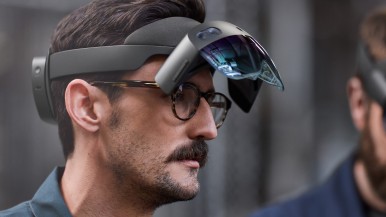
Karlsruhe – Whether logistics, trainings or support for rescue forces, Bosch Augmented Reality applications have eased and optimized several working processes in different areas throughout the last years. AR can be used for numerous applications. By means of the Common Augmented Reality Platform (CAP) developed by Bosch, the merger of both real and digital worlds can easily be adapted to new fields of application. CAP is also available for the new Microsoft HoloLens 2 presented in the run-up to the Mobile World Congress trade fair in Barcelona. Due to its great experience concerning AR applications, Bosch will be one of the first companies worldwide to use and test the new HoloLens 2 as part of a strategic cooperation. “With the new HoloLens 2, we are able to expand the potentials of our Augmented Reality applications even better. In addition, the new HoloLens 2 also provides the technical basis for the development of pioneering AR applications previously only realizable to a limited extent”, Jürgen Lumera, Bosch Augmented Reality product manager, said.AR applications are already used to train workshops regarding sophisticated repair tasks on vehicles, for example. There is, for instance, a special AR training on how to readjust the sensors of driver assistance systems – e.g. after replacing the windshield. In this regard, it is of major importance to keep an eye on the whole vehicle. The new HoloLens 2 provides a much bigger field of view than former products. This allows displaying more details and watching larger objects from closer. And the manufacturer also increased the wearing comfort of the HoloLens 2 significantly. Significant time savings thank to Augmented Reality Augmented Reality applications complement the real image superimposing useful and time-saving additional information. In case the wearer of AR glasses looks onto a vehicle or a machine featuring AR information, explanations, 3D objects or videos are added to the real image. Technical nexuses thus literally become transparent. Bosch performed a field study at the Automotive division to analyze the benefits of Augmented Reality applications. Augmented Reality allows time savings of 15 percent in average per step taken – even on common vehicles and in case of less sophisticated repair tasks. In order to create efficient Augmented Reality applications, Bosch created the Common Augmented Reality Platform (CAP) allowing the fast and easy integration of digital and visual contents. Fed with stored contents, the platform compiles the required data for each specific Augmented Reality application. Combining powerful CAP applications with the new HoloLens 2, the realization of AR scenarios previously considered highly visionary is now within reach. In future, AR glasses might, for instance, substitute user interface displays and keyboards on machines and systems or revolutionize repair processes at workshops.

Four eyes see more than two

12.03.2019

Press release

Connected mobility

Four eyes see more than two

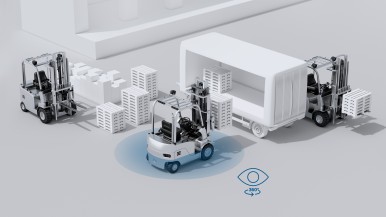
Stuttgart, Germany – In a warehouse, space is often hard to come by. Forklift drivers frequently have to maneuver their vehicles through tight spaces between shelves and stacked pallets. Time and again, this leads to accidents that result in damage to the goods or the vehicles – a consequence that is not only annoying, but can also become quite expensive. A far worse consequence than property damage is personal injury. According to a study by the German employers’ liability insurance association for the wood and metal industries (BGHW), personal injuries occur most often when the vehicle is backing up in a small space of one to three meters. In Germany alone, official reports put the number of accidents involving forklifts at some 12,000 each year (source: WEKA). “A driver’s eyes cannot be everywhere at once – that’s where the Bosch multi-camera system comes in,” says Andrew Allen, responsible for Bosch’s Commercial Vehicle and Off-Road unit.The full picture Using the sight assist, the multi-camera system can provide a full 360° view around the forklift – even if it is carrying bulky freight. This simplifies the task of picking up and moving loads, even in tight spaces. The system helps the forklift maneuver with precision and makes it possible to estimate distances more accurately while on the move. Drivers can thus execute logistics tasks simply, safely, and efficiently. The multi-camera system consists of a control unit plus four very compact near-range cameras. Working together, they can capture an area measuring eight by eight meters. The cameras were originally designed for Bosch’s passenger-car segment but have now been adapted for the special needs of the logistics market. Cameras capture the vehicle’s entire surroundings Cameras are positioned at the front, rear, and each side of the vehicle. With an aperture of nearly 190°, they capture the vehicle’s entire surroundings. Drivers see a realistic representation of their vehicle as a detailed 3D model on a display. As the vehicle moves, the display adjusts the view of its surroundings in real time. To better suit the vehicle’s purpose, the manufacturer can preconfigure the screen to display individual or 360° views as well as full-screen or split-screen views. The driver then can choose the best view for the task at hand from the preprogrammed options. Route overlay shows the way The multi-camera system can visually project the vehicle’s immediate path over the forward, rear, or top view. To achieve this, the control unit measures the steering angle, calculates the resulting route, and shows it on the display. If the steering angle changes, the system recalculates the route and adapts the display accordingly. The route overlay serves primarily to aid in maneuvering and merging.

Semiconductors – market of the future: Bosch is growing faster than the market

13.12.2018

Press release

Connected mobility

Semiconductors – market of the future: Bosch is growing faster than the market

Every car nowadays makes use of semiconductors, and that has been true for quite a while. A key technology in today’s modern world, these chips are core components of electrical systems – including those in vehicles. They regulate the powertrain and vehicle handling, tell the navigational system which way the vehicle is going, and signal the airbag to deploy when needed. Having been making semiconductors for more than 45 years, Bosch today is one of the world’s leading manufacturers of chips for mobility applications. “Semiconductors may have been around for a long time, but we have yet to realize their full potential. These components are key to modern-day mobility, and it is impossible to imagine cars today without them,” says Jens Fabrowsky, member of the executive management of Bosch’s Automotive Electronics division. In 2016, every vehicle newly registered worldwide had an average of more than nine Bosch chips on board. “When it comes to semiconductors for cars, we have a singular advantage: Bosch is the only company equally at home in both the automotive and semiconductor industries,” Fabrowsky says. In 2018, every new vehicle featured semiconductors worth 370 dollars (source: ZVEI), and thanks to increasing electrification and automation, demand for chips in vehicles is expected to rise further over the next few years.The ultimate discipline: semiconductors for the auto industry The global semiconductor market is worth billions: the market research company Gartner expects global semiconductor sales to reach 451 billion dollars in 2018. By 2019 alone, the market will have grown at an annual growth rate of more than 5 percent (source: PwC). “The Bosch semiconductor business is growing faster than the market,” Fabrowsky says. In the semiconductor market, the ultimate discipline is making chips for vehicles. Bosch has been making vehicles smart since the 1970s, when it started equipping them with its application-specific integrated circuits (ASICs). In a car, chips are exposed to strong vibrations and extreme temperatures that range from far below zero to far above 100 degrees Celsius. This requires higher standards for the toughness of these special components. Developing semiconductors that can withstand these stresses for a vehicle’s entire lifetime is an intensive process. Here is where Bosch leverages its special dual role: while other companies can process the information collected from semiconductors, Bosch can also apply its deep understanding of the physical principles at work in the chips, and of how to gather the data and ultimately integrate it into the vehicle systems. “Our comprehensive expertise in semiconductors helps us to both develop new automotive functions and steadily improve the chips themselves,” Fabrowsky says. Bosch holds over 1,500 patents and patent applications for engineering and manufacturing its semiconductors. Electromobility and driver assistance systems boost demand Bosch’s current semiconductor portfolio focuses on microelectromechanical systems (MEMS), ASICs for vehicle ECUs, and power semiconductors. Without the latter, there would be no hybrid or electric vehicles, as they regulate the electric motor and make sure that the battery is being used as efficiently as possible. “Power electronics for hybrid and electric vehicles are a growth driver for Bosch,” Fabrowsky says. Besides electrification, continued strong growth in demand for driver assistance systems is ensuring that more semiconductors with more and more functions are finding their way into cars. Chips with built-in “intelligence,” known as ASICs, are tailored to a particular application; for instance, signaling to airbags in a vehicle when they should deploy. These chips control handling to ensure a consistently safe journey. They also boost the measured signal from radar sensors, so that the proximity warning always functions reliably. “Progress in microelectronics is what made development of assistance systems and automated driving possible in the first place,” Fabrowsky says. Bosch microelectromechanical systems, or MEMS for short, are the sensory organs of modern vehicles. They supply a vehicle’s ECUs with important information regarding its handling, such as if the vehicle is braking or accelerating, or if it is skidding on a smooth road surface. The ESP electronic stability program uses this information to keeps cars, trucks, and even motorcycles safely on track and in their lanes. MEMS sensors tell runners how many calories they are burning As a key technology for the internet of things (IoT), Bosch semiconductors have applications that extend far beyond the world of vehicles. The company’s sensors can be found in more than half the world’s smartphones, and are indispensable for fitness trackers, drones, game consoles, and smart home applications. When it comes to MEMS sensors, Bosch is both a pioneer and the world’s leading manufacturer. More than 20 years ago, the supplier of technology and services itself developed the microfabrication technique, known worldwide as the “Bosch process,” used to make these semiconductors. One billion euros for one of Europe’s most advanced wafer fabs Bosch is underpinning its growth strategy for semiconductors with the single largest investment in the company’s history: it is putting some one billion euros into a new wafer fab in Dresden, which will manufacture 300 mm wafers. Following a rollout phase, pilot manufacturing operations are expected to start at the end of 2021. Compared with conventional 150 and 200 mm wafers, 300 mm wafer technology offers greater economies of scale. Up to 700 associates will be involved in the highly automated chip manufacturing process, working to plan, manage, and monitor production. After Reutlingen, the Dresden plant will be Bosch’s second wafer fab in Germany. With it, the company aims to expand its manufacturing capacity, and thus to further boost its competitive edge in global markets.

Bosch and Veniam ensure seamless vehicle-to-everything connectivity

10.12.2018

Press release

Connected mobility

Bosch and Veniam ensure seamless vehicle-to-everything connectivity

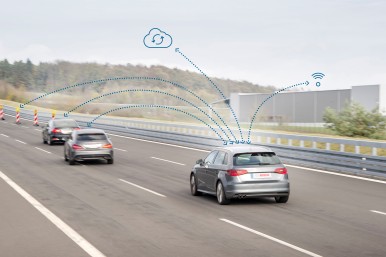
What is true for people is also true for cars: communication works best with a common language and a good connection. To enable connected and automated driving in the future, vehicles must be able to easily communicate with one another as well as with their surroundings. There is currently no globally standardized technical basis for this exchange of data, which is known as vehicle-to-everything communication, or V2X. Instead, vehicles will in future communicate using the wide variety of different standards implemented by countries and vehicle manufacturers around the world. “Bosch is taking a multi-standard approach when it comes to V2X. We have developed a universal connectivity unit capable of communicating using all of the transmission standards implemented in connected automobiles,” says Dr. Dirk Hoheisel, Member of the Board of Management at Robert Bosch GmbH. The neat thing here is that Bosch has combined connectivity units and telematics units, which – individually – are only capable of a single transmission technology, to create an all-in-one central control unit for V2X data communication. Cars can then use the Wi-Fi networks available in cities, while elsewhere they can communicate using, for instance, cellular networks. The complex task of managing these diverse communication options is handled by a software solution from the Silicon Valley-based start-up Veniam. It continuously searches for the best transmission technology that suits the particular requirements and switches automatically between the available alternatives. The software therefore maintains continuous and seamless vehicle connectivity, ensuring cars can, for example, reliably alert one another to accidents and passengers can enjoy uninterrupted music streaming.Bosch develops a connectivity unit for all standards It is expected that the number of connected vehicles on the roads in Europe, the United States, and China alone will exceed 470 million by 2025 (source: PwC). Initially, most vehicles will connect directly to the cloud; but, thanks to V2X, increasing numbers of vehicles will in future also be able to communicate directly with one another as well as with traffic signals, road construction sites, pedestrian crossings, and buildings, etc. They will then be able to alert one another to potential hazards like the approaching tail end of a traffic jam, accidents, and icy conditions. Vehicles will also be able to take advantage of the green wave, because they will know when the next set of traffic lights is going to turn green. The vehicles can then adjust their speed accordingly. This ensures the traffic, particularly in cities, flows more smoothly. There is, however, no globally harmonized standard for V2X communication currently on the horizon. While China primarily uses Cellular-V2X technology (C-V2X), which is based on mobile communications, Europe and the United States are planning to additionally introduce transmission standards based on Wi-Fi (DSRC and ITS- G5) alongside C-V2X. A mishmash of standards is therefore emerging internationally, which may lead to vehicle communication issues. However, that will not be the case in the future when cars are equipped with the universal connectivity unit from Bosch. Equipped vehicles will be able to communicate with one another as well as with their surroundings regardless of the vehicle make or the country in which they are used. This will make V2X communication even more secure and reliable. “Thanks to Bosch’s all-in-one principle for connected vehicles, as many drivers as possible around the world can benefit from the added safety, comfort, and convenience provided by V2X,” says Dirk Hoheisel. Software ensures the best connection The software from Veniam is the connection enhancer for the connectivity unit from Bosch. As well as keeping an eye on which V2X communication technologies are currently available for use, the software also closely monitors the costs and data transmission latency of each alternative connection option, since not every technology is suitable in every situation. For example, when it comes to alerting a driver to another vehicle that is about to pull out in front of them from a side street, every millisecond counts. This kind of critical information must be communicated in real time using highly reliable technology that is always ready for use – even if that means the resulting data transmission costs are greater. Software updates from the cloud or a navigation system map update, on the other hand, can be put on hold in that sort of situation until a low-cost Wi-Fi network becomes available. Large volumes of data can be transmitted via Wi-Fi in a short space of time, though a downside is that Wi-Fi networks are not always available. Veniam’s software is familiar with the pros and cons of each of the communication types and always establishes the optimal connection. “The unique combination of Veniam’s smart networking software and Bosch’s connectivity unit boosts the vehicle’s data-handling capacities dramatically, paving the way for innovative cloud services and much safer future mobility,” says João Barros, founder and CEO of Veniam. On the occasion of the world’s biggest consumer electronics trade show, CES 2019 in Las Vegas, Bosch and Veniam have been selected as CES 2019 Innovation Award Honorees in the “Vehicle Intelligence and Self-Driving Technology” category for their jointly developed solution. Bosch tests V2X in Europe, the United States, and China In the biggest European field trial to date (simTD, Safe Intelligent Mobility – Test Field Germany), V2X communication has proven its suitability for daily use under everyday conditions and in lab simulations. Bosch has played a significant role in this joint project. Since February 2017, Bosch, Vodafone, and Huawei have been performing trials of the V2X communication with the first 5G test modules − the first companies in Europe to do so. The A9 freeway in Bavaria north of Munich is the location for the field tests, which focus on real-time warning systems during lane changing maneuvers on the freeway or in case the vehicle in front brakes suddenly. V2X will also be able to make driver assistance functions even more comfortable, like adaptive cruise control (ACC). In the summer of 2018, Bosch tested secure, direct communication between vehicles and roadside infrastructure, cameras, and sensors in Detroit. The test showcased Wi-Fi-based DSRC technology, where equipped vehicles were provided with in-vehicle notifications about the status of traffic signals ahead and pedestrians crossing the street – functions designed to enhance safety in city traffic. ESCRYPT, a subsidiary in the Bosch Group, provided the cybersecurity technologies behind these V2X demonstrations. In China, Bosch is testing ad hoc communication using Wi-Fi as well as cellular technology. The tests are focusing on alerts that help the driver when overtaking or negotiating complex intersections.

This Bosch app makes car keys a thing of the past

04.09.2018

Press release

Connected mobility

This Bosch app makes car keys a thing of the past

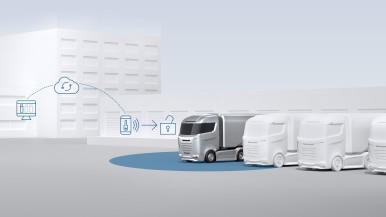
Stuttgart, Germany – The key of the future is digital, and offers more features than its analog predecessors: impossible to lose or steal, there is never a need to search for it. That is because it is stored securely and specifically for each user in a smartphone app. “Our Perfectly Keyless app is making conventional vehicle keys a thing of the past. Bosch is taking the car key into the digital realm and making it available anywhere, anytime,” says Harald Kröger, president of the Bosch Automotive Electronics division. With Perfectly Keyless, the smartphone replaces the analog vehicle key. This concept can offer owners of private vehicles increased convenience, but where it really shines is in vehicle fleets with multiple drivers. No more key handovers: fleet managers and logistics providers simply use the app to give drivers access to the vehicles. “Bosch’s digital vehicle key gives fleets a boost towards greater connectivity,” Kröger says. The company believes there is a huge market for its solution, which is making its world debut at the IAA Commercial Vehicles in Hannover: potential customers include some 15,000 logistics providers in Germany alone. Most of them manage at least a dozen vehicles and drivers.A keyless journey Row upon row of hundreds of keys hanging on large boards – logistics providers still often use this method to organize the keys to their fleet vehicles. A missing key triggers a massive search operation. But every minute counts, especially with commercial vehicles. After all, if a truck isn’t moving, it’s not making any money. At the core of the new system is an app that dispatchers and truck drivers both have on their phones. This makes it possible to grant vehicle access with just a few clicks. In the future, the Bosch solution will also allow logistics providers to completely integrate digital key management into their dispatch and scheduling systems. As soon as dispatch has assigned drivers and trucks to a route, the system automatically generates digital keys for the vehicles and sends them to the drivers’ smartphones. If the route scheduling changes, the software adjusts the keys accordingly. “Thanks to Bosch’s fully digital key management, logistics providers enjoy both security and flexibility in their planning. This is the only way the logistics of the future will be able to function efficiently,” Kröger says. Secure key management with app and cloud Bosch digital key management connects trucks and the smartphone app via the cloud. Dispatchers or fleet managers use the app to assign a truck to a driver for a particular route. Perfectly Keyless generates a personal, secure digital key and sends it via the cloud to the truck and to the driver’s smartphone. As the driver approaches the assigned truck, the sensors installed in the truck detect the smartphone via a wireless connection. The vehicle doors will open only if the key on the phone “fits” the digital lock in the vehicle. These sensors can also tell when the driver is in the driver’s seat, and the engine starts up as soon as the driver presses the start-stop button. When the driver gets out of the car at the end of the journey, the system detects this and automatically locks the doors. Battery dead? No problem! But what happens if the smartphone’s battery dies, or the device has gone missing? In the future, the vehicle key in the smartphone will work even if the phone battery is dead. In that case, the phone and truck will communicate using near-field communication (NFC), a wireless protocol for sharing data over short distances. Bosch plans to make it the “double hull” of its solution. If the smartphone is lost or stolen, and the app with it, the digital key can be simply deactivated online, thus blocking access to the vehicle. It cannot be opened and started until the fleet manager uses the app to provide another driver or a new phone with access to the truck.

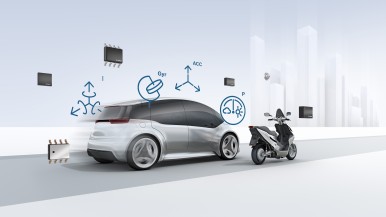
Greater safety on two wheels: Bosch innovations for the motorcycles of the future

19.06.2018

Press release

Connected mobility

Greater safety on two wheels: Bosch innovations for the motorcycles of the future

Stuttgart, Germany – Safety is one of the most urgent challenges in the motorcycle market. Whether smart assistance systems or connectivity packages, Bosch offers many solutions that make roads safer for motorcyclists. And with its innovative research projects, it is already planning for the next stages of development.Sliding mitigation research project Whether wet leaves, an oil spill, or gravel on the road surface, wheels begin to slip sideways if they can no longer apply sufficient lateral force in a curve. In situations such as these, motorcyclists have practically no chance of righting their bikes. Ideally, keeping them safely on course would require applying additional external lateral force. This is the idea behind the sliding mitigation Bosch is developing in a research project. Like a magic hand, it keeps the motorcycle on track and considerably reduces the risk of a fall. A sensor detects sideways wheel slip. If a certain value is exceeded, gas is released from a gas accumulator of the type used in passenger-car airbags. The gas flows into the tank adapter and is vented in a certain direction through a nozzle. This reverse thrust keeps the motorcycle on track. Radar-based assistance systems Giving motorcycles radar as a sensory organ enables these new motorcycle assistance and safety functions while providing an accurate picture of the vehicle’s surroundings. As a result, these assistance functions not only increase safety, they also enhance enjoyment and convenience by making life easier for riders. ACC (adaptive cruise control) Riding in heavy traffic and maintaining the correct distance to the vehicle in front takes a great deal of concentration and is strenuous over longer periods. ACC adjusts the vehicle speed to the flow of traffic and maintains the necessary safe following distance. This can effectively prevent rear-end collisions caused by insufficient distance to the vehicle in front. And not only does ACC offer riders more convenience, it also allows them to concentrate more on the road, particularly in high-density traffic. Forward collision warning system In road traffic, even the briefest lapse in concentration can have serious consequences. Bosch has developed a collision warning system for motorcycles to reduce the risk of a rear-end collision or to mitigate its consequences. The system is active as soon as the vehicle starts and it supports the rider in all relevant speed ranges. If the system detects that another vehicle is dangerously close and the rider does not react to the situation, it warns the rider by way of an acoustic or optical signal. Blind-spot detection This system keeps a lookout in all directions to help motorcyclists change lanes safely. A radar sensor serves as the blind-spot recognition system’s electronic eye, registering objects in hard-to-see areas. Whenever there is a vehicle in the rider’s blind spot, the technology warns them by way of an optical signal – for example, in the rear-view mirror. ABS Since 1984, Bosch has been continuously perfecting motorcycle ABS technology in order to make this important safety technology available for all vehicle classes in every market. According to Bosch accident research, roughly one in four motorcycle accidents involving fatalities and injuries could be prevented if all two- wheelers were fitted with ABS. Worldwide, more and more countries and regions, including the EU, Japan, Taiwan, and Brazil, are mandating motorcycle ABS. Since April 2018, motorcycle ABS is mandatory in India for all new two-wheeler types with an engine displacement above 125 cc. ABS 10 was designed specifically to meet the requirements for motorized two- wheelers in emerging markets. MSC MSC motorcycle stability control is the world’s first all-in-one safety system for two- wheelers. By monitoring two-wheeler parameters such as lean angle, the system can instantaneously adjust its electronic braking and acceleration interventions to suit the current riding status. In this way, the Bosch system can prevent the bike from lowsiding or righting itself suddenly and uncontrollably when braking in bends, which is where the majority of motorcycle accidents occur. The new 6D sensor in the MSC system is the smallest and lightest design on the market. It significantly improves mounting flexibility, and is less prone to vibration. Motorcycle-to-car communication By enabling motorcycles and cars to communicate with each other, Bosch is creating a digital shield for motorcyclists. Up to ten times a second, vehicles within a radius of several hundred meters exchange information about vehicle type, speed, position, and direction of travel. Long before a motorcycle comes into view, this technology warns drivers and the sensors in their vehicles that a motorcycle is approaching. This allows them to drive better and more defensively. The public WLAN standard (ITS G5) is used as the basis for the exchange of data between motorcycles and cars. Transmission times of just a few milliseconds between transmitter and receiver mean that participating road users can generate and transmit important information relating to the traffic situation. Emergency call, breakdown call, and information call On the basis of intelligent crash algorithms, eCall detects when a motorcyclist is involved in a crash, automatically transmits an emergency call, and informs the emergency services about the type of vehicle and its position. In the event that the two-wheeler breaks down, the bCall independently contacts the repair shop and sends the necessary data. The iCall is a helpful assistant on any road. This makes accessing service information – such as the location of the nearest gas station – simple and straightforward.