Search & find:
media, releases and events to support your reporting about the Bosch Group.

Stuttgart airport set to welcome fully automated and driverless parking

12.10.2020

Press release

Business/economy

Stuttgart airport set to welcome fully automated and driverless parking

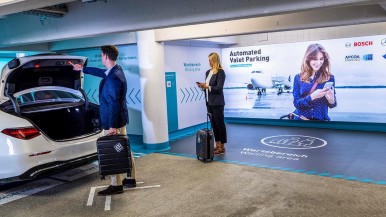
Stuttgart, Germany – Automated parking to drive down the airport stress: Bosch, Mercedes-Benz, and the parking garage operator Apcoa want to introduce driverless and fully automated parking at Stuttgart airport in the future. To this end, the automated valet parking (AVP) system co-developed by Bosch and Mercedes-Benz is to be made ready for commercial operation. The new Mercedes-Benz S-Class is already geared up to accommodate it as the world’s first production vehicle to feature the technology required for future infrastructure-based AVP. As an option, customers can buy the appropriate pre-installation for what the company calls the INTELLIGENT PARK PILOT, which makes the S-Class capable of receiving a smartphone command to drive itself to a reserved parking space. “With the new S-Class, it’s not just driving that’s a luxury, but parking as well,” says Dr. Michael Hafner, head of automated driving at Mercedes-Benz AG. The P6 parking garage at Stuttgart airport will serve as the pilot for the planned commercial automated parking service. Here, the companies will test how the vehicle technology onboard the S-Class interacts with the intelligent Bosch infrastructure and APCOA FLOW, the digital platform provided by the parking garage operator Apcoa. This platform makes the whole parking process ticketless and cashless. “Apcoa, Bosch, Mercedes-Benz, and Stuttgart airport want to work together to make parking fully automatic,” says Christoph Hartung, member of the executive management of Connected Mobility Solutions at Bosch. In the airport parking garage, preparations are currently underway to begin piloting the planned automated valet parking service. The aim of this trial with new S-Class vehicles at Stuttgart airport is to ensure that interactions between the vehicle, infrastructure technology, and parking garage operator run smoothly and are optimized for the customer.World’s first Level 4 park function in a production vehicle In July 2019, Bosch and Mercedes-Benz received the world’s first special permit to operate AVP for selected E-Class vehicles without a safety driver in real-life, mixed parking garage traffic at the Mercedes-Benz Museum in Stuttgart. Equipped with the appropriate pre-installation for the INTELLIGENT PARK PILOT, the new Mercedes-Benz S-Class is now the first production vehicle to feature AVP technology, which enables it to park without a driver. However, this is conditional on the future availability of parking garages with the appropriate infrastructure, as well as on national legislators giving AVP the green light. This makes the Mercedes-Benz S-Class the world’s first vehicle to feature a pre-installation for an SAE Level 4 automated driving function, the second-highest level of automation. “With automated valet parking, Mercedes-Benz is demonstrating that driverless parking will soon be possible,” Hafner says. To facilitate this new one-touch parking function, a spacious drop-off and pick-up area will be set up directly behind the entrance to the P6 parking garage, giving AVP users a convenient place to leave their vehicles. As they comfortably make their way to the terminal and check in, their S-Class will park itself in the basement, guided by information from the infrastructure technology. In other words, users no longer need to worry about maneuvering or having to squeeze out of their cars when the space they have finally found proves to be too narrow. “Automated valet parking really enhances our passengers’ comfort and convenience and saves them time, especially when they’re in a hurry and just want to drop their car off quickly at the airport”, says Walter Schoefer, management spokesman for Flughafen Stuttgart GmbH. For the test phase that is about to start, P6 will initially have two spaces available for self-parking vehicles. More spaces will be added when driverless parking becomes standard as planned in the future and as demand increases. Intelligent infrastructure and digital platforms The pilot parking garage at Stuttgart airport will be a premiere for new Bosch video cameras that can identify vacant parking spaces, monitor the driving aisle and its surroundings, and detect obstacles or people in the aisle. Until now, lidar sensors have been used for this purpose. A dedicated control center in the parking garage then calculates the route the vehicles need to take to reach an available space. “Our intelligent parking garage infrastructure forms the basis for the future of driverless parking,” Hartung says. Thanks to the information that the cameras provide, it is also possible for cars to drive themselves around the parking garage – even on narrow ramps, enabling them to move between different stories. The in-vehicle technology autonomously converts the information from the infrastructure into driving maneuvers. If the cameras detect an unexpected obstacle, for example, the vehicle safely performs an emergency stop. APCOA FLOW, the parking garage operator Apcoa’s digital platform, will also play a key role in driverless parking at Stuttgart airport. Drivers are already using the platform to help lighten the burden of parking. This ranges from making firm reservations for a parking space, to contactless entry into the parking garage, and to fully automated payment, invoicing, and contactless exit. The system recognizes the customer’s vehicle and the barriers open automatically, making a ticket and trip to the ticket machine redundant. “We want to be the first parking garage operator to fully support and enable automated parking services based on AVP technology in one of our parking garages,” says Frank van der Sant, chief commercial officer at Apcoa Parking Holdings GmbH. More vehicles, more parking garages A vehicle drop-off and collection service saves time and avoids long walks to the car: once parking garages are equipped with the appropriate infrastructure and national laws permit AVP, customers will be able to enjoy driverless parking services. Bosch and Mercedes-Benz are paving the way for this with the world’s first infrastructure-based solution for SAE Level 4 automated valet parking in real-life, mixed parking garage traffic. Uniform standards and interfaces ensure smooth communication between the vehicles and infrastructure technology. In the future, Bosch’s aim is to equip more and more parking garages with AVP infrastructure technology. As Europe’s largest parking garage operator, Apcoa also has a strategic interest in offering innovative premium services like AVP in more of its parking garages. “Looking ahead, we want to open up AVP to more customers at selected Apcoa locations,” van der Sant says. The company manages approximately 1.5 million individual parking spaces at over 9,500 locations in 13 European countries. By increasing the availability of driverless and fully automated parking services, the same amount of space could accommodate up to 20 percent more vehicles. In addition, driverless parking is especially suitable for narrow, remote, and therefore unattractive parking areas that people would otherwise avoid.

Bosch: broad portfolio ensures sales remain high – adverse environment impacts e ...

28.01.2020

Press release

Business/economy

Bosch: broad portfolio ensures sales remain high – adverse environment impacts e ...

Stuttgart, Germany – In spite of the economic weakness in the automotive industry, the Bosch Group was able to maintain the previous year’s high level of sales in 2019. According to preliminary figures1, the supplier of technology and services generated sales of 77.9 billion euros last year. This puts revenue on a par with the previous year’s figure. After adjusting for exchange-rate effects, however, revenue is down 1.1 percent. Presenting the preliminary figures, Dr. Volkmar Denner, chairman of the board of management of Robert Bosch GmbH, said: “A weak economy and the steep decline in automotive production left their mark on Bosch as well. In view of the current challenges, the company’s broad diversification is having a stabilizing effect, which helps both to expand existing business and to develop new business. Despite the challenging economic situation, we continue to invest in important growth areas.” This year alone, Bosch plans to spend more than one billion euros on the electrified, automated, and connected mobility of the future. “As an innovation leader, we are helping to shape the move to alternative mobility and seizing the opportunities this presents,” Denner said.In the 2019 business year, earnings before interest and taxes (EBIT) came to some 3 billion euros. This puts the estimated EBIT margin at just under 4 percent. Result was affected by the downturn in automotive production, particularly in the key Chinese and Indian markets, the further reduction in the share of diesel engines in cars, high restructuring costs (particularly in the mobility segment), and increasing upfront investments in projects of future importance. “The current year remains challenging for many companies, especially in the automotive industry – and hence also for Bosch,” said Prof. Stefan Asenkerschbaumer, CFO and deputy chairman of the Bosch board of management. “Nonetheless, in the sectors and regions that are important for us, we want to grow more strongly than the markets once again in 2020,” he added, cautioning that Bosch will have to continue to work rigorously on its profitability and adjust its manufacturing capacity. Mobility of the future: the challenges of change Bosch has a clear picture of the future of mobility and of how to make a success of the move to alternatives. “Tomorrow’s mobility will be not only electrified and automated, but also connected and personalized,” Denner said, adding that because of its diverse portfolio, Bosch is better prepared for the various scenarios and developments than almost any other company. However, he warned that the road to the mobility of the future presents the automotive industry with some major challenges. First, irrational arguments about the car have stifled any level-headed, nuanced debate about road traffic. Second, the industry needs more time to manage the transition. As Denner emphasized: “Particularly when it comes to jobs, a process as fundamental as the transition to electromobility can’t be achieved overnight.” Third, the economic situation is exacerbating the need for structural change in the industry. Bosch expects global automotive production to shrink in 2020 for the third year in a row. This year, the company is forecasting a further decline of 2.6 percent to some 89 million vehicles worldwide – almost 10 million units less than in 2017. Bosch is expecting this level to remain constant over the next few years, and does not anticipate any increase in global automotive production before 2025. The company intends to adapt its cost structures and workforce to the dramatic changes and overcapacity in the industry in the most socially acceptable way possible. Denner: “We have already reached agreements on this subject with our social partners at major locations such as Bamberg, Schwieberdingen, and Stuttgart-Feuerbach.” The goal is to adopt an approach that preserves individual growth opportunities at the locations and retains as many associates, and their skills, as possible. Mobility of the future: business opportunities for Bosch “The move to alternative mobility will not be the end of mobility – and certainly not the end of the car,” Denner said, adding that Bosch is still well-positioned in its quest to be a leading provider of mobility solutions. He went on: “The fundamental upheaval in the automotive industry holds great opportunities for Bosch.” This includes growing demand for mobility in the future. According to the International Transport Forum (ITF),personal mobility will increase by almost 50 percent worldwide between 2015 and 2030. “For the foreseeable future, the car will remain the number one means of transport – and has excellent prospects of becoming an even safer, more convenient, and more eco-friendly means of transport,” Denner said. New technologies such as the internet of things (IoT) , artificial intelligence (AI) , and the fuel cell will also further advance the move to alternative mobility. As an innovation leader, Bosch will benefit from its early entry into these areas of development. Furthermore, new automakers in the electromobility market increasingly require complete solutions rather than components. He continued: “For us as a full-service provider, more systems business means sales potential running into the billions.” In the future, Bosch will also benefit from the trend toward more electronics and software: The company estimates that the market for software-intensive electronics systems will grow by 20 percent annually between now and 2030. Bosch invests some 3.7 billion euros annually in software development and currently employs 30,000 software engineers. Upskilling associates: AI training program for 20,000 associates For Denner, a qualified workforce is a strategic success factor for mastering current and future challenges. “Bosch sees itself as a learning organization in which learning is integrated into day-to-day work,” he said. In addition to its regular investments in upskilling its workforce, Bosch is launching a new AI training program for nearly 20,000 associates. It includes training formats at three different levels for managers, engineers, and AI developers and includes guidelines for using AI responsibly. Developing business: some 3 billion euros for growth areas Bosch intends to expand its existing business and open up new areas of business. “We want to do this by making substantial up-front investments in future technologies,” Denner said. “In the period from 2013 to 2020, Bosch will have invested a total of some 3 billion euros in new growth areas.” This year, Bosch will invest 500 million euros in electromobility alone, including fuel cells. It will spend more than 600 million euros on automated driving and another 100 million euros on connected mobility solutions . Moreover, since 2015 Bosch has invested 600 million euros in expanding its activities relating to the internet of things . These include the new Bosch IoT Campus in Berlin and the expansion of the company’s connected industry business. Exploiting competitive advantages: technology leadership and neutrality By moving into new technologies, Bosch is securing important sales potential in markets worth billions. For instance, before safe automated driving can become a reality, a third sensor principle is needed in addition to camera and radar. This is why Bosch is completing its sensor portfolio and starting production of long-range lidar sensors. As Denner explained, “This bridges the sensor gap and makes automated driving a viable possibility.” The laser-based distance measurement tool can reliably detect even non-metallic objects at a great distance, such as rocks on the road. This means there is plenty of time to initiate driving maneuvers such as braking or swerving. Bosch is also driving forward the commercialization of the fuel-cell powertrain : it is developing the powertrain’s core component, the stack, together with Powercell and plans to launch it in 2022. The company is also continuing to invest in highly efficient combustion engines . According to Bosch market research, two out of every three newly registered vehicles in 2030 will still run on diesel or gasoline, with or without a hybrid option. He continued: “The path to emissions-free mobility must be technology-neutral. This is the only way to make mobility affordable for the general public.” The solution is a powertrain mix of highly efficient combustion engines and state-of-the art electric motors. In addition, Denner is committed to the use of renewable synthetic fuels: “Legacy vehicles already on the road will also have to play their part in cutting CO2 emissions. Renewable synthetic fuels can make the combustion process carbon-neutral.” To this end, Denner calls on policymakers to put the framework in place for a technology-neutral and hence innovation-friendly environment. This is a necessary step if the move to alternative mobility is to be a success, maintaining existing jobs and creating new ones, Denner said. Beyond the mobility of the future: developing new technologies Bosch wants to go beyond the mobility of the future to develop new technologies and promote climate action. In doing so, the company wants to maintain a balance between the economy, the environment, and corporate social responsibility. On its path to becoming a leading IoT company, Bosch is relying on AI. “We want to use industrial AI to make our products function as assistants for our customers – which we hope will make us one of the global leaders in this domain,” Denner said. To this end, Bosch is investing 100 million euros in its AI campus in Tübingen alone. The company is also driving forward its own climate action initiatives: at the end of 2019, Bosch achieved carbon neutrality for all its locations in Germany; by the end of 2020, the same will be true of all Bosch locations worldwide. “Climate action and energy efficiency offer Bosch further business opportunities,” Denner said. In Germany alone, up to 45 percent of electricity will come from renewable sources by 2025 (source: BMWi). “This is why we will be investing 100 million euros in growing our heat pump business over the next few years.” Business developments in 2019 by business sector Business developments in 2019 were similar across Bosch’s various operating units. In Mobility Solutions , which generates the highest share of sales, growth outstripped global automotive production. At 47 billion euros, sales came in at the previous year’s level. In nominal terms, this represents a decrease of 0.1 percent, or 1.5 percent after adjusting for exchange-rate effects. In the Consumer Goods business sector, sales amounted to 17.8 billion euros. This represents a decrease of 0.2 percent, or 0.6 percent after adjusting for exchange-rate effects. The BSH Hausgeräte and Bosch Power Toolsdivisions held their own in a strong competitive environment, with Bosch Power Tools performing above average. The Industrial Technology business sector achieved sales of 7.4 billion euros, or 0.1 percent more than in the previous year, despite a marked decline of over 4 percent in orders in the mechanical engineering sector. Adjusted for exchange-rate effects, sales fell 1.2 percent. The Energy and Building Technology business sector achieved growth of 1.5 percent, generating sales of 5.6 billion euros. This is an increase of 0.8 percent after adjusting for exchange-rate effects. Business developments in 2019 by region In Europe, Bosch’s businesses saw stable development. At 41 billion euros, sales were on a par with the previous year. In North America , sales grew by 5.3 percent to 13 billion euros. Adjusted for exchange-rate effects, this is a decrease of 0.5 percent. In South America , sales rose to 1.4 billion euros. This equates to growth of 1.1 percent, or 5.3 percent after adjusting for exchange-rate effects. In Asia Pacific , business development was negative overall. Sales declined by 3.1 percent to 22.5 billion euros, a drop of 4.5 percent after adjusting for exchange-rate effects. Sales performance was particularly affected by the slump in the automotive markets of China and India. Japan and Southeast Asia, on the other hand, developed positively. A global workforce of some 403,000 associates Worldwide, the Bosch Group employed some 403,000 associates as of December 31, 2019. Headcount fell by 6,800, or 1.7 percent, with the major changes occurring in China and Germany. Outlook for 2020: strengthening profitability despite the weak global economy Bosch expects the global economy to grow just 2.0 percent in 2020. “In the face of continued economic weakness, global growth will slow down further,” Asenkerschbaumer said. In particular, important core industries such as automotive and machinery production are set to decline. Moreover, trade disputes between the United States and China, as well as the impending Brexit, are causing forecasts to cloud over. In view of overcapacity in the automotive industry and changes to the mix of powertrain technologies, Bosch is continuing to review its cost structures. Where necessary, personnel adjustments will be made in a socially acceptable manner. Asenkerschbaumer continued: “We expect a very challenging year for Bosch as well, in which we will work rigorously on our profitability.” A high level of profitability is essential if Bosch is to be able to make significant upfront investments in technologies of future importance and in the transformation of the company.

IAA 2019: Bosch wins electromobility orders amounting to 13 billion euros

10.09.2019

Press release

Business/economy

IAA 2019: Bosch wins electromobility orders amounting to 13 billion euros

Stuttgart and Frankfurt, Germany – When it comes to electromobility, Bosch is driving in the fast lane. No other company has as much expertise in this domain. And this is paying off: since the beginning of 2018, Bosch has won electromobility orders worth roughly 13 billion euros, including production projects for battery-electrical powertrains for passenger cars and light trucks. Thanks to these successful orders and its innovative strength, Bosch is holding its own in the currently difficult environment. The Mobility Solutions business sector is again developing better than global automotive production in 2019. Despite the market’s current significant downward trend, the sector’s sales from operations will come in at just under the previous year’s level. “The transformation of mobility entails challenges, but also opportunities. We want to grasp them,” says Dr. Volkmar Denner, chairman of the Bosch board of management. Technologically, Bosch is approaching the mobility of the future with an open mind. It is both further refining conventional powertrains and fast-tracking electrification. In addition, the company is working to make mobility automated, connected, and personalized. One key to this lies in electronics and software. The company’s mobility operations currently employ some 14,000 software engineers, and annual expenditure on software expertise comes to 3 billion euros. The objective is to keep people mobile in an eco-friendly way and to ensure that mobility is accessible to everyone. “Bosch is making mobility climatefriendly and affordable,” Denner says.Efficient powertrains: from combustion engines to fuel cells Bosch is leading the way in climate action, and this not only by making all its locations worldwide carbon neutral from next year. “We are also devoting ourselves to developing mobility solutions that have no appreciable impact on global warming and air quality,” Denner adds. Each year, the company invests some 400 million euros in emissions-free mobility. When it comes to electromobility, Bosch has a broader footprint than other companies – from bikes to trucks, and from mild 48-volt hybridization to the fully electrical powertrain. Bosch is aiming to achieve a leading position in the market with its 48-volt battery, and has concluded a long-term cooperation agreement with the Chinese company Contemporary Amperex Technology Co. Limited (CATL) for the production of battery cells. At the start of the year, Bosch forecast sales of 5 billion euros by 2025 with electromobility components and systems for passenger cars and light trucks. Now it expects to exceed that figure. “Whatever the technology that brings about emissions-free mobility, we have to get the market to accept it. We will only manage that with affordable solutions. If we don’t offer them, we won’t help stop global warming,” Denner says. On its path to becoming the market leader in electromobility, Bosch also wants to create a mass market for fuel cells and is taking them into production. Here, economies of scale will also help make the manufacture of this still expensive technology more costeffective. “Bosch is making alternative powertrains affordable,” Denner says. New technology: less particulate matter, less brake dust In 2030, however, three-quarters of new vehicles will still have a conventional engine under the hood, some of them with electrical support from a 48-volt system or a plug-in hybrid. For this reason, Bosch is making not only the diesel engine but also the gasoline engine more efficient. Its most recent advance uses modifications to the engine and modern exhaust-gas treatment to bring particulate emissions from gasoline engines down to a level as much as 70 percent below the Euro 6d standard, even in real driving conditions. Bosch also wants to minimize particulate emissions from braking. Developments here include the iDisc, which generates as little as 10 percent of the brake dust produced by a conventional brake disc, and the regenerative braking system, which can cut brake dust by over 95 percent in electric vehicles. Milestone: first level 4 system approved Bosch is also posting substantial business success in automated driving. Driver assistance systems form the basis for this. In this area, Bosch will generate 12 percent growth this year, and sales of 2 billion euros. For the next levels of automated driving, Bosch will invest 4 billion euros up to 2022. For the U.S. and Asian markets, Bosch is currently developing level 2 systems that allow drivers to take their hands off the wheel on the freeway. In Germany, Bosch and Daimler were recently granted the world’s first approval for a level 4 system – automated valet parking in the parking garage of the Mercedes-Benz Museum in Stuttgart. This automated valet parking service has thus progressed beyond the prototype stage. By the end of 2021, it is expected that a dozen other parking garages will be equipped with automated valet parking. Customized mobility: shuttle services and rolling chassis The transition in the mobility industry is giving rise to new market players. Bosch is also entering into business with these players. For example, the company is working with DiDi, Lyft, and Uber – the three biggest ride-hailing providers, who already arrange more than 50 million rides a day worldwide. DiDi, which is the leading Chinese provider of mobility services, is using Bosch’s cloud-based battery services to help increase the service life of their vehicle batteries. In the future, mobility service providers such as these will increasingly use shuttles to offer customized on-demand mobility. By 2025, it is expected that more than 2.5 million shuttles will be driving on the world’s roads. With its solutions for electrification, automation, connectivity, and personalization, Bosch wants to help these providers offer ride-hailing services featuring maximum comfort and security. The undercarriage of such shuttles could be a rolling chassis – a ready-to-drive, modular platform that serves as a flexible basis for various bodywork designs. In this area, Bosch entered into an alliance with the chassis and automotive specialist Benteler at the start of the year. Automobil Pininfarina will be the first customer to use the rolling chassis for its own vehicles, and will also act as a reseller for the chassis.

Bosch increases investment in startups

02.04.2019

Press release

Business/economy

Bosch increases investment in startups

Stuttgart – Investments in startups are on the rise. In 2017, institutional investors and companies invested 147 billion euros in these enterprises – nearly three times as much as in 2012. Bosch, too, is increasing its investment in external startups, providing Robert Bosch Venture Capital GmbH (RBVC) with 200 million euros for a fourth fund. “Shaping the future also means recognizing good ideas early on and helping them achieve a breakthrough. As a leading IoT company, we want to drive forward select technologies in areas of future relevance, such as artificial intelligence,” explains Dr. Volkmar Denner, CEO of Robert Bosch GmbH. RBVC currently has a stake in three of the most promising artificial intelligence (AI) startups worldwide: DeepMap , Graphcore, and Syntiant. “We not only invest in startups, we also collaborate with them on open innovation projects. This is one way in which we boost our innovative strength.” Open innovation is a concept that brings together customers, researchers, suppliers, and partners and integrates them into a company’s innovation activities.RBVC, one of Europe’s largest corporate investors, specializes in innovative technology startups. Its portfolio includes more than 35 companies active in autonomous driving, AI, the internet of things (IoT), and even distributed ledger technologies such as blockchain. Open innovation: exploiting technology trends at an early stage Each year, experts from RBVC examine over 2,000 startups, but only around a hundred of these make it to the shortlist. “We invest in six to ten carefully selected companies each year. In addition to capital, we also offer know-how and operational support. We also connect startups with Bosch operating units,” says RBVC managing director Philipp Rose. These alliances benefit the fledgling companies as well as Bosch itself. Startups get the opportunity to become a supplier, technology partner, or even customer of Bosch. Bosch, in turn, receives early access to the latest technologies and can incorporate them into its own innovations. “Open innovation is a win-win for startups and Bosch alike,” Rose says. “It also lets us ensure that the startup’s expertise stays in the startup.” Bosch currently collaborates with more than one hundred companies on open innovation projects. Portfolio: unicorns and successful exits Sunnyvale (U.S.), Frankfurt and Stuttgart (Germany), Tel Aviv (Israel), and Shanghai (China): RBVC maintains a presence in technology hotspots around the world through its own locations and contact persons. “We are a global investor that is active at the local level,” says Dr. Ingo Ramesohl, managing director and executive vice president of technology at RBVC. “We are directly involved on the ground, and we know the markets. At the same time, we offer the startups a global network, since we invest only in companies relevant to Bosch’s business.” RBVC’s portfolio comprises thriving companies operating in areas such as machine learning, semiconductor development, and the IoT. One example is British processor company Graphcore, which produces AI components designed to accelerate machine learning. In 2018, the company closed the largest venture capital funding round in Europe and is currently valued at 1.7 billion dollars. “We have been supporting Graphcore since its initial financing round, not only financially, but also with our network and expertise,” Ramesohl says. Another recipient of early-stage RBVC investment was Sensoro, which today is the leading supplier of urban IoT solutions in China. A third example is the U.S. company DeepMap, which produces highly accurate maps for autonomous vehicles. Like every other institutional venture capitalist, RBVC ultimately aims to sell its stake in a startup at a profit. For instance, Intel acquired Movidius, a manufacturer of processor chips for computer vision, and cybersecurity expert SecurityMatters is now part of ForeScout Technologies, a provider of network security.

Bosch: sales and result once again on record level in 2018

30.01.2019

Press release

Business/economy

Bosch: sales and result once again on record level in 2018

The Bosch Group is continuing on its successful course: despite the difficult economic conditions and weak markets, sales and result in 2018 once again reached last year’s level, which was an all-time high. According to preliminary figures, the supplier of technology and services generated sales from operations of 77.9 billion euros last year. Sales results were hit hard by exchange-rate effects to the tune of 2.1 billion euros. Adjusted for exchange-rate effects, revenue rose 4.3 percent. “Despite the economically harsh environment, Bosch performed well in 2018. Sales and result are once again on a record level,” said Dr. Volkmar Denner, chairman of the board of management of Robert Bosch GmbH, speaking at the press briefing on preliminary figures. “As an innovation leader, we want to shape change in our markets, in both a technological and a business sense. Our strategic focus on connectivity is paying off,” Denner added. Bosch sold a total of 52 million web-enabled products in 2018, 37 percent more than in the previous year. In 2018, EBIT (earnings before financial result and tax) from operations reached some 5.3 billion euros. This is likely to yield an EBIT margin from operations of 6.9 percent. “Bosch aims to develop better than its markets and secure its high level of earnings, despite the difficult economic conditions expected,” said Prof. Stefan Asenkerschbaumer, the deputy chairman of the board of management and chief financial officer. “We plan to make all our business sectors even more competitive so we can finance the expansion of our technology leadership, and with it, the future of our company.”Automation I: upfront investments worth 4 billion euros One focal point of the company’s R&D work is automated driving. As part of the move toward accident-free mobility, Bosch is pursuing two development paths. The first concerns driver assistance systems, which will enable partially automated driving in private vehicles (automation levels 2 and 3). Bosch is a technology and market leader in this area. The company expects to generate sales of 2 billion euros this year with driver assistance systems. The second development path will lead to driverless driving starting at the beginning of the next decade (automation levels 4 and 5). “Driverless driving will be a game changer for individual mobility. It will open the door to disruptive business models such as robotaxis and shuttle-based mobility ,” Denner said. Due to automation’s technical complexity, Denner views it as a future focal point of investment: “In the period up to 2022 alone, we expect our upfront investments to total 4 billion euros.” Some 4,000 engineers at Bosch are working automated driving. Automation II: comprehensive ecosystem for mobility services The market potential of automated driving is huge: between 2015 and 2030, personal mobility will increase by 50 percent (source: ITF). Over the next ten years, therefore, analysts expect the market for automated-driving hardware and software to be worth some 60 billion dollars (source: Roland Berger). By 2025, most of the 2.5 million on-demand shuttle buses around the world will be driverless (source: Roland Berger). Experts predict that by 2035, sales relating to shared mobility will reach nearly 160 billion dollars (source: BCG). Bosch will offer both technology and services for this form of mobility. The Bosch ecosystem for mobility services already combines solutions and services for reservations, payment, parking, recharging, administration, maintenance, and infotainment. One of these services is Convenience Charging , a connected navigation and recharging solution for electric vehicles. Bosch’s first regular customer is the German electric vehicle manufacturer Sono Motors. “Our connected solutions mean we can make electromobility suitable for everyday use,” Denner said. Electrification I: leadership in the mass market In 2018, Bosch acquired 30 electromobility projects worth several billion euros. By 2025, the company aims to increase its sales in this area tenfold, to a total of 5 billion euros. “We aim to lead the mass market for electromobility,” Denner said. In the electromobility business, no company is as broadly diversified as Bosch. It electrifies all kinds of powertrains, from bicycles to trucks. Today, for example, more than a million cars around the world are equipped with Bosch electric or hybrid components. Denner continued: “In the future, people will say that there’s no electric car on the planet without a bit of Bosch inside.” This applies especially to China, the world’s largest electromobility market, where Bosch already leads the passenger-car segment. The company recently entered into a strategic partnership for automated and electric driving with the Chinese electric car manufacturer NIO. In China, Bosch will also start production in 2019 of the e-axle, an especially compact powertrain solution for electric cars. A newly developed 48-volt battery went into mass production there a few weeks ago. As early as 2030, 20 percent of new cars worldwide will be partly electrified with 48- volt systems. Moreover, with the complete acquisition of EM-motive GmbH, Bosch is strengthening its position in the electromobility market, which is growing rapidly worldwide. Electrification II: electrifying the transportation of goods By 2030, global goods traffic will nearly double (source: ITF). “We want trucks to be beasts of burden, but not a burden for the climate or for air quality. Again, the key here is electrification,” Denner said. As early as 2030, one in four new commercial vehicles worldwide – nearly one in three in China – will be at least partly electrically powered. Bosch stands to benefit: The company’s product portfolio for emissions-free goods transportation includes 36-volt power packs for cargo e-bikes, electric motors for light commercial vehicles like the German Post Office’s StreetScooters, e-axles for light and heavy vans, electrified axles for semitrailers, and, in the future, fuel-cell powertrains for 40-ton trucks. “Whether it’s partially electric, fully electric, battery-electric, or fuel cells, we are ready for the market,” Denner said. Artificial intelligence I: core area of expertise for Bosch In the future, Denner believes one core area of expertise will be the industrial application of artificial intelligence (AI). “By the middle of the next decade, we want all our products to be equipped with AI, or AI to have played a part in their development and manufacture. True, American and Chinese companies dominate consumer-industry AI,” Denner said, “but without domain expertise in traffic, manufacturing, or buildings, their potential will lag behind that of industrial AI.” Denner reported that Bosch has set ambitious goals for itself: “As an innovation leader, we want to master AI ourselves and join the global elite.” To this end, Bosch plans to quadruple the number of its in-house AI experts from 1,000 to 4,000 by 2021. Artificial intelligence II: success in outer space and on the road Associates at the Bosch Center for Artificial Intelligence are working on nearly 150 projects. One of these is the SoundSee sensor system. “The SoundSee algorithm applies machine learning to hear if something is broken,” Denner explained. This enables it to accurately predict machine breakdowns, which in turn brings down maintenance costs and boosts productivity. The SoundSee solution will be sent to the International Space Station (ISS) in the middle of the year. Bosch sees commercial applications for it in manufacturing, buildings, and automotive engineering. Another example of progress in AI is a multi-purpose camera for automated driving that combines image-processing algorithms with AI methods. The result is an intelligent camera for the car that can, for example, spot pedestrians and then immediately recognize and predict their behavior. Training: Learning Company and “Bosch Tube” Each year, Bosch invests some 250 million euros in professional training for its associates. They can choose from among some 19,000 different programs. The objective is to impart skills to make sure associates are ready and willing to enter new business areas. Furthermore, the Bosch Learning Company initiative integrates learning into associates’ daily routines. New offerings such as video classes or apps for learning on the go supplement traditional classroom courses. Denner said, “The Bosch Learning Company initiative encourages associates to take responsibility for their own learning and go at their own pace.” One new development here is “Bosch Tube,” a kind of YouTube for Bosch associates. They can create their own video tutorials and upload them to Bosch Tube, which also contains the entire library of video classes. Agility: corporate headquarters with one goal At the start of the year, Bosch reconceptualized the way its corporate headquarters works with the operating units. “The idea is for headquarters to provide the best possible support for the transformation of mobility solutions and our IoT connectivity business,” Denner said. To this end, Bosch has simplified structures in corporate service areas such as purchasing and human resources, and consolidated 40 corporate departments into 20. From now on, four members of the board of management will be responsible for them instead of eight. The other management board members will be responsible for the operating units. A total of some 20,000 Bosch associates work in corporate functions such as purchasing, finance, HR, and IT. Business developments in 2018 by business sector Bosch operating units can look back on a positive performance in 2018. Sales in the Mobility Solutions business sector once again outperformed global automotive production. According to preliminary figures, sales rose by 2.3 percent to 47 billion euros. Adjusted for exchange-rate effects, this is an increase of 4.7 percent. The Consumer Goods business sector achieved sales of 17.8 billion euros, a fall of 3.2 percent. Heavily adverse exchange-rate effects plus strong price pressure in the core markets had a negative impact on the business development of BSH Hausgeräte GmbH and Bosch Power Tools. Adjusted for exchange-rate effects, its sales increased 0.9 percent. In the Industrial Technology business sector, sales rose to 7.4 billion euros. At 8.9 percent, this sector achieved the strongest growth. After adjusting for exchange-rate effects, growth there was 11 percent. The sector’s Drive and Control Technology division in particular continued its positive development. Bosch is currently planning to sell Industrial Technology’s packaging machinery business. The Energy and Building Technology business sector generated sales of 5.5 billion euros. This is an increase of 2.3 percent, or 4.7 percent after adjusting for exchange-rate effects. Business developments in 2018 by region Bosch saw positive business developments in Europe, with sales rising to 41 billion euros. This equates to an increase of 2.1 percent, or 3.7 percent after adjusting for exchange-rate effects. Most of this growth came from Germany and Austria. In North America, sales rose to 12.3 billion euros. Adjusted for exchange-rate effects, this is a rise of 7.9 percent. The nominal increase is 2.8 percent. The main factor boosting the sales increase was the automotive business. In South America, sales remained below the previous year’s level. The principal factor here was the extremely negative exchange-rate effects in the core markets of Brazil and Argentina. In nominal terms, sales fell by 7.8 percent to 1.4 billion euros. After adjusting for exchange-rate effects, sales grew 8.9 percent. Sales in Asia Pacific and Africa rose by 0.4 percent to 23.2 billion euros. Adjusted for exchange-rate effects, this was an increase of 3.1 percent. The region now accounts for just under 30 percent of total sales. Associates: headcount grows by 7,800 Worldwide, the Bosch Group employed some 410,000 associates on the December 31, 2018, reporting date. This is 7,800 more than in the previous year. The largest increases in headcount took place in Europe and Asia Pacific. Germany welcomed a further 1,700 associates. The company’s demand for IT and software experts remains high. Outlook for 2019: securing a high level of earnings For 2019, Bosch expects the global economy to grow at a rate of 2.3 percent. “Our cautious forecast is due to the numerous ongoing geopolitical developments, such as the unresolved Brexit issue and various trade conflicts. In addition, aggressively protectionist economic policies in the form of punitive tariffs or withdrawal from free-trade agreements are undermining consumer spending and investment,” the Bosch CFO Asenkerschbaumer said. Nonetheless, Bosch hopes to develop better than its markets in the current year and, despite substantial upfront investments, to continue to secure its high level of earnings.

Bosch grows with connected energy and building solutions

07.12.2018

Press release

Business/economy

Bosch grows with connected energy and building solutions

Bosch is growing with connected energy and building solutions. Last year, the Energy and Building Technology business sector sold some 13 million web-enabled devices – everything from connected heating, cooling, and ventilation systems in office buildings, to smart home applications. “The internet of things is and will remain the key driver for our business,” said Dr. Stefan Hartung, the member of Bosch’s board of management responsible for energy and building technology, at a press conference. The company expects the sector’s sales to grow to 5.5 billion euros in 2018. That amounts to an increase of 2 percent, or 6 percent when adjusted for exchange-rate effects. He added that artificial intelligence (AI) will be the key to further advances on the internet of things as well as future growth: “With the help of AI, web-enabled products will become intelligent assistants.”Smart and connected: greater safety, efficiency, and convenience Where energy and building technology are concerned, connectivity and AI have the potential to boost security, efficiency, and convenience. To give one example: The Building Technologies division offers cameras that use smart image analysis to pinpoint fires. With a direct line of sight on potentially dangerous situations, these cameras spot flames and smoke in seconds – which is even faster than conventional smoke detectors. Smoke does not first need to reach the ceiling before the alarm is raised – and those few extra seconds can help limit the damage and perhaps even save lives. “Everyone is talking about AI. Bosch is putting it to use,” Hartung said. “In ten years, every electronic Bosch product will either utilize AI itself or will have been developed and manufactured with its help.” The company plans to invest accordingly, with around 300 million euros alone going to expand the Bosch Center for Artificial Intelligence (BCAI) by 2021. The BCAI currently employs 170 experts globally, and looking ahead, this is expected to rise to 400. They are currently working on some 80 development projects – from automated driving to applications in medicine and manufacturing. Many of these are being carried out in collaboration with academic partners, including the universities of Tübingen, Stuttgart, and Amsterdam. Championing open platforms, partnerships, and interoperability Bosch is also focusing on platforms and partnerships in its energy and building technology activities. “There are many devices and services from different manufacturers out there in the connected world,” explained Hartung. “We have to get these devices and services to interface. They have to understand one another and be interoperable in order to benefit people.” For this reason, the company set up Security and Safety Things GmbH (SAST) as a wholly owned Bosch subsidiary a few weeks ago. This startup is working on the world's first open IoT platform for security camera apps. SAST wants to deliver something unprecedented – an operating system that programs and controls apps for different types of security cameras. Updating cameras made by different manufacturers will require just one version rather than countless software variants. “SAST is striving to create nothing less than a global marketplace for security camera applications with this open, standardized operating system,” Hartung said. Change in management After five years as head of the Energy and Building Technology business sector, Hartung will hand over the reins to Dr. Christian Fischer on January 1, 2019. Before joining the Bosch board of management on October 1, 2018, Fischer was a senior partner at the management consultancy Roland Berger. He holds a doctorate in economics. “Bosch began exploring the opportunities offered by the internet of things ten years ago, which has given it a technological head start,” said Fischer at the press conference. “Bosch is extremely well positioned to take on the challenges of digital transformation. I’m looking forward to being a part of that.”

Bosch launches BMI260 family: new generation of IMUs optimized for smartphone ap ...

29.11.2018

Press release

Business/economy

Bosch launches BMI260 family: new generation of IMUs optimized for smartphone ap ...

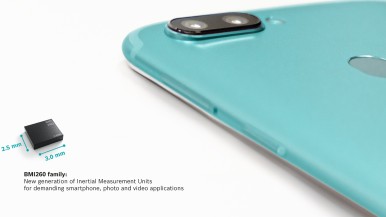
Bosch Sensortec launches the BMI260 family, a new generation of high-performance MEMS Inertial Measurement Units (IMUs) targeted at smartphone applications. The family comprises of three sensors – BMI260, BMI261 and BMI263 – which deliver an extensive range of features, including full Android compliance, an I3C interface, and support for sensor synchronization.The new IMUs are equipped with a high-performance accelerometer and provide highly accurate step counting, motion detection and precise data to support indoor SLAM (Simultaneous Localization and Mapping). In addition to increased performance, the BMI260 family offers significantly reduced power consumption for extended smartphone battery life. Thanks to low-latency, OIS (optical image stabilization) and EIS (electronic image stabilization) support, the BMI260 family enables much sharper pictures and ultra-smooth video stabilization. "Our next-generation BMI260 family of IMUs builds upon the rock-solid foundation put in place by the very successful BMI160," says Dr. Stefan Finkbeiner, CEO of Bosch Sensortec. "These new IMUs deliver enhanced accelerometer performance, an extensive range of powerful features and interfaces, and, importantly, Component Retrimming (CRT) for motionless gyroscope self-calibration. End users can now look forward to many new features and a much faster, smoother, and essentially flawless experience.” Broad range of features The BMI260 is the base variant, combining Bosch Sensortec’s high-end accelerometer performance with Bosch’s automotive-proven gyroscope technology. Its high robustness against temperature fluctuations and PCB stress enables extremely precise acceleration sensing. The BMI261 variant is fully Android-compliant and specifically optimized for always-on smartphone gesture and activity recognition. The BMI263 is Bosch Sensortec’s first product to be fully compliant with the latest I3C standard as defined by MIPI and supports both asynchronous and synchronous timing control. Each device includes a primary and secondary interface that can be configured independently in I2C or SPI. This enables dual SPI configuration, camera modules or auxiliary sensor connections, for example a magnetometer. Finally, the entire BMI260 family enables extended support for data synchronization. Built-in gyroscope self-calibration Each of the new IMU devices includes the industry’s first motionless Component Retrimming (CRT) feature for built-in gyroscope self-calibration. This eliminates the need to calibrate the sensitivity of the MEMS gyroscope using a rotation stimulus. This plug-and-play feature promises to significantly accelerate testing and manufacturing processes to further reduce cost and time-to-market for device makers. Enabling sharp pictures and videos with OIS/EIS The new family of IMUs boasts powerful OIS and EIS features. Excellent, low latency (e.g. Google Daydream View compliant), minimal group delays (max. about 600 μs) and high-precision time stamps (accuracy about 40 μs) substantially improve photo and video quality for end users. Dual SPI interfaces enable a single IMU to serve two SPI-based modules, supporting stereo or 3D camera operation. Using the BMI260 family on the mainboard enables congruent HMI and OIS functions, such as stabilized panorama photo panning and action video tagging. Ultra-low power consumption Power consumption is kept very low, helping to noticeably prolong smartphone battery life and reduce charging cycles for end users. At a full output data rate (ODR) of up to 6.4 kHz, the typical current draw for both the accelerometer and gyroscope is kept at a level of 700 μA. By enabling high output data rates with low current consumption, smartphone manufacturers can avoid compromising their designs with unpleasant aliasing effects – an effect that causes different signals to become indistinguishable when sampled at lower ODRs. The BMI260 IMU family provides an intelligent power management system enabling all always-on features to run inside the ultra-low power domain of the IMU. Therefore, the host application processor has to wake up only on rare, dedicated occasions, enabling a maximized idle period for the main processor. For example, the system can run reliable gesture and activity recognition features at power draws of merely 30 μA. The new BMI260 family offers a compact package measuring only 2.5 x 3.0 x 0.8 mm3. The IMUs are pin-to-pin compatible with its predecessor BMI160. BMI260 and BMI261 are available for high-volume production. Samples of BMI263 are now available on request.

Bosch blazing new trails in mobility and environmental protection

09.05.2018

Press release

Business/economy

Bosch blazing new trails in mobility and environmental protection

Stuttgart and Renningen, Germany – Bosch is aiming for further growth in 2018, despite the difficult economic climate. After achieving record results in 2017, and in light of economic and geopolitical risks, the Bosch Group expects its sales revenue to grow by 2 to 3 percent in 2018. In the first three months, the sales revenue generated by the company matched the high level of the same period of the previous year, and even increased by around 5 percent when adjusted for exchange-rate effects1. “Our company is unequaled when it comes to combining comprehensive connectivity expertise with broad industry and product know-how. This is the Bosch Group’s unique selling proposition,” said the Bosch CEO Dr. Volkmar Denner, speaking at the annual press conference in Renningen. Denner sees improving the quality of life and contributing to eco- and climate- friendliness at the top of Bosch’s agenda: “Our ‘Invented for life’ ethos is our motivation for developing the best possible technologies for environmental protection. We want to help keep people mobile, while improving air quality.” To make practically zero-emissions traffic reality, the company is making heavy investments – both in making electromobility a market success and in enhancing the combustion engine.Innovative diesel technology: unprecedented NOx emissions Bosch has now achieved a breakthrough in diesel technology: with their new diesel technology, Bosch engineers have succeeded in getting NOx emissions down to one-tenth of the legally permitted limit. On average, test vehicles equipped with the enhanced technology already emit no more than 13 milligrams of NOx per kilometer, or far less than the 120 milligrams that will be permitted after 2020. “There’s a future for diesel. It will remain integral to tomorrow’s mobility solutions,” the Bosch CEO said. 2017 in review: record sales revenue and earnings The year 2017 was an extremely good one for Bosch. The company generated sales revenue of 78.1 billion euros. This represents an increase of 6.8 percent, or 8.4 percent after adjusting for exchange-rate effects, which totaled some 1.2 billion euros. All business sectors contributed to these positive results. EBIT (earnings before financial result and tax) from operations reached 5.3 billion euros in 2017, thus improving by nearly 17 percent compared with 2016. “Both sales revenue and earnings are the highest ever in our company’s history. What’s more, EBIT from operations increased at a higher rate than sales revenue,” said Prof. Stefan Asenkerschbaumer, Bosch CFO and deputy chairman of the management board. The EBIT margin from operations came to 6.8 percent, or 0.6 percentage points higher than in the previous year. Research and development expenditure also remained on a high level. Last year, it came to some 7.3 billion euros. This is equivalent to more than 9 percent of sales. The ultimate IoT-related discipline: cross-domain ecosystems No other company offers as many real-world connectivity solutions as Bosch: aside from smart mobility, they include domains such as connected manufacturing (Industry 4.0), the smart city, and not least the smart home. So far, Bosch has put 170 in-house IoT projects into practice, focusing on fundamental challenges such as population growth, urbanization, and climate change. In 2017, the company sold some 38 million web-enabled products, roughly 40 percent more than in 2016. Today, Bosch employs more than 25,000 software engineers, no less than 4,000 of whom are engaged in developing solutions for the internet of things. The company increasingly sees future business prospects arising from the digitalization of entire ecosystems. Home Connect – the biggest IoT ecosystem for household appliances – has already been adopted by 28 industry partners. The Home Connect app can be used to operate everything from coffee makers to washing machines. Bosch has identified significant potential in cross-domain ecosystems that link different industries, such as “Logistics 4.0.” Such ecosystems bring together solutions for manufacturing processes, building services, security, and mobility – all areas in which Bosch plays an active role. As Volkmar Denner emphasized: “Cross-domain ecosystems are the ultimate IoT-related discipline. No other company is better qualified to realize them than Bosch. The competitive advantage offered by our diversification has never been greater.” Electromobility: striving for market leadership Bosch is working tirelessly to achieve a breakthrough for electromobility. In 2017, the company won 20 contracts to produce electrical powertrain systems, valued at a total of 4 billion euros. Bosch expects the mass market for electric vehicles to take off from 2020, and aims to be a leading player in that market. This is already the case in China, where Bosch is working with the U.S. startup Nikola Motor Company and the Chinese company Weichai Power, the world’s biggest manufacturer of commercial-vehicle engines, to promote the use of fuel cells in production vehicles. In addition to its components business, Bosch also sees a promising future in web-based services, such as the recently premiered system!e, to improve the viability of electric driving. Automated driving: from component sales to systems solutions Bosch is also making significant progress in the transition to automated driving. As early as 2019, the company expects to generate sales of two billion euros with driver assistance systems. Bosch is growing faster than the market, which is forecast to grow 20 percent this year. Sales of Bosch radar and video sensors, for example, are expected to increase by 40 percent. “More automation means greater technical complexity. In the future, our customers will need all-in-one solutions, not just discrete components. This is another area in which our systems expertise is an advantage,” Denner said. Some 4,000 engineers are working for Bosch on automated-driving solutions, 1,000 more than a year ago. Connected driving: entering the ridesharing business Connected mobility is another market in which Bosch expects to generate significant business. The value of this market is forecast to reach 140 billion euros worldwide by 2022. By 2025, there will be more than 450 million connected vehicles on the world’s roads. Bosch has entered the ridesharing business through its acquisition of the U.S. start-up Splitting Fares (SPLT). Bosch has brought SPLT and more than 20 other mobile service providers together in its new Connected Mobility Solutions division. They include the COUP e-scooter sharing service, which is soon to expand its business to Madrid, Spain. Results by business sector for 2017 All business sectors reported improved sales revenue in 2017: Mobility Solutions increased its sales revenue by 7.8 percent (9.4 percent after adjusting for exchange-rate effects) to 47.4 billion euros. This is three times the growth rate for the automotive industry worldwide. This sales revenue includes, for the last time, the contribution by the Bosch Starter Motors and Generators division, which was sold at the end of 2017. The margin from operations was 7.3 percent, or one percentage point higher than in the previous year. In the Consumer Goods business sector, sales revenue amounted to 18.4 billion euros. This represents an increase of 4.5 percent, or 6.7 percent taking exchange-rate effects into account. The margin from operations was 8.1 percent. The Industrial Technology business sector increased its sales revenue by 7.8 percent to 6.8 billion euros, or by 9.2 percent after adjusting for exchange-rate effects. The margin from operations was 3.3 percent, up 2.1 percentage points on the previous year. The Energy and Building Technology business sector achieved sales of 5.4 billion euros, which equates to an increase of 4.1 percent, or 5.8 percent after adjusting for exchange-rate effects. The margin from operations was 4.4 percent. Results by region for 2017 The Bosch Group generated sales revenue of 40.8 billion euros in Europe in 2017. This represents an increase of 5.6 percent, or 6.6 percent taking exchange- rate effects into account. The company benefited from the recovery of important western European markets and the good economic developments in Germany. Sales revenue from eastern European countries such as Russia, Romania, and Turkey also increased significantly. Strong growth was also reported in Asia Pacific, including Africa. Sales revenue increased by 13.5 percent (16.5 percent after adjusting for exchange-rate effects) to 23.6 billion euros. After adjusting for exchange-rate effects, the group’s sales revenue in North America remained on the previous year’s level. Due to lower output in the automotive sector and negative exchange-rate effects, sales revenue dropped by a nominal 2 percent to 12.1 billion euros. In South America, by contrast, sales revenue increased substantially, rising 16.4 percent (13.2 percent after adjusting for exchange-rate effects) to 1.6 billion euros. Headcount: continuing demand for IT and software experts At the reporting date of December 31, 2017, the Bosch Group had around 402,000 associates worldwide. This represents a year-on-year increase of 12,900. Recruitment was particularly strong in Asia Pacific and in central and eastern Europe. In Germany, the workforce expanded by around 3,700 to a total of 137,700 associates. Bosch is looking to recruit more trained specialists and executives in 2018, with a special focus on IT and software engineers. An overview of key figures can be found here.

CES 2018: Bosch is showing these smart solutions in Las Vegas

22.12.2017

Press release

Internet of Things

CES 2018: Bosch is showing these smart solutions in Las Vegas

At CES 2018, to be held in Las Vegas from January 9 to 12, 2018, Bosch will be demonstrating that the smart, connected city of tomorrow is already a reality. The supplier of technology and services will be presenting innovative solutions and services for urban mobility and a connected working world as well as for smart homes and buildings. You will find Bosch in the Central Hall, Booth #14028 .Solutions for connected cities: safety, energy efficiency, reduced stress Taking the hassle out of parking: Bosch will be presenting various solutions for connected and automated parking. Community-based parking enables drivers to find what has become a rarity in residential areas and city centers: an empty parking space. As they drive by, cars automatically recognize and measure the size of the gaps between parked cars, transmitting the data in real time to a digital parking-space map that enables drivers to locate vacant parking spaces. Automated valet parking from Bosch goes one step further – the car parks itself without any action needed on the driver’s part. Drivers leave their vehicle at the entrance to the parking garage and send a corresponding command from a smartphone app: the car then searches for a vacant spot on its own and parks there without assistance. One factor making fully automated parking a reality is smart parking-garage infrastructure, which connects with the vehicle’s on-board software. Intelligent power supply with DC microgrids: Microgrids are relatively small, independently controlled energy-management systems that can power large buildings. Their ability to run on both traditional and renewable fuels means they have excellent environmental credentials. Another major advantage of microgrids is their self-sufficiency, which makes them a reliable source of power when a weather- or security-related outage affects the broader grid. Unlike conventional systems, Bosch microgrids run on direct current (DC) instead of alternating current (AC), enabling energy savings of up to ten percent. The Bosch DC microgrid was developed in the U.S. as part of a strategic project to develop new business opportunities for the company in a startup environment. As early as 2015, Bosch outfitted an existing facility at Fort Bragg, North Carolina, with a smart-building microgrid solution which supplies less expensive, more eco-friendly electricity. Early warning about flooding: This system offers early warning about potential flooding by digitally monitoring the levels of rivers and other bodies of water close to cities in real time. Up to now, water levels have always been measured by mechanical means. It can take hours until the data is available for third parties. Bosch is currently testing the flood monitoring system in a pilot project on the Neckar river in Ludwigsburg, Germany. There, ultrasonic sensor probes and cameras track changes in water level, water velocity, and rate of discharge. This data is sent to the Bosch IoT Cloud for assessment. When critical thresholds are exceeded, advance alerts are sent by SMS to the affected municipalities, residents, and business owners. This gives them enough time to take precautions against flooding or flood damage. A number of flood-prone municipalities in India and South America have already expressed interest in the solution. Vivatar app – a digital guardian angel: Going jogging in the dark, or heading home on foot after the last bus has already left is enough to make anyone feel uneasy. This is where the Bosch Vivatar app comes in. People can use it to contact friends and family and be digitally “escorted” home via GPS. Users decide for themselves when they should be accompanied and by whom. The Premium version of Vivatar grants users 24/7 access to the Bosch Emergency Assistant, a professionally trained emergency team. Bosch start-ups are developing solutions for smart cities: Bosch wants to tap new fields of business quickly with its in-house start-up platform. At the same time, the innovative start-ups using it benefit from the infrastructure provided and from the long-standing experience of a supplier of technology and services such as Bosch. At CES 2018, two start-ups from the platform will be presenting their connected-city solutions. One of these is the MyScotty app, which allows users to access as well as pay for local shared mobility services from different providers. A single sign-on is enough to gain permanent access to thousands of cars, bicycles, and scooters. This means far fewer apps are needed. MyScotty debuted in Germany mid-2017, and other countries are set to follow. Another solution, the smart mobility center BePart, is still in the development phase. It is designed to enable cities and towns to avoid congestion by diverting traffic during rush hour. Commuters can receive recommendations in real time from the municipal authorities and adjust their routes accordingly. The goal is to improve air quality in conurbations. Initial pilot projects will run in one or two cities in Germany in 2018.