Search & find:
media, releases and events to support your reporting about the Bosch Group.

Bosch polls Europeans about the future of the powertrain: respondents in favor o ...

20.10.2020

Press release

Electrified mobility

Bosch polls Europeans about the future of the powertrain: respondents in favor o ...

Stuttgart, Germany – According to a representative survey conducted in June 2020 by the market research institute Innofact on behalf of Bosch, no powertrain types have lost any of their relevance – whether batteries or fuel cells, gasoline or diesel engines. If the 2,500 survey respondents in Germany, France, Italy, and the U.K. had to decide on a new car tomorrow, one in two would opt for a stand-alone combustion engine for their primary car and around one in three for their second car. However, when asked what would be the most prevalently used powertrain in 2030, some 68 percent of those polled see the electrical powertrain in pole position, ahead of hybrids and combustion engines. Survey participants acknowledged the potential of fuel cell-powered cars, with around one in three seeing the fuel cell as the future of mobility. “Electric mobility is on its way – and that’s good news. This year alone, Bosch is investing 500 million euros in this domain. At the same time, we’re also continuously refining the internal combustion engine – because it’s still needed,” says Dr. Stefan Hartung, member of the Robert Bosch GmbH board of management and chairman of the Mobility Solutions business sector.Respondents want incentives for all powertrain types A further question reveals respondents’ open-mindedness toward powertrains of all types: when asked whether they favor incentives for vehicles equipped solely with combustion engines, in addition to the many government subsidies for electric cars and plug-in hybrids, 70 percent of the Europeans polled answered in the affirmative. The number of respondents in favor of government incentives to buy new cars with a conventional powertrain is highest in Italy at 83 percent, and lowest in the United Kingdom at 60 percent. In France, 77 percent are in favor; in Germany, 62 percent. “Incentivizing modern combustion engines can accelerate the vehicle fleet’s renewal, which would also help the environment and the climate,” Hartung says. Just under one-third of Europeans would like to see this subsidy run to at least 9,000 euros. This is the same as the maximum rebate currently offered by the German government for the purchase of an electric car. Two findings are notable: for one, 72 percent of city dwellers in the four surveyed European countries believe the combustion engine merits a subsidy. For the other, the majority (80 percent) of 18-to-29 year-olds also endorse incentives for cars with combustion engines. Even cars with conventional engines can run in a climate-neutral way. The key to this is renewable synthetic fuels (RSF), which are made from renewable hydrogen and CO2 captured from the surrounding air. On average, 57 percent of those taking part in the Bosch survey agreed that RSF should benefit from tax breaks. “There’s just no way around renewable synthetic fuels if we want to achieve our climate targets,” Hartung says. “Only with RSF can the more than one billion vehicles already on the road worldwide help contain global warming.” Can’t live without a car: respondents in Europe are unanimous In Europe, the status of the car and its importance for mobility is unlikely to change any time soon. Around 60 percent of those surveyed in Germany, France, Italy, and the U.K. are unable to imagine living without a car altogether. And a clear majority of the remaining 40 percent are only prepared to leave their car behind some of the time. The car’s approval rating in rural Europe is 77 percent. Incidentally, these findings are roughly similar among 18-to-29 year-olds, around half of whom also come out clearly in favor of a car. While 61 percent of those surveyed in Germany and 47 percent in the U.K. cited greater flexibility as the most important reason for having a car, 41 percent of French respondents indicated they need it mostly for work. In contrast, 55 percent of surveyed Italians prefer the car to other forms of mobility that they feel are less convenient. “For the foreseeable future, the car will remain the number one means of transport – and has excellent prospects of becoming even more climate-friendly,” Hartung says. Bosch’s objective is for people to be able to stay mobile in an affordable and eco-friendly way. The future of the powertrain: Bosch champions electromobility and combustion technology Bosch aims to make transportation as resource-friendly as possible, and is pursuing the vision of CO2-neutral and virtually emissions-free mobility in several ways. In its approach to future powertrain technology, the supplier of technology and services is keeping an open mind. On the one hand, Bosch aims to become the market leader in electromobility with battery and fuel cell-powered vehicles. Electric vehicles are climate-neutral if the charging power and hydrogen are sourced from renewables. On the other hand, Bosch is continuing to refine combustion engines to contain global warming and protect the environment to the greatest extent possible. If they run on RSF, gasoline and diesel engines can also be climate-neutral on the road. Bosch expects around one-third of all newly registered vehicles worldwide to be purely electric by 2030. Two-thirds of all new vehicles will still be powered by a combustion engine, many of them as hybrids.

Bosch and CATL collaborate on battery cells

10.09.2019

Press release

Electrified mobility

Bosch and CATL collaborate on battery cells

Stuttgart, Germany: Bosch and Contemporary Amperex Technology Co. Limited (CATL) have concluded a long-term strategic cooperation agreement. The partners are going to jointly specify high-performance battery cells. CATL will then design, develop, and manufacture these cells in accordance with Bosch requirements. The cells are to be used in the 48-volt battery developed by Bosch. This battery is the core element of 48-volt hybrid powertrain systems, whose efficiency is making them globally ever more important. In joining this alliance, the supplier of technology and services is also securing its long-term sourcing for battery cells. “We have to understand battery cells, but we do not have to make them ourselves,” says Dr. Stefan Hartung, member of the board of management and chairman of the Mobility Solutions business sector. “With CATL, we have brought an established cell specialist for lithium-ion batteries on board as a partner. In combination with our systems know-how and expertise in battery management, we will extend our strong position in the 48-volt battery market.” CATL, one of the world's leading experts of lithium-ion battery is currently building a battery factory in Erfurt, Germany. For Bosch, this alliance is another step on the path to market leadership in electromobility. Numerous global automakers already use Bosch’s 48-volt battery.48-volt system destined to be the minimum standard in tomorrow’s automotive market Bosch’s portfolio for 48-volt systems extends beyond the 48-volt battery to encompass other system components such as DC/DC converters and electrical machines. With this technology, Bosch aims to gear up all classes of vehicles for future emissions requirements and offer affordable hybridization. Its 48-volt electrification augments the combustion engine with an electric motor. This motor is powered by the 48-volt battery, which in turn is charged by recovering energy expended during braking. This can cut fuel consumption by as much as 15 percent. If we want to improve efficiency, we can no longer afford to let brake energy dissipate unused,” Hartung says. “This 48-volt hybridization is sure to be the minimum standard in tomorrow’s automotive market.” The market for 48-volt solutions is growing worldwide. Bosch expects that by 2025, nearly 20 percent of new cars sold annually around the globe will have a 48-volt system and matching battery on board. Demand for 48-volt systems is rising, especially in Europe and China. Cost-effective and easy to integrate – the Bosch 48-volt battery The Bosch plant in Wuxi, China, started making the first generation of the 48-volt battery late last year. The USP of the latest version of this product is that the battery is compact and cooled passively. This means automakers can simply integrate it into their vehicle models, and do not require any additional cooling units. In addition, they can dispense with the long and costly effort of proprietary engineering work. “We are confident that our 48-volt battery will achieve a leading position in the market, and make the 48-volt hybrid affordable for the mass market,” Hartung says. Expertise across the e-mobility ecosystem Bosch is more broadly positioned in e-mobility than any other company. It aims to take the lead in the mass e-mobility market that will emerge in 2020 and beyond. The company is planning to increase its sales in this area more than tenfold by 2025, to five billion euros. Bosch electrical powertrain components already feature in more than a million vehicles around the world. The supplier of technology and services has carried out powertrain projects for 50 electricvehicle platforms. It is the market leader in China, the world’s biggest and fastestgrowing electric-vehicle market. Bosch technology can be found in practically every class of vehicle, from electric baby buggies, bicycles, and scooters to passenger cars and commercial vehicles. The company’s expertise thus extends across the entire e-mobility ecosystem. Bosch is partnering with various automakers to give e-vehicle drivers app-based access to some 40,000 charge spots in eight European countries.

Bosch extends the service life of electric-vehicle batteries

28.08.2019

Press release

Electrified mobility

Bosch extends the service life of electric-vehicle batteries

Stress makes cells age faster. Something that geneticists have long since demonstrated for the human body is also true for electric-vehicle battery cells. The older the batteries get, the lower their performance and capacity, and the shorter the range of the vehicle. To help batteries last longer, Bosch is developing new cloud services that supplement the individual vehicles’ battery-management systems. “Bosch is connecting electric-vehicle batteries with the cloud. Its data-based services mean we can substantially improve batteries’ performance and extend their service life,” says Dr. Markus Heyn, member of the board of management of Robert Bosch GmbH. Smart software functions in the cloud continually analyze the battery status and take appropriate action to prevent or slow down cell aging. These measures can reduce the wear and tear on the battery, the most expensive component of an electric vehicle, by as much as 20 percent. Real-time data gathered from the vehicle and its surroundings plays a key role here. The cloud services utilize this data to optimize every single recharging process and to provide drivers with tailored driving tips on how to conserve battery power via the dash display. Bosch calls the new service Battery in the Cloud, and its first customer is DiDi, China’s leading provider of mobility services.Precise real-time analysis According to experts, the average service life of today’s lithium-ion batteries is 810 years or between 500 and 1,000 charge cycles. Battery makers usually guarantee mileage of between 100,000 and 160,000 kilometers. But rapid battery charging, high numbers of charge cycles, an overly sporty driving style, and extremely high or low ambient temperatures are all sources of stress for batteries, which makes them age faster. Bosch’s cloud-based services are designed to recognize – and counter – these stress triggers. All battery-relevant data – e.g. current ambient temperature and charging habits – is first transmitted in real time to the cloud, where machine-learning algorithms evaluate the data. With these services, Bosch is not only offering a window into the battery’s current status at all times, but enabling a reliable forecast of a battery’s remaining service life and performance to be made for the first time. Previously, it was not possible to make any accurate forecast of how quickly an electric-vehicle battery would wear out. “Powerful batteries with long services lives will make electromobility more viable,” said Heyn. Another feature of the smart software functions is their use of the swarm principle: the algorithms used for analysis evaluate data gathered from an entire fleet, not just from individual vehicles. Swarm intelligence is the key to identifying more of the stress factors for vehicle batteries, and to identifying them more quickly. Protecting cells against aging The new insights gained into a battery’s current status enable Bosch to also actively protect it against aging. To give one example: fully-charged batteries age more quickly at particularly high or low ambient temperatures. Bosch’s cloud services thus ensure that batteries are not charged to 100 percent when conditions are too hot or too cold. By reducing the battery charge by only a few percentage points, the battery is protected against inadvertent wear and tear. Data in the cloud will also help improve battery maintenance and repair. As soon as a battery fault or defect is identified, for example, the driver or fleet operator can be notified. This increases the chances that a battery can be repaired before it becomes irrevocably damaged or stops working altogether. Finally, the cloud services also optimize the recharging process itself. The recharging process – which, by the way, is one of the biggest obstacles to creating a mass market for electromobility – harbors the danger that the battery cells permanently lose some of their performance and capacity. Smart software in the cloud can calculate an individual charge curve for each recharging process, regardless of whether it takes place at home or elsewhere. This means the battery is recharged to the optimum level, helping conserve the cells. Whereas existing apps with charge timers merely allow drivers to time the recharging process so that it is carried out when demand for electricity is low, the Bosch solution goes much further, offering a specially developed recharging process as part of the company’s new battery services. They optimize both fast and slow charging and control electricity and voltage levels during the recharging process, thus prolonging battery life. Q&A What is the difference between Bosch cloud services and conventional battery-management systems? The battery-management systems currently integrated in electric vehicles monitor and manage the battery cells, and ensure both reliable operations and uniform recharging of the battery cells. But a battery’s performance and service life depend on numerous factors, such as the frequency with which it is recharged and discharged, the type of recharging process used, the driving style, and external factors such as the ambient temperature. That is why Bosch has developed cloud services that supplement the conventional battery-management systems installed in electric vehicles. Why is Bosch developing its own recharging strategies? Up to now, different recharging processes have been programmed into electric vehicles. Going forward, Bosch will offer automakers innovative recharging strategies that complement the processes available. When, for example, drivers want to recharge their batteries faster, a rapid recharge process automatically shortens the time required without damaging the battery. Another strategy optimizes the more leisurely standard recharging process, which can take several hours. The Bosch process is especially gentle on the battery, enhancing both its capacity and service life.

Bosch presents electromobility for semitrailers

17.09.2018

Press release

Electrified mobility

Bosch presents electromobility for semitrailers

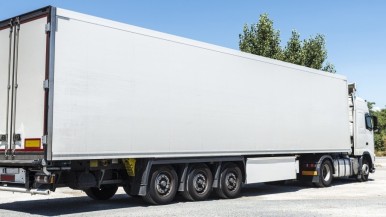
Bosch is electrifying semitrailers, and thus making electromobility possible for today’s semitrucks. At the IAA Commercial Vehicles in Hannover, Bosch will be presenting an electrified axle that can be integrated into semitrailers. The idea behind it is to integrate an electrical machine into the semitrailer’s axles, instead of simply allowing them to roll freely, as has been the case up to now. This means they can generate electricity during braking, and feed it into the trailer’s power units. In the case of a refrigerated trailer, the saving can be as much as 10,000 euros a year. If the cooling unit is operated using the power generated in this way, Bosch calculates that it can save up to 9,000 liters of diesel a year. An electrical start and acceleration boost function can help save additional fuel. Any fuel saving also reduces CO2 emissions. One further advantage, especially for deliveries by urban supermarkets, is that electric cooling units make significantly less noise than diesel-powered ones. Deliveries can thus be made early in the morning or late in the evening without disturbing the neighbors.“Bosch is making trucks’ rear axles electric and smart. Our electrification solution for trucks makes economic sense and shows how electromobility can work even in today’s trucks,” says Dr. Markus Heyn, member of the Robert Bosch GmbH board of management. In addition, the electrical axle is an important step toward automated trailer parking on logistics companies’ parking lots. Adding a powertrain to the axle means that the trailer can be shunted around the parking lot without a tractor. Bosch offers this technology either for new trailers or as a retrofit solution. The potential demand is huge. In Europe alone, roughly a quarter of a million trailers with a gross vehicle weight of more than 10 metric tons are newly registered every year. One in five of these is equipped with a refrigeration unit. Energy recuperation: passenger-car components work intermittently In contrast to many other commercial-vehicle projects, Bosch engineers are relying on passenger-car parts for the electrified axle. For example, the SMG180 electric motor already features in hundreds of thousands of hybrid and electric cars worldwide, including the German postal service ́s StreetScooters. Unlike in electric cars, the motors in the electrified axle work only intermittently, starting only if they can recuperate energy. This may be the case when driving downhill or braking, for example. As a result of this recuperation, which is an established technology in passenger cars, energy is no longer lost when braking, but is stored in a high-voltage battery. The electricity can be fed into the motors during hill starts, or power the trailer’s refrigeration unit, and in this way save a lot of fuel. Such demand-driven application has a further advantage: since the electric motors are inactive most of the time, recuperating energy or providing assistance when starting or on ascents for only a few seconds or minutes every hour, significantly less expensive production parts from passenger cars can be used in this trailer application. The motors are still powerful enough to move the trailer or to provide start assistance to construction vehicles. Automated parking at the depot: electric motor is an invaluable helper In addition, the electrified axle is an invaluable helper for automated driving – only when a motor is installed in the axle can a trailer maneuver independently at the depot. “Bosch’s electrified axle makes trailers independent. By electrifying trailers, Bosch is taking an important step toward automated parking at freight depots,” Heyn says. They also facilitate remote-controlled electric driving on private property such as freight companies’ premises or at ports. Up to now, truckers have had to do this task themselves, or a special trailer-shunting unit has done it for them. Now, however, the electric motor makes the trailer into an independent vehicle that can travel short distances. With the help of additional sensors attached to the trailer and installed at various points in the depot, it will be possible for goods trailers to park themselves. Electrified axle: Q&A What parts are needed to electrify an axle? Bosch supplies an inverter and the relevant vehicle control unit (VCU). The separate motor generator (SMG) is available for installation as a complete electric motor, or the active components – rotor, stator, and resolver – can be integrated into the axle. A battery system that can store the energy is also required. How much does an electrified axle cost? Bosch cannot provide an exact figure. However, the company’s view is that the system must pay back the original investment after two years’ operation at the latest. In view of the cost savings the axle offers in applications such as refrigerated trailers, Bosch is confident that this goal is realistic. Where can an electrified axle typically be used? The most obvious choice at present is in refrigerated trucks, especially for food deliveries in urban areas. Electrically powered refrigeration units are not only more economical over the medium term, but also make significantly less noise. And there are none of the emissions caused by combustion engines. The construction industry is very interested in the start assistance function in excavation pits, especially when they are muddy. How do you arrive at your estimate for fuel savings? The diesel engine that currently powers the refrigeration unit, and that is now being completely displaced by electricity, consumes between two and three liters of diesel an hour. On this basis, annual consumption is roughly 9,000 liters. In addition, there are potential savings resulting from the electrical assistance provided when starting, accelerating, and on ascents. The extra saving may be as much as four percent. Why does Bosch favor an axle with two electric motors? Two electric motors can recuperate significantly more energy, and offer a high additional benefit at relatively low extra cost, thus allowing greater savings to be made, In addition, a dual-motor axle is better for automatic maneuvering at a depot: having an electric motor at each end of the axle significantly reduces the trailer’s turning radius. If the customer wishes to save costs, electrification with just one motor is possible.