

Stuttgart – The automotive industry is undergoing a fundamental transformation, with software – and especially artificial intelligence (AI) – becoming a core component of the future driving and in-cabin experience. Bosch is a pioneer in this field and is taking a decisive step forward in bringing AI into the vehicle, turning the cockpit into an intelligent and proactive companion. At one of the world’s leading electronics trade fairs, CES® 2026 in Las Vegas, USA, Bosch will unveil its new AI extension platform, an AI-enabled high performance computing unit for realizing an AI-powered cockpit. “The new AI extension platform enables existing cockpit systems to be quickly and easily upgraded with advanced AI functions. This makes the driving experience more comfortable, intuitive, and safer for all vehicle occupants,” says Markus Heyn, member of the board of management of Robert Bosch GmbH and chairman of Bosch Mobility.
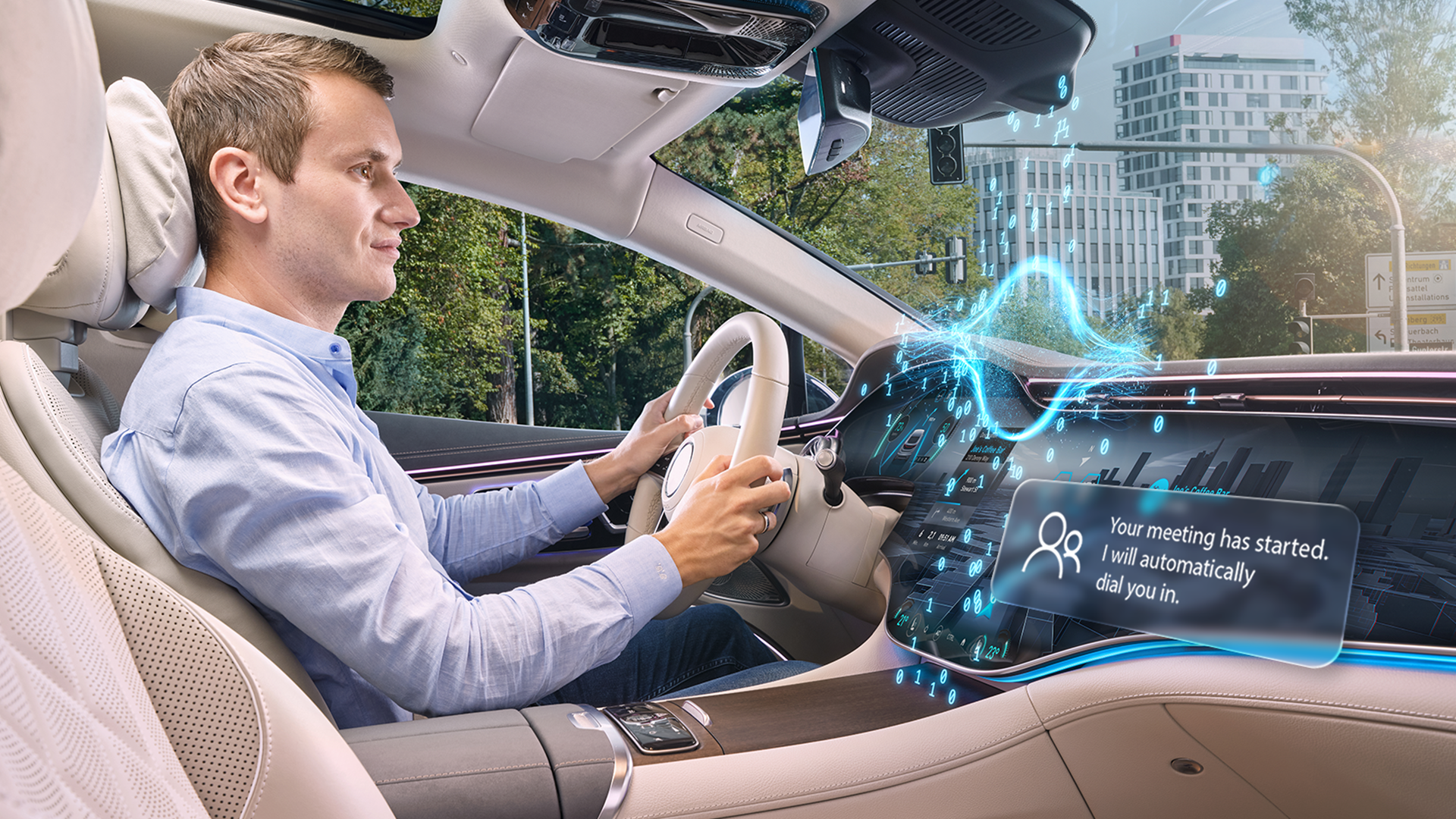
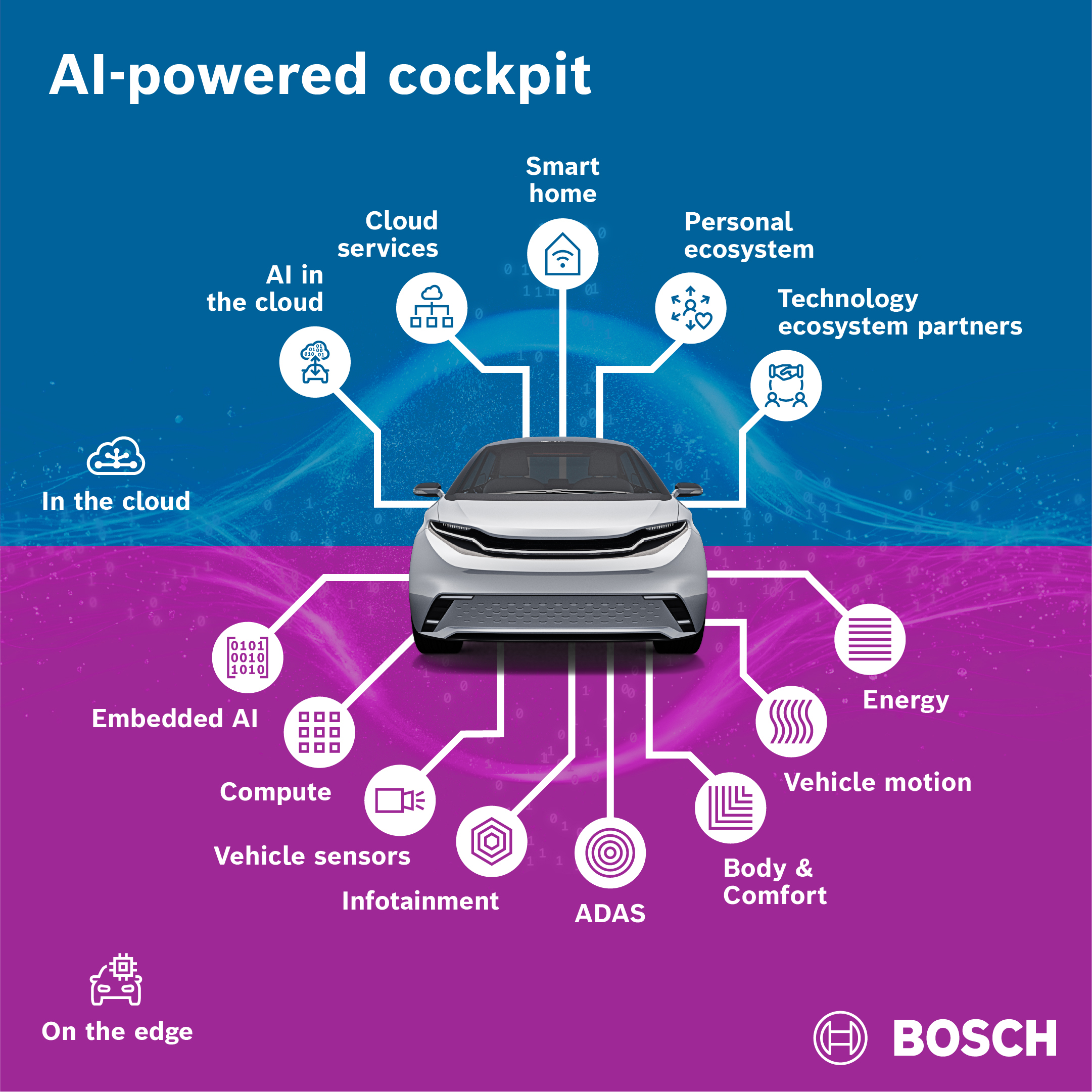
With Bosch’s new AI-powered cockpit, the vehicle is transforming from a simple means of transport into an intelligent, self-learning partner that understands the driver’s routines, preferences, and context. Features of Bosch’s AI-powered cockpit include an AI voice assistant that anticipates needs, comprehensive scene understanding of the vehicle interior, precise navigation, and extensive entertainment options. For instance, a simple statement like, “I’m feeling cold,” can trigger multiple coordinated actions, such as activating the seat heating while simultaneously adjusting the cabin temperature.
Two billion euros in sales by the end of the decade
“Bosch’s new AI-powered cockpit enables both drivers and car manufacturers to fully leverage the capabilities of modern automotive software. Thanks to the ‘AI extension platform,’ new functions can be implemented in the vehicle much faster in the future,” says Heyn. Bosch sees a significant and growing market for such AI cockpits. Various market research institutes, including Grand View Research* and MarketsandMarkets*, predict that the market for AI-enabled in-vehicle infotainment (IVI) solutions will reach a volume of approximately 17 billion euros by 2030. Bosch aims to participate in this market. The company expects sales of over 2 billion euros with such IVI solutions by the end of the decade and strives for a leading position among the top three providers.
Bringing advanced AI to today’s vehicles
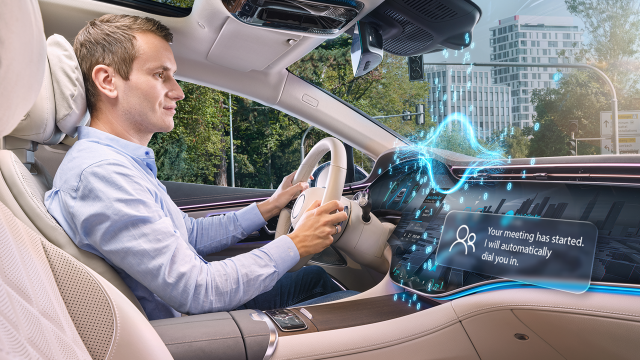
A key application of this is turning unproductive downtime in the car into productive work time. Together with Microsoft, Bosch is transforming the car into a mobile office without compromising on driver safety. By integrating Microsoft Foundry and specialized features for the cockpit, the solution provides seamless access to the Microsoft 365 productivity suite. Microsoft 365 applications can be intelligently connected with other vehicle domains to prioritize safety and minimize distraction. For example, a driver can use an intuitive voice command to join a Microsoft Teams call, which in turn prompts the system to proactively activate adaptive cruise control. This seamless, cross-domain interaction helps to create a journey that is both productive and safe – a significant value for commuters and frequent drivers, for instance.
Bosch’s new “AI extension platform” allows today's vehicles to be quickly and easily retrofitted without changes to existing hardware or system architecture. At its core, the platform leverages the powerful “NVIDIA DRIVE AGX Orin system-on-chip” (SoC), which forms the foundation for complex AI applications in the cockpit. It builds on the industry-standard “NVIDIA CUDA” platform, allowing automakers to easily integrate their own AI models and agents. Offering 150 to 200 tera operations per second (TOPS) of additional compute power, the compact unit connects via simple power and Ethernet interfaces and is supported by flexible active air or liquid cooling options. To accelerate the development and deployment of complex AI features, Bosch also utilizes Nvidia’s software suites, including the “NVIDIA NeMo framework” for managing the end-to-end AI lifecycle. This enables seamless integration of advanced in-cabin applications such as real-time sensor processing and vision-language models (VLMs). In addition, core reasoning and speech capabilities powered by “NVIDIA Nemotron models” deliver contextual understanding, multi-step reasoning, and natural, conversational user interactions. Furthermore, using Microsoft Foundry, Bosch designs and manages the in-vehicle AI, ensuring a scalable, always up-to-date AI assistant experience in the cockpit.
Bosch will demonstrate the AI-powered cockpit and the AI extension platform for the first time at CES® 2026 in Las Vegas.