Search and find:
Photos, videos, releases, events to support your reporting about the Bosch Group

Bosch and Mojio Introduce IoT Emergency Response Solution for Any Passenger Vehi ...

07.01.2019

Press release

Internet of Things

Bosch and Mojio Introduce IoT Emergency Response Solution for Any Passenger Vehi ...

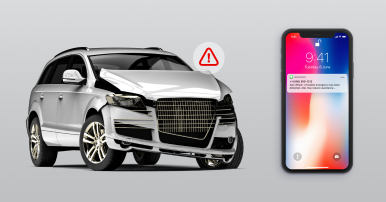
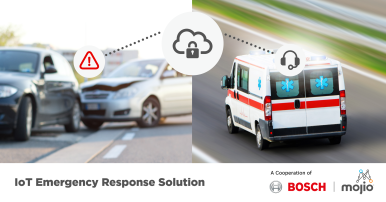
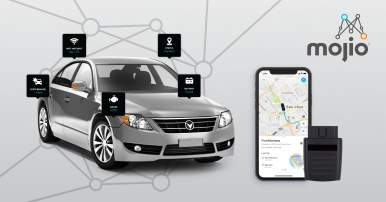
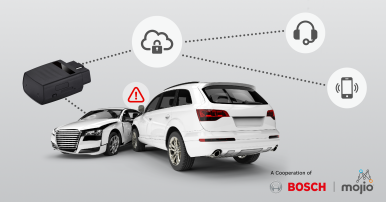
Las Vegas – The promise of the Internet of Things is vast, especially when humans begin to see, touch and feel the benefits of IoT technology. One key place is the vehicle, where IoT technology is enabling connected car experiences that make driving smarter, safer and more convenient.Today, at CES®, the largest, most influential tech event in the world, Bosch and Mojio unveiled a jointly developed, IoT integrated emergency response solution. The new offering adds crash detection and emergency call (eCall) response to an existing connected car solution from Mojio. Through the simple combination of a plug-and-play device for the vehicle’s OBD-II port and a mobile app, nearly a million consumers in North America and Europe have already upgraded their cars with Mojio’s white-label connected car solutions. These connected car offerings are deployed by Mojio’s portfolio of mobile network operator customers, including Deutsche Telekom, T-Mobile US and Telus. The new integrated emergency response offering combines a crash detection algorithm and eCall emergency services from Bosch with Mojio’s telco-grade cloud platform and white-label mobile apps for connected cars. The end result is an enhanced safety experience that senses collisions, assesses severity and triggers the appropriate emergency response. The key benefit of this IoT solution where vehicles are directly connected to the cloud is professional help arriving sooner in the case of an accident. “Enhanced driver safety, and the peace-of-mind that comes with it, will be a powerful benefit of connected mobility,” said Mike Mansuetti, president of Bosch in North America. For about $10 a month, this retrofit technology can be used in any vehicle, regardless of the make and model. Existing benefits include Wi-Fi connectivity for the vehicle and notifications for engine issues and recall notices to make informed decisions on maintenance and repairs. It can also locate a stolen vehicle to inform authorities and provides access to a growing range of smart, integrated services, such as on-demand roadside assistance and parking reservations. With the addition of the integrated crash detection and eCall service, drivers will soon benefit from the enhanced safety features enabled by Bosch. The crash detection algorithm from Bosch uses accelerometer sensor data from within a ‘made for Mojio’ certified OBD-II device to sense and measure a collision in real-time, communicating the crash data to Mojio’s cloud platform and triggering contextual emergency response alerts. The critical data, including the crash time, vehicle location and incident severity, is sent from Mojio’s cloud to Bosch’s eCall system to enable rapid dispatch of local emergency responders to the scene. In addition to the professional eCall response from Bosch, a simultaneous notification is sent to user-designated SOS contacts, such as family and friends, via Mojio’s mobile app and SMS. “We’re excited to work side-by-side with Bosch to help save lives by creating a safer and smarter global driving community, enabled by IoT,” said Kenny Hawk, Mojio CEO The solution is initially being offered to Mojio’s global portfolio of mobile network operator customers, with early deployments to consumers expected by mid-2019 in North America and Europe. Mojio’s distribution model leverages the strength of major telecom brands to deliver IoT services that are affordably priced and widely accessible through a variety of sales channels. That consumer reach, combined with the ubiquity of the OBD-II port (mandated with all passenger vehicles manufactured since 1996 in the US and 2001 in Europe), will unlock the benefits of this IoT safety upgrade to hundreds of millions of drivers of all types of vehicles. This is the first joint connected mobility solution to be introduced since the two companies announced a strategic investment and innovation agreement in June 2018 - an initiative led by Bosch’s Connected Mobility Solutions global division.

14.12.2018

Press release

Internet of Things

Christmas goes digital: why mini Bosch components will feature in so many gifts ...

Reutlingen, Germany – This year once again, the gifts under the Christmas tree will be emitting beeps, buzzes, and radio waves: according to Bitkom, some 70 percent of Germans will be giving digital gifts. This could be a smart watch, a game console, or of course a cell phone. This also means that Bosch will figure prominently under people’s Christmas trees, even though few may realize it. There’s at least one Bosch MEMS sensor in more than half the smartphones on the planet, and five of them on average in every new car. And there are millions more in drones, game consoles, fitness wristbands, and vacuum-cleaning robots. Bosch has produced more than ten billion of these miniature sensors in its wafer fab at Reutlingen, 40 kilometers south of Stuttgart, since 1995. “MEMS sensors are the building blocks of the connected world. They endow everyday objects with sensory perception and connect them with the internet,” says Jens Fabrowsky, member of the executive management of the Automotive Electronics division at Robert Bosch GmbH. With the number of connected devices rising fast – Gartner expects the global count to come to 20 billion by 2020 – MEMS sensors are sure to become chip-sized superheroes that we simply cannot do without. MEMS sensors measure the world and teach electronic systems how to see, feel, and smell. They turn a simple cell phone into a smartphone that takes sharp pictures and navigates on the street and over multiple stories in buildings....Jens Fabrowsky, member of the executive management of the Automotive Electronics division at Robert Bosch GmbH Ten billion sensory organs Rectangular or square and smaller than a pinhead at between one and four millimeters tall, these components are not easily seen. But however unremarkable MEMS sensors may seem at first glance, these mighty mites are the stars and polymaths of the connected world. “MEMS sensors measure the world and teach electronic systems how to see, feel, and smell. They turn a simple cell phone into a smartphone that takes sharp pictures and navigates on the street and over multiple stories in buildings,” Fabrowsky says. With the benefit of MEMS sensors, drones glide smoothly and can be controlled precisely even in winds. Installed in fitness trackers and smart watches, they count steps, stairs, and calories. These diminutive sensors’ fine-tuned receptors measure temperature, air pressure, humidity, and even air quality. They allow indoor air-conditioning and ventilation systems to be controlled more efficiently and, when office meetings drag on, they can trigger smartphone reminders that it is time for some fresh air. The first MEMS sensors developed nearly 25 years ago were not meant for smart-home technology or consumer electronics; they were destined for cars. These perceptive miniatures furnish data to the control units about when the car brakes or accelerates, as well as about the direction the car is traveling. The ESP electronic stability program uses this information to keep cars, trucks, and even motorcycles safely on track and in their lanes. Moreover, the GPS never loses sight of its destination, even if its signal is temporarily interrupted. What exactly are MEMS sensors? Microelectromechanical systems, or MEMS for short, are a combination of electronic and mechanical hardware. Every MEMS sensor consists of tiny silicon structures that are machined into a silicon wafer with a special type of etching process. For example, under a microscope, an acceleration sensor’s structures look like gossamer combs arranged in opposing and interlocking patterns. Some of these fine comb-like structures measure a mere four micrometers across – that is just a tenth the size of an ant’s leg. The force of a car accelerating or braking squeezes these combs. This changes the electrical voltage between the individual teeth, transforming a mechanical force into an electrical signal. A control unit interprets this signal and processes it further as a digital value. Bosch developed the manufacturing process behind MEMS technology nearly 25 years ago. It still forms the basis of today’s production runs, which take up to 14 weeks and entail several hundred steps. These tiny sensors are manufactured under exacting cleanroom conditions, as even the smallest airborne particles would disrupt their production. One cubic foot of air – that is about 30 liters – may contain no more than one particle weighing half a microgram. To put this into perspective, that equates to a cherry pit in Lake Constance – or 360 million bathtubs.

13.12.2018

Press release

Internet of Things

CES 2019: The smart solutions Bosch will be presenting in Las Vegas

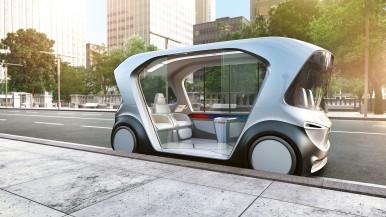
At CES 2019 in Las Vegas, Central Hall, booth #14020 from January 8 to 11, 2019, Bosch is presenting technological answers to today’s challenges, including urbanization, population growth, and climate change. The supplier of technology and services will be highlighting innovative solutions and services for the mobility of the future and for the smart home. World first: Bosch concept vehicle for a new kind of mobility At CES, Bosch wants people to experience a new kind of mobility in the form of a driverless electric concept shuttle with integrated services. This kind of mobility will soon feature on streets in major cities around the world: whisper-silent, driverless shuttles that are seamlessly connected with their surroundings. Bosch will provide the necessary hardware, software, and new digital services that will enable users to book vehicles, pay for their ride, or share it with other passengers.CES Innovation Awards: a total of six honorees for Bosch In the run-up to CES 2019, Bosch received a total of six CES Innovation Awards. The CES Innovation Awards are an annual program run by the Consumer Technology Association (CTA) covering 28 categories, and serve as an indicator of future trends. This year, awards went to the following Bosch products and solutions: 1. All-in-one principle for vehicle connectivity: For the future of connected, automated driving, vehicles need the ability to communicate smoothly both among themselves and with their environment. To this end, Bosch has developed a universal connectivity unit for all Wi-Fi-based and wireless-based transmission technologies used in vehicle-to-everything (V2X) communication. This enables vehicles to communicate with each other and with traffic infrastructure, regardless of the country or manufacturer. Software produced by the Portuguese startup Veniam handles the complex task of managing the data connections. It constantly searches for the best transmission technology for each requirement and switches automatically between the available options. 2. Trucks with no exterior mirror: The new Mercedes-Benz Actros is the first production truck to feature a camera system in place of conventional main and wide-angle mirrors. Known as Mirror Cam, this system offers better 360-degree vision. In addition to increasing safety, having compact digital cameras instead of mirrors improves the truck’s fuel consumption thanks to the cameras’ considerable aerodynamic advantages. Two cameras, fitted left and right on the roof of the driver’s cab, feed real-time images to two high-resolution 15-inch displays mounted on the A-pillars inside the cab. The system adjusts the monitor display to match the driving situation. Overall, Mirror Cam greatly improves the truck’s aerodynamics, safety, and vehicle handling. Daimler’s development partners for the Mirror Cam system are Bosch and Mekra Lang. 3. The smartphone as car key: The Bosch Perfectly Keyless access system will soon let car drivers, car-sharing fleet operators, and logistics companies manage their vehicle keys digitally. They can use a smartphone app to decide at any given time who should have access to cars or trucks and when. The ingenious feature of this Bosch system is that it makes the connection between smartphone and vehicle more secure than ever. Perfectly Keyless can pinpoint the authorized smartphone like a digital fingerprint. For CES 2019, Bosch has installed the system in a demonstration vehicle based on a Ford Mustang. 4. Radar-based assistance systems prevent motorcycle accidents: Blind-spot detection, collision warning, and adaptive cruise control: giving motorcycles radar as a sensory organ enables new motorcycle assistance and safety functions while providing an accurate picture of the vehicle’s surroundings. As a result, these assistance functions not only increase safety, they also enhance enjoyment and convenience by making life easier for riders. According to Bosch accident research estimates, radar-based assistance systems could prevent one in seven motorcycle accidents. These electronic assistants are always vigilant and, in emergencies, they respond more quickly than people can. They are based on a combination of radar sensor, brake system, engine management, and HMI. 5. App for connecting e-scooters: A new app turns e-scooters into connectivity pros. As well as displaying key information such as the e-scooter’s current battery charge, it allows rider-vehicle communication and the option to connect with other users via social networks. This makes it easy for users to find out which of their friends are in the area. In addition, there is a connected helmet holder on the e-scooter’s handlebar which is controlled by app. Whenever the e-scooter is parked, this provides a storage solution for the helmet while also protecting the vehicle against theft and its display against vandalism. 6. Retrofit solution for more efficient machinery and households: Bosch has developed the Phantom algorithm to help small and medium-sized enterprises assess and greatly increase the energy efficiency of their machinery. This retrofit solution, which takes just a few minutes to install, uses sensors to measure the load on each device in the customer’s energy consumption network to provide valuable insights into usage and potential faults. This enables users to improve the machinery’s operations and efficiency. In homes, too, Bosch Phantom can tell how much power each device is using. This energy transparency makes it possible to save electricity. Mobility of the future: selection of solutions and services Driving electric, yet stress-free – that is the goal of Convenience Charging, the Bosch service that the company is presenting at CES 2019 in a demonstration vehicle based on an Audi A3 e-tron. This integrated charging and navigation solution enhances the everyday benefits of electromobility. In the future, the service will tell electric cars precisely when their power will run out, but also where they can find the next charge spot. To this end, Convenience Charging combines information from the electric powertrain with both vehicle and environment data to produce a reliable range forecast. The service uses state-of-the-art route planning to determine charging opportunities based on the driver’s personal preferences. In the future, drivers of electric cars will be able to order food for delivery directly to their pre-booked charge spot, so they can make the best use of the charging time. Using the Convenience Charging app, drivers will also be able to plan the charging stops they need in the comfort of their own home, with the app then seamlessly transmitting the suggested routes between charge spots to the vehicle. Safe use of cell phones when driving: The mySPIN smartphone integration solution makes it safe for drivers to use smartphone apps while they are on the road. Now, mySPIN also supports the MirrorLink vehicle communication standard. In the future, it will take just a simple adapter for the vehicle’s infotainment system or instrument cluster to enlarge mySPIN-compatible apps and display a reduced set of their key functions. Drivers will then be able to operate the apps by touch or using the vehicle’s rotary push button. Bosch is also developing mySPIN smartphone integration for commercial vehicles, motorcycles, scooters, and powersports vehicles. Lifesavers from the data cloud: In Germany alone, some 2,000 warnings about wrong-way drivers are broadcast each year. In most cases, however, the warning comes too late, since such incidents generally end after an average of 500 meters – in the worst case with fatal consequences. Bosch has developed a cloud-based solution that sends a warning to wrong-way drivers and all road users at risk within ten seconds. Some 15 radio and navigation apps already use Bosch wrong-way driver warning technology to reach people in 13 European countries. The service relies on a software module for integration into existing infotainment systems and apps. Making the electronic horizon even more accurate: Today, the electronic horizon provides data on road inclines and the sharpness of bends to complement navigation data. Because the system enables vehicles to think ahead, it enhances both safety and convenience. Bosch is now working on the next-generation electronic horizon, which will be even more accurate and up to date. In addition to information on road classifications, bends, and vertical profiles, it will provide vehicle systems and navigation systems with geometries for each and every traffic lane as well as infrastructure data with 3D objects. This will help automated vehicles determine their precise location within the lane. A seat-of-the-pants feel for automated vehicles: Bosch predictive road-condition services will allow self-driving vehicles to determine how road conditions will develop over the course of a journey, based on weather data provided by the company’s partner Foreca. As a sufficient number of connected vehicles take to the roads, Bosch will supplement its predictive road-condition services with vehicle data. This will increase the safety, availability, and convenience of automated driving functions. Automated driving in cities: San José in California’s Silicon Valley is set to become the pilot city for an automated ridesharing service provided by Bosch and Daimler. The three parties have already signed a letter of intent to this effect. Bosch and Daimler plan to offer the app-based service with automated Mercedes-Benz S class vehicles to selected customers. The test area is centered on the San Carlos Street / Stevens Creek Boulevard traffic artery between Downtown and West San José. Bosch and Daimler are working together on solutions for automated driving in cities. Their aim is to develop a driving system for fully automated driverless driving (SAE level 4/5) that is ready for production by the beginning of the next decade. Integrated security solution for connected vehicles: Since April 2018, all newly registered vehicles are automatically connected vehicles – thanks to the automatic Emergency Call system. This makes it increasingly important to have integrated security concepts for connected vehicles. At CES, ESCRYPT will be presenting CycurACCESS, a security solution for keyless vehicle access systems. State-of-the-art cryptographic methods make these digital keys particularly secure. What’s more, the Bosch subsidiary is presenting an all-in-one solution for secure over-the-air software updates, Featuring efficient key and certificate management to guarantee end-to-end encryption from the car’s ECU to the vehicle manufacturer’s IT systems. Intelligent assistants: solutions for the smart home Food recognition for smart storage: Connected devices offer their owners tangible benefits both on the road and at home – for instance when it comes to optimizing how food is stored. Now, Bosch connected refrigerators with interior cameras offer a new function: food recognition with storage recommendations . The device automatically recognizes some 60 kinds of fruits and vegetables and suggests the ideal place to store them via an app. By storing food in the best possible way, it stays fresh for longer and doesn’t have to be thrown away so often. Cooking without sticky touchscreens: PAI is a Bosch projector that is mounted over the kitchen counter, turning the whole worktop into a touchscreen. An integrated 3D sensor records when users touch the surface, making touch control possible. That means users can access a wide variety of digital services while cooking or baking, for instance to pull up recipes with ease or control connected appliances. Thanks to its robust design, the PAI’s interface is easy to operate even with greasy fingers, unlike conventional smartphones or tablets. This approach also frees up space on the work surface. Easy lawn care thanks to artificial intelligence: Bosch is using machine learning to improve the way its Indego robot lawn mower recognizes obstacles on the lawn by evaluating data such as motor flow, acceleration, motor speed, and direction. Thanks to AI, Bosch is making lawn care even easier and more convenient by enabling the Indego to take over the chore of mowing. Each Indego adapts to its garden in order to mow it perfectly every time. And Bosch’s new connected Indego S+ opens up new possibilities for users. It now supports voice control via Amazon Alexa, making it one of the first robot lawn mowers on the market to offer this function. Turning shelves into personal assistants: The new BML100PI interactive projection module lets users create smart shelves in their closets or wardrobes. A single module projects touchscreen functions onto the surface of as many as six shelves at a time. These projections enable a wardrobe to display weather forecasts, an individual’s daily schedule, or reminders of upcoming events. This information forms the basis for daily outfit suggestions, which users can share on social media. Once clothing has disappeared from the shelves, users can use the virtual touchscreen to place an online order for something new or make an appointment with the laundry service. The interactive projection module turns any standard shelf into a personal assistant to make everyday life more convenient. Recognizing every movement: The new BMI270 sensor is an intelligent inertial measurement unit (IMU) sensor with extremely low energy consumption which was designed for use in wearable electronic devices. The BMI270 improves the functionality of these wearables, including step counting and gesture recognition, and can distinguish between different activities, such as standing, walking, running, or cycling, in addition to detecting the transition from one activity to another. It can also detect where activities are taking place – for instance, whether it is inside a vehicle. What’s more, the new sensor can detect movements such as bending or raising the arm and tilting the wrist, making it possible to operate wearables with intuitive gestures. The gesture recognition is fully compatible with the wearables operating system Wear OS from Google. The IMU’s high level of performance is the result of combining yaw-rate sensor technology used extensively in automotive applications with a significantly improved acceleration sensor. Getting to grips with the interior climate: The AIR well-being sensor offers innovative climate comfort for the home. It records and presents information on air quality, temperature, and humidity, as well as brightness and noise. Users can operate the well-being sensor even without a smartphone thanks to its easy-to-understand interface featuring traffic-light logic. In addition, the Bosch AIR app offers more detailed information about measurements over time and enables users to tailor the sensor’s settings. By offering specific recommendations for how to improve indoor air quality and achieve a healthy interior climate, AIR helps people perform, concentrate, and feel better. Voice control for heating systems: The .aino chatbot lets users communicate with their heating system using plain language. Typing or saying “I feel cold” instructs the system to increase the room’s temperature by two degrees Celsius. In addition, the chatbot even understands the difference between “a little cold” and “very cold,” expressing that as different degrees of temperature change. The system also provides useful energy-saving tips, for instance based on the weather forecast, and suggests how to improve the efficiency of the heating system. On request, .aino sends weekly or monthly reports of energy consumption including a year-on-year comparison. Bosch at CES 2019 PRESS CONFERENCE: Monday, January 7, 2019, from 9:00 to 9:45 a.m. local time, in the Mandalay Bay Hotel, Las Vegas South Convention Center, Level 2, Ballrooms B, C, and D BOOTH: Tuesday to Friday, January 8–11, 2019, in the Central Hall, #14020 FOLLOW the Bosch CES 2019 highlights on Twitter: #BoschCES PANELS WITH BOSCH EXPERTS: Wednesday, January 9, 2019, 9:00 – 10:00 a.m. (local time) “Connected Home Innovations” with Anne Rucker, global head of digital strategy, Venetian, Level 4 Marcello 4405 Wednesday, January 9, 2019, 9:00 – 10:00 a.m. (local time) “Technology, Jobs, and the Future of Work” with Charlie Ackerman, senior vice president of human resources North America, Las Vegas Convention Center, North Hall N258 Wednesday, January 9, 2019, 2:15 – 3:15 p.m. (local time) “IoT to the Max, Thanks to 5G” with Davie Sweis, vice president of web business, Las Vegas Convention Center, North Hall N256

Bosch presents tomorrow’s mobility today

12.12.2018

Press release

Internet of Things

Bosch presents tomorrow’s mobility today

Stuttgart, Germany – A light, airy, minimalistic design, a futuristic outer shell made of display screens and glass, and a spacious interior – that is how architects might describe a novel structure, but in actuality the description also fits a completely new class of vehicle and a new kind of mobility: driverless electric shuttles that glide almost silently through city centers and are seamlessly connected with their environment. These will soon be a common sight on our city streets – whether they are transporting goods or people. Bosch provides components and systems for automating, connecting, and electrifying the shuttles, but shuttle mobility won’t be possible without mobility services. In the future, the company will offer these services too, bundling them into a smart, seamlessly connected ecosystem. That will include booking, sharing, and networking platforms, parking and charging services, and software solutions for managing and maintaining the vehicles, as well as infotainment during the journey. “Bosch is developing a unique package of hardware, software, and mobility services for shuttle mobility of the future,” says Dr. Markus Heyn, member of the board of management of Robert Bosch GmbH. At CES 2019 in Las Vegas, the world’s biggest electronics show, Bosch will be presenting its solutions for this area of transportation with a concept shuttle, and visitors will be able to experience its full range of services. Bosch is developing a unique package of hardware, software, and mobility services for shuttle mobility of the future....Dr. Markus Heyn, member of the board of management of Robert Bosch GmbH Bosch services for users and shuttle operators The emergence of the shuttle segment is a result of rising demand for ridesharing services: in Europe, the U.S., and China alone, about one million such on-demand shuttle buses will be on the roads as early as the year 2020, growing to 2.5 million by 2025 (source: Roland Berger ). Many of these vehicles, available 24/7, will be fully electric, and they will also be completely autonomous by the middle of the next decade at the latest. That’s why Bosch has packed every square centimeter of its concept shuttle with the appropriate technology – from electric powertrains and 360-degree surround sensors to connectivity management and vehicle computers. Yet these components and systems go only part of the way towards shuttle mobility. To make on-demand vehicles suitable for flexible everyday use, they must be connected to mobility services. “In the future, every vehicle on the road will make use of Bosch digital services,” Heyn says. These services allow users to book the vehicles, share rides with other passengers, and pay for the journey. Charging, repairing, and maintaining the vehicles, plus route planning and administrative activities, also call for services that Bosch will offer shuttle fleet operators in a seamlessly connected ecosystem. In the future, every vehicle on the road will make use of Bosch digital services....Dr. Markus Heyn, member of the board of management of Robert Bosch GmbH Booking and sharing Users can easily book a shuttle via smartphone, regardless of whether they’re relaxing on the sofa or sitting at their desk at work. Working behind the scenes, an algorithm identifies the vehicle closest to the requested location and finds other users who wish to travel a similar route. The more passengers a single shuttle can transport, the cheaper the journey for everyone. This approach also reduces the amount of traffic in cities and mitigates the impact on the environment. Bosch is developing the necessary software platforms to make this a reality. When the shuttle pulls up to the requested pick-up point, users again use their smartphones to identify themselves – thanks to Bosch’s Perfectly Keyless digital access service. It recognizes the owner’s smartphone as unmistakably as a digital fingerprint and opens the vehicle only for them. Every passenger always gets the seat that they reserved. Moving forward: electrified and automated Bosch’s electric axle drive makes the shuttles especially efficient yet affordable as they wend their way through the city. And the company’s Convenience Charging service knows just how long the battery charge will last and where to recharge the vehicle. This service means that even today, drivers no longer need to worry about being stranded with a dead battery. It also links vehicle information, such as the current state of battery charge or how much energy the heating and air-conditioning systems are consuming, with environmental data such as congestion and weather forecasts, so as to predict vehicle range with particular accuracy. Furthermore, Convenience Charging finds the ideal charging station and can reserve it in advance. And thanks to a standardized access and payment system, charging is easier than ever. Driverless e-shuttles provide users with transportation that is not only nearly emissions-free, but also very safe. For automation, Bosch develops and makes its own radar, video, and ultrasonic sensors, braking control systems, and power steering, to name a few examples. Smart digital services are indispensable here, too: Bosch predictive road-condition services let automated vehicles know in advance what environmental conditions to expect. They can thus adapt their driving style as needed so as to ensure maximum safety throughout the journey. The Bosch road signature is a map-based localization service with which automated vehicles can accurately determine their position in the lane down to a few centimeters – another crucial prerequisite for the safety of automated shuttles. Comfortable interior Bosch has designed the interior of its concept vehicle to provide space for four passengers, seating them across from one another to maximize legroom and comfort. Infotainment is provided on screens that can be used either by each passenger individually or in groups; for example, a family can watch a movie together as they travel somewhere for the weekend, or colleagues can work on a presentation on their way to the office. Smartphones use the on-board Wi-Fi and can integrate seamlessly with the infotainment system, thanks to Bosch connectivity technology. Its concierge service turns the shuttle into a personal assistant. With all kinds of information at its disposal, the shuttle can provide passengers with recommendations, advance bookings, weather reports, and travel tips at any time. Once the shuttle has arrived at its destination, the passengers can pay for their journey with Bosch’s e-payment service. Maintenance and administrative activities But Bosch services do not end when a rideshare journey is over: the company’s camera-based system for the vehicle interior checks whether anyone has forgotten their phone or handbag. If a passenger does forget something, the shuttle informs them directly via smartphone. The cameras can also detect gum on the seat or an overturned coffee cup – in other words, whether the shuttle needs cleaning – and can make the necessary arrangements immediately. This is so every passenger can start their journey in a clean shuttle. Bosch’s service for over-the-air updates can determine whether the driverless shuttles have the latest software version. The service detects software updates as soon as they are available and executes them in the vehicle securely and reliably. Thanks to sensors installed in the vehicle, predictive diagnostics can monitor the condition of key components and notify the shuttle before a fault actually occurs, so it has enough time to drive itself to a repair shop. This prevents the car from suddenly breaking down, which is a boon to operators. In the future, Bosch will pool updates from the data cloud and predictive diagnostics into a comprehensive connectivity platform . This will give vehicle manufacturers and shuttle service operators a constant overview of the condition of their fleets, so they can ensure that their shuttles are always ready for action. And finally, the Bosch subsidiary ESCRYPT’s security solutions handle vehicle security – whether for keyless access systems, data connectivity with the outside world, or software updates.