Search & find:
media, releases and events to support your reporting about the Bosch Group.

IAA Transportation 2024: Bosch grows with software and technology for trucks and vans

16.09.2024

Press release

Mobility Solutions

IAA Transportation 2024: Bosch grows with software and technology for trucks and vans

Stuttgart and Hannover, Germany – Freight transport is an important pillar of the economy. For their green transformation to succeed, commercial vehicles that transport goods must be equipped with alternative powertrains. As a result, the industry is on the move – and Bosch is leading the way. The technology company is expanding its product and solution portfolio and is once again focusing on diversity. “Commercial vehicles’ transition to alternative powertrains will succeed only if we remain technology neutral and continue to develop all forms of powertrains and make them more efficient,” said Markus Heyn, member of the Bosch board of management and chairman of the Mobility business sector, at this year’s IAA Transportation trade fair in Hannover. “In the coming years, we expect the continuing growth in global freight transport and the simultaneous switch to alternative powertrains for commercial vehicles to drive another surge in growth for our business. For us, our business with big vehicles is anything but a small matter – in Mobility, we generate one-quarter of our sales with trucks and vans,” Heyn said. Global vehicle production is expected to stagnate in 2024 compared to the previous year. Assuming a good final quarter, the company anticipates slight sales growth at Bosch Mobility in 2024 despite the very challenging market environment. Bosch Mobility aims to achieve global sales of more than 80 billion euros by 2029.New setup for commercial-vehicle business Bosch wants to seize the huge opportunities now arising from the growth in global freight transport and the switch to alternative powertrain systems. To that end, the company will be reorganizing its commercial-vehicle business within the Mobility business sector. Starting January 2025, under the leadership of Jan-Oliver Röhrl, executive vice president for commercial vehicles and off-road, the company will pool important competencies in a new business unit, bringing together system development and product and portfolio management for trucks and off-highway applications. “We’re convinced that this new setup will offer benefits to our customers – and that we will collaborate with even greater success as a result. Together, we want to get commercial vehicles on the road even more efficiently and safely,” said Röhrl at IAA Transportation 2024. To achieve this, Bosch is focusing on powertrain diversity and technology neutrality. According to internal forecasts, the company assumes that, globally, around 20 percent of all newly registered commercial vehicles heavier than six metric tons will have a battery-electric powertrain in 2030, while fuel cells will have a share of around 3 percent. By 2035, a good one in three trucks will have a battery on board, and one in ten will feature a fuel cell. At this point, the hydrogen engine will also be on the road, albeit in smaller numbers. One thing is clear: freight transport can go electric only if the proper infrastructure is in place. “We need a consistent and faster expansion of electric charging stations and hydrogen filling stations in Germany and Europe,” Heyn said. As Bosch sees it, the various powertrain technologies aren’t in competition with each other – on the contrary: the variety allows manufacturers to decide on the optimum solution for each application. That means Bosch is not only further developing powertrain technologies for batteries, fuel cells, and hydrogen engines, but is also making modern combustion engines even more efficient. And especially in view of how big the existing vehicle fleet is, synthetic fuels can also play a major part in mitigating climate change.Assistance systems for commercial vehicles are in the fast lane At IAA Transportation, Bosch presents its ideas, innovations, and solutions for modern freight transport. But even far away from Hannover, Bosch technology is already changing the way we transport goods from A to B. In China, for example, a Bosch e-axle for heavy commercial vehicles weighing between 18 and 49 tons has gone into volume production – with a fully integrated electric motor, transmission, clutch actuator, inverter, and differential. The solution is suitable for both battery-electric vehicles and vehicles powered by fuel-cell electric modules. In India, the first test vehicles with hydrogen engines are on the road. For these, Bosch supplies injection systems, sensors, tank valves, and control units, including software – all crucial components for hydrogen propulsion. And in the U.S., Bosch and the company FirstElement Fuel are working intensively on something called a cryogenic pump, which will go into operation for the first time in California in 2025. The new pump will make it much easier and, above all, faster to refuel commercial vehicles – with enough hydrogen for 1,000 kilometers of driving in just ten minutes! The assistance systems business also remains an important part of Bosch’s commercial-vehicle strategy. According to an internal Bosch study, around one in eight accidents caused by a heavy truck can be avoided with the help of the lane-keeping support system – it not only saves lives, but also avoids property damage costs for transport companies. Another key Bosch assistant system is the electronic horizon, which enables fuel-efficient and emission-saving driving for heavy trucks. It collects data on, for example, topography, curve radii, or traffic signs, and intelligently adapts the vehicle’s speed to its surroundings, including by using the truck’s kinetic energy. The system works both on freeways and in urban traffic. For commercial vehicles with combustion engines, it can reduce fuel consumption by up to 5 percent and thus cut CO2 emissions. Electrically powered commercial vehicles have better energy efficiency, which gives them a longer range. More than one million vehicles are already equipped with the Bosch electronic horizon system.Trucks and vans have to be updatable, too With the move in the automotive industry toward software-defined mobility, commercial vehicles are also facing a paradigm shift. The growing number of connected services and solutions for fleet management alone makes it crucial for trucks and vans to be updatable, similar to the passenger car sector. Here, the golden rule is to have fewer vehicle computers and hence less complexity in the vehicle’s electrical/electronic architecture. Intelligence is currently distributed across several different computers, but in the future it will be grouped into just a few vehicle computers. Bosch supports manufacturers in the transition from hardware- to software-defined mobility, the commercial-vehicle business included, while offering a wide range of suitable software solutions and services. Bosch’s digital service platform for logistics, called L.OS, pinpoints and addresses the specific challenges facing the transportation and logistics industry. The company collaborates in this area with Amazon Web Services, among others. At the heart of the software ecosystem for freight forwarders and carriers is a marketplace that offers centralized access to various providers’ digital solutions for all aspects of the logistics business – all in one seamless experience: driver, transport, and fleet management; route planning and parking; financial services and supply chain transparency. Bosch connectivity solutions also help mobility and logistics service providers to use their vehicles as efficiently as possible and minimize downtimes. The technical basis for this is a Bosch control unit that can be retrofitted to any vehicle regardless of manufacturer, allowing the fleet operator to access its operating and diagnostic data, and thus enabling a wide range of data-based services. The Retrofit Efficiency module (remodul) function, for example, recognizes the route a truck is taking and slightly adjusts its speed in line with empirical values stored in a central database. This can reduce fuel consumption by up to 4 percent – an attractive cost advantage for fleet operators. Vehicle Health, in turn, records both standardized and manufacturer-specific error codes in the vehicle and evaluates them in the cloud. As a result, impending problems can be identified at an early stage and presented in an understandable way so that, for example, early servicing can be suggested. This significantly reduces the number of unexpected breakdowns, thus making it much easier for operators to plan.

Efficient Bosch solutions for the commercial vehicles of today and tomorrow

23.08.2024

Press release

Mobility Solutions

Efficient Bosch solutions for the commercial vehicles of today and tomorrow

Stuttgart and Hannover, Germany – Freight transport is a mainstay of the global economy, and one in which commercial vehicles play a crucial role. These are undergoing a paradigm shift similar to the one in passenger cars, namely, the transformation from hardware- to software-defined vehicles. Bosch is responding to this change with hardware and software products, customized solutions, and smart services. The technology company supports truck manufacturers, freight forwarders, and logistics companies on their way into the future. Bosch will be showcasing its innovations for tomorrow’s freight transport at IAA Transportation 2024 in hall 19/20, booth A51/B52.Efficient powertrains, reliability on the road Electric powertrain: Bosch manufactures economical and efficient electrification solutions for both light and heavy commercial vehicles. The Bosch e-axle is easy to integrate into commercial vehicles of up to 7.5 metric tons. One benefit of this is that fleet operators will still be able to serve delivery routes in restricted areas such as urban low-emission zones in the future. Bosch’s electric motor and inverter already feature in a heavy-duty, purely battery-electric commercial vehicle. Here, an 800-volt operating voltage and the silicon carbide chips used enable longer ranges and shorter charging cycles for efficient goods transport, even over long distances. Fuel cell: Commercial vehicles can also be operated in a climate-neutral way with a fuel-cell system . This technology is particularly suitable for longer journeys and maximum payloads, making it a sensible addition to battery-electric trucks. Bosch already has a 200-kilowatt fuel-cell system in large-scale production. The company is now working on the Fuel Cell Power Module Compact 300, which will be even more compact and, with an increased output of 300 kilowatts, also more efficient. In addition to this type of complete solution, Bosch also offers individual system components and submodules as well as components for hydrogen storage systems, enabling it to provide every customer with the right solution. Hydrogen engine: Another option for the climate-friendly transportation of goods by road is the hydrogen engine , which will initially be used in heavy trucks. At the beginning of 2024, the EU also recognized this powertrain solution as climate neutral. Derived from established diesel and natural-gas engines, this concept lets engine manufacturers use more than 90 percent of existing development and production technologies. Bosch is developing the key components of the injection system for the hydrogen engine, including a new injector for direct injection that requires no additional lubrication and is scheduled for launch in 2026. The first hydrogen engines equipped with Bosch intake manifold injection are set for launch in 2025. H2 tank system: The main challenges in the design of H2 tank systems lie in storing the hydrogen safely under high pressure and controlling the supply of the highly flammable gas. ITK Engineering GmbH supports and advises vehicle manufacturers throughout the entire development process, from the design to the implementation of a safe, certified H2 tank system. When designing systems, ITK Engineering also relies on digital twins for physical simulation so it can achieve maximum safety and efficiency. Connectivity solutions: Fleet operators and vehicle manufacturers can also further improve the efficiency of their vehicles with Bosch digital services. The technical basis for this is the Automotive Connectivity Hub – a solution that can be retrofitted to any vehicle regardless of manufacturer, providing access to the vehicle’s operating and diagnostic data and thus enabling a wide range of data-based services. With the efficiency services, such as the Retrofit Efficiency module , the speed can be easily adjusted as needed in line with empirical values stored in a central database, thus reducing consumption by up to 4 percent. Vehicle Health , in turn, records both standardized and manufacturer-specific error codes as well as notifications in the vehicle and evaluates them in the cloud. Any impending problems are recognized at an early stage and presented in an understandable way, and immediate responses such as prioritized servicing are suggested. This significantly reduces the number of unexpected breakdowns, which makes it much easier for operators to plan. For electric vehicles, Battery in the Cloud for example offers an improvement in the performance and service life of high-voltage batteries. With the help of continuously recorded data on battery status and usage, it can analyze high-voltage batteries, predict their aging and defects, and optimize their rapid-charging behavior for greater durability, which improves the reliability and economy of electric vehicles. The Digital Fuel Twin is ideal for fleet operators who want to use alternative fuels such as HVO for their existing fleet. This function can verify the use of these fuels and thus the reduction in CO2 achieved – in a fully automated way that is certified for auditing. To monitor the condition of the vehicle or fleet in real time, RideCare Insight uses an intelligent sensor box to detect potential bodywork damage, in-vehicle smoking, and risky driving maneuvers in light commercial vehicles. On course for the future with steering systems Fully electric power steering: The ServoE steering system augments Bosch’s product portfolio to include a fully electric steering system for heavy trucks. This electromechanical steering system enables simple and oil-free assembly, while the power-on-demand function guarantees eco-friendly driving. Steering function and feel can be tailored to customer requirements. Servotwin: The Servotwin electrohydraulic steering system for heavy commercial vehicles combines a hydraulic Servocom steering system with scalable electrical servo units and intelligent software architecture. This supports SAE Level 2 steering assistance and driver assistance functions as well as automated driving functions up to and including SAE Level 4. Rear-axle steering system: The electrohydraulic steering system for rear axles is a stand-alone power-on-demand system. It enables the steering of three or more leading or trailing heavy-truck axles. Steering the additional axles, if required, reduces the turning radius and tire wear. Thanks to its compact design, this Bosch technology can be adapted to all powertrain types. The intelligent software architecture supports safe and eco-friendly driving and protects the steering system against external attacks. Steering shaft: The modular and weight-optimized steering shaft is theconnection between the steering mechanism and steering column and is used in medium- and heavy-duty commercial vehicles and buses. In vehicles fitted with a Bosch steering shaft, relative movements between the driver’s cab and chassis that occur during driving have no effect on the steering behavior. Its design features impressively compact construction and low friction. EPSapa highload: The high-load version of the long-established electric power steering with parallel-axle servo unit (EPSapa) has no difficulty driving on asphalt, gravel, or rough terrain. This new variant not only expands the Bosch electric power steering portfolio, but also fills a niche: thanks to increased steering-rack force and exceptional robustness, this steering system is – unlike previous variants – ideally suited for heavy SUVs, vans, and off-road pickup trucks. This makes EPSapa highload ideal for the North American market. Smart road safety: the vehicle as a mobility platform E/E architectures: With customized consulting and engineering services , Bosch Engineering supports manufacturers in the transition from hardware- to software-defined vehicles. The focus here is on defining a new electrical and electronic architecture to reduce the complexity of the process and cut integration costs. Cloud-based diagnostic solution: Automakers and their suppliers have a common task: providing authorized workshops with service solutions so that they can carry out repairs and maintenance to ensure vehicle availability and customer satisfaction. This is particularly important for new technologies such as fuel cells, for which practical experience can be gathered only gradually. ETAS has a solution that takes diagnostic and repair capability into account during development, meaning it is available before the start of production. It enables manufacturers to significantly reduce the time to market for diagnostic and repair concepts while ensuring that the solution is always up to date with a cloud?enabled platform. This concept can also be applied to all the other complex components in modern vehicles. The mobile version enables diagnostics directly on the vehicle, whether in the workshop or on the road. Connected map services: With the help of swarm data from connected vehicles and infrastructure data, Bosch map services provide accurate and up-to-date information about the driving environment. Here, the function benefits from the sum of information from all connected vehicles, from which attributes such as optimum driving speeds, exact lane geometries, localization landmarks, and current road conditions can be derived. Based on this real-time information, driving behavior can be planned predictively and safely and adjusted if necessary. In this way, connected map services not only improve existing driver assistance functions and increase their availability, but also create new possibilities for developing and improving vehicles and mobility services, thereby making the mobility of the future safer and more convenient. Software platform for logistics specialists: Bosch’s digital service platform for logistics (L.OS) addresses many of the challenges facing the transportation and logistics industry. At the heart of the software ecosystem for freight forwarders and carriers is a marketplace that offers centralized access to various providers’ digital solutions for all aspects of the logistics business. But the platform is much more than just a marketplace. It enables the seamless integration of previously separate services and data. For example, software providers such as Webfleet, Europe’s biggest fleet management system, are working with Bosch L.OS to offer fleet managers value-added services within their fleet management solution. This enables their users to activate new and value-creating functions without having to carry out their own costly and time-consuming IT projects. Bosch is working on this with Amazon Web Services. The first use case involved integrating Bosch Secure Truck Parking , the leading European booking platform for secure truck parking, into the Webfleet fleet management system via Bosch L.OS. This allows Webfleet customers to easily find and book truck parking spaces for their fleets without having to leave the application. It also helps companies to increase safety for drivers, vehicles, and goods and to better plan the estimated time of arrival. Cutting the time spent looking for a parking space also reduces fuel costs and CO2 emissions and helps ensure driving hours are not exceeded. Secure connectivity and communication: A prerequisite for numerous smart services that make driving safer and more efficient is for vehicles to be able to exchange data with objects in their immediate vicinity and with the traffic infrastructure. The basis for this is the Bosch Connectivity Control Unit for commercial vehicles (CCU). It uses wireless interfaces to connect the driver’s vehicle with the cloud, the infrastructure, and other vehicles. The Central Gateway links the vehicle domains, serves as a router for in-vehicle communications, and communicates with the outside world via the CCU. It acts as a secure data distributor for communication within commercial-vehicle systems and is also the gateway for all data entering the vehicle. The Central Gateway supports various bus systems such as Ethernet and CAN. Powernet Guardian: The Bosch Powernet Guardian is a holistic concept for the vehicle electrical system. It ensures that safety-relevant functions in commercial vehicles are supplied with power at all times. If a fault occurs, the Powernet Guardian takes over the function of an electronic circuit breaker, disconnecting the safety-relevant vehicle electrical system from the other consumers. This protects them from under- or overvoltage and, by extension, can prevent malfunctions or reduced functionality. By digitalizing the power supply, the Powernet Guardian enables intelligent power distribution functions that also make it possible to switch loads according to demand and vehicle electrical system capacity. Convenient vehicle access: Fleet Management Xtended Access is a digital vehicle access system that allows the driver to access the vehicle via a digital key on a smartphone and – depending on the variant – also to start the engine. Manufacturers can integrate the system components directly into their commercial vehicles according to their needs. They have the option of retrofitting their vehicle fleet with the Fleet Management Xtended Access Kit. This flexible combination of ultra-wideband, Bluetooth Low Energy, and near-field communication technologies enables manufacturers to provide secure and user-friendly access to vehicles and permits the scalable introduction of a digital vehicle access system that can replace their existing systems. Truck cockpit technologies: Bosch’s cockpit technology solutions include a platform for integrating instrumentation and infotainment applications and a digital mirror replacement system developed with Mekra Lang to replace conventional mirrors. The Driver Monitoring System for commercial vehicles detects driver fatigue and distraction at an early stage and warns the driver. In addition to these safety-related functions, the Bosch platform supports various convenience functions. Infotainment in coaches: The Bosch Coach Infotainment series makes next-generation infotainment available for professional use in coaches. Perfectly coordinated components provide a new experience for drivers and in the passenger compartment. Enjoy movies, surf the internet, watch TV, listen to music, and hear announcements clearly – all this is possible with Bosch infotainment systems for coaches. Ethernet AVB technology provides optimum synchronization between image and audio signals, ensuring smooth playback of HD media content with very low latency. Keeping an eye on the environment Smart eyes: The third generation of the multifunction camera is tailored to the requirements of heavy trucks. With its unique multipath approach, the camera combines conventional image processing algorithms with AI-driven methods, giving it a key role in high-performance driver assistance systems. It reliably detects and processes objects and structures and uses an innovative, high-performance system on a chip for image processing. The camera is designed for safety-relevant driver assistance systems and convenience functions such as the lane-keeping support system, and it also supports object?based functions such as automatic emergency braking. Moreover, it permits implementation of other functions such as traffic sign recognition. This means the system supports the legal requirements of the EU General Safety Regulation on intelligent speed assistance for detecting speed limits and warning of exceeding them. Precise object detection: The fifth-generation front and side radar ensures greater safety in the heavy truck segment, thanks to reliable and precise object detection in the area to the front and side of the vehicle. Thanks to the sensors’ large detection range and high angular resolution, as well as their wide aperture, they can detect complex driving situations very quickly, accurately, and safely. They employ novel chirp-sequence modulation to improve surround sensing by producing more detailed reflections. As a result, both the front and side radar solutions are extremely precise when detecting and distinguishing between objects and people as well as their position, relative speed, and direction of movement – even when visibility is poor. This means that Bosch radar sensors in heavy trucks can ensure greater safety for the driver and other road users by supporting functions such as automatic emergency braking and by helping to meet legal requirements.

Bosch at Agritechnica 2023

15.11.2023

Press release

Mobility Solutions

Bosch at Agritechnica 2023

As different as the tasks of agricultural machinery are, all these vehicles have one thing in common: a diesel engine. Yet its use in the agricultural sector alone accounts for some 5 percent of Germany’s diesel consumption. Clearly, agricultural machinery needs to become more climate friendly. Bosch sees hydrogen, which can also be used to power heavy vehicles, as essential for achieving climate neutrality. With its solutions for the hydrogen engine, which can also serve as a suitable drive for specific applications in agriculture, the company wants to move further toward the establishment of a hydrogen economy. At Agritechnica 2023, it will be premiering a technical innovation: an injector for direct hydrogen injection that requires no additional lubrication. “Technologically, the new hydrogen injector for direct injection is a great leap forward,” says Jan-Oliver Röhrl, the executive vice president responsible for commercial vehicle powertrains in the Bosch Powertrain Solutions division.In the course of a vehicle’s service life, the injector opens and closes roughly one billion times. To ensure that this always works reliably, the engineers developing the hydrogen engine had to overcome two challenges: one, the lubrication provided by the fuel in the diesel engine is absent; and two, the hydrogen may react with materials it comes into contact with. The engineers’ solution is a sophisticated design that keeps the media separate inside the injector, and uses various coating technologies. The systems for low-pressure direct and port injection have been developed for engines that can also be operated with heavy loads and in difficult environmental conditions. As a systems supplier, Bosch also offers electronic control units, products for storing and supplying hydrogen, and other powertrain components. Besides fuel-cell applications and battery-electric powertrains, the hydrogen engine is another option in the powertrain mix of the future. Its concept is based on established diesel and natural-gas engines. This means that the fundamental structure of the engine, as well as the fuel, air-supply, and exhaust systems, can be transferred from existing powertrain solutions, along with a large number of other familiar system components. “More than 90 percent of the development and manufacturing technologies needed for the hydrogen engine already exist,” Röhrl says. “This allows us to maintain large parts of our value chain – and applies to the aftermarket as well.” In addition, the hydrogen engine consists primarily of steel and aluminum, which reduces dependencies on critical raw materials and their supply chains. Making conventional systems fit for the future At the same time, Bosch is continuing to improve its conventional diesel-injection and exhaust-gas treatment systems for commercial vehicles and the off-highway sector. “We want our solutions to help automakers worldwide further reduce CO 2 and other emissions,” Röhrl says. For example, the modular CRSN common-rail system for commercial vehicles and off-highway applications exhibited at Agritechnica 2023 ensures efficient fuel supply and injection in diesel engines. It is scalable for pressure levels between 1,800 bar and 2,500 bar, and can be configured for engine sizes of up to eight cylinders. In addition, Bosch diesel technology can already run on renewable synthetic fuels. Such fuels can complement electromobility or hydrogen-based powertrains where these solutions face economic or physical challenges. Digital services improve vehicle availability Bosch also offers innovative digital services that cover the various phases of vehicles’ service lives. These services help identify problems during operation at an early stage, reduce quality costs, and avoid expensive downtime. The cloud-based, connected diagnostic services combine vehicle operating data with Bosch expertise. AI-based algorithms are used to gain additional valuable insights from the combined data. The result is a clear indication of the powertrain’s status when or before a problem occurs, enabling anomalies to be detected.

Ten years of developing tram assistance systems at Bosch Engineering

18.10.2022

Press release

Mobility Solutions

Ten years of developing tram assistance systems at Bosch Engineering

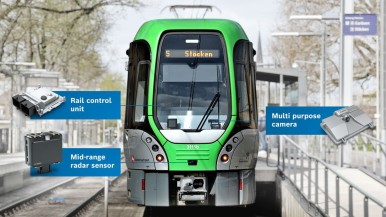
Abstatt – Inattentive traffic participants who suddenly walk or drive in front of the tram present a high risk of accidents, especially in the dense, chaotic traffic of today’s city centers. “To minimize the risk of collisions in city rail transportation and to reduce stress for the drivers, we started a development project for driver assistance systems more than ten years ago which are designed especially for trams,” explains Heiko Mangold, head of the rail technology business field at Bosch Engineering. Since 2017, Bosch Engineering’s tram forward collision warning system (TFCW) has been used in passenger operations. Once an object is perceived in the detection area, the system warns the driver visually and/or acoustically of the obstacle and even brakes the tram automatically until it stops if the driver fails to react to the warning or does so too late. After the installation of the system in a German city, for example, the number of tram accidents declined by more than 40%, although the number of trams in operation increased. Currently, around 1.200 TFCW-systems are installed in trams in Europe, Australia, and North America.Bringing automotive technology onto the track Bosch’s wide-ranging expertise from the automotive sector forms the foundation for the assistance systems in city rail transportation. This applies to both the proven hardware, such as sensors and electronic control units, used by the millions in the passenger car and commercial vehicle sector and to the software and development methods. Components are chosen from the modular system and then tailored to the specific requirements of tram operation and the individual topographical and urban planning specifics for the region in which they are used. “By transferring the technology from the street to the track, we are able to develop assistance functions for city rail transportation with a high technical standard and degree of maturity,” says Mangold. For example, the basic functions of the system have been optimized in the past years to better detect pedestrians in situations with poor visibility and provide additional safety when moving through tunnels. For future expansions of the system, other assistance functions known from the passenger car segment will be adapted for use in rail traffic. Tram drivers will then be supported to a greater extent in their daily range of responsibilities and the risk of an accident will be minimized even more. Further information: https://www.bosch-engineering.com/stories/stories-detailpages/t-storypage-5.html

Longer range as standard: Bosch gives go-ahead for volume production of silicon  ...

07.12.2021

Press release

Mobility Solutions

Longer range as standard: Bosch gives go-ahead for volume production of silicon ...

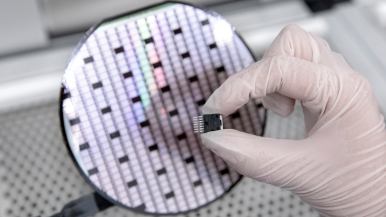
Reutlingen, Germany – They are small, powerful, and extremely efficient: semiconductors made of silicon carbide (SiC). After several years of development, Bosch is now starting volume production of power semiconductors made of this innovative material, supplying automotive manufacturers worldwide. In the future, more and more production vehicles will feature these chips. “The future for silicon carbide semiconductors is bright. We want to become a global leader in the production of SiC chips for electromobility,” says Harald Kroeger, member of the board of management of Robert Bosch GmbH. Two years ago, the supplier of technology and services had announced that it would push ahead with the development of SiC chips and enter production. For this, Bosch has developed its own highly complex manufacturing processes, which it has been using to produce the special semiconductors since the beginning of 2021 – initially as samples for customer validation. “Our order books are full, thanks to the boom in electromobility,” Kroeger says. In the future, Bosch intends to expand its production capacity for SiC power semiconductors to a unit volume running into the hundreds of millions. With this in mind, the company has already started expanding the clean-room space at its Reutlingen plant. In parallel, work is also being done on the second generation of SiC chips, which will be even more efficient and should be ready for volume production as of 2022. Bosch is receiving support for the development of these innovative manufacturing processes for SiC semiconductors from the German Federal Ministry for Economic Affairs and Energy (BMWi) as part of the “Important Project of Common European Interest (IPCEI) Microelectronics” program. “For several years now, we have been providing support to help establish semiconductor production in Germany. Bosch’s highly innovative semiconductor production strengthens the microelectronics ecosystem in Europe and is a further step toward greater independence in this key field of digitalization,” says Peter Altmaier, Germany’s Federal Minister for Economic Affairs.The stuff range dreams are made of Around the world, demand for silicon carbide power semiconductors is rising. A forecast by the market research and consulting company Yole indicates that, between now and 2025, the SiC market as a whole will grow on average by 30 percent a year to over 2.5 billion dollars. At around 1.5 billion dollars, the SiC car market is expected to account for the lion’s share. “Silicon carbide power semiconductors make particularly efficient use of energy. This material’s advantages really come to the fore in energy-intensive applications such as electromobility,” Kroeger says. In the power electronics of electric vehicles, silicon carbide chips ensure that drivers can drive significantly further on one battery charge – on average around 6 percent further than with their pure silicon counterparts. In order to meet steadily increasing demand for these semiconductors, an extra 1,000 square meters were already added to the clean-room space at the Bosch wafer fab in Reutlingen in 2021. Another 3,000 square meters will be added by the end of 2023. The new space will house state-of-the-art production facilities for manufacturing silicon carbide semiconductors using processes developed in-house. To achieve this, Bosch’s semiconductor experts are building on their decades of expertise in chip manufacturing. In the future, the company – incidentally the only automotive supplier to produce its own silicon carbide chips – plans to manufacture the semiconductors on 200-millimeter wafers. Compared with today’s 150-millimeter wafers, this will deliver sizeable economies of scale. After all, it takes several months for a single wafer to pass through several hundred process steps in countless machines. “By producing on larger wafers, we can manufacture significantly more chips in one production run and thus supply more customers,” Kroeger says. Small atom, big impact The secret behind SiC chips’ impressive performance lies in a tiny carbon atom. Introducing it into the crystalline structure of the ultra-pure silicon generally used to manufacture semiconductors gives the raw material special physical properties: for example, silicon carbide semiconductors support higher switching frequencies than pure silicon chips. What’s more, they lose only half as much energy in the form of heat, thereby increasing the range of electric vehicles. The chips are also important for 800-volt systems, where they enable faster recharging and better performance. Since the SiC chips also emit significantly less heat, the power electronics require less in the way of costly cooling. In addition to weight, this is another way to reduce the cost of electric vehicles. In the future, Bosch will supply silicon carbide power semiconductors to customers around the world – both as individual chips and installed in power electronics or complete solutions such as the e-axle. This combination of electric motor, gearbox, and power electronics achieves an efficiency of up to 96 percent thanks to the more efficient design of the overall system. This leaves more energy for the powertrain, which increases the range.

Bosch at the IAA Mobility: Safe, emissions-free, and exciting mobility - now and ...

19.08.2021

Press release

Connected mobility

Bosch at the IAA Mobility: Safe, emissions-free, and exciting mobility - now and ...

Munich, Germany - Cars, e-bikes, motorcycles, scooters, electric race cars: Bosch is rolling out mobility solutions for all types of vehicles, and is even making smartphones and people's homes an integral part of mobility. At IAA Mobility 2021 in Munich, the supplier of technology and services will be showcasing its solutions for personalized, automated, connected, and electrified mobility. Bosch will be in exhibition hall B3 at booth C30 and in the bike area, in the Messe West parking garage, and downtown at Königsplatz and Odeonsplatz.At the trade fair and downtown - get in, get on, try it out Bosch show car: In the future, more and more vehicles will be electrically powered. They will increasingly be connected with other road users and their surroundings, assume more and more of the driving task themselves, and provide personalized services for their occupants. Bosch technology for automated, electrified, personalized, and connected mobility is paving the way for this future vision of mobility. The company has the systems know-how and comprehensive software and hardware expertise that this requires. For example, Bosch is developing central computers for the electronics architecture of the future. These vehicle computers are used for assisted and automated driving, controlling vehicle motion, as well as for cockpit functions and body electronics. (Trade fair: Hall B3, booth C30) Driverless parking: Bosch and nine project partners will present the future of parking in a live demonstration. In the automated valet parking system developed jointly by Bosch and Mercedes-Benz, a smartphone command directs cars automatically to their assigned parking bays without the need for driver supervision. Interplay between the intelligent parking garage infrastructure and the vehicle technology makes this possible. Sensors in the parking garage monitor the driving aisle and its surroundings while guiding the vehicle. The in-car technology converts the commands from the infrastructure into safe driving maneuvers. A joint project with the association of the German automotive industry (VDA) shows how vehicles from different manufacturers will be able to communicate with infrastructure technology from various suppliers in the future. Against this backdrop, the project partners are also working on an international standard (ISO 23374). (Live demonstrations several times a day in the Messe West parking garage) An enhanced cycling experience: E-bikes are the best-selling electric vehicle in Europe. Riding an electrically assisted bike is good for people's health and the environment - as well as a lot of fun. Connected products and services enhance the cycling experience and connect e-bikers with the digital world. Bosch will be showcasing new connected-biking solutions and allowing visitors to see for themselves just how much fun power-assisted cycling can be. (Trade fair: Hall B3, booth C30; bike area B5, Blue Lane Micromobility: Brienner Strasse; open space: Königsplatz and Odeonsplatz) Bosch is electrifying mobility and helping mitigate global warming Bosch wants to be a key player in climate-neutral mobility. The company has set itself the goal of making all vehicle classes ready for upcoming emissions requirements. As an innovation leader, Bosch has a broader electric driving portfolio than any other company - from e-bikes to passenger cars to heavy trucks. Battery-electric power for two- and four-wheeled vehicles: From powertrains to steering systems to brakes, Bosch's portfolio includes all the building blocks for the electrification of passenger cars. One component is the e-axle , which combines the power electronics, electric motor, and transmission in a single unit. And with its pre- integrated system solutions for vehicle platforms, Bosch helps automakers bring electric vehicles to market faster than before. The key is the optimized interaction of the powertrain, steering, braking, and vehicle control in the advanced driving module , which is combined with partner solutions to form a complete axle module for the front and rear axles. Alongside efficient powertrains, Bosch also uses thermal management to increase the range of electric and hybrid vehicles. Precise control of currents of hot and cold air improves the efficiency of the battery and ensures that all components are working within their optimum temperature range. Bosch also offers drives and control units for electric two-wheelers . Integrated in a compact system, the two components ensure precise control of the motor, reliable riding performance, and optimum torque development. Fuel-cell system: Mobile fuel cells offer long ranges and short refueling times. Where they really come into their own is on long-haul routes and in commercial vehicles. With green hydrogen, fuel cells enable vehicles to be operated CO2-free. Bosch develops all the key system components to production readiness - including complete systems. For the stack, which converts hydrogen and ambient oxygen into electrical energy, the company is working with the Swedish specialist Powercell. Large-scale manufacturing of the stack is set to begin in 2022, and the launch of the complete fuel-cell system - the Bosch fuel-cell power module - is scheduled for 2023. Services for electromobility: Bosch's Battery in the Cloud prolongs the life of electric car batteries. Smart software functions in the cloud continually analyze battery status and take appropriate action to prevent or slow cell aging. The tamper-proof "usage certificate" documents the condition of the battery throughout its entire service life, thus giving a better picture of the battery's residual value if the car is sold. With charging services such as Convenience Charging , Bosch makes it easy and straightforward for drivers of electric cars to find - and pay at - publicly accessible charging stations. In addition, the integrated recharging and navigation solution allows for a precise range forecast and route planning that includes recharging stops - and comes with the option to set personal preferences, such as charging stations next to restaurants. High-speed electromobility: For everyday life and for the racetrack - Bosch is committed to becoming the leading supplier of electrified powertrain solutions, both in electromobility for production vehicles and in electrified motorsports. The company has entered into a long-term technology and development partnership with the DRAGON/PENSKE AUTOSPORT Formula E Team. And those who want to experience driving the racing series courses virtually and compete with others for the best time can do just that in two simulators. (Open space: Königsplatz) Recharging at home: Bosch's intelligent energy manager makes it possible for homeowners to reduce CO2 emissions and save energy costs. Serving as an interface between a Bosch heat pump and a photovoltaic system, it optimizes the use of home-generated solar energy and distributes it intelligently throughout the building. Alongside heating and hot water, it will also be possible to integrate electric cars into the Bosch energy management system in the future. Compatible wallboxes can then be deployed to recharge vehicles using as much home-generated electricity as possible. Bosch is automating driving and making roads safer Less stress, smoother traffic flows, greater safety - vehicles that assume more driving tasks themselves are a key building block for tomorrow's mobility. An automated vehicle must be able to do everything a human driver can: perceive its surroundings, make decisions, and accelerate, brake, and steer. Step by step, Bosch is laying the technical foundations for automated driving. With its driver assistance systems, it is already paving the way for all levels of automation. Surround sensing for all traffic situations: Sensor technology forms the basis for assisted and increasingly automated driving. To drive safely, the vehicle must be able to reliably recognize objects, people, and other road users. Bosch's multi-purpose camera combines traditional image-processing algorithms with artificial intelligence (AI) methods. Using AI, the camera understands and interprets what it sees, ensuring reliable object recognition and good surround sensing. In addition to camera, radar, and ultrasonic sensors, Bosch is also developing a long-range lidar, for which it employs various sensor principles. The more complex the driving task, the more important their interaction. Localization technology for exact positioning: Automated vehicles need to know exactly where they are at all times. Bosch offers a comprehensive package of hardware, software, and services that allows automated vehicles to precisely determine their own location. The VMPS (vehicle motion and position sensor) uses satellite navigation signals to identify the exact position, augmented by data from a correction service and information from the steering-angle and wheel-speed sensors. The Bosch road signature cloud-based map service uses data from radar and video sensors as well as vehicle motion data to create additional layers for high-resolution maps. Volkswagen Golf 8 vehicles are currently collecting this information on Europe's roads. Redundant braking and steering systems for safe and energy-saving driving maneuvers: Better safe than sorry - this holds especially true for safety-relevant functions in automated driving. Thanks to multiple redundancy, Bosch's electric steering syste m offers additional safety. In the rare event of a malfunction, the system is still capable of retaining 50 percent of its electric steering functionality. Bosch has also integrated a redundant architecture into the design of its braking systems : should either the iBooster (the electromechanical brake booster) or the ESP electronic stability program fail, the other component can brake the vehicle. A second braking unit serves as a backup for the integrated power brake system, which combines brake boosting technology and ESP functionality. This is an especially important requirement in automated vehicles. In addition, Bosch's regenerative braking systems help save CO2: in a very smooth process, which is unnoticeable for the driver, they make it possible to switch between generator and friction braking, thus enabling braking energy to be converted back into electrical energy and fed back into the battery every time the vehicle is braked. Services for automated driving: Bosch's predictive road-condition services raise the alert in the event of potential hazards long before critical situations develop. They provide real-time information about road conditions and risks such as aquaplaning, ice, and snow. This enables automated vehicles to correctly anticipate road conditions, adapt their driving behavior to the conditions, choose a different route, or even ask the driver to take control. Bosch connects vehicles with each other and with their surroundings: Vehicles that warn each other of danger, keep a protective eye on their occupants, and communicate with the smart home - Bosch connects systems, components, and services inside and outside the vehicle, making mobility more efficient, safer, and more relaxed. Users, vehicles, and surroundings are seamlessly connected, making driving more enjoyable and providing a personalized mobility experience. Smart car meets smart home: Bosch is turning cars into the command centers for smart homes: using Mercedes-Benz's MBUX infotainment system, Bosch Smart Home applications can be controlled by voice command from the vehicle. In addition to shutters and heating thermostats, the system can also be used to control light switches and smart adapters, and to check the status of motion detectors and door/window contacts. Using voice commands allows the driver to stay focused on the road. Guardian angel for all areas of life: In the shape of Help Connect , Bosch has developed a digitally connected emergency call system for motorcycles and other vehicles. A smart crash algorithm added to the acceleration sensors in the Bosch MSC motorcycle stability control system allows accidents to be detected. A smartphone app transmits information about the accident scene and the rider to a service center, and from there to the emergency services. If the motorcycle has no permanently installed accident detection system, the sensor data from the smartphone can be used to initiate the emergency response. Bosch Help Connect can also provide assistance at home, in the gym, or when out cycling. Indoor monitoring for better occupant protection: Bosch has developed a system comprising cameras and AI that can increase the safety of vehicle occupants. The interior monitoring system detects driver drowsiness and distraction, or if occupants are in an unsafe seating position. It warns inattentive drivers, recommends a break if they are getting tired, and can reduce vehicle speed - depending on the automaker's wishes and legal requirements. The system also enhances convenience by automatically adjusting the seat, mirrors, and steering wheel height in line with individual preferences – as well as enabling gesture control of the infotainment system. Wrong-way driver alert: Bosch's cloud-based wrong-way driver warning system warns both the wrong-way driver and all road users at risk of the impending danger within seconds - much faster than traffic news on the radio. In early 2021, SKODA became the first automaker worldwide to opt for Bosch's digital guardian angel. The lifesaving warning is flashed up directly on the display in the vehicle cockpit. As an app solution for smartphones, this service already has 2.5 million active users in 20 European countries. Smartphones as car keys: With Perfectly Keyless , sensors in the car recognize the owner's smartphone as securely as a fingerprint and open the vehicle only at their request. The cell phone thus displaces the conventional car key. Thanks to ultra- wideband technology, the system also offers other practical everyday advantages: it is even easier to maneuver the car into tight parking spaces by remote control or to open the trunk remotely so that package handlers can deposit deliveries in it. For large parking lots where it is difficult to locate vehicles, Perfectly Keyless helps find the way to the car and illuminates the path by switching on the headlights, providing extra safety in the dark.

08.03.2021

Press release

Mobility Solutions

Bosch reaches milestone on the way to opening new wafer fab in Dresden

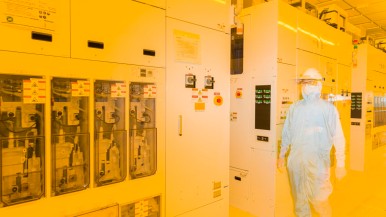
Dresden, Germany – It is a milestone on the path to the chip factory of the future: at the new Bosch semiconductor fab in Dresden, silicon wafers are passing through the fully automated fabrication process for the first time. This is a key step toward the start of production operations, which is scheduled for late 2021. Manufacturing of automotive microchips will be a primary focus when the fully digital and highly connected semiconductor plant is up and running. “Chips for tomorrow’s mobility solutions and greater safety on our roads will soon be produced in Dresden. We plan to open our chip factory of the future before the year is out,” says Harald Kroeger, member of the board of management of Robert Bosch GmbH. The company already operates a semiconductor fab in Reutlingen near Stuttgart. The new wafer fab in Dresden is Bosch’s response to the surging number of areas of application for semiconductors, as well as a renewed demonstration of its commitment to Germany as a high-tech location. Bosch is investing around one billion euros in the high-tech manufacturing facility, which will be one of the most advanced wafer fabs in the world. Funding for the new building is being provided by the federal German government, and more specifically the Federal Ministry for Economic Affairs and Energy. Bosch plans to officially open its wafer fab in June 2021.Prototype manufacturing already underway In January 2021, Bosch began putting its first wafers through the fabrication process in Dresden. From these, the company will make power semiconductors for use in applications such as DC-DC converters in electric and hybrid vehicles. In the six weeks it takes to produce the wafers, they undergo some 250 individual fabrication steps – all of which are fully automated. In the process, minute structures with dimensions measuring fractions of a micrometer are deposited on the wafers. These microchip prototypes can now be installed and tested in electronic components for the first time. In March, Bosch will start the first production runs of highly complex integrated circuits. To make the wafers into the finished semiconductor chips, they undergo some 700 processing steps, which take more than ten weeks to complete. 300-millimeter fab The technology in focus at Bosch’s new Dresden facility is 300-millimeter fabrication, in which a single wafer can accommodate 31,000 individual chips. Compared with conventional 150- and 200-millimeter wafers, this technology offers the company greater economies of scale and boosts its competitiveness in semiconductor production. Moreover, fully automated production and real-time data exchange between the machines will make chip manufacturing in Dresden exceptionally efficient. “Our new wafer fab sets standards in automation, digitalization, and connectivity,” Kroeger says. Construction of the facility began in June 2018 on a plot of land measuring some 100,000 square meters, or roughly 14 soccer fields. It is located in Silicon Saxony, Dresden’s answer to Silicon Valley. In late 2019, the outer shell of the high-tech factory was completed, providing 72,000 square meters of floor space. Work then began on the interior and the first production machinery was installed in the clean room. In November 2020, initial parts of this highly sophisticated fabrication technology completed a brief automated manufacturing cycle for the first time. The final construction phase will see up to 700 people working in the Dresden fab to control and monitor production and maintain the machinery. From wafer to chip Semiconductors are finding their way into more and more applications, including in the internet of things and for mobility of the future. The semiconductor fabrication process begins with round discs of silicon known as wafers. At the Bosch fab in Dresden, these wafers have a diameter of 300 millimeters and, at just 60 micrometers thick, will be thinner than a human hair. To produce the coveted semiconductor chips, the untreated – or “bare” – wafers are then processed for several weeks. As the application-specific integrated circuits (ASICs) in vehicles, for instance, these semiconductors act as the vehicle’s brains. They process the information from sensors and trigger further actions, such as sending a lightning-fast message to the airbag to tell it to deploy. Although the silicon chips measure just a few square millimeters, they contain complex circuits, sometimes featuring several millions of individual electronic functions.

20.10.2020

Press release

Powertrain systems

Bosch polls Europeans about the future of the powertrain: respondents in favor o ...

Stuttgart, Germany – According to a representative survey conducted in June 2020 by the market research institute Innofact on behalf of Bosch, no powertrain types have lost any of their relevance – whether batteries or fuel cells, gasoline or diesel engines. If the 2,500 survey respondents in Germany, France, Italy, and the U.K. had to decide on a new car tomorrow, one in two would opt for a stand-alone combustion engine for their primary car and around one in three for their second car. However, when asked what would be the most prevalently used powertrain in 2030, some 68 percent of those polled see the electrical powertrain in pole position, ahead of hybrids and combustion engines. Survey participants acknowledged the potential of fuel cell-powered cars, with around one in three seeing the fuel cell as the future of mobility. “Electric mobility is on its way – and that’s good news. This year alone, Bosch is investing 500 million euros in this domain. At the same time, we’re also continuously refining the internal combustion engine – because it’s still needed,” says Dr. Stefan Hartung, member of the Robert Bosch GmbH board of management and chairman of the Mobility Solutions business sector.Respondents want incentives for all powertrain types A further question reveals respondents’ open-mindedness toward powertrains of all types: when asked whether they favor incentives for vehicles equipped solely with combustion engines, in addition to the many government subsidies for electric cars and plug-in hybrids, 70 percent of the Europeans polled answered in the affirmative. The number of respondents in favor of government incentives to buy new cars with a conventional powertrain is highest in Italy at 83 percent, and lowest in the United Kingdom at 60 percent. In France, 77 percent are in favor; in Germany, 62 percent. “Incentivizing modern combustion engines can accelerate the vehicle fleet’s renewal, which would also help the environment and the climate,” Hartung says. Just under one-third of Europeans would like to see this subsidy run to at least 9,000 euros. This is the same as the maximum rebate currently offered by the German government for the purchase of an electric car. Two findings are notable: for one, 72 percent of city dwellers in the four surveyed European countries believe the combustion engine merits a subsidy. For the other, the majority (80 percent) of 18-to-29 year-olds also endorse incentives for cars with combustion engines. Even cars with conventional engines can run in a climate-neutral way. The key to this is renewable synthetic fuels (RSF), which are made from renewable hydrogen and CO2 captured from the surrounding air. On average, 57 percent of those taking part in the Bosch survey agreed that RSF should benefit from tax breaks. “There’s just no way around renewable synthetic fuels if we want to achieve our climate targets,” Hartung says. “Only with RSF can the more than one billion vehicles already on the road worldwide help contain global warming.” Can’t live without a car: respondents in Europe are unanimous In Europe, the status of the car and its importance for mobility is unlikely to change any time soon. Around 60 percent of those surveyed in Germany, France, Italy, and the U.K. are unable to imagine living without a car altogether. And a clear majority of the remaining 40 percent are only prepared to leave their car behind some of the time. The car’s approval rating in rural Europe is 77 percent. Incidentally, these findings are roughly similar among 18-to-29 year-olds, around half of whom also come out clearly in favor of a car. While 61 percent of those surveyed in Germany and 47 percent in the U.K. cited greater flexibility as the most important reason for having a car, 41 percent of French respondents indicated they need it mostly for work. In contrast, 55 percent of surveyed Italians prefer the car to other forms of mobility that they feel are less convenient. “For the foreseeable future, the car will remain the number one means of transport – and has excellent prospects of becoming even more climate-friendly,” Hartung says. Bosch’s objective is for people to be able to stay mobile in an affordable and eco-friendly way. The future of the powertrain: Bosch champions electromobility and combustion technology Bosch aims to make transportation as resource-friendly as possible, and is pursuing the vision of CO2-neutral and virtually emissions-free mobility in several ways. In its approach to future powertrain technology, the supplier of technology and services is keeping an open mind. On the one hand, Bosch aims to become the market leader in electromobility with battery and fuel cell-powered vehicles. Electric vehicles are climate-neutral if the charging power and hydrogen are sourced from renewables. On the other hand, Bosch is continuing to refine combustion engines to contain global warming and protect the environment to the greatest extent possible. If they run on RSF, gasoline and diesel engines can also be climate-neutral on the road. Bosch expects around one-third of all newly registered vehicles worldwide to be purely electric by 2030. Two-thirds of all new vehicles will still be powered by a combustion engine, many of them as hybrids.

12.10.2020

Press release

Automated mobility

Stuttgart airport set to welcome fully automated and driverless parking

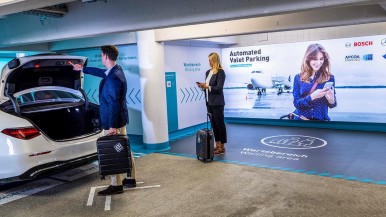
Stuttgart, Germany – Automated parking to drive down the airport stress: Bosch, Mercedes-Benz, and the parking garage operator Apcoa want to introduce driverless and fully automated parking at Stuttgart airport in the future. To this end, the automated valet parking (AVP) system co-developed by Bosch and Mercedes-Benz is to be made ready for commercial operation. The new Mercedes-Benz S-Class is already geared up to accommodate it as the world’s first production vehicle to feature the technology required for future infrastructure-based AVP. As an option, customers can buy the appropriate pre-installation for what the company calls the INTELLIGENT PARK PILOT, which makes the S-Class capable of receiving a smartphone command to drive itself to a reserved parking space. “With the new S-Class, it’s not just driving that’s a luxury, but parking as well,” says Dr. Michael Hafner, head of automated driving at Mercedes-Benz AG. The P6 parking garage at Stuttgart airport will serve as the pilot for the planned commercial automated parking service. Here, the companies will test how the vehicle technology onboard the S-Class interacts with the intelligent Bosch infrastructure and APCOA FLOW, the digital platform provided by the parking garage operator Apcoa. This platform makes the whole parking process ticketless and cashless. “Apcoa, Bosch, Mercedes-Benz, and Stuttgart airport want to work together to make parking fully automatic,” says Christoph Hartung, member of the executive management of Connected Mobility Solutions at Bosch. In the airport parking garage, preparations are currently underway to begin piloting the planned automated valet parking service. The aim of this trial with new S-Class vehicles at Stuttgart airport is to ensure that interactions between the vehicle, infrastructure technology, and parking garage operator run smoothly and are optimized for the customer.World’s first Level 4 park function in a production vehicle In July 2019, Bosch and Mercedes-Benz received the world’s first special permit to operate AVP for selected E-Class vehicles without a safety driver in real-life, mixed parking garage traffic at the Mercedes-Benz Museum in Stuttgart. Equipped with the appropriate pre-installation for the INTELLIGENT PARK PILOT, the new Mercedes-Benz S-Class is now the first production vehicle to feature AVP technology, which enables it to park without a driver. However, this is conditional on the future availability of parking garages with the appropriate infrastructure, as well as on national legislators giving AVP the green light. This makes the Mercedes-Benz S-Class the world’s first vehicle to feature a pre-installation for an SAE Level 4 automated driving function, the second-highest level of automation. “With automated valet parking, Mercedes-Benz is demonstrating that driverless parking will soon be possible,” Hafner says. To facilitate this new one-touch parking function, a spacious drop-off and pick-up area will be set up directly behind the entrance to the P6 parking garage, giving AVP users a convenient place to leave their vehicles. As they comfortably make their way to the terminal and check in, their S-Class will park itself in the basement, guided by information from the infrastructure technology. In other words, users no longer need to worry about maneuvering or having to squeeze out of their cars when the space they have finally found proves to be too narrow. “Automated valet parking really enhances our passengers’ comfort and convenience and saves them time, especially when they’re in a hurry and just want to drop their car off quickly at the airport”, says Walter Schoefer, management spokesman for Flughafen Stuttgart GmbH. For the test phase that is about to start, P6 will initially have two spaces available for self-parking vehicles. More spaces will be added when driverless parking becomes standard as planned in the future and as demand increases. Intelligent infrastructure and digital platforms The pilot parking garage at Stuttgart airport will be a premiere for new Bosch video cameras that can identify vacant parking spaces, monitor the driving aisle and its surroundings, and detect obstacles or people in the aisle. Until now, lidar sensors have been used for this purpose. A dedicated control center in the parking garage then calculates the route the vehicles need to take to reach an available space. “Our intelligent parking garage infrastructure forms the basis for the future of driverless parking,” Hartung says. Thanks to the information that the cameras provide, it is also possible for cars to drive themselves around the parking garage – even on narrow ramps, enabling them to move between different stories. The in-vehicle technology autonomously converts the information from the infrastructure into driving maneuvers. If the cameras detect an unexpected obstacle, for example, the vehicle safely performs an emergency stop. APCOA FLOW, the parking garage operator Apcoa’s digital platform, will also play a key role in driverless parking at Stuttgart airport. Drivers are already using the platform to help lighten the burden of parking. This ranges from making firm reservations for a parking space, to contactless entry into the parking garage, and to fully automated payment, invoicing, and contactless exit. The system recognizes the customer’s vehicle and the barriers open automatically, making a ticket and trip to the ticket machine redundant. “We want to be the first parking garage operator to fully support and enable automated parking services based on AVP technology in one of our parking garages,” says Frank van der Sant, chief commercial officer at Apcoa Parking Holdings GmbH. More vehicles, more parking garages A vehicle drop-off and collection service saves time and avoids long walks to the car: once parking garages are equipped with the appropriate infrastructure and national laws permit AVP, customers will be able to enjoy driverless parking services. Bosch and Mercedes-Benz are paving the way for this with the world’s first infrastructure-based solution for SAE Level 4 automated valet parking in real-life, mixed parking garage traffic. Uniform standards and interfaces ensure smooth communication between the vehicles and infrastructure technology. In the future, Bosch’s aim is to equip more and more parking garages with AVP infrastructure technology. As Europe’s largest parking garage operator, Apcoa also has a strategic interest in offering innovative premium services like AVP in more of its parking garages. “Looking ahead, we want to open up AVP to more customers at selected Apcoa locations,” van der Sant says. The company manages approximately 1.5 million individual parking spaces at over 9,500 locations in 13 European countries. By increasing the availability of driverless and fully automated parking services, the same amount of space could accommodate up to 20 percent more vehicles. In addition, driverless parking is especially suitable for narrow, remote, and therefore unattractive parking areas that people would otherwise avoid.

16.12.2019

Press release

Connected mobility

Safe eyes save lives: How Bosch engineers are innovating the 95-year-old sun viso

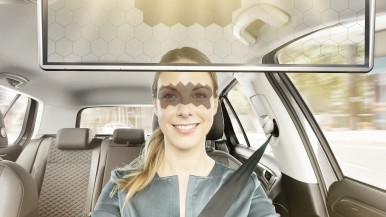
Farmington Hills, Michigan – Bosch is rethinking driver safety and comfort, bringing one of the most overlooked interior components into the spotlight, the sun visor. The sun causes twice as many car accidents as any other weather-related condition due to temporary blindness. The National Highway Traffic Safety Administration reports thousands sun glare-related car accidents each year, and another study indicates the risk of a car crash is 16 percent higher during bright sunlight than normal weather. The traditional sun visor is not equipped to adequately address this safety concern. At best, it blocks some of the sun from your eyes but along with it, some of your view is blocked as well. Bosch is offering a solution with the revolutionary Virtual Visor, a transparent LCD and intuitive camera, which replaces the traditional vehicle sun visor completely. As the first reimagined visor in nearly a century, Bosch’s technology utilizes intelligent algorithms to intuitively block the sun’s glare and not the view of the road ahead. “For most drivers around the world, the visor component as we know it is not enough to avoid hazardous sun glare – especially at dawn and dusk when the sun can greatly decrease drivers’ vision,” said Dr. Steffen Berns, president of Bosch Car Multimedia. “Some of the simplest innovations make the greatest impact, and Virtual Visor changes the way drivers see the road.”The Virtual Visor, which was honored as a Best of Innovation in the CES 2020 Innovation Awards, will debut at CES 2020 in Las Vegas. The Virtual Visor was also named as an honoree in the awards competition, which recognizes products across 28 categories. Virtual Visor received the Best of Innovation for the In-Vehicle Entertainment & Safety category, as it received the highest ratings from a panel of judges that includes designers, engineers and members of the tech media. A sun visor fit for the future Virtual Visor links an LCD panel with a driver or occupant-monitoring camera to track the sun’s casted shadow on the driver’s face. The system uses artificial intelligence to locate the driver within the image from the driver-facing camera. It also utilizes AI to determine the landmarks on the face ‒ including where the eyes, nose and mouth are located ‒ so that it can identify shadows on the face. The algorithm analyzes the driver’s view, darkening only the section of the display through which light hits the driver’s eyes. The rest of the display remains transparent, no longer obscuring a large section of the driver’s field of vision. “We discovered early in the development that users adjust their traditional sun visors to always cast a shadow on their own eyes,” said Jason Zink, technical expert for Bosch in North America and one of the co-creators of the Virtual Visor. “This realization was profound in helping simplify the product concept and fuel the design of the technology.” The creative use of liquid crystal technology to block a specific light source decreases dangerous sun glare, driver discomfort and accident risk; it also increases driver visibility, comfort and safety. Innovation from the recycling bin From the original ideation and concept phase to testing and prototyping, Virtual Visor is a bottom-up solution made possible through the innovation culture established at Bosch. Employees are encouraged to apply lean startup methodologies to confirm customer benefits, market potential and feasibility for new ideas, which are then validated by peers and approved for development. “We’ve built a culture around empowering our associates by putting them in the driver’s seat,” said Mike Mansuetti, president of Bosch in North America. The Virtual Visor was developed by a team in North America as part of Bosch internal innovation activities. “As a leading global technology provider, we understand that innovation can come from any level of an organization, and we want to see that grow.” A group of three powertrain engineers, led by Zink, developed the idea for Virtual Visor and created prototypes in their free time in order to secure internal funding for the project concept. “Like many early-stage ideas, we were working with limited capital and resources,” said Zink. “The original prototype, we used to first pitch the concept, was made from an old LCD monitor we recovered from a recycling bin.” The Virtual Visor team received mentorship from Bosch executives as they sought funding and developed additional versions of the product. Ultimately the product was transitioned into the Bosch Car Multimedia division. Bosch at CES 2020: • PRESS CONFERENCE: From 9:00 to 10:30 a.m. local time on Monday, January 6, 2020 in Ballrooms B, C, and D, Mandalay Bay Hotel, Las Vegas South Convention Center, Level 2 • BOOTH: Tuesday to Friday, January 7–10, 2020 , in the Central Hall, booth #12401 • FOLLOW the Bosch CES 2020 highlights on Twitter: #BoschCES • PANELS WITH BOSCH EXPERTS: Wednesday, January 8, 2020, 10:15 to 11:15 a.m. (local time) Growth of Apprenticeships for “New Collar” Jobs session with Charlie Ackerman, Senior Vice President of Human Resources, Las Vegas South Convention Center

08.10.2019

Press release

Connected mobility

Bosch poised for leap in e-mobility technology

Reutlingen and Dresden, Germany – Nowadays, all cars feature semiconductors. There are more than 50 of them in every vehicle that rolls off the production line. The new microchips made of silicon carbide (SiC) that Bosch has developed will now help electromobility make a great leap forward. In the future, the chips made of this extraordinary material will set the pace in the power electronics – the command center for electric and hybrid vehicles. Compared to the silicon chips used to date, SiC semiconductors have better electrical conductivity. This enables higher switching frequencies while also ensuring that much less energy is dissipated in the form of heat. “Silicon carbide semiconductors bring more power to electric motors. For motorists, this means a 6 percent increase in range,” says Harald Kroeger, member of the Bosch board of management. Bosch manufactures the new generation of semiconductor chips at its Reutlingen plant, 25 miles south of Stuttgart. At this plant, the company has been turning out several million microchips every day for decades.SiC: a booster for e-mobility Semiconductors made of silicon carbide set new standards for switching speed, heat loss, and size. It all begins with additional carbon atoms, which are introduced into the crystalline structure of the ultra-pure silicon used to manufacture semiconductors. The chemical bond created in this way turns the semiconductor chips into real powerhouses. Especially for applications in electric and hybrid vehicles, this means many advantages. In power electronics, they ensure that 50 percent less energy is lost in the form of heat. This saving translates into more efficient power electronics and more energy for the electric motor and therefore for the battery range. Motorists can drive 6 percent further on a single battery charge. In this way, Bosch is addressing one of the stumbling blocks for potential buyers of electric cars: nearly one in two consumers (42 percent) decide against buying an electric vehicle because they are afraid the battery will run out while they are on the road. In Germany, this anxiety is even more prevalent, affecting 69 percent of consumers (source: Consors Finanz Automobile Barometer 2019 ). Alternatively, car manufacturers can make the battery smaller for a given range. This reduces the cost of an electric car’s most expensive component, which in turn reduces the vehicle’s price. “Silicon carbide semiconductors will transform e-mobility,” Kroeger says. The reason is that the new technology also offers further potential savings down the line: the much lower heat losses of the chips, combined with their ability to work at much higher operating temperatures, mean that manufacturers can cut back on the expensive cooling of the powertrain components. That has a positive impact on electric vehicles’ weight and cost. Bosch: at home in the automotive and semiconductor industries With this silicon carbide technology, Bosch is systematically expanding its semiconductor know-how. The company will be using the SiC semiconductors in its own power electronics in the future. For its customers, this brings together the best of both worlds, as Bosch is the only automotive supplier that also manufactures semiconductors. “Thanks to our deep understanding of systems in e-mobility, the benefits of silicon carbide technology flow directly into the development of components and systems,” Kroeger says. As one of the leading manufacturers of automotive semiconductors, Bosch has been exploiting this globally unique advantage for almost 50 years. In addition to power semiconductors, these include microelectromechanical systems (MEMS) and application-specific integrated circuits (ASICs). Whether in airbags, belt tensioners, cruise control systems, rain sensors, or powertrains, there is scarcely a domain in modern automotive technology that does not rely on microchips. In 2018, the value of the chips in an average car was around 370 dollars (337 euros) (source: ZVEI). While this amount is growing by 1 to 2 percent annually for applications not relating to infotainment, connectivity, automation, and electrification, on average an electric vehicle has additional semiconductor chips worth 450 dollars (410 euros) on board. Experts predict that this figure will increase again by around 1,000 dollars (910 euros) as a result of automated driving. This makes the automotive market one of the drivers of growth in the semiconductor sector. Furthermore, key applications of the internet of things, such as artificial intelligence, cyber security, smart cities, edge computing, smart homes, and connected industry, will drive future growth in the domain. With its semiconductor factories in Reutlingen and Dresden, Bosch is well prepared for these developments: “Our semiconductor know-how helps us not only to develop new automotive functions and IoT applications but also to continuously improve the chips themselves,” Kroeger says. Bosch is strengthening its competitiveness Turning the circular discs of silicon or silicon carbide – the wafers – into semiconductor chips involves an elaborate manufacturing process that can last up to 14 weeks. In several chemical and physical processes, the wafers acquire ultra-fine structures that will subsequently make up the tiny chips, each of which measures just a few millimeters. In June 2018, Bosch laid the cornerstone for its state-of-the-art semiconductor factory in Dresden. Its manufacturing operations will use wafers with a diameter of 300 millimeters. This means significantly more chips from a wafer, and correspondingly greater economies of scale than with semiconductors based on 150- and 200-millimeter technology. Bosch produces the latter in Reutlingen, where it will also manufacture the new SiC chips. The wafer fabs in Reutlingen and Dresden complement each other perfectly. This enables Bosch to further strengthen its competitiveness. “Semiconductors are a core component of all electrical systems. They are also turning data into a coveted raw material of the future. As they are becoming increasingly important in our fields of activity, we want to continuously expand our manufacturing operations,” Kroeger says. In its wafer fab in Dresden, Bosch is investing around a billion euros – the largest single investment in the company’s history. In the factory, facilities are currently being installed in the clean room areas. The first associates are due to start work in the spring of 2020. Bosch will operate the plant as a carbon-neutral site.