Search & find:
media, releases and events to support your reporting about the Bosch Group.

22.09.2022

Press release

Automotive Aftermarket

Bosch plans acquisition of Radio Frequency specialist ItoM

Reutlingen, Eindhoven – Bosch is expanding its team of experts in the field of "System on chip" (SoC). SoC are special semiconductors that are increasingly used in control units for the automotive industry. With the planned acquisition of Semiconductor Ideas to the Market (ItoM), headquartered in Eindhoven, the Netherlands, the technology group aims to strengthen its development expertise for high-frequency processing SoC. Bosch and ItoM signed corresponding contracts on 22nd of September 2022. Bosch plans to acquire ItoM and welcome the approximately 30 employees. Both development sites in Eindhoven and Enschede are to be further expanded.In the automotive sector, SoC is considered a key technology for modern control units, such as those used in driver assistance systems. "We are very pleased to welcome our new colleagues. The team fits perfectly into our development area for integrated circuits and will strengthen the expertise there in the area of high-frequency circuits," says Jens Fabrowsky, Executive Vice President Automotive Electronics, Robert Bosch GmbH, with responsibility for the business field Semiconductor Components at Bosch. Former Philips engineers, including the current CEO Harm van Rumpt, founded ItoM in 1998. The company is specialized in high-frequency processing components. "We have core expertise on mixed-signal IC design and bring a strong team to the table. Bosch offers the ideal framework to grow. I am convinced that the merger will open up completely new perspectives for our company and our employees," says Edwin Veldman, Managing Partner at ItoM. The parties have agreed not to disclose details of the transaction, such as the purchase price. The acquisition is subject to approval by the antitrust authorities. More information: https://www.itom.nl/

11.05.2021

Press release

Automotive Aftermarket

Bosch, Shell, and Volkswagen develop renewable gasoline with 20 percent lower CO ...

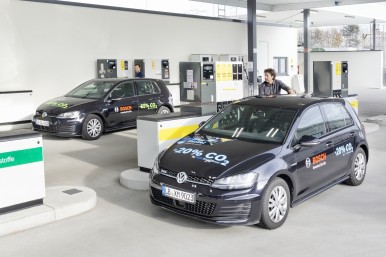
Stuttgart, Germany – The available range of renewable low-carbon fuels is growing. Following on from R33 Blue Diesel, Bosch, Shell, and Volkswagen have now come up with a low-carbon gasoline. Their new fuel, called Blue Gasoline, similarly contains up to 33 percent renewables, ensuring a well-to-wheel reduction in carbon emissions of at least 20 percent per kilometer driven. This means a fleet of 1,000 VW Golf VIII 1.5 TSIs alone could save more than 230 metric tons of CO2 per year, assuming an annual mileage of 10,000 kilometers each. Shell will offset the remaining carbon emissions from the use of Blue Gasoline through certified offset arrangements. The initial plan is to make the fuel available at regular filling stations over the course of the year, starting in Germany.“On the road to climate-friendly mobility, we must ensure we don’t leave any technical opportunities untapped, starting with electromobility and ending with renewable fuels. Every bit of CO2 we save can help us achieve our climate targets,” says Dr. Uwe Gackstatter, president of the Bosch Powertrain Solutions division. “We’re pleased to present this counterpart to R33 Blue Diesel. Our new fuel now also takes gasoline engines a big step forward in terms of sustainability,” says Felix Balthasar, Manager Speciality Fuels at Shell. Sebastian Willmann, head of Internal Combustion Engine Development at Volkswagen, says: “Blue Gasoline is another building block in the effective reduction of CO2 emissions from the vehicle fleet. Blue Gasoline’s high storage stability makes the fuel particularly suitable for use in plug-in hybrid vehicles. In the future, the expansion of the charging infrastructure and larger batteries will mean that these vehicles predominantly run on electrical power, and thus that fuel may remain in the fuel tank for longer periods of time.” Highest standards set for fuel quality and sustainability Blue Gasoline fuel complies with the EN 228/E10 standard and even exceeds it in key parameters such as storage stability and boiling behavior. High-quality additives also keep the engine extremely clean and protect it against corrosion. This means not only that the fuel can be distributed via the existing filling station network, but also that it can be used in all new and existing vehicles for which Super 95 E10 gasoline has been approved. The proportion of up to 33 percent renewables is made up of biomass-based naphtha or ethanol certified by the International Sustainability and Carbon Certification (ISCC) system. One source of such naphtha is what is known as tall oil, a by-product in the production of pulp for paper. But naphtha can also be obtained from other residual and waste materials. Bosch company filling stations will now offer only low-carbon fuels In the Blue Gasoline project, the three partners jointly defined the fuel specification to be achieved, taking into account engine requirements and sustainability. They put the product they developed through intensive testing on engine test benches and in trial vehicles – with consistently positive results. Bosch will debut Blue Gasoline at its company filling stations as early as May 2021, starting with its Schwieberdingen site, with a rollout to the company’s filling stations at its Feuerbach and Hildesheim sites scheduled for the course of 2021. The supply of conventional Super 95 E10 gasoline will then be gradually phased out. Since the end of 2018, R33 Blue Diesel has been the only diesel fuel that Bosch company filling stations offer for company cars and internal delivery vehicles. R33 Blue Diesel is also becoming available at more and more regular filling stations in Germany. At present, it is offered at eight filling stations belonging to different brands nationwide, with more set to follow. Renewable fuels are not a substitute for electromobility For Bosch, renewable low-carbon and carbon-neutral fuels will not replace electromobility, but complement it. In principle, the use of these fuels makes sense in all modes of transport, but especially in those for which there is as yet no clear and economical path to electrification. In addition to ships and aircraft, this applies primarily to heavy goods vehicles and existing vehicles, but also to all the vehicles with internal-combustion engines or hybrid powertrains that are on the world’s roads today or will be built in the coming decades. To promote rapid market uptake for these fuels, the focus is on renewable biomass and synthetic fuel components that can be blended into regular fuel in high proportions in line with existing fuel standards. By using Blue Diesel and Blue Gasoline, Bosch is demonstrating that it is not just up to new vehicles to reduce the transport sector’s CO2 emissions: the existing fleet can also help achieve climate targets.

26.03.2019

Press release

Connected mobility

Bosch Augmented Reality applications now also work with the new Microsoft HoloLens 2

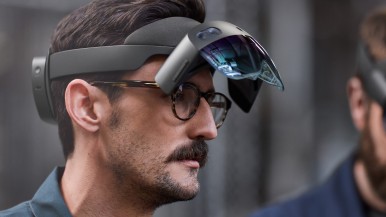
Karlsruhe – Whether logistics, trainings or support for rescue forces, Bosch Augmented Reality applications have eased and optimized several working processes in different areas throughout the last years. AR can be used for numerous applications. By means of the Common Augmented Reality Platform (CAP) developed by Bosch, the merger of both real and digital worlds can easily be adapted to new fields of application. CAP is also available for the new Microsoft HoloLens 2 presented in the run-up to the Mobile World Congress trade fair in Barcelona. Due to its great experience concerning AR applications, Bosch will be one of the first companies worldwide to use and test the new HoloLens 2 as part of a strategic cooperation. “With the new HoloLens 2, we are able to expand the potentials of our Augmented Reality applications even better. In addition, the new HoloLens 2 also provides the technical basis for the development of pioneering AR applications previously only realizable to a limited extent”, Jürgen Lumera, Bosch Augmented Reality product manager, said.AR applications are already used to train workshops regarding sophisticated repair tasks on vehicles, for example. There is, for instance, a special AR training on how to readjust the sensors of driver assistance systems – e.g. after replacing the windshield. In this regard, it is of major importance to keep an eye on the whole vehicle. The new HoloLens 2 provides a much bigger field of view than former products. This allows displaying more details and watching larger objects from closer. And the manufacturer also increased the wearing comfort of the HoloLens 2 significantly. Significant time savings thank to Augmented Reality Augmented Reality applications complement the real image superimposing useful and time-saving additional information. In case the wearer of AR glasses looks onto a vehicle or a machine featuring AR information, explanations, 3D objects or videos are added to the real image. Technical nexuses thus literally become transparent. Bosch performed a field study at the Automotive division to analyze the benefits of Augmented Reality applications. Augmented Reality allows time savings of 15 percent in average per step taken – even on common vehicles and in case of less sophisticated repair tasks. In order to create efficient Augmented Reality applications, Bosch created the Common Augmented Reality Platform (CAP) allowing the fast and easy integration of digital and visual contents. Fed with stored contents, the platform compiles the required data for each specific Augmented Reality application. Combining powerful CAP applications with the new HoloLens 2, the realization of AR scenarios previously considered highly visionary is now within reach. In future, AR glasses might, for instance, substitute user interface displays and keyboards on machines and systems or revolutionize repair processes at workshops.

23.05.2018

Press release

Automated mobility

Bosch blazing new trails in mobility and environmental protection

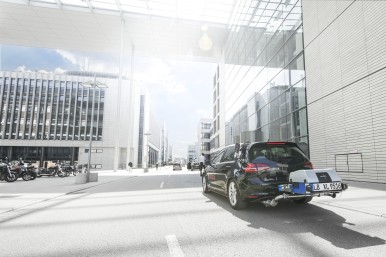
Stuttgart and Renningen, Germany – Bosch is aiming for further growth in 2018, despite the difficult economic climate. After achieving record results in 2017, and in light of economic and geopolitical risks, the Bosch Group expects its sales revenue to grow by 2 to 3 percent in 2018. In the first three months, the sales revenue generated by the company matched the high level of the same period of the previous year, and even increased by around 5 percent when adjusted for exchange-rate effects1. “Our company is unequaled when it comes to combining comprehensive connectivity expertise with broad industry and product know-how. This is the Bosch Group’s unique selling proposition,” said the Bosch CEO Dr. Volkmar Denner, speaking at the annual press conference in Renningen. Denner sees improving the quality of life and contributing to eco- and climate- friendliness at the top of Bosch’s agenda: “Our ‘Invented for life’ ethos is our motivation for developing the best possible technologies for environmental protection. We want to help keep people mobile, while improving air quality.” To make practically zero-emissions traffic reality, the company is making heavy investments – both in making electromobility a market success and in enhancing the combustion engine.Innovative diesel technology: unprecedented NOx emissions Bosch has now achieved a breakthrough in diesel technology: with their new diesel technology, Bosch engineers have succeeded in getting NOx emissions down to one-tenth of the legally permitted limit. On average, test vehicles equipped with the enhanced technology already emit no more than 13 milligrams of NOx per kilometer, or far less than the 120 milligrams that will be permitted after 2020. “There’s a future for diesel. It will remain integral to tomorrow’s mobility solutions,” the Bosch CEO said. 2017 in review: record sales revenue and earnings The year 2017 was an extremely good one for Bosch. The company generated sales revenue of 78.1 billion euros. This represents an increase of 6.8 percent, or 8.4 percent after adjusting for exchange-rate effects, which totaled some 1.2 billion euros. All business sectors contributed to these positive results. EBIT (earnings before financial result and tax) from operations reached 5.3 billion euros in 2017, thus improving by nearly 17 percent compared with 2016. “Both sales revenue and earnings are the highest ever in our company’s history. What’s more, EBIT from operations increased at a higher rate than sales revenue,” said Prof. Stefan Asenkerschbaumer, Bosch CFO and deputy chairman of the management board. The EBIT margin from operations came to 6.8 percent, or 0.6 percentage points higher than in the previous year. Research and development expenditure also remained on a high level. Last year, it came to some 7.3 billion euros. This is equivalent to more than 9 percent of sales. The ultimate IoT-related discipline: cross-domain ecosystems No other company offers as many real-world connectivity solutions as Bosch: aside from smart mobility, they include domains such as connected manufacturing (Industry 4.0), the smart city, and not least the smart home. So far, Bosch has put 170 in-house IoT projects into practice, focusing on fundamental challenges such as population growth, urbanization, and climate change. In 2017, the company sold some 38 million web-enabled products, roughly 40 percent more than in 2016. Today, Bosch employs more than 25,000 software engineers, no less than 4,000 of whom are engaged in developing solutions for the internet of things. The company increasingly sees future business prospects arising from the digitalization of entire ecosystems. Home Connect – the biggest IoT ecosystem for household appliances – has already been adopted by 28 industry partners. The Home Connect app can be used to operate everything from coffee makers to washing machines. Bosch has identified significant potential in cross-domain ecosystems that link different industries, such as “Logistics 4.0.” Such ecosystems bring together solutions for manufacturing processes, building services, security, and mobility – all areas in which Bosch plays an active role. As Volkmar Denner emphasized: “Cross-domain ecosystems are the ultimate IoT-related discipline. No other company is better qualified to realize them than Bosch. The competitive advantage offered by our diversification has never been greater.” Electromobility: striving for market leadership Bosch is working tirelessly to achieve a breakthrough for electromobility. In 2017, the company won 20 contracts to produce electrical powertrain systems, valued at a total of 4 billion euros. Bosch expects the mass market for electric vehicles to take off from 2020, and aims to be a leading player in that market. This is already the case in China, where Bosch is working with the U.S. startup Nikola Motor Company and the Chinese company Weichai Power, the world’s biggest manufacturer of commercial-vehicle engines, to promote the use of fuel cells in production vehicles. In addition to its components business, Bosch also sees a promising future in web-based services, such as the recently premiered system!e , to improve the viability of electric driving. Automated driving: from component sales to systems solutions Bosch is also making significant progress in the transition to automated driving. As early as 2019, the company expects to generate sales of two billion euros with driver assistance systems. Bosch is growing faster than the market, which is forecast to grow 20 percent this year. Sales of Bosch radar and video sensors, for example, are expected to increase by 40 percent. “More automation means greater technical complexity. In the future, our customers will need all-in-one solutions, not just discrete components. This is another area in which our systems expertise is an advantage,” Denner said. Some 4,000 engineers are working for Bosch on automated-driving solutions, 1,000 more than a year ago. Connected driving: entering the ridesharing business Connected mobility is another market in which Bosch expects to generate significant business. The value of this market is forecast to reach 140 billion euros worldwide by 2022. By 2025, there will be more than 450 million connected vehicles on the world’s roads. Bosch has entered the ridesharing business through its acquisition of the U.S. start-up Splitting Fares (SPLT) . Bosch has brought SPLT and more than 20 other mobile service providers together in its new Connected Mobility Solutions division. They include the COUP e-scooter sharing service, which is soon to expand its business to Madrid, Spain. Results by business sector for 2017 All business sectors reported improved sales revenue in 2017: Mobility Solutions increased its sales revenue by 7.8 percent (9.4 percent after adjusting for exchange-rate effects) to 47.4 billion euros. This is three times the growth rate for the automotive industry worldwide. This sales revenue includes, for the last time, the contribution by the Bosch Starter Motors and Generators division, which was sold at the end of 2017. The margin from operations was 7.3 percent, or one percentage point higher than in the previous year. In the Consumer Goods business sector, sales revenue amounted to 18.4 billion euros. This represents an increase of 4.5 percent, or 6.7 percent taking exchange-rate effects into account. The margin from operations was 8.1 percent. The Industrial Technology business sector increased its sales revenue by 7.8 percent to 6.8 billion euros, or by 9.2 percent after adjusting for exchange-rate effects. The margin from operations was 3.3 percent, up 2.1 percentage points on the previous year. The Energy and Building Technology business sector achieved sales of 5.4 billion euros, which equates to an increase of 4.1 percent, or 5.8 percent after adjusting for exchange-rate effects. The margin from operations was 4.4 percent. Results by region for 2017 The Bosch Group generated sales revenue of 40.8 billion euros in Europe in 2017. This represents an increase of 5.6 percent, or 6.6 percent taking exchange- rate effects into account. The company benefited from the recovery of important western European markets and the good economic developments in Germany. Sales revenue from eastern European countries such as Russia, Romania, and Turkey also increased significantly. Strong growth was also reported in Asia Pacific, including Africa. Sales revenue increased by 13.5 percent (16.5 percent after adjusting for exchange-rate effects) to 23.6 billion euros. After adjusting for exchange-rate effects, the group’s sales revenue in North America remained on the previous year’s level. Due to lower output in the automotive sector and negative exchange-rate effects, sales revenue dropped by a nominal 2 percent to 12.1 billion euros. In South America, by contrast, sales revenue increased substantially, rising 16.4 percent (13.2 percent after adjusting for exchange-rate effects) to 1.6 billion euros. Headcount: continuing demand for IT and software experts At the reporting date of December 31, 2017, the Bosch Group had around 402,000 associates worldwide. This represents a year-on-year increase of 12,900. Recruitment was particularly strong in Asia Pacific and in central and eastern Europe. In Germany, the workforce expanded by around 3,700 to a total of 137,700 associates. Bosch is looking to recruit more trained specialists and executives in 2018, with a special focus on IT and software engineers. An overview of key figures can be found here .