Suche

Press release #Bosch Group
share

Hannover Messe 2026: Here are Bosch’s highlights for the industrial sector

Prototypes that closely match production parts:

Agentic AI for more efficiency in manufacturing

  • Bosch establishes new approach to operational excellence in manufacturing
  • New Bosch pellet printer enables prototypes using material from large-scale production
  • Bosch presents scalable automation solutions for battery recycling
Manuela Kaiser

Manuela Kaiser

X

Stuttgart / Hannover, Germany – In times of increasing complexity and an aging society, the two key factors for industrial success are resilience and competitiveness. But what do specific solutions to these abstract challenges look like? At Hannover Messe 2026, Bosch is providing some clear answers and showing how an intelligent combination of people, software, and artificial intelligence (AI) doesn’t just improve manufacturing, but transforms it from the ground up. Visitors will also discover Bosch’s technological highlights all around the trade fair – from innovative approaches for recycling vehicle batteries to revolutionary 3D printers and scalable solutions for increasing production. Bosch Connected Industry will be represented in hall 14, booth J17, while Bosch Rexroth will be showcasing its industrial technology solutions in hall 26, booth E69
Bosch is making factories fit for the future

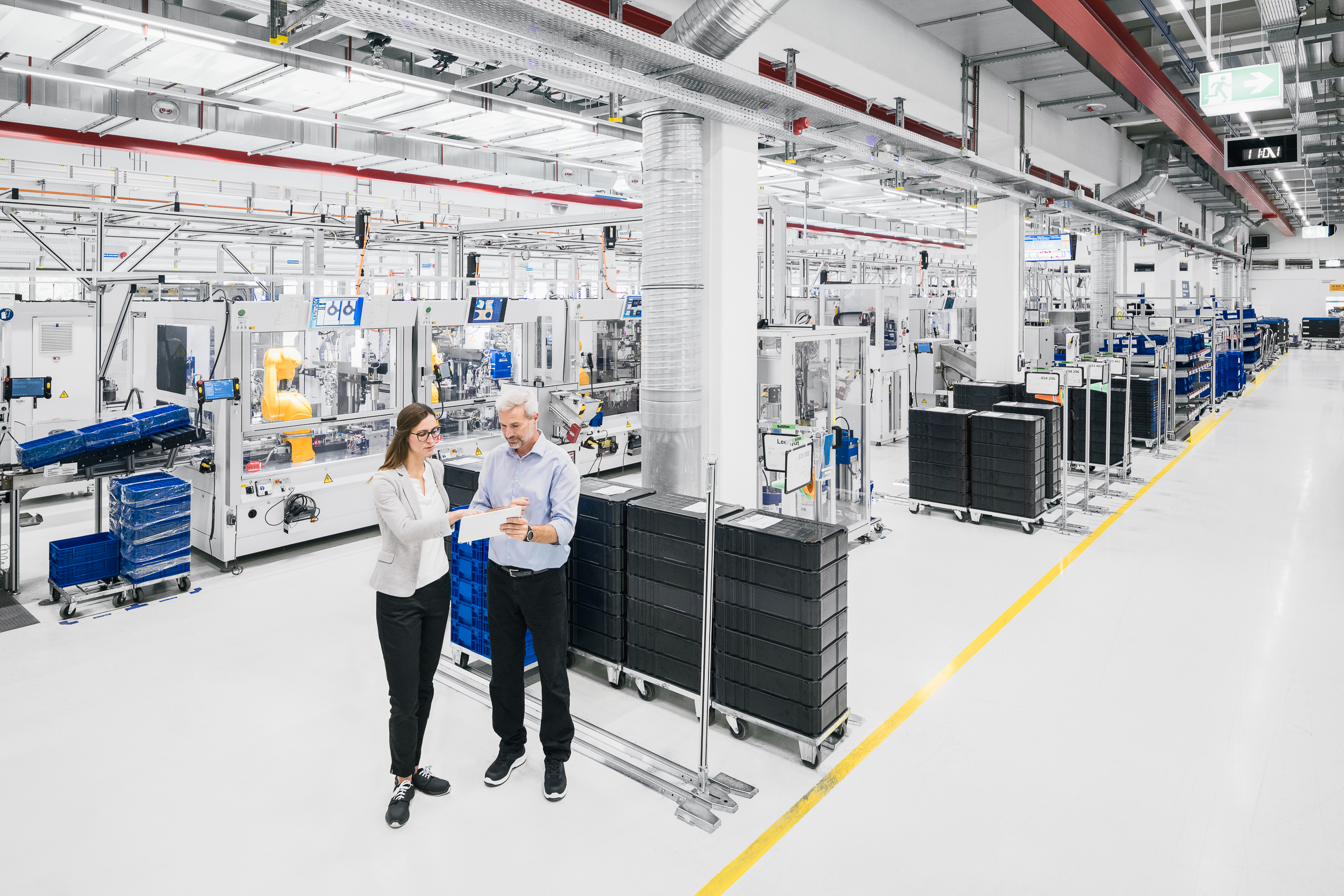
Bosch is using the example of shopfloor collaboration to show how agentic AI can become a real partner for people.

Technology as a partner: In response to current challenges such as the shortage of skilled workers, increasing complexity, and cost pressure, Bosch is pursuing a new approach to intelligent collaboration between humans, machines, and digital systems: Manufacturing Co-Intelligence®. The concept starts where today’s process chains still break – because information is stored in different systems; planning, production, quality, and maintenance rarely work on the same database; and people manually compensate for the things that the systems don’t map in an integrated manner. Manufacturing Co-Intelligence® connects these systems, puts data in the right context, and creates a common operational view – both on the shopfloor and along the entire product lifecycle from development to operation. Today, each time a maintenance team has to be deployed at night or on the weekend to deal with a machine breakdown serves as an example of the change that end-to-end agentic AI can bring. By monitoring processes across the board and detecting the smallest deviations, it can initiate solutions that avert a major breakdown. If, in spite of this, a fault does still occur, then the worker responsible can communicate via a chat or voice interface with the AI agent, which will evaluate manuals and analyze the shift log before providing instructions on how to rectify the fault. It automatically documents incidents and solutions and also passes them on to other plants operating the same machinery. Thanks to integrated domain knowledge, AI agents can answer questions correctly up to three times more often than isolated AI systems and reduce the manual effort for documentation and data reconciliation by up to 50 percent.

Digital AI twins: State-of-the-art manufacturers face a major challenge: how to keep track of the huge amounts of data that arise throughout a product’s lifecycle and at the same time make that data usable. Bosch’s digital twin concept solves this problem by giving each real component a digital twin that brings together all the data and puts it into an understandable context. This enables seamless traceability and full transparency from planning through to use by the customer. Bosch is extending this principle with artificial intelligence to enable the digital twins not only to map the component’s current status, but also to make reliable forecasts about its future. This means potential machine failures can be detected at an early stage, downtimes reduced, and energy consumption optimized. Companies benefit from more predictable maintenance and greater long-term efficiency of their systems.

Smart Bosch solutions: from 3D printing to EV battery recycling

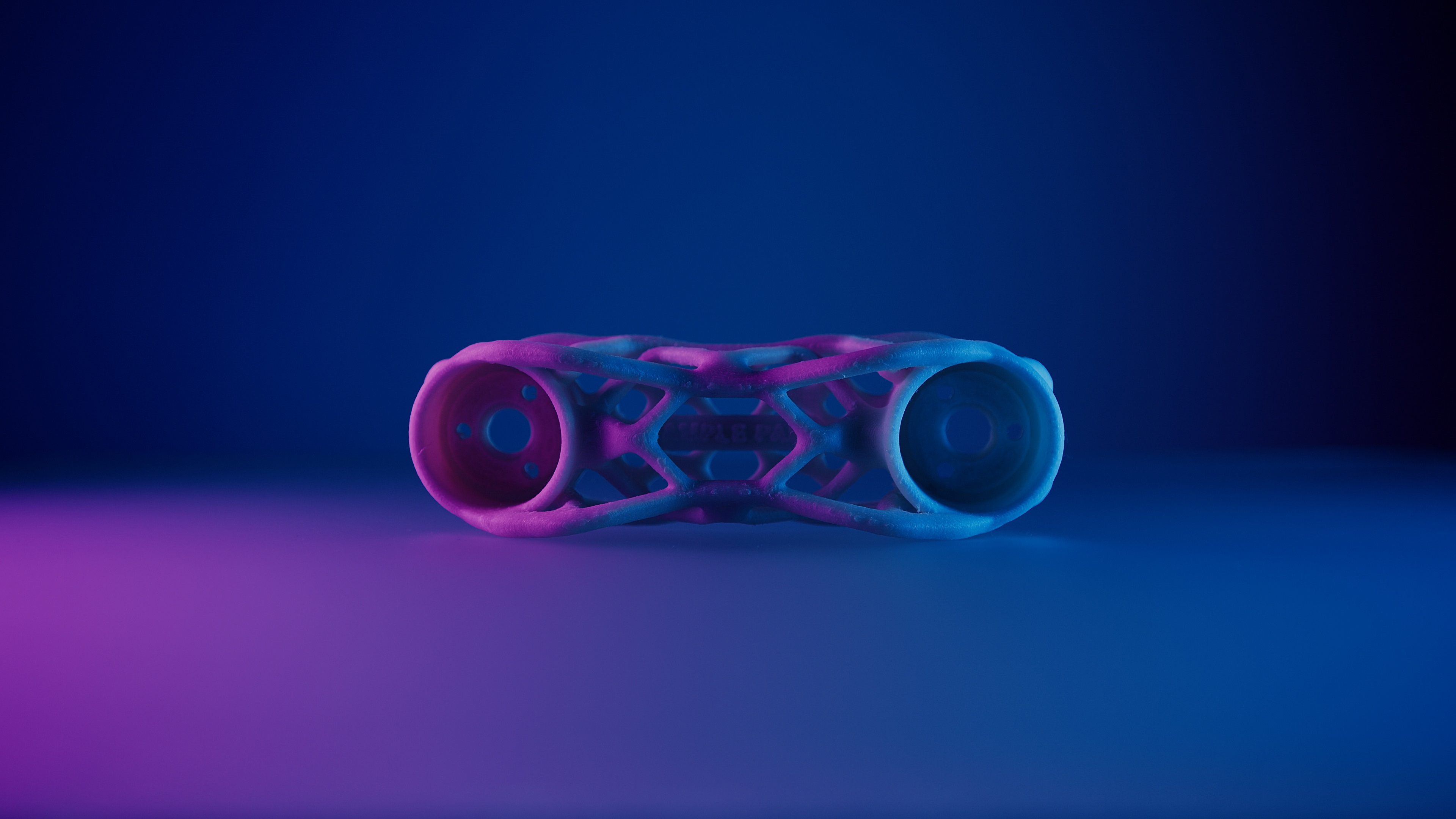
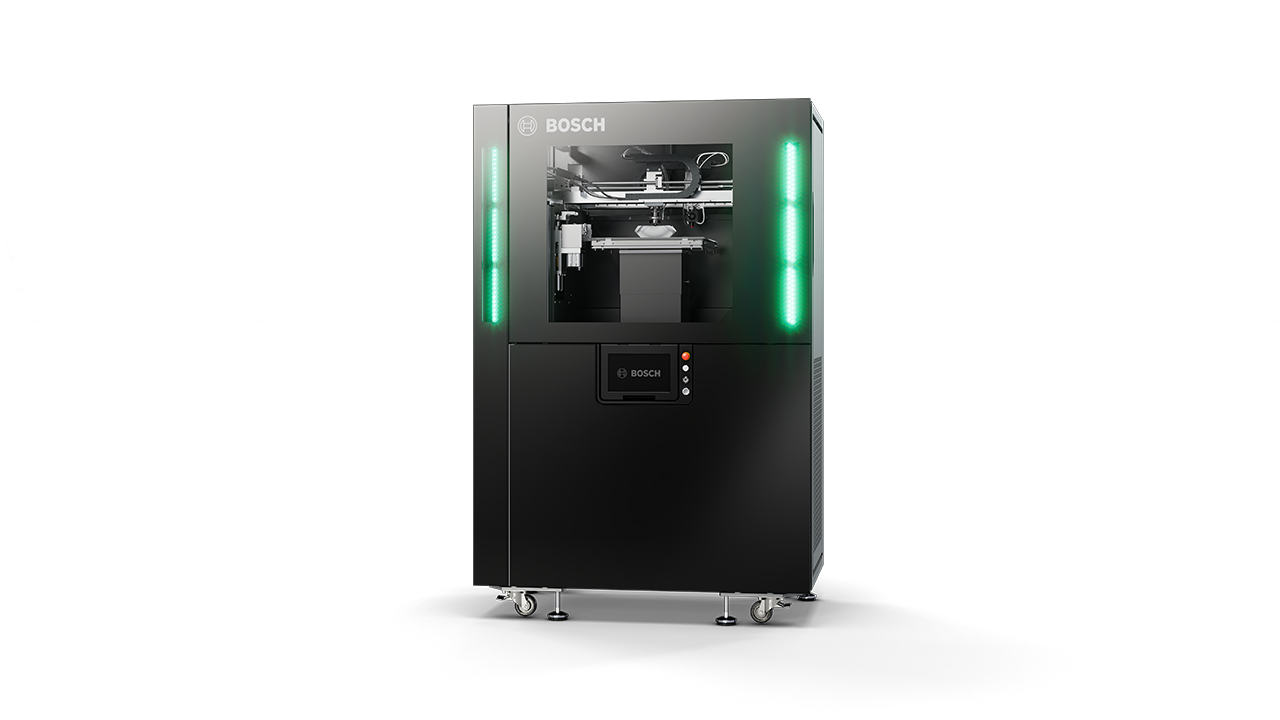
Prototyping in production materials: Bosch Industrial Additive Manufacturing’s granulate-based pellet printer produces precise plastic components using original injection molding materials – i.e. industrial plastic granulate. This results in prototypes with properties that are comparable to those of production components. The 3D printer achieves mechanical strengths similar to those of injection-molded parts. With optimum alignment and process control, it can even exceed these values. This makes producing functional prototypes, components for installation tests, and small batches much faster, more flexible, and cost-effective.

Recycling of electric vehicle batteries: Over the next five years, the recycling volume of electric vehicle batteries will increase tenfold. Today’s recycling infrastructure faces the challenging prospect of recycling not only huge numbers of batteries but also a wide range of different battery types. Bosch Rexroth offers a comprehensive range of solutions for every level of automation – from manual processing to semi-automated and fully automated manufacturing – based on its broad portfolio of drive and control technology as well as assembly, linear motion, and joining technology. With its scalable overall concept, the company reduces safety risks, increases process efficiency, and improves the cost-effectiveness of diagnostics, discharging, and disassembly.

Hannover Messe 2026: partner country Brazil

As the partner country of Hannover Messe 2026, Brazil is positioning itself as a driving force for sustainable industrial transformation. Bosch has been active in Brazil for over 70 years, making it a prime example of the German-Brazilian success story. With around 11,000 associates there, the company is deeply rooted in the Brazilian industrial landscape. Since 2025, Brazil has been home to Bosch’s global center of competence for the agriculture industry. This is where the company concentrates on the development and manufacturing of intelligent agricultural technologies with a focus on cultivation and fertilization, while also driving innovation in areas such as Industry 4.0 and digitalization. For example, One Smart Spray – developed by Bosch in collaboration with BASF – is a unique solution for farmers that makes spraying herbicides precise and intelligent. According to preliminary figures, Bosch generated sales of 1.78 billion euros in Latin America in 2025.

Contact persons for press inquiries:

Jennifer Gass
Phone: +49 711 811 42239
E mail: Jennifer.Gass@de.bosch.com

Manuela Kaiser,
Phone: +49 711 811 44203
E mail: Manuela.Kaiser@de.bosch.com

Panels with Bosch experts at Hannover Messe:

  • Monday, April 20, 2026,
    Microsoft booth, hall 17, booth G06:

    Norbert Jung, Deb Cupp (Microsoft), panel discussion
  • Tuesday, April 21, 2026, 10:00 am – 12:00 pm,
    Center Stage, hall 25:

    Tanja Rückert, Industry 4.0 Platform Leaders’ Dialogue
  • Tuesday, April 21, 2026, 3:30 – 4:30 pm,
    hall 26, Automation & Digitalization Solution Lab (booth E43), Masterclass 1:

    Josepha Pfeiffer, masterclass “From scalable semantic data and digital twins to value creation in industry”
  • Wednesday, April 22, 2026, 10:00 – 10:20 am,
    hall 26, Automation & Digitalization Solution Lab (booth E43), Expert Stage 2:

    Michael Kolb, lecture “Agentic AI is easy – the path to productive application is not”
  • Wednesday, April 22, 2026, 11:40 am – 12:00 pm, hall 12,
    Energy & Industrial Infrastructure Solution Lab (booth F56), Expert Stage:

    Josepha Pfeiffer, lecture “Digital product twins: lifecycle data for product passports and other regulations”
  • Thursday, April 23, 2026, 11:15 – 11:35 am,
    hall 26, Automation & Digitalization Solution Lab (booth E43), Expert Stage 1:
    Dr. Birgit Boss, lecture “Beyond data silos: Unlocking next-gen industrial value with semantic digital twins”

About Bosch

The Bosch Group is a leading global supplier of technology and services. It employs roughly 412,000 associates worldwide (as of December 31, 2025). According to preliminary figures, the company generated sales of 91 billion euros in 2025. Its operations are divided into four business sectors: Mobility, Industrial Technology, Consumer Goods, and Energy and Building Technology. With its business activities, the company aims to use technology to help shape universal trends such as automation, electrification, digitalization, connectivity, and an orientation to sustainability. In this context, Bosch’s broad diversification across regions and industries strengthens its innovativeness and robustness. Bosch uses its proven expertise in sensor technology, software, and services to offer customers cross-domain solutions from a single source. It also applies its expertise in connectivity and artificial intelligence in order to develop and manufacture user-friendly, sustainable products. With technology that is “Invented for life,” Bosch wants to help improve quality of life and conserve natural resources. The Bosch Group comprises Robert Bosch GmbH and its roughly 490 subsidiary and regional companies in over 60 countries. Including sales and service partners, Bosch’s global manufacturing, engineering, and sales network covers nearly every country in the world. Bosch’s innovative strength is key to the company’s further development. At 136 locations across the globe, Bosch employs some 82,000 associates in research and development.

The company was set up in Stuttgart in 1886 by Robert Bosch (1861-1942) as “Workshop for Precision Mechanics and Electrical Engineering.” The special ownership structure of Robert Bosch GmbH guarantees the entrepreneurial freedom of the Bosch Group, making it possible for the company to plan over the long term and to undertake significant upfront investments in the safeguarding of its future. Ninety-four percent of the share capital of Robert Bosch GmbH is held by Robert Bosch Stiftung GmbH, a limited liability company with a charitable purpose. The remaining shares are held by Robert Bosch GmbH and by a company owned by the Bosch family. The majority of voting rights are held by Robert Bosch Industrietreuhand KG. It is entrusted with the task of safeguarding the company’s long-term existence and in particular its financial independence – in line with the mission handed down in the will of the company’s founder, Robert Bosch.

Additional information is available online at www.bosch.com, www.bosch-press.com.
download