Suche

Press release #Bosch Group
share

Bosch presents ultrasonic chipsets for AI-based applications in the automotive industry

Intelligent parking assistants through direct data capture at the source

  • Improved signal quality enables Bosch's new ultrasonic chips to make more accurate AI-based decisions in parking and driving situations.
  • The chipsets TB193 and TB293 capture sensor data directly at the source for more precise object detection in driver assistance systems.
  • For the first time, Bosch offers ultrasonic ICs independently on the market and introduces the VASI bus, an open interface for maximum flexibility.
Athanassios Kaliudis

Athanassios Kaliudis

X

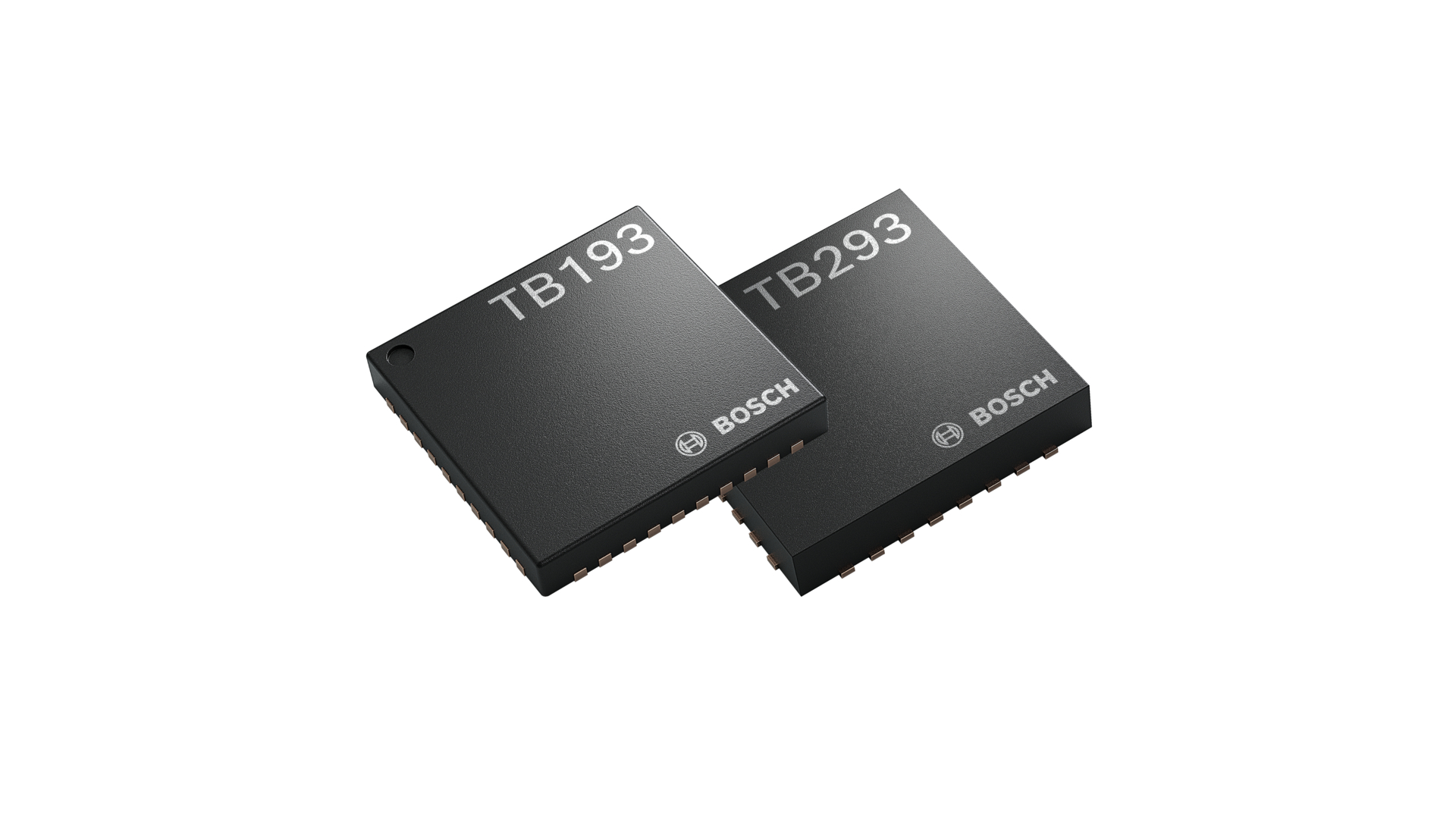
Stuttgart, Germany – At Auto China in Beijing, Bosch presents the new generation of its ultrasonic chipsets for close-range perception in vehicles. The new TB193 and TB293 chipsets enable more precise detection of objects such as parked vehicles or curbs and allow for accurate measurement of the distance to them. For the first time, these solutions process the raw signals directly from the ultrasonic sensors. This provides a significantly larger and more detailed data set.
Reinventing parking assistance

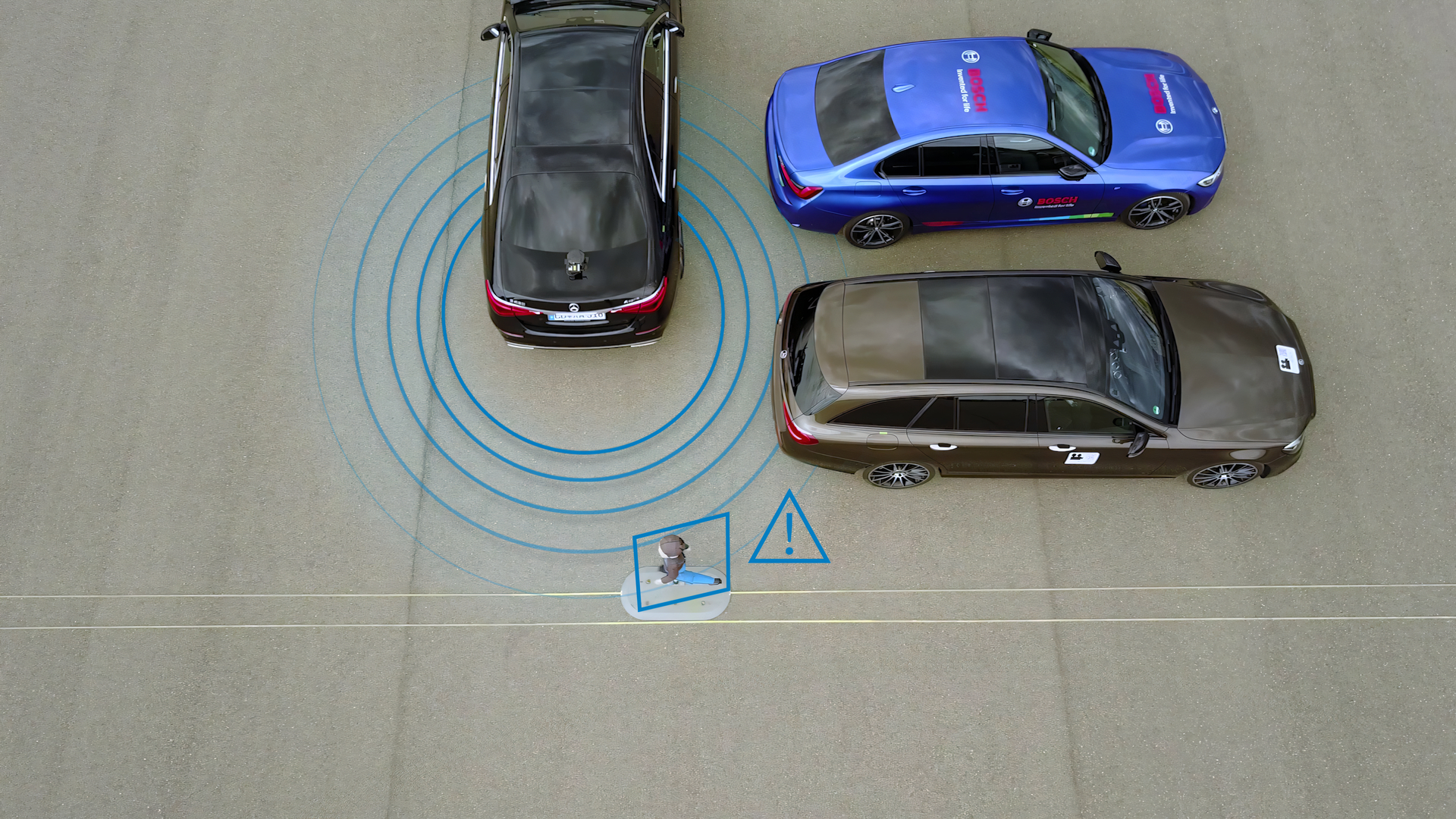
Ultrasonic sensors already help drivers to park safely. The new generation from Bosch goes one step further by using the original, unprocessed signals from the sensors. This raw data contains significantly more detail than pre-processed information. This allows AI-based parking assistants to better assess the surroundings, which is particularly beneficial in tight parking garages with many pillars and walls, or when vehicles are parked close together. In addition to objects, road conditions like wet or varying surfaces can also be detected, enabling additional features such as smarter braking decisions.

Bosch chips for innovative ADAS systems

The new chipsets capture and process ultrasonic data directly at the source. One chip controls and processes the data, while the other chip captures the actual sensor signals. Together, they deliver exactly the information that AI-based parking or brake assistance systems need. In addition, the chipset architecture provides the necessary data transmission speed and bandwidth to handle and transport these large volumes of raw data in real time, ensuring that no relevant information is lost between sensor and central processing unit.

“The seventh generation of our ultrasonic chips captures sensor data with the highest precision and speed – exactly what AI-powered parking assistants need,” explains Axel Kaschner, Senior Vice President of the Business Unit Integrated Circuits at Bosch Mobility Electronics. By offering individual ultrasonic chips directly to customers, Bosch is making its technology available beyond complete sensor systems for the first time and actively promoting its broader use in the market. To this end, Bosch is introducing VASI bus (Versatile Automotive Sensor Interface), a new open interface that offers vehicle manufacturers greater flexibility in choosing their sensor suppliers.

One team for maximum flexibility: TB293 and TB193

Bosch relies on a dual-chip architecture with a clear distribution of tasks: The TB293 as sensor chip is installed directly at the ultrasonic transducer and captures the raw signals without intermediate steps. The TB193 as controller chip centrally coordinates multiple sensor chips and prepares the collected data for further processing. This modular design enables vehicle manufacturers to flexibly scale the number of sensors according to vehicle class and desired functional scope. The clear separation of tasks perfectly aligns with modern vehicle architectures. It supports scalable system design, reduces complexity at vehicle level, and creates a smooth transition toward more centralized, software-defined vehicle platforms.

High speed for large data volumes

“Our solution provides the original, unprocessed sensor signals. This ensures that all relevant information is available to be evaluated flexibly and used for various functions,” explains Hendrik Seidel, Head of the ADAS business unit at Mobility Electronics. The uniquely high data rate of 1.16 Mbps enables real-time processing of large amounts of data and creates the basis for next-generation smart assistance systems. Raw data transfer opens up new possibilities: from high-quality data fusion, where ultrasonic, camera, and radar data are intelligently connected, to advanced AI algorithms that can draw more precise conclusions from the sensor signals.

Less power consumption and installation space

The new chipsets use up to 50 percent less energy than comparable solutions. This preserves battery power especially in situations where the engine is not running, such as low speeds in start-stop mode or in the electric mode of hybrid vehicles. The chips also require fewer peripheral components and less pins, while the VASI bus transmits both data and power. These features reduce cabling, simplify wiring, and save up to 50 percent of the component’s weight. The chipset’s unique temperature rating of up to 150 degrees Celsius (approx. 300 degrees Fahrenheit) ensures reliable operation even under demanding conditions, for example in engine-adjacent installation areas.

Bosch technology paves the way for autonomous driving functions

The new chipsets mark an important step on the journey toward higher levels of automation in vehicles. “The combination of complete raw data, high transmission speed, energy efficiency, and open interface enables vehicle manufacturers to develop the assistance systems today that will grow into fully automated driving functions in the future,” Axel Kaschner summarizes.

Contact person for press inquiries:

Athanassios Kaliudis,
Phone: +49 711 811 7497
E-mail: Athanassios.Kaliudis@de.bosch.com

About Bosch

The Bosch Group is a leading global supplier of technology and services. It employs roughly 413,000 associates worldwide (as of December 31, 2025). The company generated sales of 91 billion euros in 2025. Its operations are divided into four business sectors: Mobility, Industrial Technology, Consumer Goods, and Energy and Building Technology. With its business activities, the company aims to use technology to help shape universal trends such as automation, digitalization, electrification, and artificial intelligence. In this context, Bosch’s broad diversification across regions and industries strengthens its innovativeness and robustness. Bosch uses its proven expertise in hardware, software, and services to offer customers cross-domain solutions from a single source. It also applies its expertise in connectivity and artificial intelligence in order to develop and manufacture intelligent, user-friendly, and sustainable products. With technology that is “Invented for life,” Bosch wants to help improve quality of life and conserve natural resources. The Bosch Group comprises Robert Bosch GmbH and its roughly 500 subsidiary and regional companies in over 60 countries. Including sales and service partners, Bosch’s global manufacturing, engineering, and sales network covers nearly every country in the world. Bosch’s innovative strength is key to the company’s further development. Bosch employs some 82,000 associates in research and development.

The company was set up in Stuttgart in 1886 by Robert Bosch (1861-1942) as “Workshop for Precision Mechanics and Electrical Engineering.” The special ownership structure of Robert Bosch GmbH guarantees the entrepreneurial freedom of the Bosch Group, making it possible for the company to plan over the long term and to undertake significant upfront investments in the safeguarding of its future. Ninety-four percent of the share capital of Robert Bosch GmbH is held by Robert Bosch Stiftung GmbH, a limited liability company with a charitable purpose. The remaining shares are held by Robert Bosch GmbH and by a company owned by the Bosch family. The majority of voting rights are held by Robert Bosch Industrietreuhand KG. It is entrusted with the task of safeguarding the company’s long-term existence and in particular its financial independence – in line with the mission handed down in the will of the company’s founder, Robert Bosch.

Additional information is available online at www.bosch.com, www.bosch-press.com.
download