Dr. Tanja Rueckert,
member of the board of management
of Robert Bosch GmbH,
and Paul Thomas,
president of Bosch in North America,
at CES®, on January 5, 2026
Check against delivery.



Irina Ananyeva

Dr. Tanja Rueckert,
member of the board of management
of Robert Bosch GmbH,
and Paul Thomas,
president of Bosch in North America,
at CES®, on January 5, 2026
Check against delivery.
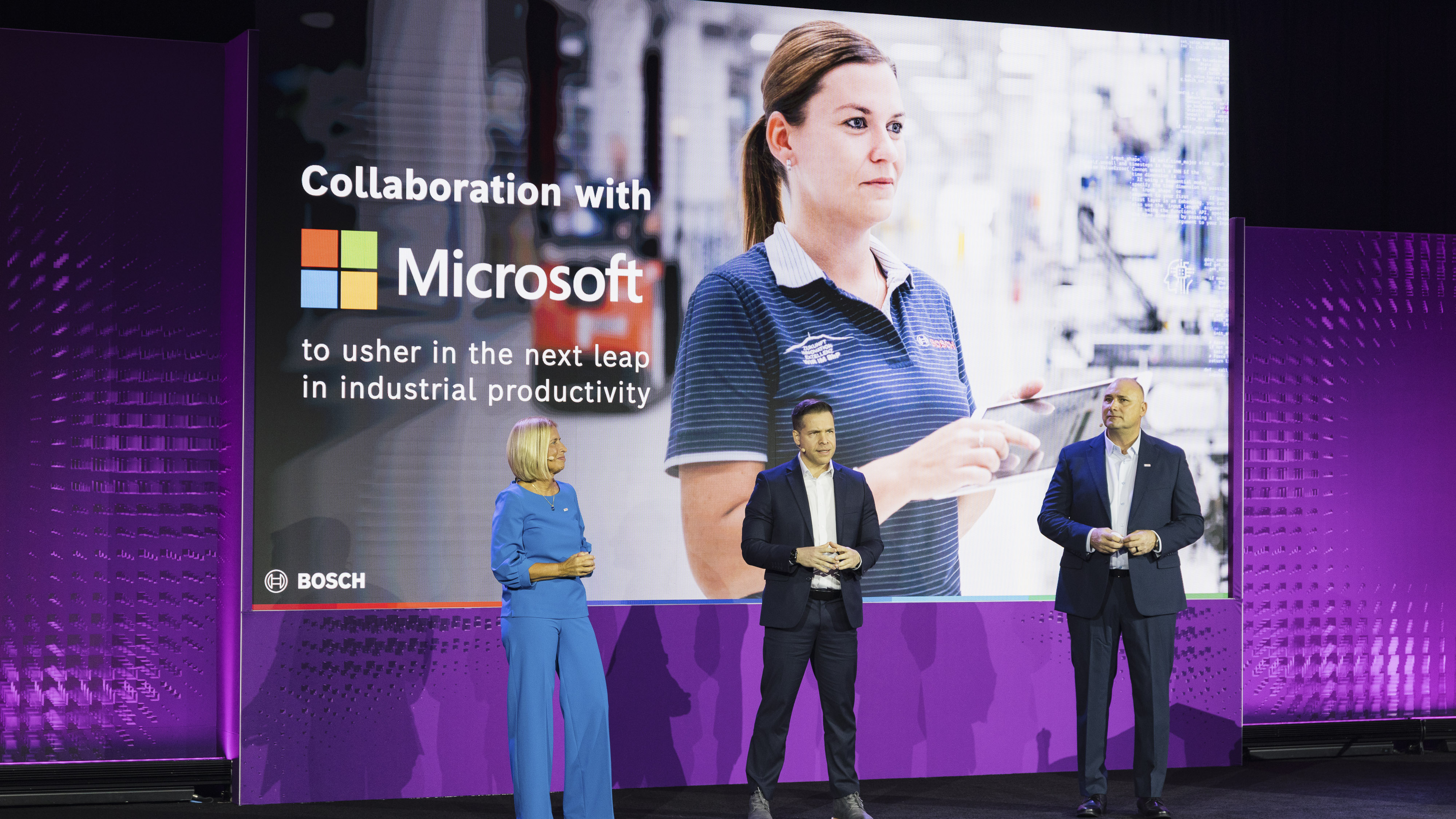
Bosch and Microsoft are working together on agentic AI solutions for industrial use cases.

Cooking with AI
CES 2026
CES2026
CES 2026
CES 2026
CES 2026
CES 2026
CES 2026
CES 2026
CES 2026
CES 2026
CES 2026
CES 2026
Paul Thomas, president of Bosch in North America
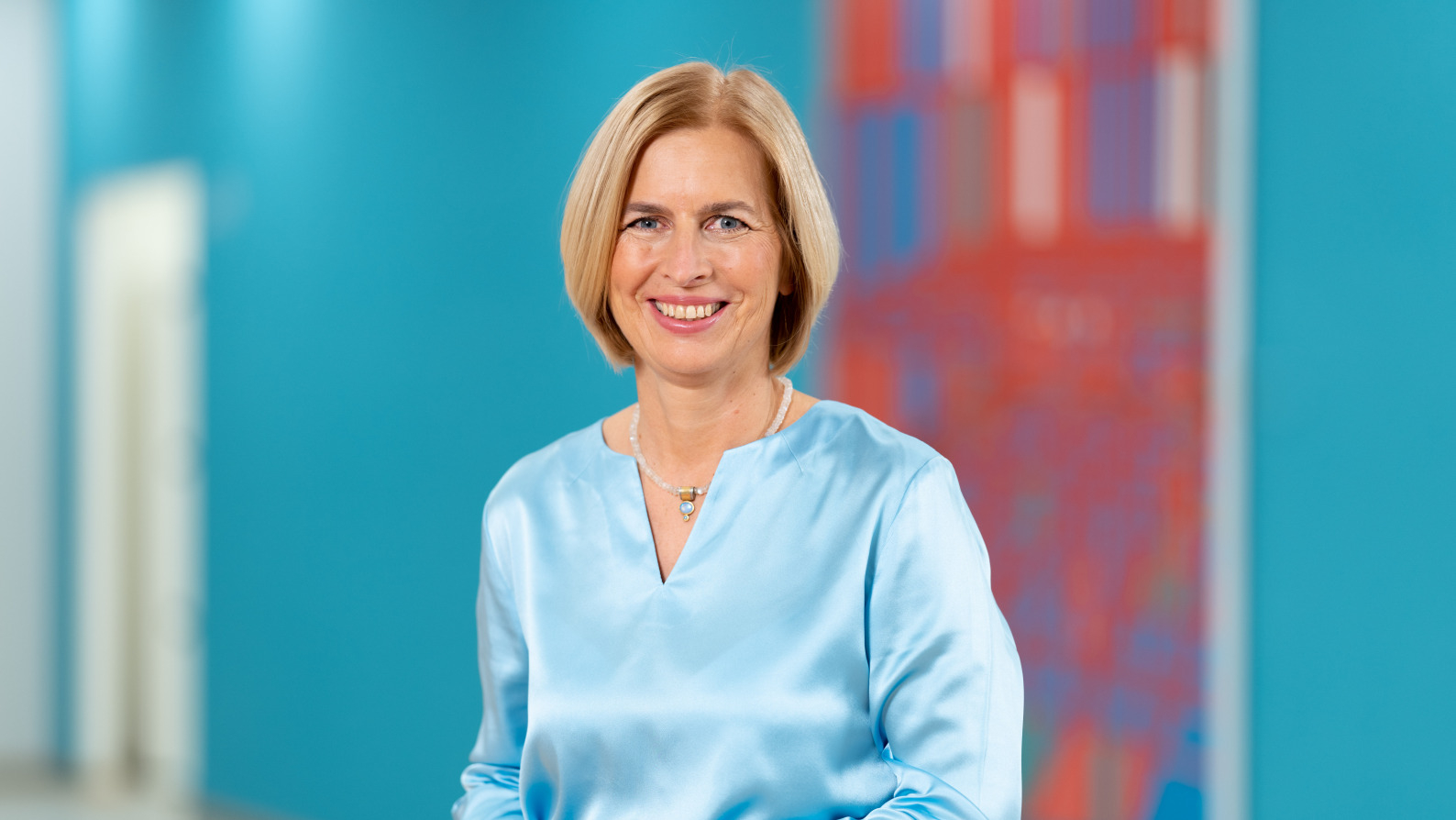
Tanja Rückert, Member of the Board of Management of Robert Bosch GmbH
Bosch and Microsoft are working together on agentic AI solutions for industrial use cases.
Tanja Rückert, Member of the Bosch board of management, Paul Thomas, President of Bosch in North America and Dayan Rodriguez, corporate vice president manufacturing and mobility, Microsoft, introduce the cooperation in the field of agentic Ai for production.
Cooking with AI
Top Chef Marcel Vigneron, Tanja Rückert, Member of the Bosch board of management and Paul Thomas, President of Bosch in North America, demonstrate on stage, how AI can assist with cooking.
CES 2026
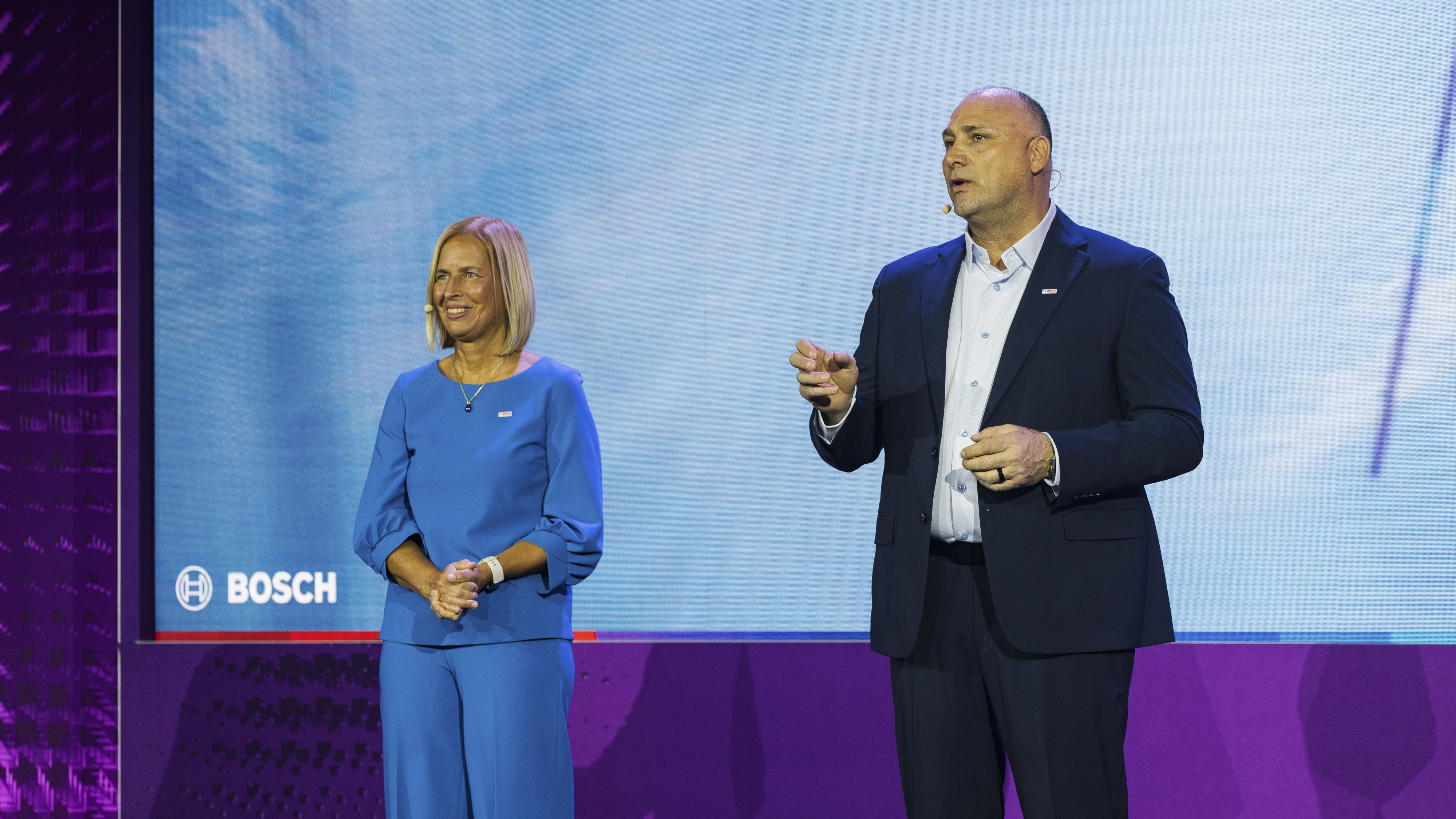
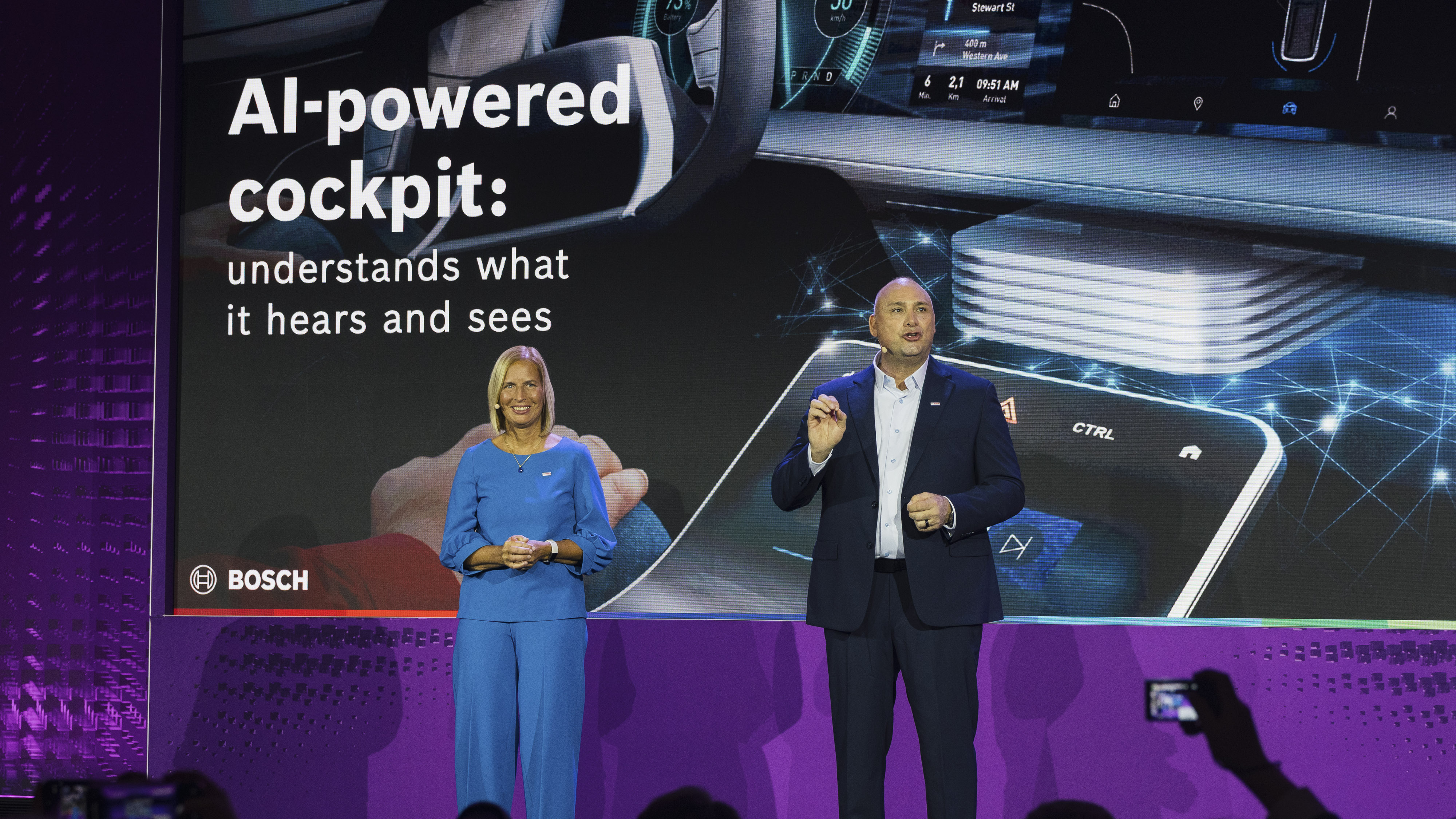
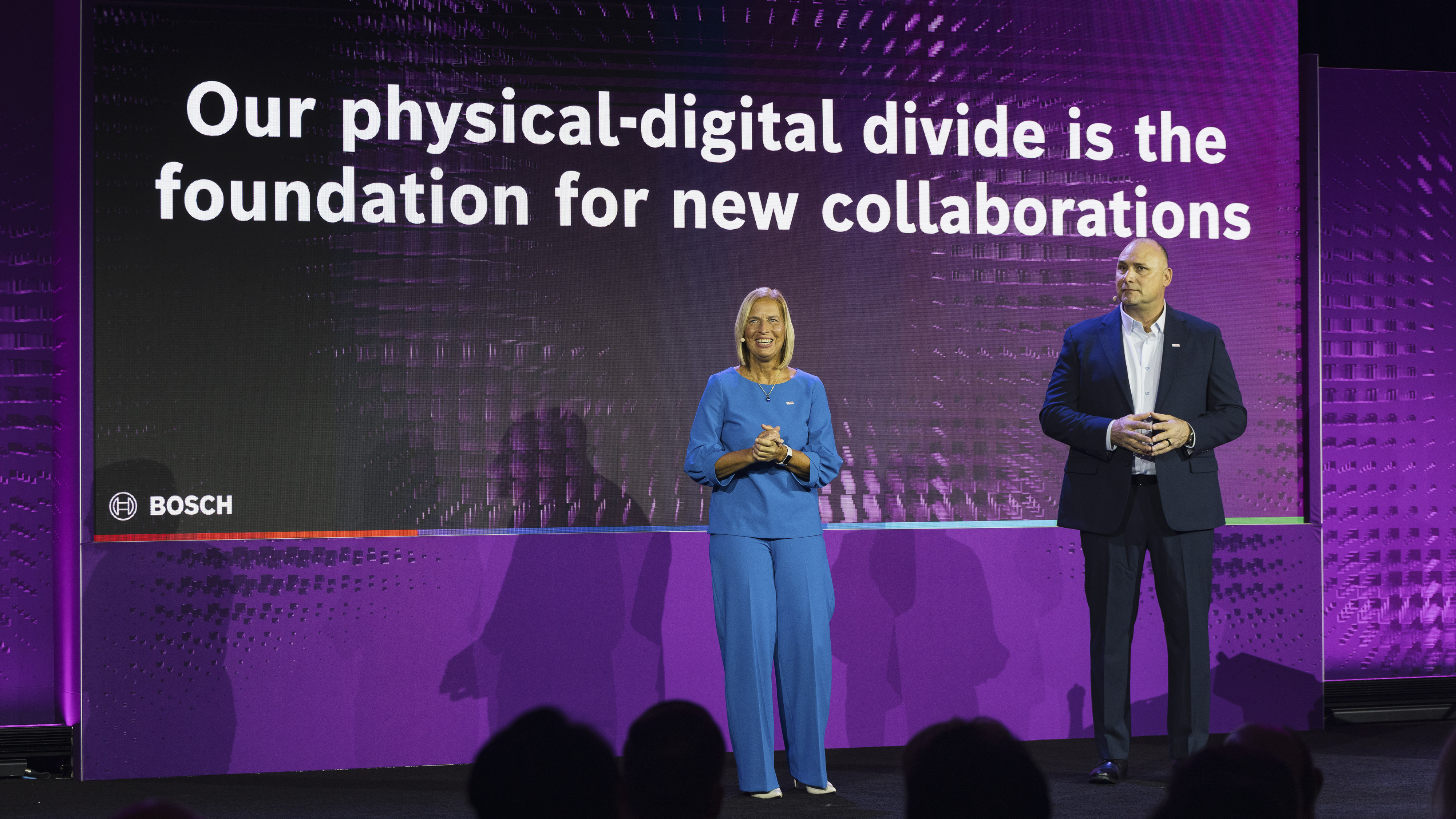
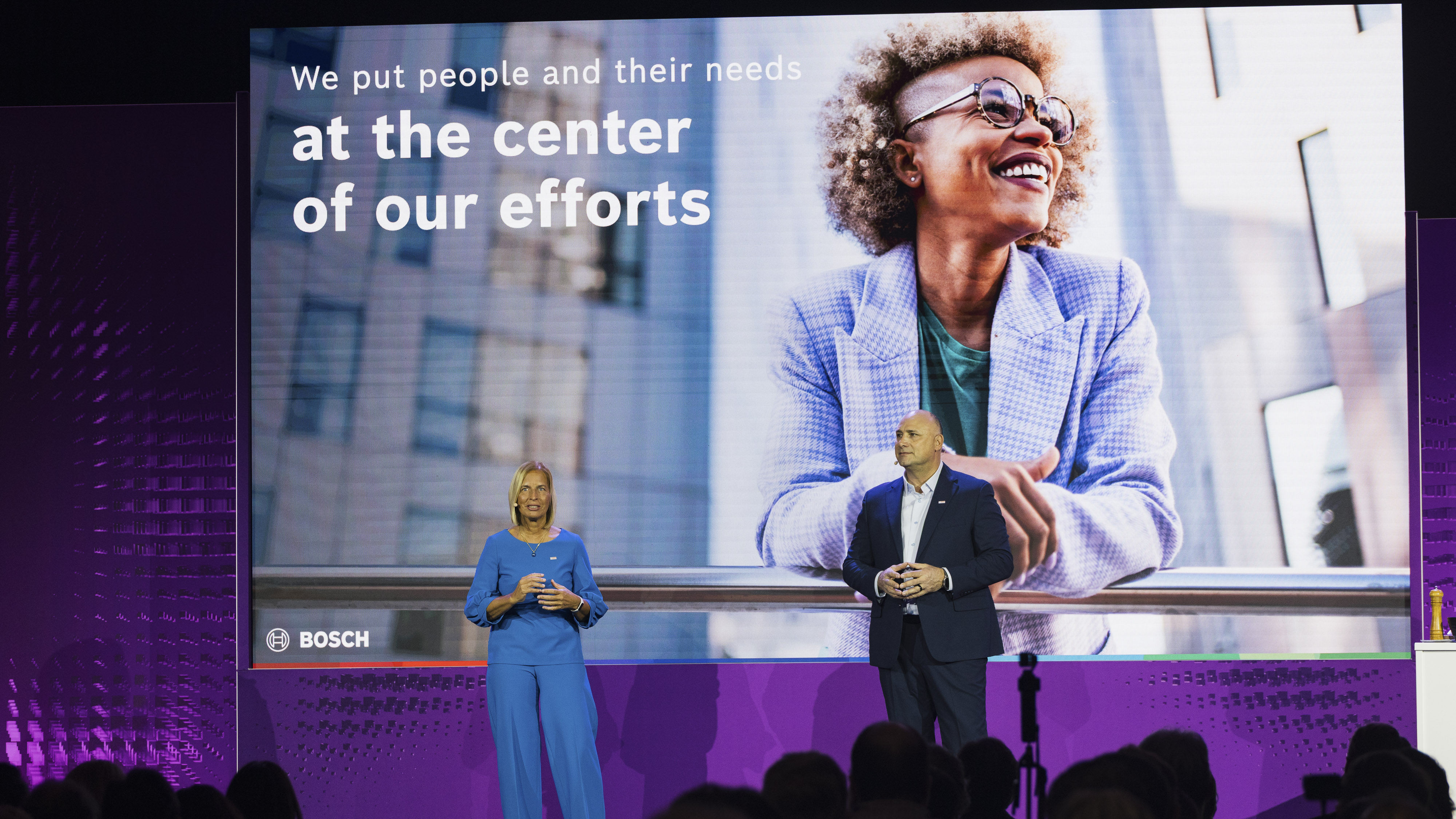
Tanja Rückert, Member of the Bosch board of management and Paul Thomas, President of Bosch in North America, at the CES press conference 2026.
CES2026
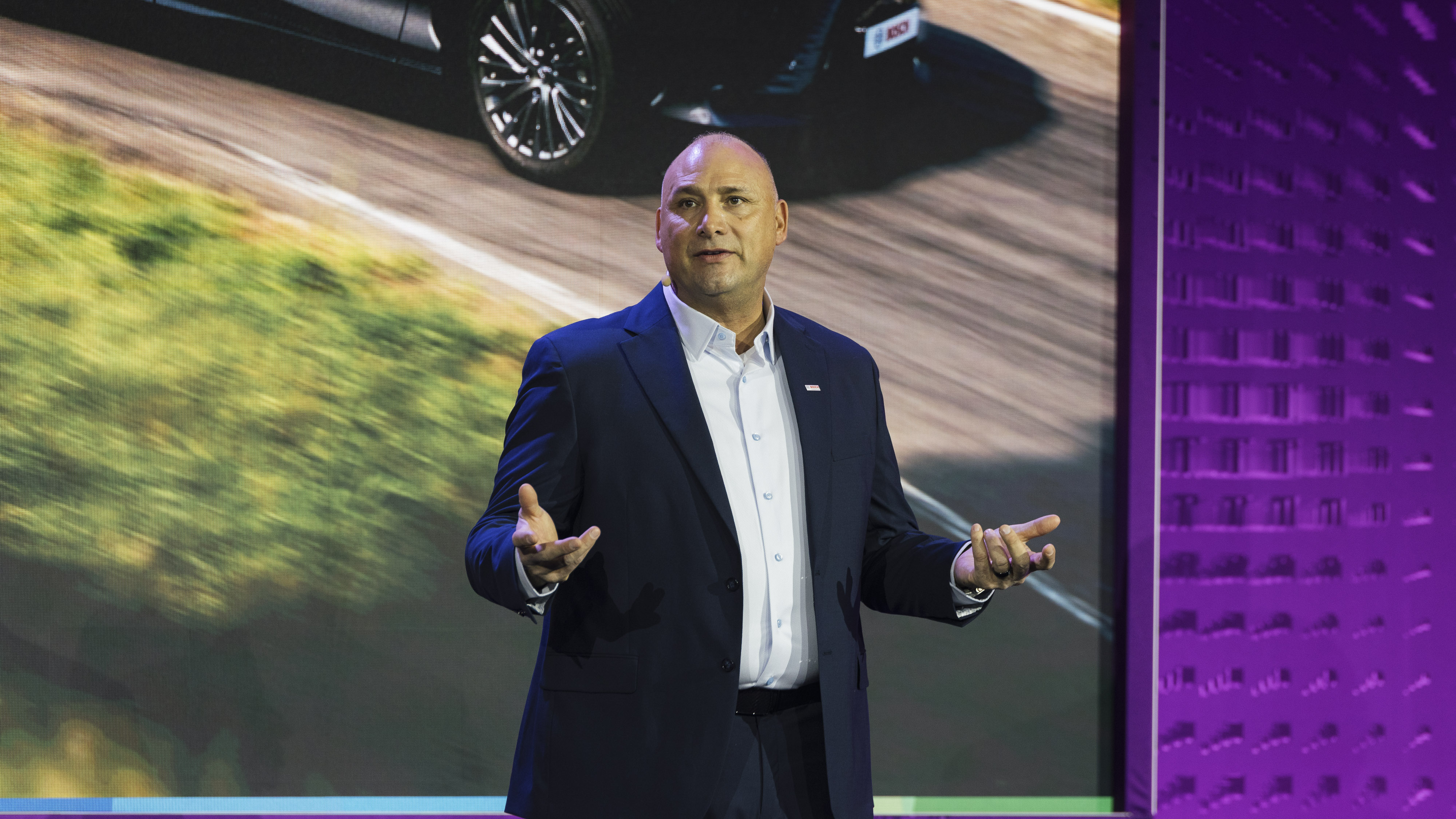
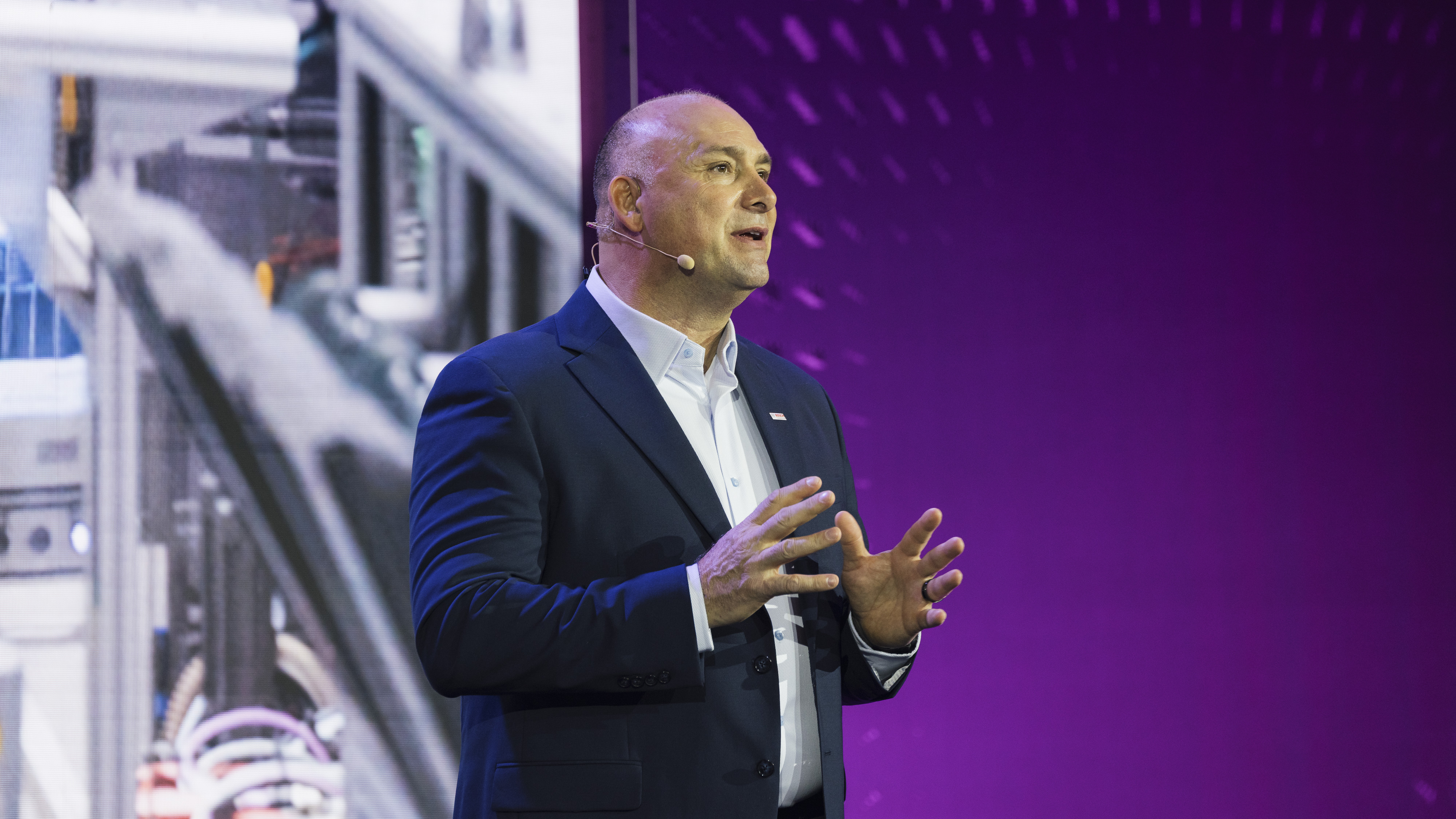
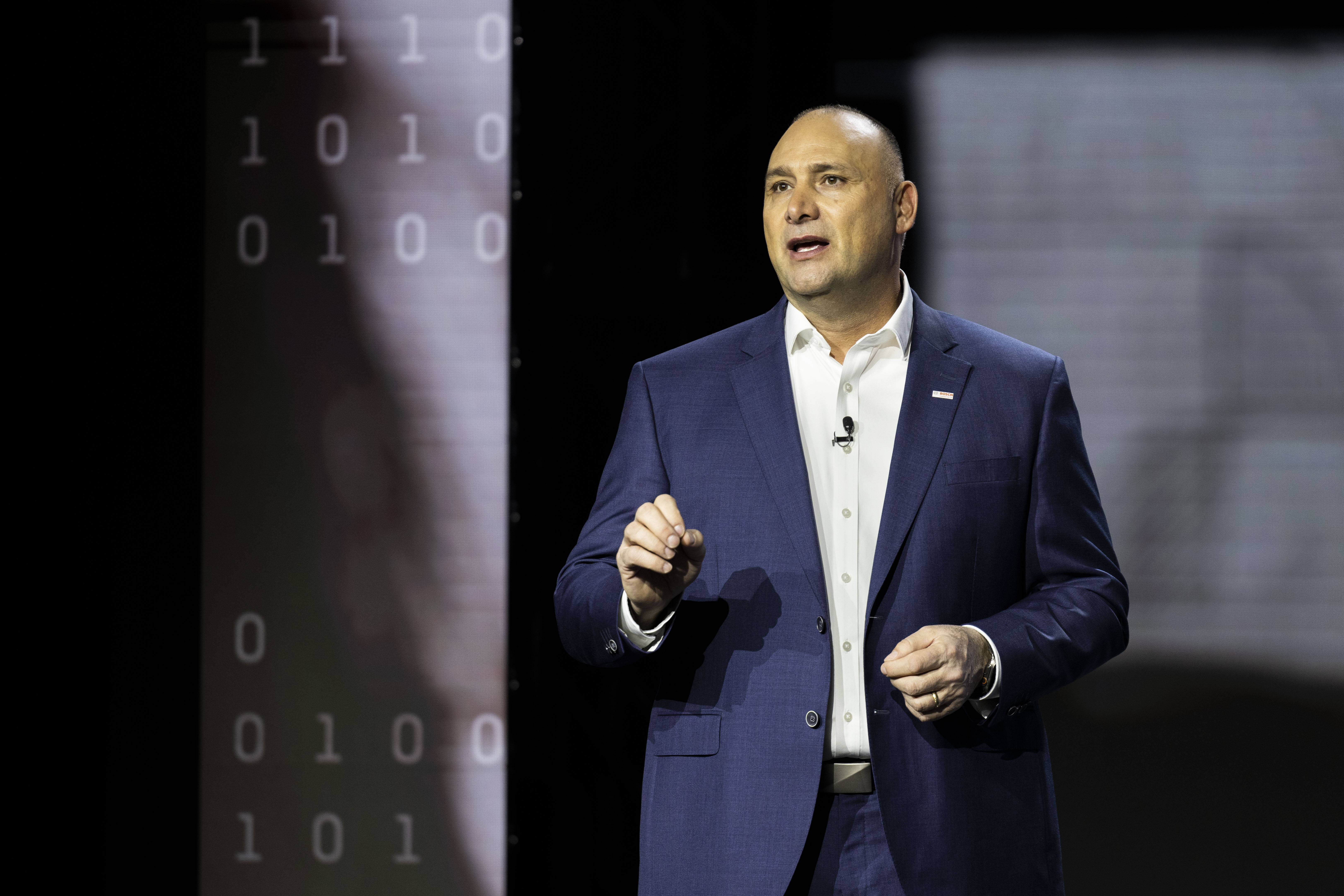
Paul Thomas, President of Bosch in North America, speaks at the CES press conference 2026.
CES 2026
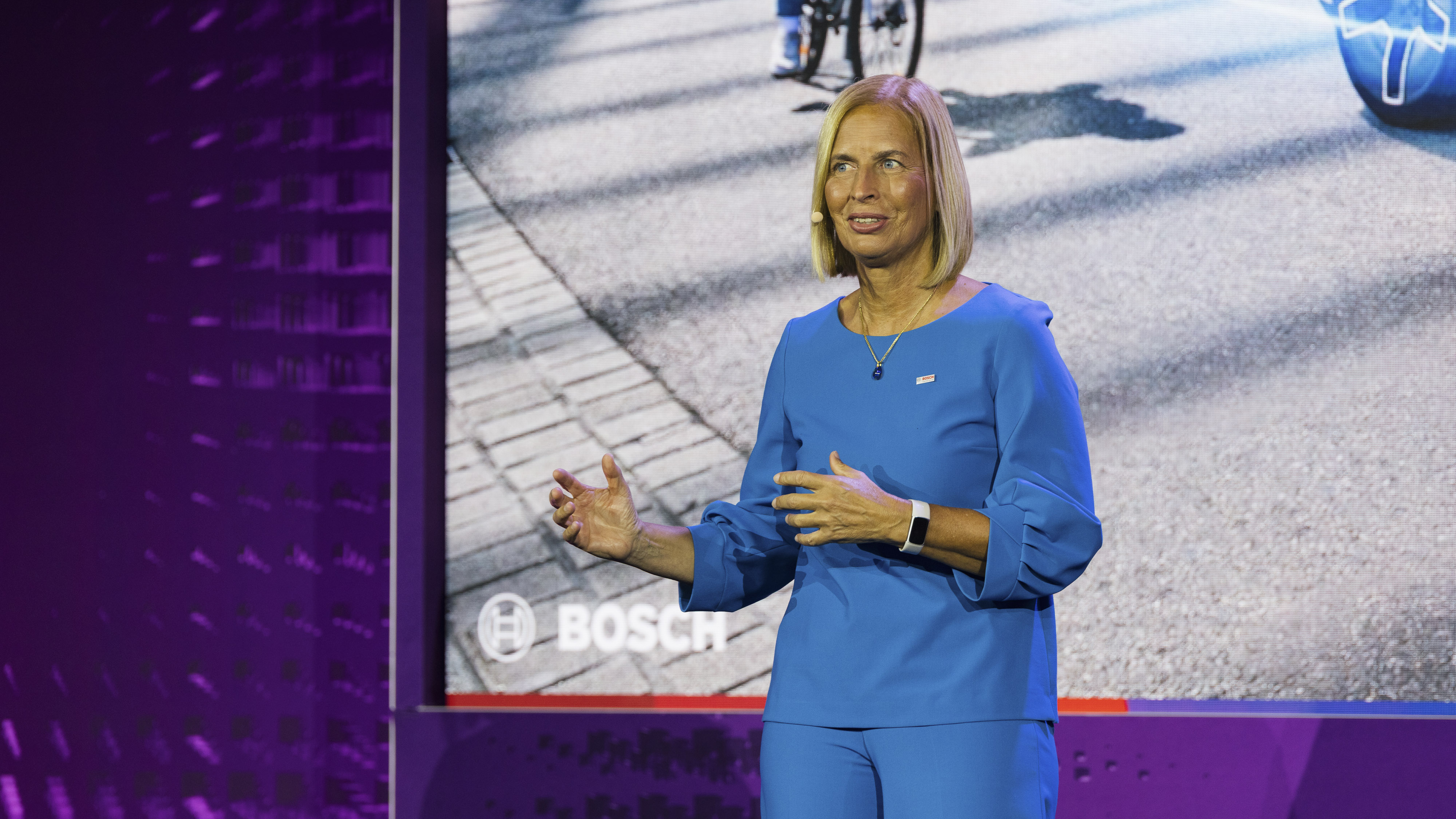
Tanja Rückert, Member of the Bosch board of management, speaks at the CES press conference 2026.
CES 2026
Tanja Rückert, Member of the Bosch board of management and Paul Thomas, President of Bosch in North America, at the CES press conference 2026.
CES 2026
Tanja Rückert, Member of the Bosch board of management and Paul Thomas, President of Bosch in North America, at the CES press conference 2026.
CES 2026
Tanja Rückert, Member of the Bosch board of management and Paul Thomas, President of Bosch in North America, at the CES press conference 2026.
CES 2026
Paul Thomas, President of Bosch in North America, speaks at the CES press conference 2026.
CES 2026
Tanja Rückert, Member of the Bosch board of management and Paul Thomas, President of Bosch in North America, at the CES press conference 2026.
CES 2026
Tanja Rückert, Member of the Bosch board of management and Paul Thomas, President of Bosch in North America, at the CES press conference 2026.
CES 2026
Tanja Rückert, Member of the Bosch board of management and Paul Thomas, President of Bosch in North America, at the CES press conference 2026.
CES 2026
Tanja Rückert, Member of the Bosch board of management and Paul Thomas, President of Bosch in North America, at the CES press conference 2026.
CES 2026
Tanja Rückert, Member of the Bosch board of management and Paul Thomas, President of Bosch in North America, at the CES press conference 2026.
Paul Thomas, president of Bosch in North America
Paul Thomas, Präsident von Bosch in Nordamerika.
Tanja Rückert, Member of the Board of Management of Robert Bosch GmbH
Tanja Rückert, Member of the Board of Management of Robert Bosch GmbH
Tanja Rueckert:
Good morning, everyone! A very warm welcome to the Bosch press conference at CES 2026.
Paul Thomas:
Hello and welcome from me as well. We’re thrilled to have you here – thank you for joining us, either on-site or via the livestream.
Tanja Rueckert:
Vehicle components. Industrial machinery. Power tools. Home appliances. Microchips. It’s no secret that Bosch is a diversified company. But our expertise is not only broad, it also bridges a gap that many others struggle to cross: the divide between the physical and the digital.
Most companies are at home on one side or the other. Rarely does one have equal competence in the world of things and the world of software. Bosch, however, is one such company: you could say we’re at home everywhere.
Paul Thomas:
Since its earliest days, Bosch has been a byword for innovative, high-quality hardware. At the dawn of the digital age, we then did what we’ve always done in our quest to bring the most pioneering and beneficial solutions to market. We figured out what competence was required, and we built it up in-house.
Tanja Rueckert:
Thanks to this mindset, software has been a core competence of ours for decades now. It allowed us to establish ourselves as an early digital pioneer in our diverse hardware-based business, where we helped drive forward the Internet of Things and Industry 4.0. Now, it’s enabling us to play a key role in shaping the software-driven mobility of the future. And it’s driving growth across the board: by the beginning of the next decade, we aim to generate sales of over 6 billion euros with software and services.
It’s also put us on the forefront in leveraging AI, where we’re one of the leading European companies for AI patents filed – with 2,000 and counting. In total, we’ll be investing more than 2.5 billion euros in AI by the end of 2027. And so far we’ve already trained over 100,000 associates on AI – nearly a quarter of our workforce.
Above all, having both hardware and software competence enables us to deliver superior versions of both. And this, ultimately, is what sets us apart. Our hardware has an edge because we can use our home-grown software and AI expertise to level it up. At the same time, our software has an edge because we deeply understand the hardware it runs on. The result is solutions that are innovative, intelligent, and offer a host of tangible benefits to their users. In other words, true people-centric tech!
But let’s talk specifics. How exactly does our mastery of the hardware-software divide give our solutions an edge?
Paul Thomas:
Well first and foremost, it enables us to equip our solutions with groundbreaking functions and unlock capabilities no one else has yet been able to realize.
Case in point: our smartphone-based solution Origify, which you can see in action at our booth. Counterfeit products are a huge and growing problem: last year they were estimated to account for up to 3 percent of global trade, with a market value in the trillions. We urgently need more effective ways to combat this problem, and with Origify, we’ve developed a truly innovative one. In simple terms, it works on the basis of surface pattern recognition. Where other solutions rely on add-ons like tags, chips, or codes, Origify uses an object’s unique physical attributes to create a tamper-proof digital identity. Once that has been registered in our system, our new Detector app can quickly and reliably verify authenticity via a live video stream. Within seconds, you know whether a pair of sneakers, a car part, or even a painting is the real thing. This revolutionary technology could really shake up the counterfeiting industry – and it stems from our profound expertise on both sides of the physical-digital divide.
Tanja Rueckert:
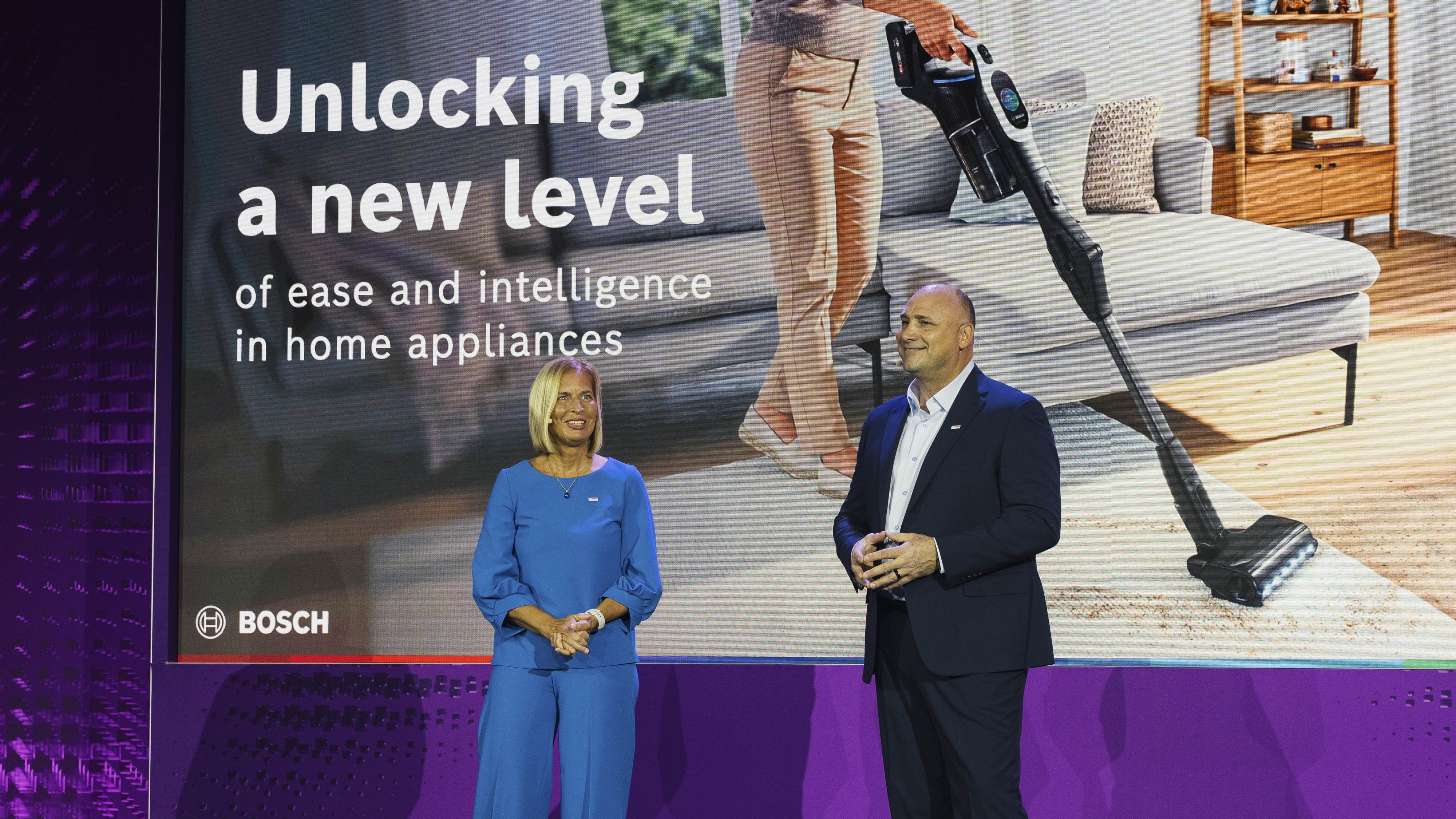
Of course, many people’s daily concerns are more practical in nature. Laundry, housework, cooking. In the home, our appliances have long set the benchmark for quality, innovativeness, and precision engineering. Thanks to software and AI, we’re now unlocking a new level of convenience and intelligence in them. After all, we strongly believe that technology should serve people, not the other way around. It should take away stress, and help you to achieve more for less effort – no matter what your skill level.
For example, in the kitchen…
And we have one more surprise!
Paul Thomas:
Look who we have with us today, let’s give a hand to Marcel Vigneron!
Tanja Rueckert:
Marcel, we’re so happy to have you here. But I must admit, all this talk about cooking is making me hungry! Maybe because I missed breakfast this morning…
Marcel Vigneron:
Tanja, not to worry: I just happen to know a thing or two about cooking! Got you covered. I hope you don’t mind a little steak for breakfast…
Tanja Rueckert:
Well, I’m jetlagged, and in Germany it’s dinner time, so that sounds perfect!
Paul Thomas:
I’m always up for a steak!
Marcel Vigneron:
We happen to have a few juicy ribeyes on hand. Let’s fire these up! By the way, how do you like your steak?
Tanja Rueckert:
Medium-rare, of course!
Paul Thomas:
Sounds good to me.
Marcel Vigneron:
Fantastic.
So, I’m going to be cooking your steak with the help of some cool new technology you saw in the video. It’s cutting-edge stuff, where generative AI meets incredible sensors from across the Bosch world.
Paul Thomas:
And it’s all based on something the 800 Series Induction Cooktop already has built-in: our AutoChef feature.
Marcel Vigneron:
Absolutely, Paul. AutoChef is the basis here. It’s a sensor-based technology that continuously regulates the temperature of your frying pan and adjusts it so you get the best possible result. And now AutoChef is being leveled up with the help of the new Bosch Cook AI. That feature is still in final testing, but I can give you a sneak peek today of how it’s going to work and how helpful it’s going to be for home cooks.
Tanja Rueckert:
We’re always very excited to see AI making life easier. Can you tell us more about how it works?
Marcel Vigneron:
Sure, Tanja, Bosch Cook AI is powered by generative AI, combined with proprietary technologies and processes in the appliances. Basically, you take a picture of your ingredients and tell it what result you want – in this case the degree of doneness for your steak. The algorithm figures out the right heat level and timing and communicates with your cooktop, while giving you precise, live instructions. There’s basically no more guess work. And this Bluetooth meat probe is tracking the temperature of the steak as well. Together, Bosch Cook AI and AutoChef work in concert to lead you to the finish line. It’s that easy!
Paul Thomas:
It sounds fantastic, but tell me the truth – is it really useful for a chef of your caliber?
Marcel Vigneron:
Well Paul, the truth is I’m a huge fan of science and technology and I find it really exciting to see how the latest innovations can take my profession to the next level. And really, that’s why I love Bosch, because I feel like I’m getting a preview of something we’re all going to be using in a few years. You’re the enablers of the future, and it’s cool to be able to play a part in that!
But at the end of the day, even I just need to get dinner on the table sometimes. And it’s great to have a helping hand when my 5-year-old distracts me at the wrong moment...
Tanja Rueckert:
Oh, I know all about that! I wish I’d had something like that when my kids were young – it would have helped me a lot!
Marcel Vigneron:
I hear you! By the way, I wanted to mention to people that if they stop by the Bosch booth this week, they can see me and a few fellow alums from Top Chef: my fellow Food Network star Bryan Voltaggio, and my long-time friend and co-host of Next-Level Chef on Fox, Nyesha Arrington. We have some fun things going on with a “Battle in the Booth” theme and some exciting cooking challenges. If you’re lucky you might even snag a taste…
Looks like it’s done. Let’s see how we did.
Tanja Rueckert:
Oh, it looks perfect! I really think this could be a game changer – it means that anyone can cook an impressive meal for their friends and family. That’s what I call people-centric tech!
Paul Thomas:
And ultimately that’s what we’re aiming for. We want the seamless functionality of our products with their enhanced digital features to empower and enable people. Or as we like to say, “The more you Bosch, the more you feel like a Bosch”!
Marcel Vigneron:
Or in this case “cook like a Bosch”!
Tanja Rueckert:
That’s right, thank you Marcel! Let’s give him a big hand!
So, first we’re combining our software and hardware expertise to unlock groundbreaking functions and unique capabilities. Second, we’re leveraging our software competence to enable hardware to do something revolutionary: we’re helping it evolve.
In the past, if you wanted something more “up to date,” you had to trade in your old product for a newer model. Today, with the right capabilities and the right software, hardware can continue to evolve and gain new functionality long after you bring it home.
Thanks to comprehensive connectivity, many Bosch appliances are now able to gain completely new capabilities via over-the-air updates. For example, we recently added “air fry” and “air sous vide” functions to a range of our connected ovens that didn’t come with them. At no cost to their owners!
Paul Thomas:
Wow, and we’re not only helping our own hardware to evolve. In the mobility domain, our Vehicle Motion Management is enabling many cars to gain new features, functions, and options for personalization long after they leave the dealer’s lot. This pioneering hardware-agnostic software solution manages and coordinates various functions in the braking, steering, powertrain, and suspension systems. Essentially, it allows all these variables to be fine-tuned at the press of a button. By selecting from different driving modes, the car’s characteristics can be intelligently adapted to the driver’s needs or the driving situation.
And Vehicle Motion Management itself is constantly evolving – for example, we’ve recently enhanced it with capabilities to control the vehicle’s movement in all six degrees of freedom. Available as part of a pre-installed package or as an over-the-air update for capable cars, the control in all six degrees of freedom can play a major role in reducing vehicle roll during cornering. This means it can help significantly reduce motion sickness – which, as studies show, not only affects up to one-third of adults, but also disproportionately affects passengers. Since a lot of us are going to be passengers in the self-driving cars of the future, this has the potential to bring increased well-being to hundreds of millions of people worldwide – and to help eliminate a real obstacle on our path to autonomous mobility. Not bad for a little algorithm!
And it’s another great example of how we’re using our hardware-software edge to make a difference in people’s lives. Which brings me to number three. Thanks to our dual-domain expertise, as a matter of principle we offer much more than individual components and piecemeal solutions. Across our diverse areas of business, we specialize in all-in-one systems, intelligent platforms, and even entire ecosystems. And this, as you’ll see, translates into numerous benefits for our customers.
Tanja Rueckert:
Our systems expertise is especially visible – and valuable – in vehicles. I’m sure you’ve heard of how software is enabling greater intelligence, efficiency, safety, and personalization behind the wheel. It’s really a paradigm shift – by the end of this decade, more than 80 percent of new vehicles worldwide are projected to be software-defined, with a market value exceeding a trillion dollars. Bosch is playing a key role in shaping this transition. Here, the combination of our software expertise and our profound knowledge across all areas of vehicle technology enables us to offer a major advantage to automakers. Specifically, it means they get customizable, deployment-ready systems with minimal development times and without the usual compatibility headaches.
When it comes to software-driven mobility, we’re facilitating development from the ground up. Our Eclipse Safe Open Vehicle Core project, S-CORE for short, is an initiative we’re spearheading with our subsidiary ETAS. It aims to create a high-performance middleware platform based on open source. Middleware is basically the central nervous system of software-defined vehicles – it’s responsible for translating between the highly complex and diverse hardware and software components within a vehicle. Together with global automakers, we’re seeking to move beyond current OEM-specific solutions to create a single standard that’s available to all. Ultimately, this will speed up development, lower costs, enhance security, and boost innovation across the entire industry – which in turn means more people will have access to all the benefits software-defined vehicles have to offer.
Paul Thomas:
Our systems expertise is especially apparent at the solutions level. Here, we’re a leading provider of innovative hardware such as electronic by-wire systems, as well as the software that controls their operation and interplay. Soon, we’ll see a market first – with the launch of our true brake-by-wire system which will go into production with one of the world’s largest automakers. By-wire systems are a key technology for tomorrow’s self-driving and software-defined vehicles. And Bosch is quickly establishing itself as the go-to partner: by 2032, we expect to achieve cumulative global sales of more than 7 billion euros with our steer-by-wire and brake-by-wire systems.
When talking about vehicles of the future, of course we also have to talk about AI. At Bosch we’re already using AI to enhance safety and convenience behind the wheel. By 2035, we’re aiming for sales of well over 10 billion euros with AI-based solutions for assisted and automated driving. At our booth, for example, you can see a demonstration of our AI-powered cockpit. This is a truly pioneering system, since it can both hear and see! This is possible thanks to two different language models. One is a text-based large language model, which means you can talk to your vehicle as if it was a person sitting next to you. The other is a visual language model, which means the cockpit can make sense of what it sees via cameras and sensors, inside and outside the vehicle. Together, they unlock some truly next-level functions: for example, the vehicle can automatically search for a parking spot when you arrive at your destination, or generate minutes for online meetings you attend from behind the wheel.
Tanja Rueckert:
As you’ve seen, our ability to bridge the physical-digital divide translates into a wide range of features, capabilities, and systems. It also makes us a preferred partner – for example, in the industrial domain, where we possess many years of experience as both a user and a provider. In fact, here at CES, we’re signing a wide-ranging MoU to explore an initiative to realize the next leap in industrial productivity using agentic AI. To help me tell you more about this exciting collaboration, please welcome to the stage Dayan Rodriguez, corporate vice president of manufacturing and mobility at Microsoft.
Dayan Rodriguez:
Hi Tanja, hi Paul!
Tanja Rueckert:
Hi Dayan, so glad to have you here! Why don’t you start off by telling us a little about the project?
Dayan Rodriguez:
Happy to! Let me start with a little context. The world is changing, and so are the requirements for doing business in this AI era. Companies are navigating new layers of complexity and rapid technological evolution. In our factories, connecting diverse value streams is challenging. We must evolve with new ways of working.
But it’s easier said than done – many factories operate with legacy systems, and they need to evolve intentionally and thoughtfully. At the same time, the volume of data continues to grow, but the ability to interpret it and derive decisions is increasingly difficult. This is where we come in. Working together, Bosch and Microsoft want to harness agentic AI to help transform factories. This powerful technology can make sense of this data, and then autonomously make decisions and execute tasks to optimize production, maintenance, and supply chains. It’s like adding another layer of intelligence to factory processes.
Paul Thomas:
In fact, we’re calling what we’re doing here “Manufacturing Co-Intelligence.” Our deep industrial knowledge forms the basis. Bosch brings decades of manufacturing expertise to the table as well as the lifecycle data insights leveraged from more than 1 billion products and 700 million digital twins in our own AI-enabled factories.
Tanja Rueckert:
That’s right, and in combination with Microsoft’s IT infrastructure and software expertise, we want to create an open, scalable, and secure ecosystem that empowers our customers. Our collaboration aims to see beyond data to understand its real-world meaning. And this is going to help manufacturers evolve to meet the challenges of the future. We want to give them the tools to make smarter choices and boost efficiency, while ensuring maximum quality and flexibility. But we also want to make manufacturing more human-centric, don’t we?
Dayan Rodriguez:
Yes, central to our vision is a factory that empowers and unburdens its workers. Our goal is simplified solutions. At the moment, when something goes wrong on a production line, like a machine malfunctioning, for example, it’s all hands on deck. Maintenance technicians are often called out in the middle of the night, or on weekends or holidays, to fix problems and get production up and running again ASAP. It’s stressful, and fixing large machines under time pressure is not without risk either. With agentic AI monitoring all processes, even minor deviations can be identified and solutions implemented long before they cause a catastrophic failure – meaning a safer, lower-stress yet more productive workplace for everyone.
Paul Thomas:
And of course, that productivity translates into savings. In our own operations as well as those of our pilot customers, we’re seeing system integration costs slashed by up to 70 percent, and predictive warranty solutions enabling savings of up to a third.
Tanja Rueckert:
Our agentic approach also delivers much greater reliability on the semantic level. Thanks to their integrated domain knowledge, our AI agents respond to questions correctly up to three times more often than isolated AI systems. And they save time, reducing the manual effort needed for things like fact-finding, data consolidation, and documentation by up to half.
Dayan Rodriguez:
Yes, the impact is profound! Thanks to our powerful blend of deep industrial knowledge and cutting-edge technology, we hope to transform the manufacturing landscape and the lives of those who work there. Together, we’re contributing to the development of a new future – where human and machine work together in intelligent and cooperative ways. We proudly call this our “Manufacturing Co-Intelligence” vision!
Tanja Rueckert:
Yes indeed. Thank you, Dayan – I can’t wait to see where our collaboration will lead!
Dayan Rodriguez:
Thank you both for having me!
Paul Thomas:
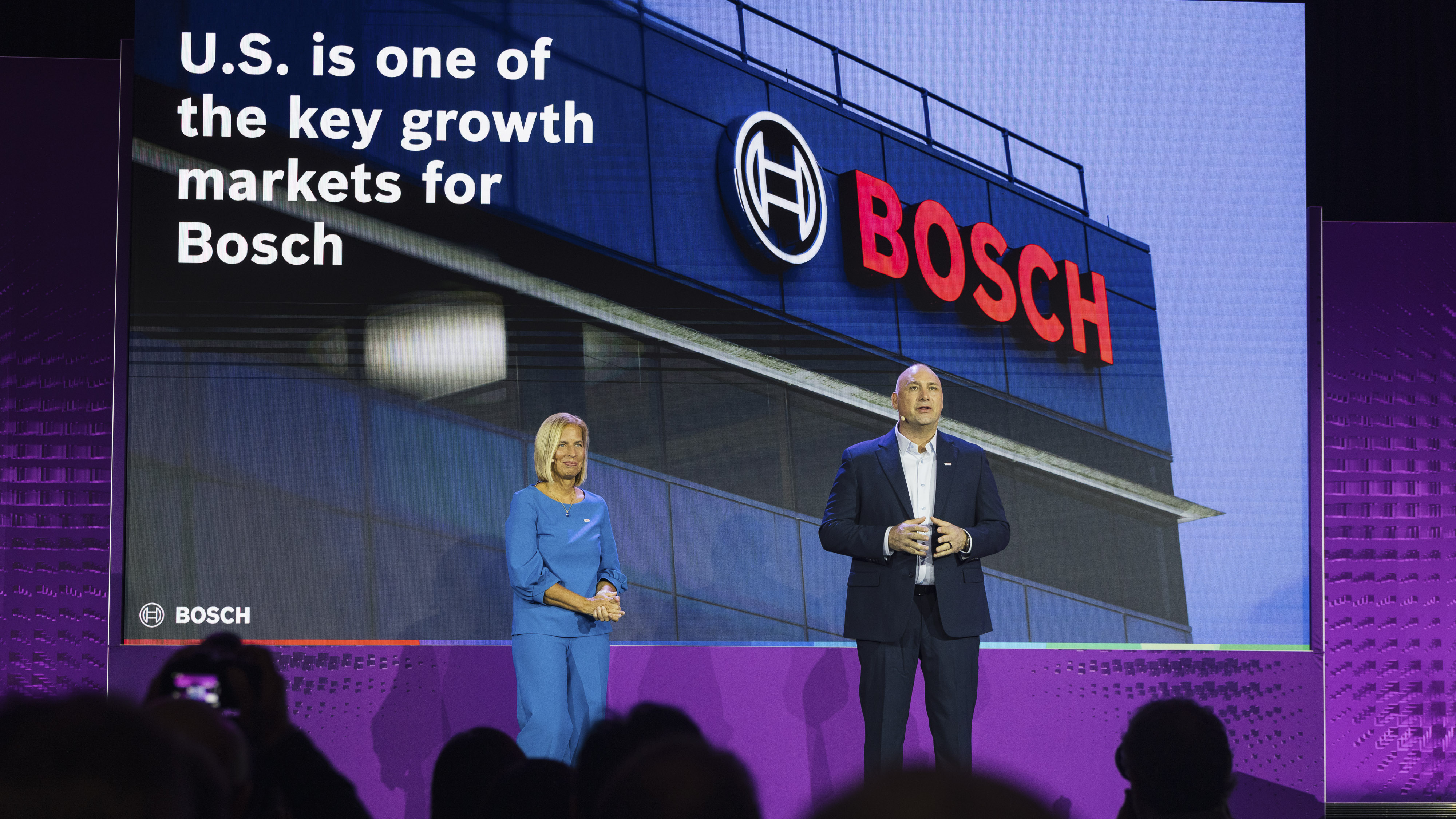
Our work with Microsoft is a strong example of how we’re continuing to push forward growth, investment, and collaborations here in the U.S. – and it’s only one of many. The U.S. is one of Bosch’s key growth markets.
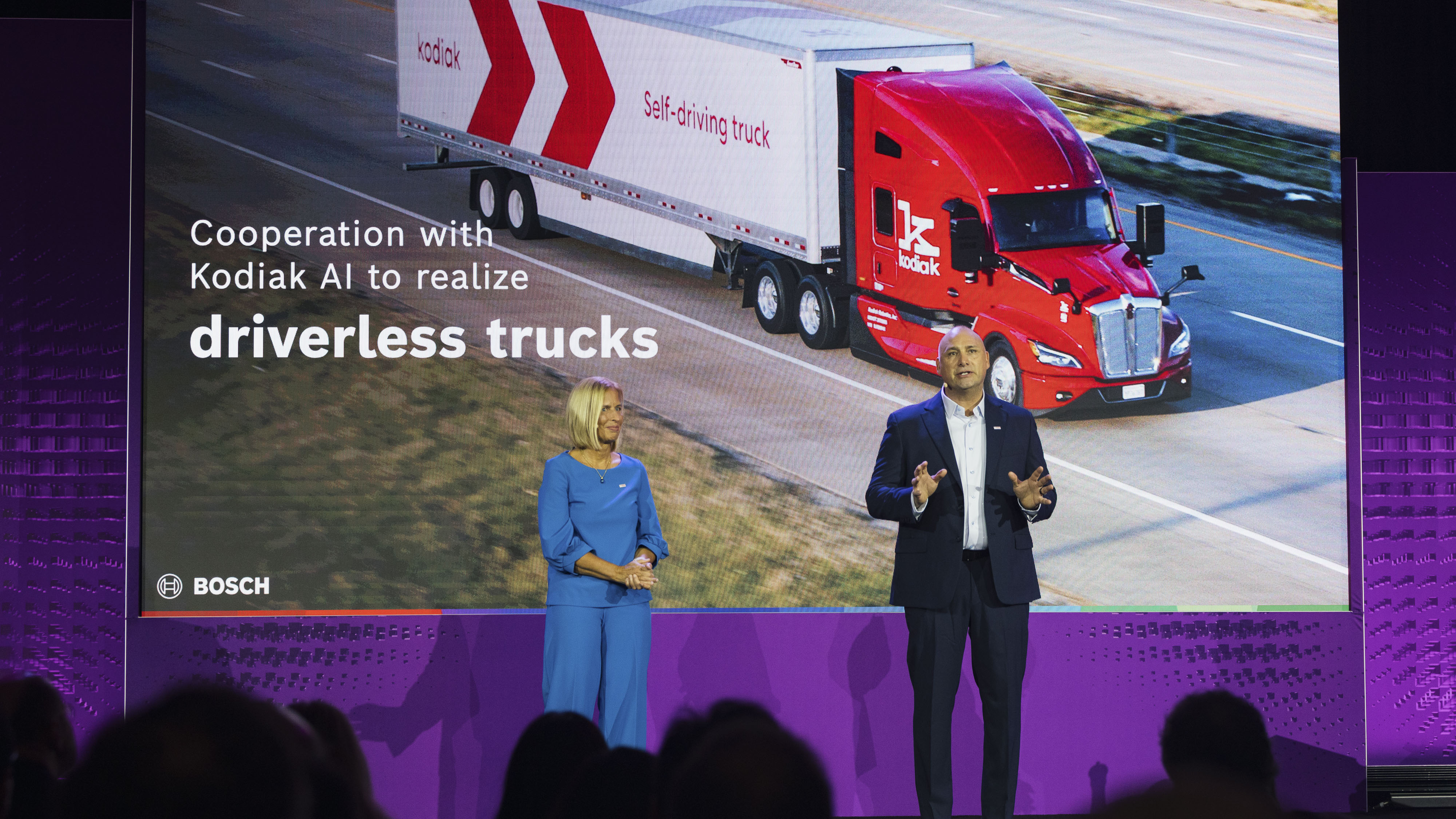
In fact, we recently signed an exciting cooperation agreement with Kodiak AI. This is a dynamic company on the vanguard of AI-powered autonomous trucking technology that has already deployed Class 8 trucks with no humans on board in a commercial operation. As part of our cooperation, we’ll be supporting the development of a production-ready, redundant platform that combines the hardware, firmware, and software necessary to realize fully autonomous trucking at scale. This platform will include sensors such as cameras and radars that the trucks use to perceive their surroundings and advanced steering technologies to promote enhanced safety for this critical vehicle segment. This collaboration is a win-win for us: it offers us a great opportunity to deepen our understanding of real-world autonomous vehicle requirements while at the same time enhancing our portfolio for the broader autonomous mobility ecosystem.
Where investments are concerned, we’re on track with our silicon carbide wafer fab in Roseville, California. Over the past two and a half years, we have committed a substantial portion of our planned 1.9 billion dollar investment and remain on track to begin manufacturing later this year. Producing silicon carbide chips here in the United States is a key part of our strategic plan to reinforce our semiconductor portfolio and support our local customers with access to this essential technology for the future of energy and mobility – including hybrid vehicles.
And in football-related news, I hope you caught our first-ever Big Game ad last year. With the help of some phenomenal friends, we showed the U.S. how Bosch products can transform your life for the better. But even if you didn’t see it, don’t worry. We’ll be back at the Big Game on February eighth with another winning spot that demonstrates how “The more you Bosch, the more you feel like a Bosch.” We hope you’ll tune in!
Tanja Rueckert:
Very exciting! I can’t wait to see what’s coming next.
At Bosch, our innovation has always been driven by a simple goal: to make life better through technology. This involves putting people at the center of our efforts, and focusing on meeting their evolving needs. But we can’t develop people-centric tech without people, and this is why it’s so important that we maintain a dialogue with them. For five years now, that’s exactly what we’ve done in the framework of the Bosch Tech Compass, an annual survey we conduct in seven countries worldwide.
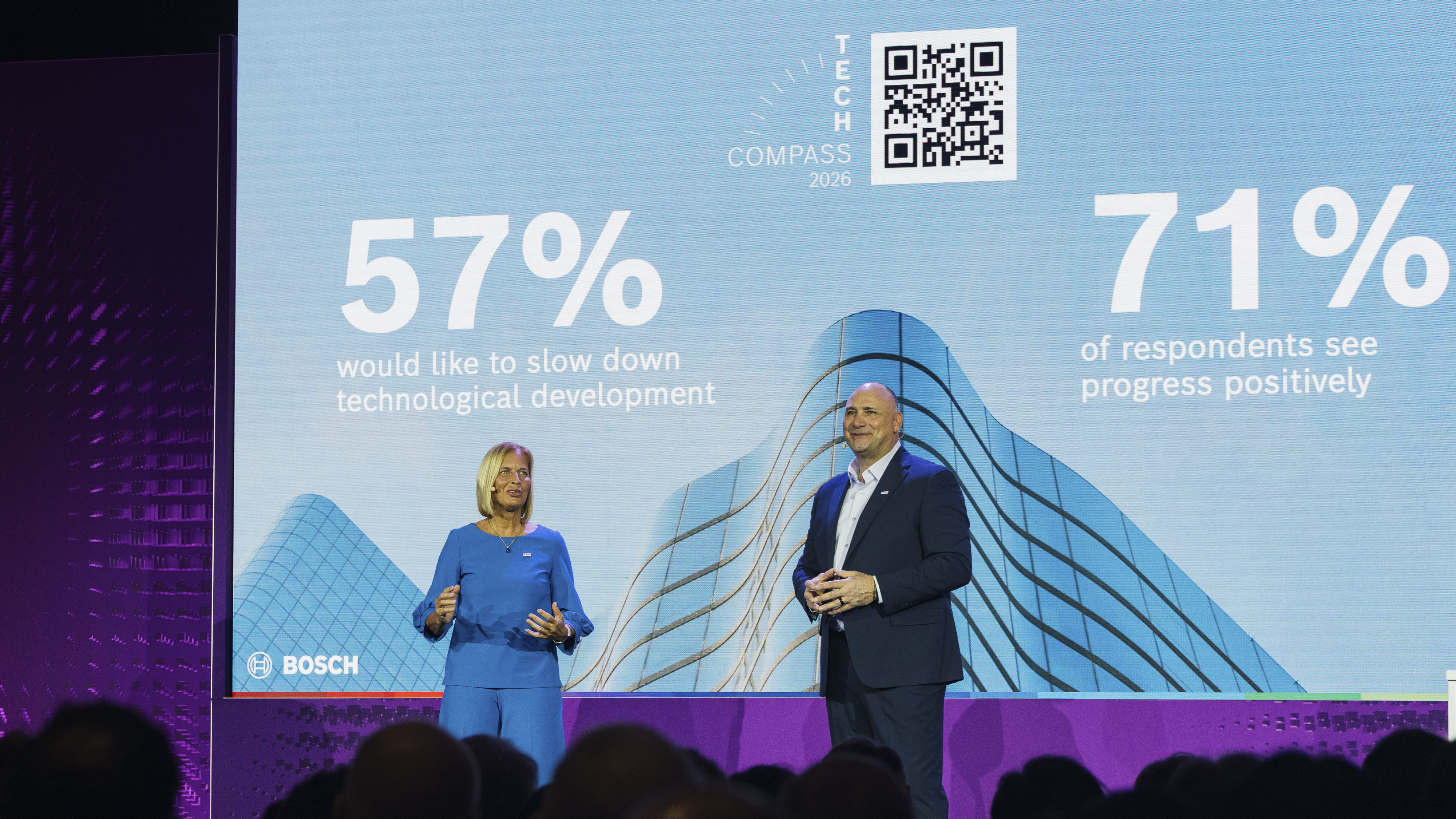
Thanks to the Tech Compass, we know for example that a lot of people are suffering from a kind of “progress fatigue.” In fact, 57 percent of respondents would like to hit the pause button on technological development until its consequences can be better understood. On the other hand, never before have we seen such positive responses regarding AI. A majority of respondents believe it will have a greater positive impact on society than any other technology.
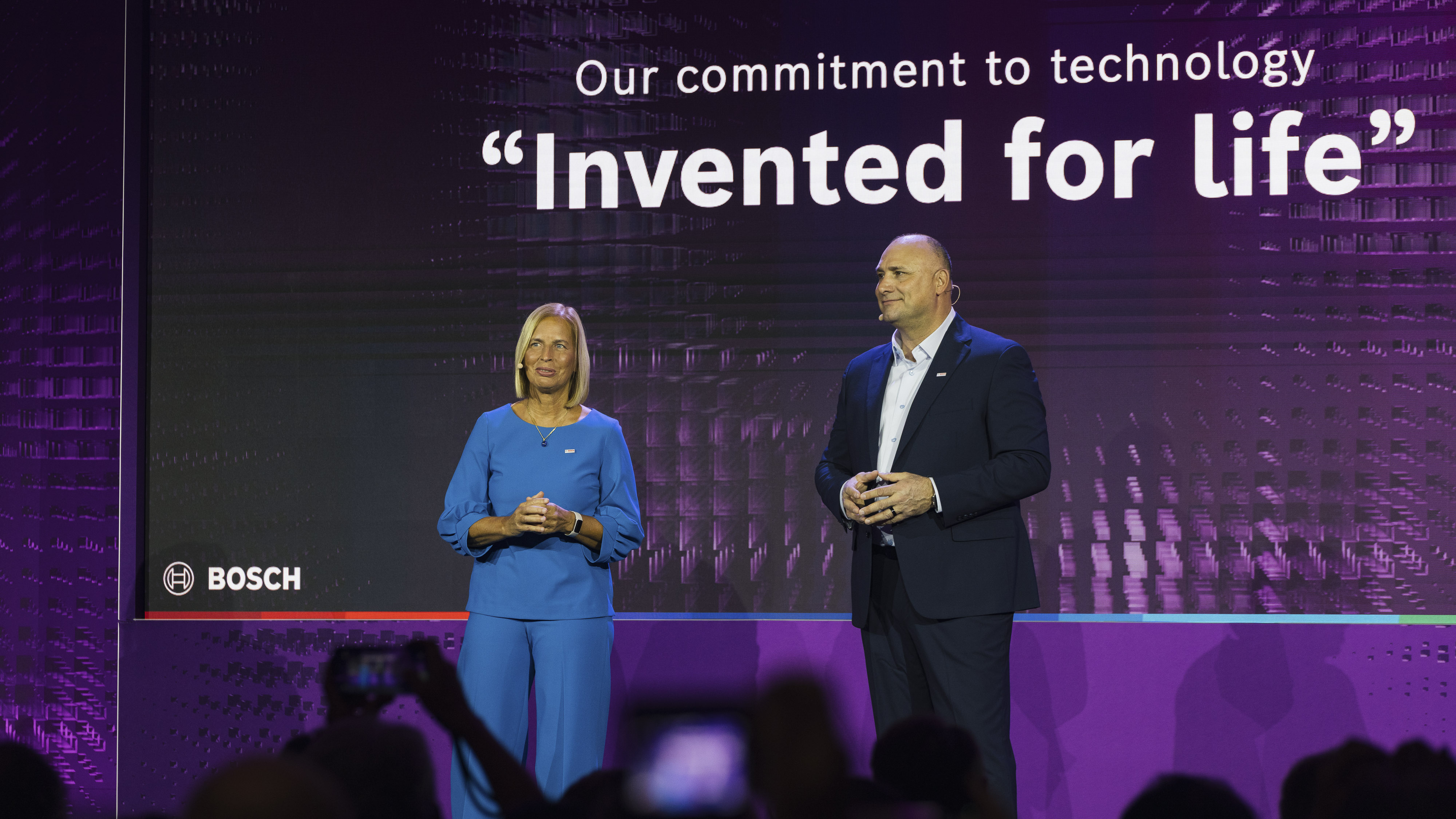
And there’s more good news. General optimism in technology is higher than it has been in years. Globally, 71 percent of people now agree that technological progress makes the world a better place. Of course, we at Bosch share this conviction wholeheartedly. Because we’re committed to creating people-centric tech. By seamlessly bridging the software-hardware divide, we deliver technology that supports and enables humans; technology that is truly “Invented for life.”
Thank you and come by our booth to see for yourself!
Paul Thomas:
Thanks everyone, and see you at our booth in the Central Hall!
Contact persons for press inquiries:
Bosch at CES: Irina Ananyeva, +49 152 597-53284, Megan Bonelli, +1 947 281-7062, Tim Wieland, +1 248 410-0288
Mobility, software: Athanassios Kaliudis, +49 152 086-51292
Artificial intelligence: Matthias Jekosch, +49 711 811-17645
Connected manufacturing: Manuela Kaiser, +49 711 811-44203
The Bosch Group is a leading global supplier of technology and services. It employs roughly 413,000 associates worldwide (as of December 31, 2025). The company generated sales of 91 billion euros in 2025. Its operations are divided into four business sectors: Mobility, Industrial Technology, Consumer Goods, and Energy and Building Technology. With its business activities, the company aims to use technology to help shape universal trends such as automation, digitalization, electrification, and artificial intelligence. In this context, Bosch’s broad diversification across regions and industries strengthens its innovativeness and robustness. Bosch uses its proven expertise in hardware, software, and services to offer customers cross-domain solutions from a single source. It also applies its expertise in connectivity and artificial intelligence in order to develop and manufacture intelligent and user-friendly products. With technology that is “Invented for life,” Bosch wants to help improve quality of life. The Bosch Group comprises Robert Bosch GmbH and its roughly 500 subsidiary and regional companies in over 60 countries. Including sales and service partners, Bosch’s global manufacturing, engineering, and sales network covers nearly every country in the world. Bosch’s innovative strength is key to the company’s further development. Bosch employs some 82,000 associates in research and development.
The company was set up in Stuttgart in 1886 by Robert Bosch (1861-1942) as “Workshop for Precision Mechanics and Electrical Engineering.” The special ownership structure of Robert Bosch GmbH guarantees the entrepreneurial freedom of the Bosch Group, making it possible for the company to plan over the long term and to undertake significant upfront investments in the safeguarding of its future. Ninety-four percent of the share capital of Robert Bosch GmbH is held by Robert Bosch Stiftung GmbH, a limited liability company with a charitable purpose. The remaining shares are held by Robert Bosch GmbH and by a company owned by the Bosch family. The majority of voting rights are held by Robert Bosch Industrietreuhand KG. It is entrusted with the task of safeguarding the company’s long-term existence and in particular its financial independence – in line with the mission handed down in the will of the company’s founder, Robert Bosch.
Additional information is available online at www.bosch.com, www.bosch-press.com.