Search and find:
Photos, videos, releases, events to support your reporting about the Bosch Group

Rising demand for SiC chips: Bosch plans to acquire U.S. chipmaker TSI Semiconductors

26.04.2023

Press release

Business/economy

Rising demand for SiC chips: Bosch plans to acquire U.S. chipmaker TSI Semiconductors

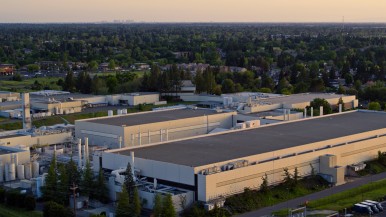
Stuttgart, Germany – Bosch is expanding its semiconductor business with silicon carbide chips. The technology company plans to acquire assets of the U.S. chipmaker TSI Semiconductors, based in Roseville, California. With a workforce of 250, the company is a foundry for application-specific integrated circuits, or ASICs. Currently, it mainly develops and produces large volumes of chips on 200-millimeter silicon wafers for applications in the mobility, telecommunications, energy, and life sciences industries. Over the next years, Bosch intends to invest more than 1.5 billion USD in the Roseville site and convert the TSI Semiconductors manufacturing facilities to state-of-the-art processes. Starting in 2026, the first chips will be produced on 200-millimeter wafers based on the innovative material silicon carbide (SiC).In this way, Bosch is systematically reinforcing its semiconductor business, and will have significantly extended its global portfolio of SiC chips by the end of 2030. Above all, the global boom and ramp-up of electromobility are resulting in huge demand for such special semiconductors. The full scope of the planned investment will be heavily dependent on federal funding opportunities available via the CHIPS and Science Act as well as economic development opportunities within the State of California. Bosch and TSI Semiconductors have reached an agreement to not to disclose any financial details of the transaction, which is subject to regulatory approval. “With the acquisition of TSI Semiconductors, we are establishing manufacturing capacity for SiC chips in an important sales market while also increasing our semiconductor manufacturing, globally. The existing clean-room facilities and expert personnel in Roseville will allow us to manufacture SiC chips for electromobility on an even larger scale,” says Dr. Stefan Hartung, the chairman of the Bosch board of management. “The location in Roseville has existed since 1984. Over nearly 40 years, the U.S. company has built up vast expertise in semiconductor production. We will now be integrating this expertise into the Bosch semiconductor manufacturing network,” says Dr. Markus Heyn, member of the Bosch board of management and chairman of the Mobility Solutions business sector. “We are pleased to join a globally operating technology company with extensive semiconductor expertise. We are confident that our Roseville location will be a significant addition to Bosch’s SiC chipmaking operations,” says Oded Tal, CEO at TSI Semiconductors.Acquisition of TSI Semiconductors creates new manufacturing capacity The new location in Roseville will reinforce Bosch’s international semiconductor manufacturing network. Starting in 2026, following a retooling phase, first SiC chips will be produced on 200-millimeter wafers in a facility offering roughly 10,000 square meters of clean-room space. At an early stage, Bosch invested in the development and production of SiC chips. Since 2021, it has been using its own proprietary, highly complex processes to mass-produce them at its Reutlingen location near Stuttgart. In the future, Reutlingen will also produce them on 200-millimeters wafers. By the end of 2025, the company will have extended its clean-room space in Reutlingen from roughly 35,000 to more than 44,000 square meters. “SiC chips are a key component for electrified mobility. By extending our semiconductor operations internationally, we are strengthening our local presence in an important electric vehicle market,” Heyn says. Demand for chips for the automotive industry remains high. By 2025, Bosch expects to have an average of 25 of its chips integrated in every new vehicle. The market for SiC chips is also continuing to grow fast – by 30 percent a year on average. The main drivers of this growth are the global boom and ramp-up of electromobility. In electric vehicles, SiC chips enable greater range and more efficient recharging, as they use up to 50 percent less energy. Installed in these vehicles’ power electronics, they ensure that a vehicle can drive a significantly longer distance on one battery charge – on average, the possible range is 6 percent greater than with silicon-based chips.Systematic investments in pivotal semiconductor technology Semiconductors are key to the success of all Bosch business areas. The company recognized the potential of this technology early on, and has been producing semiconductors for more than 60 years. Bosch is one of the few companies to have not only electronic and software expertise but also a profound understanding of microelectronics. It can combine this decisive competitive advantage with its strength in semiconductor manufacturing. The supplier of technology and services has been manufacturing semiconductors in Reutlingen since 1970. They are used both in the automotive sphere and in consumer electronics. Modern electronics in vehicles is also the basis for reducing traffic emissions, preventing road accidents, and efficient powertrains. Production at the Bosch wafer fab in Dresden (300-millimeter wafers) started in July 2021. At nearly one billion euros, the wafer fab is the biggest single investment in the company’s history. In its wafer fabs in Reutlingen and Dresden, Bosch has invested more than 2.5 billion euros in total since 200-millimeter technology was introduced in 2010. On top of this, billions of euros have been invested in developing microelectronics. Independently of the investment now planned in the United States, the company announced in summer last year that it will be investing a further 3 billion euros in its semiconductor business in Europe, both as part of its investment planning and with the aid of the EU’s “Important Project of Common European Interest on Microelectronics and Communication Technologies” program.

The 2022 business year: Bosch achieves its targets in a difficult environment

03.02.2023

Press release

Business/economy

The 2022 business year: Bosch achieves its targets in a difficult environment

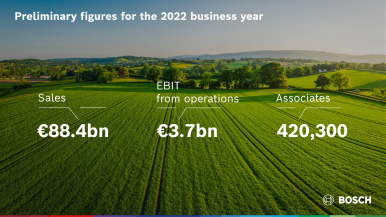
Stuttgart, Germany – Despite the challenging macroeconomic situation, Bosch, the supplier of technology and services, succeeded in increasing sales and result in the 2022 business year. According to preliminary figures , the Bosch Group generated total sales of $93.1 billion. Sales thus increased approximately 12 percent over the previous year, or around 10 percent after adjusting for exchange-rate effects. EBIT (earnings before interest and taxes) from operations reached $3.9 billion. The EBIT margin from operations is expected to be around 4 percent. “The difficult 2022 business year once again demonstrated that Bosch is crisis-proof while possessing tremendous innovative strength,” said Dr. Stefan Hartung , chairman of the board of management of Robert Bosch GmbH, at the presentation of the company’s preliminary business figures. "In an environment that remains challenging, we are securing our growth opportunities worldwide with targeted investments and expanding our international presence. We want to offer people around the world technology that is ‘Invented for life’ and thus make a meaningful contribution to society – from climate-friendly heating and energy saving to sustainable mobility.” Recently, Bosch announced that approximately $1 billion2 will be invested over ten years in an engineering and manufacturing center in Suzhou, China. The center will create mobility solutions and products in the areas of electrification and automation which are specifically designed to serve local market demand. At the same time, Bosch is helping to boost Europe’s status as a high-tech location: “A prime example is the expansion of our wafer fabs in Dresden and Reutlingen,” Hartung said. “In the years up to 2026, we plan to invest another $3 billion2 in our semiconductor business – also as a contribution to countering chip shortages in the mobility sector.” Bosch also plans to focus more on expanding its business globally, in places including Egypt, India, Mexico, the United States, and Vietnam.Global trade: collaboration essential for prosperity and climate action For Bosch, the changes in the market and technology environment being ushered in by connectivity, automation, and electrification in particular, along with the growing importance of sustainability, will serve as growth drivers in the years ahead. Additional demand in emerging regions such as the ASEAN countries will open up further market growth. Against this backdrop, Hartung believes that the company is well positioned with regard to the economic and energy policy situation. However, the energy shortages driving inflation might negatively impact consumption, and thus monetary stability, over the long term. For this reason he welcomed the introduction of a restrictive monetary policy by the central bank. At the same time, he warned against the formation of global economic blocs. “A fragmentation of economic systems threatens innovative strength and prosperity for everyone,” Hartung said. “Most importantly, climate action needs international cooperation.” Hartung sees the further development of renewables as a way of resolving the conflicting goals of environmental and economic sustainability. “The transformation of energy systems needs to remain affordable, must not lead to power supply failures in businesses or households, and should leave fossil fuels behind wherever possible.” Bosch is playing its part in this, he said, and upping the pace in fuel-cell and hydrogen technology. “Where electromobility is concerned,” Hartung said, “we are registering a consistently high order intake.” As a result, Bosch expects to register sales of $6.3 billion in this segment by as early as 2026. In China, business with e-axles and motors is already forecast to turn a profit this year.Climate-neutral technology: energy crisis driving demand Notwithstanding all the challenges it presents, the energy and climate crisis is increasing global demand for climate-neutral technology. This is opening up a variety of new perspectives for Bosch as well: the company already generates sales of more than $21 billion with products for the home. “Our product portfolio can positively influence around 90 percent of energy consumption in the home,” said Dr. Christian Fischer , deputy chairman of the Bosch board of management, who is also responsible for the company’s home and building technology business. “Of this figure, 85 percent relates to heating and hot water and 15 percent to home appliances.” In Germany, Bosch already increased its unit sales of heat pumps by 50 percent in 2022. The European heat-pump market is expected to grow by an annual 25 to 35 percent between now and 2025, and by nearly 40 percent at Bosch, enabling it to gain market share. That is why the company is expanding its manufacturing capacity for heat pumps in Europe: since the beginning of the year, a further production facility has been ramping up in Eibelshausen, Germany. Bosch sees further growth potential in the transformation of energy systems. “However, this transformation must be affordable,” Fischer said. “In buildings, the cost of renovation and retrofitting should not be underestimated.” This explains why Bosch is focusing on hybrid heating systems consisting of heat pump and gas boiler. For the future, the Bosch deputy chairman sees additional potential in the combined optimization of energy flows in vehicles and buildings: “We’re electrifying everything, from bicycles to hydraulics – and we know our way around buildings as well as around cars.”Employer attractiveness: sustainability attracts skilled workers Bosch also made progress in implementing its own sustainability and climate targets in the 2022 business year. Over the course of the year, the company increased the share of renewables in its electricity consumption from 89 to 94 percent. “2022 saw us reach nearly half the 1.7 terawatt-hour energy-saving target we have set ourselves for 2030,” said Filiz Albrecht , member of the board of management and director of industrial relations at Robert Bosch GmbH, who is also responsible for sustainability. “At the same time, our commitment to sustainability makes Bosch a more attractive employer.” According to Albrecht, the company’s sustainability strategy is an increasingly important consideration for applicants. In times when skilled workers are in short supply, finding the best talent around the world is also becoming more difficult for Bosch, she said. She pointed out that India is gaining in importance in the competition for software experts. Bosch has 17,000 such associates there, and worldwide their number has risen from 38,000 to 44,000. The need for software developers remains high; the company expects to add more than 10,000 by the middle of the decade. “Bosch will soon employ more than 50,000 people in software development,” Albrecht said. The Bosch Group is also developing the digital skills of its assembly-line associates: this year, for example, will see the launch of “LernWerk,” an initiative in the Mobility Solutions business sector. Its initial aim is to improve the skills that will be needed to work in the “factory of the future” at all locations in Germany.Business developments in 2022: mobility business posts highest sales growth "Despite semiconductor shortages and a weak economy, all business sectors were able to increase their sales,” said Dr. Markus Forschner , member of the board of management and chief financial officer of Robert Bosch GmbH. At $55.4 billion, the biggest business sector, Mobility Solutions , once again generated the highest sales in 2022. The 17 percent increase in sales came to 12 percent after adjusting for exchange-rate effects. “The good news is that our sales thus grew faster than automotive production,” Forschner said. Nonetheless, Bosch cannot be satisfied with its profitability: margins were burdened by cost increases along the entire supply chain as well as upfront investments for the transformation of the company’s mobility business, he said. The Industrial Technology business sector achieved sales growth of 14 percent to $7.3 billion. After adjusting for exchange-rate effects, sales growth was 11 percent. According to Forschner, the purchase of HydraForce and the acquisition of Elmo are important milestones for Bosch’s industrial technology business. The Consumer Goods business sector managed to increase sales slightly despite significant consumer reluctance to buy home appliances and power tools, Forschner said. It increased its sales by 2 percent to $22.6 billion. After adjusting for exchange-rate effects, this figure rises to 3 percent. In the Energy and Building Technology business sector, on the other hand, growth reflected the unabated high demand for energy-efficient home and building technology. Forschner reported that sales increased to $7.4 billion. After adjusting for exchange-rate effects, the increase of 15 percent amounts to 13 percent.Business developments in 2022: stronger growth in second half of year “Encouragingly, all regions increased their sales by double digits,” Forschner said. “We saw especially strong growth in the second half of 2022.” In Europe, sales totaled $47.2 billion. The 8 percent increase amounts to 10 percent after adjusting for exchange-rate effects. “Growth in Europe was hit harder than the other regions by the war in Ukraine and its consequences,” Forschner said. In North America , sales grew by 25 percent to $15 billion, which makes it the second-biggest sales increase across all the Bosch Group’s regions. The increase amounted to 11 percent after adjusting for exchange-rate effects. Forschner reported that the development of Bosch’s business with heating and air-conditioning solutions was especially encouraging. In South America , sales totaled $1.9 billion. Sales there thus grew faster than in any other region – by 30 percent, or 21 percent after adjusting for exchange-rate effects. As Forschner pointed out, “The strong economy was a key factor in this growth.” In Asia Pacific , sales growth was 12 percent, or 8 percent after adjusting for exchange-rate effects, with sales amounting to $28.9 billion. According to Forschner, the region benefited from strong growth in India. By contrast, China’s changes to its Covid-19 policy dampened business developments there at the end of the year.Headcount development in 2022: Some 18,000 more associates Worldwide, some 420,300 people worked in the Bosch Group as of the December 31, 2022, reporting date. That is around 18,400 more people than in the previous year, an increase of around 4 percent. Headcount in Germany increased by 2,600 to 133,400. “Nearly half this total growth was among associates in research and development,” Forschner said. The number of associates in this area was 84,800 – of whom 44,000 are software developers.Outlook for 2023: global economic upswing losing impetus Bosch anticipates an economic slowdown and expects global economic output to grow by less than 2 percent in the current year. “The global business climate is already reflecting economic burdens,” Forschner said. “Rising interest rates are weighing on investment, especially construction activity and private consumption.” In Europe, this is being compounded by the marked rise in energy costs, even after the recent declines. In China, on the other hand, following the abandonment of its zero-covid policy, a recovery process is likely to begin once the massive infection waves have subsided. According to Forschner, Bosch is feeling an economic slowdown in important sectors and expects to see ongoing cost pressure in value chains. At the same time, a significant amount of capital must be outlaid in order to finance growth in future technologies. “An innovative company like Bosch must make heavy upfront investments,” he said. Over the course of 2023, he went on, Bosch thus aims to increase its sales and further improve its profitability. “We are on course to achieve our long-term target margin of at least 7 percent,” Forschner said. “On these economically rough seas, we’ll maintain a balance – between safeguarding our profitability and financial strength on one hand, and investments and possible acquisitions on the other.”

Bosch focuses on climate-neutral and connected technology in North America

07.06.2022

Press release

Business/economy

Bosch focuses on climate-neutral and connected technology in North America

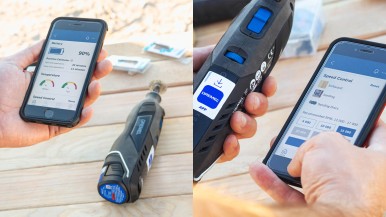
Farmington Hills, Mich . – In the 2021 business year, Bosch achieved sales growth in North America despite continued global economic challenges. The provider of technology and services achieved sales of $13.5 billion (11.4 billion euros) for the North American region, registering steady growth of 5 percent over 2020. “While we face headwinds related to the COVID-19 pandemic, supply chain disruption, raw materials cost increases and more, our team in North America continues to rise to meet those challenges and support growth and recovery of the business here in the region,” said Mike Mansuetti, president of Bosch in North America. In 2022, Bosch will invest $664 million (561 million euros) in capital expenditures across its broad portfolio in North America. This includes $420 million (355 million euros) specifically for Mobility Solutions. At the core of the company’s investments in the region are a continued its focus on climate-neutral technology and the hydrogen economy. ‘“We are all in for the hydrogen economy,” Mansuetti said. “Our hydrogen portfolio is expansive across multiple domains in a way no other company can match. This cross-domain knowledge will enable Bosch to lead when it comes to driving hydrogen as a climate-neutral solution. And we are committed to local production of hydrogen solutions in the North American region in the coming years.”All in for the hydrogen economy Bosch is investing heavily to support the development of hydrogen as an energy source. This includes investments in the mobile fuel cell, where the company will produce both the fuel cell stack as well as balance of plant components to support customers. Globally, Bosch has once again increased its capital expenditure for mobile fuel cells, to more than $1 billion USD between 2021 and 2024. In the interest of effective climate action, Bosch is also entering the components business for hydrogen electrolysis. The company announced plans to invest nearly $600 million in this new area of business by the end of the decade – half of it by the time of market launch, which is planned for 2025. Bosch is branching out into the development of components for electrolyzers, which use electrolysis to split water into hydrogen and oxygen. Ideally, the electricity for this purpose is generated from renewable sources such as wind or photovoltaic power, in which case the result is known as “green hydrogen.” Bosch is supplying the stack – the core of the hydrogen electrolysis system – which combines with power electronics, sensors, and a control unit to create a smart module. In the United States, Bosch is evaluating where its electrolyzer technology can help to bring clean hydrogen to the market. Of particular interest are opportunities created by the U.S. Department of Energy (DOE) $9.5 billion Clean Hydrogen Initiative, which is based on the bi-partisan Infrastructure Investment and Jobs Act. Recently announced DOE Regional Clean Hydrogen Hubs provide a potential opportunity to accelerate hydrogen availability in the U.S. The decentralized fuel cell is also a strategic focus area for Bosch. The Bosch Solid Oxide Fuel Cell (SOFC) energy supply system can use both renewable fuels (hydrogen from wind or sun, for example) and conventional fuels (biomethane or natural gas) to generate electricity and heat. The technology can be used in residential urban areas, commercial buildings, industrial plants, and data centers. It achieves an overall efficiency of over 85 percent at the beginning of life.Enabling electrification – for the powertrain and beyond In addition to the mobile fuel cell, Bosch continues to advance electrification with solutions for battery-electric vehicles as well. The company continues to ramp toward electrification production at its Charleston, S.C., facility. “Here in the North American region and the United States in particular, our customers are aggressively growing their electrification offerings,” said Paul Thomas, executive vice president of Mobility Solutions, Americas for Bosch. “At Bosch we are helping our customers achieve their electromobility goals. No other supplier offers as many electromobility solutions across the entire value stream as Bosch does.” A key technical task is to keep the powertrain, including the battery, at the right temperature and to provide the necessary climate comfort in the passenger compartment. Intelligent thermal management alone can increase the electric driving range by 25 percent. To this end, Bosch has developed a pre-integrated solution: the flexible thermal unit, or FTU. With the FTU, Bosch is tapping into a market that it expects will reach a volume of more than $4 billion globally by the end of the decade. Beyond the powertrain, Bosch is making electrification a reality with solutions for electric vehicles in the areas of steering and braking. “When it comes to vehicle control, our portfolio is uniquely positioned to support the needs of the U.S. market,” Thomas said. “For areas like braking and steering – including by wire and conventional solutions – our solutions fit well with electric trucks and SUVS.”The value of being connected Across its entire business, Bosch is reaping the benefits of connectivity and the Internet of Things (IoT). As of the beginning of 2022, the company announced all its electronics product classes were connectable. “Connectivity enables us to deliver in new ways on our ‘Invented for life’ promise,” Mansuetti said. “We are demonstrating in many different areas the value of connectivity to our customers through new data-driven updates and development.” In the area of mobility, Bosch’s braking portfolio is now IoT-ready. This enables both data-driven development for automakers and Bosch as well as data-driven service enablement for fleet owners and end consumers. Through continuous development enabled by data, specifications can be further defined and virtual updates sent to the system. For fleet owners and consumers, this benefit unlocks the ability to monitor component health information across braking systems, tires and other chassis components. “Ultimately, in addition to development benefits, leveraging data like this will help us to better understand the built environment, providing insights around road roughness, road friction, pothole detection – heat maps for extreme braking events,” said Mohammed Abraham, regional president of Chassis Systems Control for Bosch in North America. “When we leverage the power of the connected vehicle, every wheel on the road is transformed into a mapping tool for public infrastructure which can ultimately aid in the design of safer streets.” Beyond mobility, global sales of connected power tools, household appliances, and heating systems alone have grown by 50 percent within one year – from four million units in 2020 to more than six million in 2021. The Dremel® brand, part of the Bosch Power Tools portfolio, unveiled the world’s first brushless smart rotary tool in late 2021. The Dremel 8260 was a project led out of North America. Introducing connectivity to a rotary tool allows users to understand the rotary tool’s performance, including: sending alerts when battery life is low and when the tool is overloading/stalling, providing tips on how to resolve these issues and displaying the amount of usage time left on the tool in minutes. In addition, the app has an interactive material guide that offers detailed accessory information and includes the recommended accessory speed in RPM for each material. In the Bosch Thermotechnology business, the team in North America combines digital transformation and IoT with a passion for sustainability to deliver connected solutions to the market. The IDS Premium Connected, an IoT advancement in air-source heat pumps pioneered in North America, provides an interactive IoT platform for contractors and homeowners. It enables remote monitoring where contractors and homeowners can monitor data for a heat pump even without a communicating thermostat. It also enables the Bosch EasyAir app, which provides homeowners the ability to monitor their energy usage and receive critical alerts while contractors can easily access the information they need to conduct on-site installation, troubleshooting and warranty registration.Connected to local communities; more than 5 million students reached through Bosch Community Fund grants Bosch is also staying close to the communities where it operates. The Bosch Community Fund, the corporate foundation for Bosch in North America, is celebrating 10 years of giving in 2022. Since its founding, the Bosch Community Fund has reached approximately 5.3 million students and 58,500 teachers in 39 site communities across the region via 2,130 grants representing approximately $37 million. Nearly 200,000 students and more than 4,000 teachers across North America were positively impacted in 2021 alone by the Fund's investments. The Bosch Community Fund focuses on STEM education, environmental sustainability, eco+STEM and disaster response. Its grants aim to provide access to under-represented and underserved audiences; encourage students through project-based and hands-on learning; strengthen workforce development and career transitions; and engage people in environmental sustainability and stewardship.Positive development across all business sectors in North American region All four business sectors reported sales increases in North America in 2021 from a year earlier. The Mobility Solutions business sector was in line with overall results at a five percent increase as it delivered $7.9 billion in sales. Consumer Goods increased sales to nearly $3.5 billion, representing nearly a nearly 20 percent increase in 2021. This comes after the Consumer Goods area had already defied trends by posting a 12 percent sales increase in 2020. Industrial Technology as well as Energy and Building Technology also both increased sales nearly 20 percent, posting just over $1 billion in sales in each respective sector. Headcount was up slightly to nearly 35,500 associates across the North American region. In the United States alone, the company aims to hire more than 500 software engineers in 2022 as it continues to win new business and develop new business models driven by software. The company also graduated the first cohort from its inaugural IoT apprentice program, which started in 2020 and teaches the fundamentals of software engineering. All five of the participants in the first round of the program came from a non-software background. They completed their training in 2021 and all are now employed within Bosch full-time in software-focused roles.Bosch Group: outlook for 2022 and strategic course In 2021, Bosch achieved significant growth in sales and result despite a difficult environment. In the first quarter of 2022, the sales revenue of the supplier of technology and services rose 5.2 percent. For the year as a whole, Bosch expects sales to grow more than 6 percent, and to achieve an EBIT margin in the range of 3 to 4 percent – and this despite the likelihood of considerable burdens, especially due to rising costs for energy, raw materials, and logistics. “The successful outcome of the 2021 business year bolsters our confidence as we tackle the challenging environment of the current year,” said Dr. Stefan Hartung , chairman of the board of management of Robert Bosch GmbH. One of the considerable uncertainties is the war in Ukraine and all its implications. In his view, the current situation highlights the pressure on policymakers and society to become less dependent on fossil fuels and to vigorously pursue the development of new sources of energy. For this reason, he said, the Bosch Group is systematically continuing its efforts to mitigate global warming, despite the challenging economic environment. In addition, Hartung announced Bosch will be investing some three billion euros ($3.5 billion USD) over three years in climate-neutral technology such as electrification and hydrogen. The Bosch chairman announced that, over the next three years, the company will be investing another ten billion euros ($11.8 billions USD) in digitally transforming its business. “Digitalization also has a special role to play in sustainability – and our solutions start from this premise,” Hartung said. This year alone, moreover, Bosch plans to take on 10,000 new software engineers worldwide.

Bosch makes $295 million available to startups

03.06.2022

Press release

Business/economy

Bosch makes $295 million available to startups

Stuttgart, Germany – Despite the challenging business environment, the Bosch Group is raising its venture-capital funding for the current business year: its subsidiary Robert Bosch Venture Capital GmbH (RBVC) is setting up a new fund for startups; the fund has a volume of $295 million (250 million euros). As a provider of venture capital, Bosch supports startups around the world whose technologies have the potential to improve quality of life and conserve natural resources. “Our investments in startups promote technological progress in business and society,” says Dr. Stefan Hartung, chairman of the board of management of Robert Bosch GmbH. “And we ourselves also benefit from this collaboration, since solutions to ever more complex tasks can frequently be found faster, more efficiently, and better in partnership with others.” As an innovation leader, Bosch is at the forefront of efforts to bring about climate-neutral technology, sustainable mobility, and connectivity, which is why RBVC investments also focus on fields such as energy efficiency and powertrain electrification. Bosch recently announced that it will be investing billions in climate-neutral technology, including hydrogen technologies and the digital transformation of its business.Expanding globally: RBVC to open new office in U.S. RBVC, one of Europe’s largest corporate investors, specializes in innovative technology startups. Its portfolio includes more than 50 companies, mainly active in artificial intelligence (AI), the internet of things (IoT), semiconductors, and quantum computing. RBVC invests nearly $30 million (up to 25 million euros) in individual young startups, and also provides them with the know-how and contacts the Bosch Group has as a leading supplier of technology and services. As part of its localization strategy, RBVC is continuously expanding its investment activities worldwide: in China, the subsidiary successfully established an investment platform with Boyuan Capital through which other companies can also invest venture capital in funds. Through its own locations and contact persons for the startup scene, RBVC maintains a presence in technology hotspots around the world, such as China, Germany, Israel, and the U.S. Its U.S. office in Sunnyvale is now to be joined by a further office on the Atlantic coast, in Boston. “As a global investor we are part of the startup scene, looking out for the next disruptive innovation that will turn markets on their head,” says Dr. Ingo Ramesohl, managing director at Robert Bosch Venture Capital GmbH. “This second U.S. office will ensure we are even better at keeping our finger on the pulse of technology startups.”Open Bosch: exploiting technology trends at an early stage Each year, experts from RBVC examine over 2,000 startups, but only about a hundred of these make it to the shortlist. RBVC also wants to use the new funding round to find technological answers to changed geopolitical and business-policy circumstances. “Two years of the Covid-19 pandemic and ongoing geopolitical tension have left their mark everywhere, as is shown by the chip shortages and disruptions in global value chains,” Ramesohl says. “That’s why we also want to identify technological trends that can provide relief in such situations.” Each year, RBVC invests in six to ten carefully selected companies. In addition to capital, it also offers know-how and operational support. As Ramesohl points out, RBVC pursues an open culture of innovation with its Open Bosch program, forging links between startups and Bosch operating units at an early stage. This gives startups the opportunity to become a supplier, customer, or technology partner of Bosch. Bosch, in turn, receives early access to the latest technologies and can incorporate them into its own innovations. Bosch already has several hundred partnerships with startups – in 2021 alone, the number of such activities tripled.Successful investments ensure technological progress When an investment comes to an end, RBVC may also choose to help a startup go public. In this respect, it is similar to institutional venture-capital funds. One recent success story was the IPO of Xometry, the operator of an AI-assisted marketplace for on demand manufacturing. Another success was IonQ, the first-ever quantum computing company to be publicly listed. Since 2021, RBVC’s portfolio has also included Variantyx. This startup uses AI-assisted genetic testing in cancer diagnosis, and also works with the Robert Bosch Hospital in this field. To support the shift to electromobility, RBVC has also invested in the startup BASiC Semiconductor, which manufactures silicon carbide power electronics. Finally, Motive, the startup formerly known as Keep Trucking, operates a fleet management system in the U.S. that reduces trucking costs and fuel consumption.

17.12.2020

Press release

Business/economy

Robert Bosch Venture Capital invests in Arris Composites.

Stuttgart, Germany – Robert Bosch Venture Capital GmbH (RBVC), the venture arm of the Bosch group, has participated in a 48.5 million US dollar series B investment round in Arris Composites, a start-up based in Berkeley, California. RBVC invested alongside Taiwania Capital, Valo Ventures and return investor New Enterprise Associates (NEA).Arris’ flagship technology, Additive Moldingis a high-speed manufacturing process that allows the world’s top brands to precisely align continuous carbon fibers and embed electronic components and multifunctional materials into a single topologically optimized part or component. The result: a cost-effective method for manufacturing lighter, stronger and more intelligent products at scale. “Arris isthe first company with the capability to mass-produce complex high-performance composites," saysRBVC Managing Director Dr. Ingo Ramesohl.“This is an important development for manufacturing. Arris’ scalable manufacturing andhigh-performance materialsenablenew design possibilities for future products across industries. Essentially, Arris offers designers the replacement of metal with a plastic composite material whichat the same time has high functional integration capabilities.”"We're excited to add Bosch through its venture arm RBVC, a world-class manufacturing leader of highly engineered products, as a strategic investor,” says Ethan Escowitz, CEO of Arris. "We recently opened Arris Taiwan to support our consumer electronics growth. Now we’re looking forward to leveraging Bosch's extensive manufacturing and engineering expertise in automotive, industrial, and consumer goods as we expand in Europe and around the world.”

Robert Bosch Venture Capital invests in Aclima’s US $40 million Series B funding ...

18.11.2020

Press release

Business/economy

Robert Bosch Venture Capital invests in Aclima’s US $40 million Series B funding ...

Stuttgart, Germany – Robert Bosch Venture Capital GmbH (RBVC), the corporate venture capital company of the Bosch Group, has completed an investment in Aclima Inc., a startup based in San Francisco, California.Aclima is a leader in hyperlocal air quality and greenhouse gas measurement and analysis. Their platform helps governments, communities, and enterprise customers accelerate action to reduce emissions and protect public health. “Aclima has built an expansive mobile and stationary sensor network that generates billions of measurements about our most critical resources,” says Dr. Ingo Ramesohl, Managing Director of RBVC. “Bosch invents and delivers connected solutions for a smarter future across transportation, home, industrial, and many other fields. What Aclima has achieved in connected environmental sensing is an impressive feat. Together, we can accelerate Aclima’s ability to support customers in taking decisive and data-driven climate action, supporting Bosch’s guiding principle “Invented for Life”.” Novel approach with rigorous scientific validation Aclima has pioneered a new class of measurement and analysis tools that make air pollution and climate-changing emissions visible at the street-level, and at the scale of entire cities and states. To deploy its mobile sensing network, Aclima upfits emission-free vehicles with their sensing devices. As the cars drive through streets, air samples pass through a specially designed intake and are then routed to the device for initial analysis before streaming the measurements results to the cloud. Each week, Aclima sends billions of air quality data points to their cloud-based software platform where it is combined with other data streams for use by governments, communities, and businesses to inform actions that reduce emissions and their impacts. "Air pollution takes millions of lives and costs billions of dollars every year, and is now linked with higher COVID-19 death rates," said Davida Herzl, co-founder and CEO of Aclima. “We’re thrilled by the potential for collaboration with Bosch that RBVC enables. With this coalition of investors, we’re expanding our capacity to support our customers and community partners in their critical efforts to reduce emissions and protect public health.” The $40 million Series B round was led by Clearvision Ventures. Other new investors joining Aclima on their journey include the Microsoft Climate Innovation Fund, GingerBread Capital, KTB Network, ACVC Partners, and Splunk Inc. Existing shareholders participating in the round include Plum Alley, Kapor Capital, Rethink Impact, the Schmidt Family Foundation and Social Capital. These new resources and partnerships will enable Aclima to further expand its connected sensor networks to cover millions more people in many more places.

Robert Bosch Venture Capital co-leads USD 10 million investment round in SiteAware

05.10.2020

Press release

Artificial Intelligence

Robert Bosch Venture Capital co-leads USD 10 million investment round in SiteAware

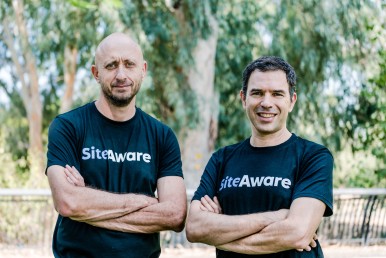
Stuttgart, Germany – Robert Bosch Venture Capital GmbH (RBVC), the venture capital arm of the Bosch Group, co-leads a USD 10 million round A financing in Tel Aviv (IL) based SiteAware ltd., investing together with Axon Ventures. Existing investors, including lool Ventures, Oryzn Ventures, Kluz Ventures and Power Capital Venture also participated in the round. The proceeds of the round will be used to scale the company’s business across North America.The Artificial Intelligence (AI) construction verification platform provides real-time, high accuracy quality control through its purpose-built digital twinning engine, paired with AI based anomaly detection. SiteAware is defining a new standard for Digital Construction Verification (DCV) to enable consistent First-Time Quality and mitigate construction risks. “SiteAware’s purpose-built AI streamlines construction field work and would therefore allow the industry to lower construction costs,” says RBVC Managing Director Dr. Ingo Ramesohl. “SiteAware’s Digital Construction Verification technology enables field teams to achieve First Time Quality, and we believe it has the potential to revolutionize quality control (QC) and verification in the construction industry.” Digital construction verification reduces costs and drives efficiency Construction is a major contributor to the U.S. economy. The industry comprises of more than 680,000 employers with over seven million associates. This industry has been heavily relying solely upon human spot checks, while seeking the adequate tools and processes to perform comprehensive building verification. SiteAware’s enhanced solution provides the digital value add and, according to the Associated General Contractors of America (AGC), is addressing a USD 1.3 trillion market of new buildings each year. “The costs of construction errors and risk mitigation contribute 10%-30% of this number.” said Zeev Braude, SiteAware CEO. “SiteAware’s technology significantly lowers this overhead, allowing customers to reap the benefit.” With the help of ground and drone-mounted cameras, SiteAware digitally scans buildings under construction and creates a highly accurate 3D model of the verified area. The model is then verified against the approved construction plans to flag any inconsistencies between plans and fieldwork. The result is a complete view, in real time, of the work performed that exposes any deviation from the plan, enabling field teams to make the necessary adjustments before needing to carry out reactive rework Furthermore, SiteAware’s 3D model enables an easy generation of an accurate As-Built model of the building. SiteAware’s scans save much time and resources and eliminates the physical measuring of the existing facility, which sometimes involves measures such as precision laser distance meters and 3D laser scanners. “The need for DCV is even more evident during the COVID-19 pandemic. Implementing SiteAware’s solution enabled construction projects to maintain efficiency, make progress and adhere to schedule despite workforce reduction and social distancing”, added Ramesohl. World class team developing breakthrough technology The latest round of funding will enable SiteAware to expand its experienced management team led by CEO, Zeev Braude, and Co-founder and CTO, Ori Aphek. Both Zeev and Ori bring a combined 40 years of business industry experience. Zeev’s business leadership track record in B2B enterprise and SaaS products in rapidly changing environments, together with Ori’s experience in building optical and computer vision solutions is the necessary force in leading SiteAware to becoming the market leader within an industry ready for a digital upgrade.