Search and find:
Photos, videos, releases, events to support your reporting about the Bosch Group

Ford, Bedrock and Bosch are exploring highly automated vehicle technology in Det ...

27.08.2020

Press release

Automated mobility

Ford, Bedrock and Bosch are exploring highly automated vehicle technology in Det ...

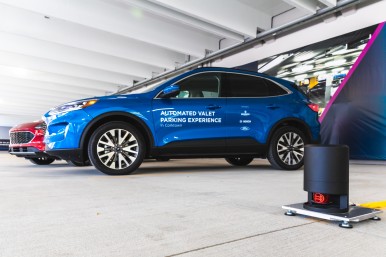
DETROIT – Many people enjoy driving… until it’s time to park. So why not leave the task to the vehicle?Ford Motor Company, Bedrock and Bosch are launching a demonstration project with connected Ford Escape test vehicles that can drive and park themselves inside Bedrock’s Assembly Garage in Detroit using Bosch smart infrastructure. This is the first U.S. infrastructure-based solution for automated valet parking where the vehicle will park itself inside a parking garage. The research will take place in the Corktown neighborhood, the site of Ford’s new mobility innovation district, anchored by Michigan Central Station. The district will draw mobility innovators and disruptors from around the world to develop, test, and launch new solutions to solve urban transportation challenges, improve mobility access for everyone and prepare for the increasingly connected and autonomous world ahead. “We are continually searching for opportunities to expand our leading suite of Ford Co-Pilot360 driver-assist technologies that help people drive more confidently and we believe automated valet parking technology holds great promise,” said Ken Washington, chief technology officer at Ford Motor Company. “Our work with Bosch and Bedrock also aligns with our vision for the future, which includes increasingly automated vehicles that are more aware of their surroundings while requiring less on-board computing to help improve design, packaging and affordability.” The demonstration project will be on display on the ground floor of Bedrock’s Assembly Garage, the real estate developer’s first residential redevelopment project in the Corktown neighborhood. The project aligns with Bedrock’s vision of combining ground up and historical developments with the newest technology in parking and mobility - including the current installation of the Midwest’s first automated parking stall, which parks and retrieves vehicles in the basement of the Free Press Building using street-level load bays. “We strive to be at the forefront of parking and mobility initiatives in Detroit because we recognize the importance of interconnectivity between real estate and mobility,” said Heather Wilberger, chief information officer at Bedrock. “In addition to drastically reducing park time, we see this solution as the first step to bringing automated parking to our city, providing the ultimate convenience for our tenants, visitors, neighborhoods and residents.” The automated valet parking technology will be running for Assembly tenant and private demonstrations through the end of September. Connected vehicle and smart infrastructure enhance automated parking The connected Ford test vehicles operate in a highly automated fashion by vehicle-to-infrastructure (V2I) communication with Bosch’s intelligent parking infrastructure. The infrastructure sensors recognize and localize the vehicle to guide its parking maneuver, including the ability to help avoid pedestrians and other hazards. If the infrastructure senses something in the vehicle’s path, it can stop the vehicle immediately. “For Bosch, automated valet parking brings together our deep cross-domain experience in mobility and building technologies to deliver a smart infrastructure solution that improves everyday life,” said Mike Mansuetti, president of Bosch in North America. “This technology enables consumers to see the benefit of highly automated technology as the vehicle handles a task such as parking in a garage.” Upon arriving into the garage, a driver will leave the vehicle in a designated area and use a smartphone app to send the vehicle into an automated parking maneuver. Drivers will also use the app to request the return of the vehicle to the designated pick-up area, expediting the parking experience and removing the responsibility of finding the vehicle upon return to the garage. New mobility requires collaboration The demonstration project at Assembly Garage brings together one of the world’s largest automakers, Ford, the largest property developer in the City of Detroit, Bedrock, and the world’s largest automotive supplier, Bosch, to demonstrate how organizations are working together on new mobility initiatives. “Michigan continues to lead the way through unprecedented investments in the smart infrastructure that is critical to developing and deploying the most advanced forms of mobility,” said Garlin Gilchrist II, Lt Governor. “With the Office of Future Mobility and Electrification, we are ensuring our state solidifies its position not only in the manufacturing of advanced automobiles, but also in the future of smart, connected roadways and parking areas. We will continue finding innovative ways to work with partners across both the public and private sector to deliver real-world solutions to today’s transportation challenges.” The demonstration project will enable the three companies to gain valuable insights regarding user experience, vehicle design, parking structure design and application to expand the technology and its application. “The City of Detroit continues to be at the forefront of mobility and the heart of the automotive industry,” said Mike Duggan, mayor of the City of Detroit. “Ford has a long and storied history with the Motor City and it is exciting to see them collaborate with Bosch and Bedrock on this innovative effort to propel the region into the future of mobility. I look forward to the day when Detroit residents and visitors alike will see a benefit from future technologies such as automated valet parking – it will undoubtedly save space in our garages and make the entire parking experience more convenient.” Efficient use of space and vehicle services make the case Automated parking solutions bring value to garage owners by allowing for the more efficient use of spaces inside a parking garage. With automated valet parking, the same amount of space can accommodate up to 20 percent more vehicles. The solution can be deployed via retrofitted solutions like the one in the Assembly Garage or with embedded infrastructure planned into construction of new garages that enables optimized design for maximum capacity. In addition to simply parking, a vehicle could also drive itself to areas within the garage for specific services such as vehicle charging or a car wash. During the demonstration project, Ford, Bedrock and Bosch will demonstrate vehicle paths showing how a vehicle would move between service areas and ultimately to a parking spot before the user calls it back to leave the garage.

How Ford, Bosch Are Using Virtual Reality to Train Technicians On All-Electric M ...

14.02.2020

Press release

Connected mobility

How Ford, Bosch Are Using Virtual Reality to Train Technicians On All-Electric M ...

“Technicians will be immersed in a simulated and gamified world, meaning they won’t need to rely on actual Mustang Mach-E vehicles to learn about its components, including the electric SUV’s new high-voltage system,” said Dave Johnson, director of Ford service engineering operations. “This new virtual reality training tool allows technicians to understand the components and steps required to service these high-voltage systems, then confidently perform diagnostics and maintenance.”Here’s how it all works: A technician will learn how to diagnose and perform service related to the vehicle’s high-voltage system wearing the virtual reality headset. This includes tasks such as removal and installation of the main battery as well as service and maintenance on the battery pack itself. Bosch also is developing future extensions where the technicians utilize VR to enter the vehicle and navigate through modules as if they were walking through rooms to learn the system. Navigating between modules enables the technicians to determine the issue to repair the vehicle. “The virtual reality training solution is about new technology that builds efficiency,” said Geoff Mee, director of operations for Bosch. “By improving the diagnostic process, technicians are able to perform maintenance and make repairs faster and more easily.” This new virtual reality system can be used as an ongoing training tool, allowing technicians to learn niche skills in the Ford technical training program. Virtual reality training has the potential to attract new hires to the automotive repair world, rightly framing the profession as a high-tech, forward-thinking industry in which technicians can learn more efficiently in a state-of-the-art environment. Additionally, technicians can tap into the system from any location. Bosch developed a proof of concept in 2019 for automotive service training via virtual reality, then market tested it with instructors, technicians and college students. Ford Motor Company is the first automaker to pilot the application in its service technician powertrain repair course, specifically with the all-new Mustang Mach-E, the company’s first all-electric SUV. Ford could expand the technology to train on additional vehicles in the future. The virtual reality training solution uses an Oculus Quest virtual reality headset from Facebook. Ford and Bosch are working with Oculus for Business to manage their fleet of headsets deployed to the Ford technician training program, as well as with PIXO VR. The company’s proprietary virtual reality content distribution platform enables scaling and iterating virtual reality training software and applications.

Camera-based lifesaver: Bosch helps cars keep an eye on their passengers

18.12.2019

Press release

Automated mobility

Camera-based lifesaver: Bosch helps cars keep an eye on their passengers

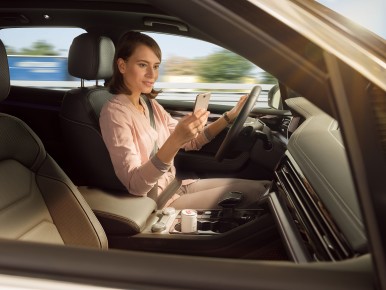
Stuttgart, Germany – Drowsiness, distraction, a seatbelt left undone – many things that happen inside a vehicle can have far-reaching consequences. To avert critical driving situations and possibly also accidents, future cars will use their sensors not only to monitor the road but also the driver and other passengers. For this purpose, Bosch has developed a new interior monitoring system featuring cameras and artificial intelligence (AI). If the car knows what its driver and occupants are doing, driving will become safer and more convenient....says Harald Kroeger, a member of the Robert Bosch GmbH board of management. The Bosch system may go into production in 2022. In that year, the EU will make safety technology that warns drivers of drowsiness and distraction, for example, a standard feature in new vehicles. The EU Commission expects the new safety requirements for vehicles will save more than 25,000 lives and help prevent at least 140,000 severe injuries by 2038. By tracking what is happening inside the car, technology can help solve a fundamental problem of self-driving cars. For example, if responsibility for driving is to be transferred to the driver following an automated drive, the car needs to be able to prove the driver is neither sleeping, nor reading the newspaper, nor writing emails on their smartphone. A smart camera constantly monitors the driver If a driver dozes off or looks at a smartphone for just three seconds, a vehicle traveling at approximately 30mph can cover about 130 feet completely unsupervised, and many people underestimate the associated risk. International studies state that nearly one in 10 accidents are caused by distraction or drowsiness, which has prompted Bosch to develop an interior monitoring system that detects and alerts to this danger and provides driving assistance. A camera integrated in the steering wheel detects when drivers’ eyelids are getting heavy, when they are distracted, and when they turn their head toward passenger or rear seats. Thanks to AI, the system draws the right conclusions from this information: it warns inattentive drivers, recommends a break if they are getting tired, or even reduces the speed of the vehicles – depending on the automaker’s wishes, as well as legal requirements. “Cameras and AI will turn the vehicle into a lifesaver,” Kroeger says. To achieve this, Bosch engineers have used intelligent image-processing algorithms and machine learning to teach the system to understand what the person in the driving seat is doing. For driver drowsiness, the system is trained using recordings of real driving situations, eyelid position and eye-blink rate to learn how tired the driver really is. This allows the system to give an alert that is appropriate to the situation, so driver assistance can be used to intervene. Warning systems that sound the alert, in the case of distraction and drowsiness, will be so important in the future that NCAP, the European New Car Assessment Program, will include them in the roadmap for its vehicle safety assessment by 2025. Further, only the software in the vehicle itself evaluates the information provided by the interior monitoring system – the information is neither saved nor shared with third parties. Like a relay race, responsibility for steering passes from car to driver and back At the very least when cars start driving automatically, it is important that they understand their drivers, as cars will drive along freeways without driver intervention. They will also have to hand back control to their drivers in tricky situations such as construction zones or when the exit ramp is drawing near. Drivers need the option to safely take the wheel again at any time during the automated driving phase. The camera makes sure they don’t fall asleep, and if their eyes remain closed for a prolonged period, an alarm is sounded. The system also interprets camera recordings to establish what drivers are currently doing and how ready they are to respond. The transfer of driving responsibility is then timed accordingly. “Bosch driver observation will be essential for safe automated driving,” Kroeger says. When the car keeps its camera eyes open The new Bosch system keeps its eye not only on the driver, it also tracks all the other passengers, whether next to or behind the driver. For this purpose, a camera mounted above or below the rearview mirror monitors the entire passenger compartment. It notices when children in the rear seats have carelessly unfastened their seat belts and warns the driver. If someone sitting in the back is leaning too far forward, at an angle, or with their feet up on the seat next to them, the airbags and belt tensioner will not be able to protect them properly in an accident. The interior monitoring camera can tell what position they are sitting in and set the airbags and belt tensioner to ensure the best possible protection. On the subject of children, it is a sad fact that parked vehicles can be dangerous for them. In the United States in 2018, parked vehicles claimed the lives of more than 50 children (source: KidsAndCars.org), either because they had been left in the car for a short while or had clambered in unnoticed. The new Bosch system can recognize this danger and warn parents quickly by sending a message to their smartphone. In an emergency, it also can alert the emergency services. As the Hot Cars Act currently being debated in the United States shows, legislators are interested in technology solutions to address this challenge. A camera for more convenience The Bosch interior monitoring camera can recognize preset driver preferences, such as seat position, rearview mirror adjustment, steering wheel height and infotainment profiles, for increased driver convenience. The camera can be used for eye- and hand-gesture control of the infotainment system as well.