-
Press material
-
Press releases
- Business/economy
- HR and CSR issues
- Research
- Automotive technology
- Spare parts, diagnostics, workshop equipment, workshop concepts
- Car Multimedia
- Bosch eBike Systems
- Power Tools
- Security Systems
- Location
- Communication Center
- Packaging Technology
- Thermotechnology
- Solar Energy
- Bosch Software Innovations
- Healthcare
- Bosch Sensortec, Akustica
- Bosch Energy and Building Solutions
- Sustainability
-
Press releases
Email service
Get press releases via email. subscribe
RSS newsfeeds
Get press releases as RSS feeds
subscribeBusiness/economy
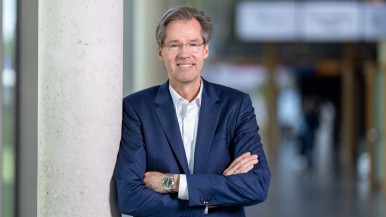
No5 Interview 07.09.2011 Unsere Verantwortung Dialog Christof Bosch and Ernst Ulrich von Weizsäcker
Zitat: “Sustainability arises from the sum total of interactions between civilization and nature.”
Christof Bosch
Mr. von Weizsäcker, Mr. Bosch, what does sustainability mean to you?
Ernst von Weizsäcker: Future generations should not be worse off than ours. But when you consider that the world's population is heading for the ten billion mark and beyond, then future generations by definition will be incomparably worse off unless we make changes in our lifestyle and our behavior. What's more, fairness and long-term success are also significant aspects of sustainability.
Christof Bosch: The fundamental definition – which is development designed not to destroy the basis for future generations' existence – seems quite clear to me. But what specifically is sustainability? This question is anything but simple. That's because sustainability is not something that can be isolated in the social, economic, or political arena; nor is it scientifically quantifiable. Sustainability arises from the sum total of interactions between civilization and nature. And defining the sum of these interactions is tremendously difficult. I would say it's all about intelligent development – intelligent meaning above all creating the best possible conditions such that future generations won't automatically be so much worse off than we are today.
And what will that take?
Christof Bosch: To achieve that, we need intelligent development that increases the potential available to us on this earth.
Ernst von Weizsäcker: I would fully agree with that. Natural resources should remain the basis of life for future generations; as things stand, crude technologies, greed, ill-conceived incentives, and the like still result in intolerable waste. If we want to leverage this potential, we need to pool the best engineering minds, establish globally recognized regulations, and create a global sense of shared responsibility, the first signs of which we are starting to see in Europe today. That would be a blessing for the two hundred or so countries on the planet.
Christof Bosch: Absolutely. Sustainability can only work if it is part of the equation from the outset. When we make something, whatever it may be, we have to consider right from day one, during the development phase, whether it will be compatible with future needs under foreseeable conditions. That does not in any way imply opposition to growth; we'll need a vast amount of positive growth to meet the challenges we face. But it does mean that growth must be intelligent.
High-tech companies such as the Bosch Group need to invest their energies and their collective global expertise in developing products that will truly make people's lives easier. That can only mean creating products that are sustainable, responsible in their use of resources, and energy-efficient. Technical solutions need to help us master the major challenges of today and tomorrow, and also offer jobs with adequate income to ensure good quality of life for workers. That is part of sustainability, too.
Ernst von Weizsäcker: Yes, replacing gigajoules or kilowatt hours with systems control and intelligence – that's an area where Bosch as a technology company and other similar enterprises can play a big part, with the aim of achieving a factor of five in the increase of resource productivity, which I feel is absolutely essential for the global economy. Companies that play a leading role here will guarantee their own long-term success. To do that, these companies need to harness the combined expertise of their entire workforce, especially of their engineers, to define the tasks they face and generate technological solutions.
Christof Bosch: I really do believe that if you set out to develop products that are truly invented for life, it's vital that the creative minds tasked with developing those products have a broad interest in the global issues of the future. Creativity can't really be planned; all you can do is create conditions where it can flourish. The key to making sustainable products is raising awareness of what is expected of these products in the hearts and minds of the people who develop them. That they should go easy on resources, that they should offer a high level of benefit over a long period of time, and so on. And I believe the only way to achieve that is by educating the people in development as well as the decision makers. I think a lot is happening in that sphere: my own observations would certainly seem to indicate that this is the case. But in my view it's definitely a huge challenge for companies to understand that ecological issues have to do with training and that tackling questions of global development is not a luxury. Workers need knowledge to base their decisions on.
Why can't the global community move faster to tackle the sustainability issue effectively in the long term with an appropriate framework?
Ernst von Weizsäcker: Let me answer that with economic theory. Today's prevailing theory is rooted in Adam Smith, who put forward the view that an individual pursuing his own interest also promotes that of society. He said that at a time when the geographic scope of the market and the geographic scope of the law were identical. Today, we live in a world where markets are global and laws are national. The upshot is that global conglomerates tend to be rewarded for seeking out the country with the weakest laws where they can turn the largest profit, so they can then report to the happy shareholders that their plan worked out. So if you ask me what has to come first, my answer is: global laws.
Today, however, not even the ILO's international labor standards are applied, to say nothing of ecological standards. Given that, it's no wonder that the big winners tend to be those who are the least scrupulous about exploiting natural resources, with the exception of the companies whose customer base demands ethical behavior and decency.
Christof Bosch: I don't think it's necessarily true that the companies that most recklessly destroy the environment will automatically come out on top in the long run. Sadly, in the short term, it does seem that way. But companies with such practices have a very hard time retaining good staff and establishing a corporate culture that truly fosters innovation. Companies like that have internal problems and tensions that, in my view, make it tough for them to survive in the long term. Our problem is less a system that lacks the fundamental will to generate sensible rules and regulations on a global scale; our problem is the incredible pace of change and the fact that people and societies need time to establish rules that can keep up with these seismic shifts. I think what we're seeing at the moment is the laborious emergence of just such a global regulatory system – one that will allow us to create as much freedom and order as a functioning economy needs. Whether we manage to create that system fast enough – I think that's a big question, but I don't see a fundamental lack of will. The trouble is that we're in the unfortunate situation of having to get through this process so quickly.
Ernst von Weizsäcker: Yes. Take the empirical experience of the FTSE4Good. The Financial Times Stock Exchange Index – or the FTSE, as it's known for short – is the traditional one, and then there's an index for “good,” responsible companies, whose growth rate is better than the overall average. There's the empirical evidence for what you're saying. But that doesn't negate what I called for a moment ago, namely that we need to aim for global laws. Even before we get that far, though, we can still work toward making sure responsible action is rewarded, including financially. And, of course, that includes customer loyalty, staff loyalty, conserving resources, and much more besides. You can then still attach importance to – and focus your energies on – ensuring that national laws support responsible companies rather than penalizing them. Take short-time compensation, an instrument the state uses to help companies during tough times. This would certainly have been in line with the principles of your company founder, Robert Bosch, not to have to fire associates unless absolutely necessary. In Germany we have that option. But not in the U.S., so – surprise, surprise – when the financial crisis erupted in 2008, American companies were forced to let a lot of good people go. Bosch, however, didn't need to do that, nor did the German automakers, so it was all much less harsh. Later, when demand picked up again, the good people were still on board. That's one example of legitimate and successful cooperation between the state and the private sector. You could say the same thing about national and international environmental and social welfare laws. Social stability is valuable for companies as well.
Christof Bosch: In my view, the state and supranational organizations are of vital importance in keeping the markets functioning. To say that Adam Smith called for a free market, and that he meant “no rules,” is to distort his philosophy from a false historical perspective. He lived at a time when the rules were extremely narrow and restrictive, and he said more freedom of movement was needed for the best possible developments to take shape. The market's need for rules was still a given at that time, so he simply didn't focus on it. That's still true today; markets only work when they have rules. We're witnessing in the world of finance right now how a lack of rules causes the market to become terribly inefficient. When the rules are unsound, the market doesn't work.
How do you create a culture of sustainability in a field like politics, where the long-term perspective doesn't really figure in? And how do you retain the long-term perspective in a company?
Christof Bosch: I was in China recently, where I spoke with quite a few Bosch associates. I experienced something I found incredibly moving: even in China, they don't think of Robert Bosch and the values he embodied as remote, something from the company you happen to be working for now that's based in far-off Germany. Instead, there's a direct and relevant relationship with this person. I witnessed a huge willingness to delve into the convictions Robert Bosch held, a great interest in understanding them better. It gives me the sense that a global culture is actually taking shape. We can understand each other better today than we ever could have decades ago. That experience fills me with optimism. It lets me believe that these globally emerging networks – which are, of course, supported by digital paths – actually have what it takes to create the foundation for rules practicable on an international or global scale. I think that's the main problem: establishing global laws calls for social solidarity to support them. That's the only way laws can work. And a global network is developing right now before our very eyes, so it will probably become more and more feasible for globally acceptable laws to be established. But it will take this very intensive, personal network to achieve it. In fact, helping to evolve this network is probably one of the most important contributions multinational companies can make.
Ernst von Weizsäcker: There is talk, for example, of establishing an ombudsman for future generations, incorporated into the constitution or made in some other way a firm part of a parliamentary democracy. Or there are the inalienable passages in the constitution: the first articles cannot be voided by democratic majorities. That includes human rights, for instance. In other words, certain aspects already enjoy a broad and lasting cultural consensus.
Christof Bosch: There's another important aspect: self-interest is one of humankind's primary driving forces. To me, the problem seems to be the definition of what self-interest actually is. Again, it's all about the time frame. When you think of self-interest as stretching and defining itself across generations – whether you're talking about a family business or a culture in which the good of the children and the good of the elderly are considered important to your own well-being – then decisions that promote self-interest turn out completely differently. That's because suddenly things serve your self-interest that have to do with the stability of society as a whole as well as with creating or maintaining the conditions needed to make sure your own children have a good life. And defining self-interest that way eliminates the extreme conflict where a higher stock market value a year down the road appears to serve my interests better than asking myself whether the measures I implement in the company might seriously damage the standard of living in some country somewhere on this planet.
What can the Robert Bosch Stiftung do to promote sustainable development?
Christof Bosch: In everything it does, the Robert Bosch Stiftung can support the sustainable development of society and the company. Whether it's about promoting healthcare, education, or international relations – the three main pillars of the Robert Bosch Stiftung are based on the concept of sustainability and are also directly interconnected.
If we want to focus on healthcare, progress will only be possible if we also keep an eye on the big issues concerning global nutrition and global health – if we understand our own global culture, in other words. Then it's clear that sustainability and health are essentially the same issue. Or let's look at international understanding, and consider what we were discussing. If we need some kind of global social contract in order to master challenges, then sustainability and international understanding are basically about the same thing. And these are obviously education issues as well. What is education all about, what do we really need to learn? We need to be smart enough, to know enough, to develop sufficient understanding on various levels so we can keep our bearings during these times of tremendous change. The Robert Bosch Stiftung will pursue its work to advance the social aspects of sustainability on our planet in the years ahead.
Ernst von Weizsäcker: When you think of education, you typically think of children and teenagers. I am very pleased to see that Robert Bosch GmbH strategically works toward keeping older associates in the workforce longer. That is also a way to promote education.
Does a foundation tend to strengthen a company in the long term?
Ernst von Weizsäcker: Time magazine ran an article in March 2011 entitled “How Germany became the China of Europe.” As a positive aspect, the article highlighted the many strong family-owned businesses in Germany that consider long-term innovative strength and sustainability more important than the last quarterly report. That's part of the answer to your question. But it also mentioned a few other valid points, such as short-time compensation and how companies in Germany were quick to see the sense in ecologically sound technologies. There was also the educational system, in this case vocational training, where basic education and practical training work together in sync rather than the one looking down snobbishly on the other. I have quoted Time magazine instead of answering the question, but the answer is right there:
Strong family-owned businesses that consider long-term innovative strength and sustainability more important than the last quarterly report have a very good basis for lasting success. And having a foundation as the majority shareholder will tend to strengthen a company even further in the long term.
Christof Bosch: It has to be said that Bosch simply had the great good fortune to have had a founder who took his company so seriously and arranged his legacy in such a way as to make the Stiftung possible. It's not something to take for granted, and not many companies have that opportunity. Robert Bosch left his mark both on the company and on the family. The older we get, the more we sense how strongly his stamp was ingrained in us during our childhood and teenage years, and in everything we got from our parents. In my view, our responsibility is to a large extent to pass on the parts of this tradition that we consider to be right. And one thing my grandfather passed on is the crystal-clear message that this asset – this property – is not here for our own private gratification; rather, this asset obliges us to help carry on this company, to help it continue to grow fruitfully for a long time to come, because so many people's welfare depends on it. This conviction has been passed down through three generations, and it is our responsibility to keep it alive.
And how do you see the potential conflicts between sustainability and growth?
Christof Bosch: The idea that sustainability means zero growth is completely off-target! But it's an idea that is very popular, despite what the economists say. If we don't constantly direct our efforts toward creating growth in forward-looking developments, we will not be able to develop our company. And if the company doesn't develop, it will not survive, so it won't be able to produce the technical solutions for the major challenges of the present and the future. Sustainability that simply consists in saying we'll maintain the status quo? That can't work. In my understanding, sustainability is an absolutely dynamic principle, and in forestry, where the term originated, it's obvious: operations that have achieved sustainability are not the ones where nothing grows, but the ones that are highly productive and dynamic while maintaining a balance. They cut down plenty of trees, because if they didn't, they'd lose their sustainability. A sustainable operation produces high yields and, when this sustainable operation is run well, its yields can continue to grow. You don't define a sustainable company as one that simply maintains a steady yield. It's one that uses productive forces so that this year's harvest, rather than having a negative impact on future productivity, will in fact strengthen the productive forces in their entirety at every stage in the system. Long-term growth is only possible when this sustainable balance is integrated.
Ernst von Weizsäcker: The word “growth” is deceptive. The destruction of the Amazon rain forest that's happening right now shows up in the statistics as growth, but physically speaking, it's destruction. So we also need to learn to apply better yardsticks and to make these better yardsticks the basis for our reward systems. In many places today, destroying the environment is financially rewarded rather than penalized.
Christof Bosch: The key is the quality of growth, what it's based on. Right now, many people fear that private consumption might not be strong enough, because that would inevitably push us into the next crisis. And that's a typical example of how the perspective is wrong: if people don't consume more than before, the economy will become less dynamic, and then the system will collapse – like a bicycle that slows down and finally falls over. But this completely ignores the huge tasks we face. When we tackle them, when we devote our energies to developing products and establishing the methods we really need, there's enormous dynamic potential to create jobs and provide stability. That calls for policies that support sustainable choices. If we create the conditions in which consumers can choose a utility company that generates a greater share of its power from renewable sources, or can be confident that the batteries they use really get recycled and so on, then we'll be on the right track. With policies that allow individual consumer choices to help make the economy more sustainable, we'd have growth potential we can only dream of today.
Ernst von Weizsäcker: I feel almost exactly the same way. In chapter nine of my book Factor Five, I outlined a political strategy I am convinced would generate this dynamic and secure it over the long term. Countries and businesses that embrace this approach would be extremely successful, and this on a lasting basis. But it's a terribly unpopular strategy to say we should increase the price of energy and other resources every year by exactly the same amount as efficiency in the use of these resources increased during the previous year; that way, on average you don't spend any more per month on energy and resources than before. But only those who buy into this dynamic of efficiency improvement will prosper, while the others will have a harder time. And that is essentially the system of incentives we need to generate dynamism in innovation, the kind of dynamism that will promote the sustainable development of a country or a company and create competitive advantages as well as added value and added prosperity for decades to come. The whole system is a lesson learned from the huge success story of the industrial revolution over the last 150 years, in which Bosch, of course, has played a very positive role. During that era, labor productivity has increased twentyfold while salaries and gross wage costs have also increased twentyfold. And if social policy had never existed and wages had remained at preindustrial levels, the whole dynamic in the growth in labor productivity, which has created such incredible prosperity, would never have happened. Today, there is no shortage of labor – but there is a definite shortage of resources. And if you make that scarce factor increasingly more efficient, you've got a great recipe for success. I am happy to see that, long, long before such bold ideas as mine take political hold, Bosch has been pursuing this very course.
Christof Bosch: We have instituted an international climate change process, but it is making terribly slow progress – that indicates the degree of the dilemma. Obviously the forces pushing for a globally balanced system are strong. Just look how intensively we're grappling with climate issues today. In my view, that would have been unthinkable just a few decades ago. So there has been robust development. At the same time, the destabilizing dynamic is also extremely powerful – and which of the two will ultimately prevail, I wouldn't venture to predict. But I am optimistic in that I do actually encounter these forces a lot, forces which I could basically describe as a global change in awareness.
More
Christof Bosch
Mr. von Weizsäcker, Mr. Bosch, what does sustainability mean to you?
Ernst von Weizsäcker: Future generations should not be worse off than ours. But when you consider that the world's population is heading for the ten billion mark and beyond, then future generations by definition will be incomparably worse off unless we make changes in our lifestyle and our behavior. What's more, fairness and long-term success are also significant aspects of sustainability.
Christof Bosch: The fundamental definition – which is development designed not to destroy the basis for future generations' existence – seems quite clear to me. But what specifically is sustainability? This question is anything but simple. That's because sustainability is not something that can be isolated in the social, economic, or political arena; nor is it scientifically quantifiable. Sustainability arises from the sum total of interactions between civilization and nature. And defining the sum of these interactions is tremendously difficult. I would say it's all about intelligent development – intelligent meaning above all creating the best possible conditions such that future generations won't automatically be so much worse off than we are today.
And what will that take?
Christof Bosch: To achieve that, we need intelligent development that increases the potential available to us on this earth.
Ernst von Weizsäcker: I would fully agree with that. Natural resources should remain the basis of life for future generations; as things stand, crude technologies, greed, ill-conceived incentives, and the like still result in intolerable waste. If we want to leverage this potential, we need to pool the best engineering minds, establish globally recognized regulations, and create a global sense of shared responsibility, the first signs of which we are starting to see in Europe today. That would be a blessing for the two hundred or so countries on the planet.
Christof Bosch: Absolutely. Sustainability can only work if it is part of the equation from the outset. When we make something, whatever it may be, we have to consider right from day one, during the development phase, whether it will be compatible with future needs under foreseeable conditions. That does not in any way imply opposition to growth; we'll need a vast amount of positive growth to meet the challenges we face. But it does mean that growth must be intelligent.
High-tech companies such as the Bosch Group need to invest their energies and their collective global expertise in developing products that will truly make people's lives easier. That can only mean creating products that are sustainable, responsible in their use of resources, and energy-efficient. Technical solutions need to help us master the major challenges of today and tomorrow, and also offer jobs with adequate income to ensure good quality of life for workers. That is part of sustainability, too.
Ernst von Weizsäcker: Yes, replacing gigajoules or kilowatt hours with systems control and intelligence – that's an area where Bosch as a technology company and other similar enterprises can play a big part, with the aim of achieving a factor of five in the increase of resource productivity, which I feel is absolutely essential for the global economy. Companies that play a leading role here will guarantee their own long-term success. To do that, these companies need to harness the combined expertise of their entire workforce, especially of their engineers, to define the tasks they face and generate technological solutions.
Christof Bosch: I really do believe that if you set out to develop products that are truly invented for life, it's vital that the creative minds tasked with developing those products have a broad interest in the global issues of the future. Creativity can't really be planned; all you can do is create conditions where it can flourish. The key to making sustainable products is raising awareness of what is expected of these products in the hearts and minds of the people who develop them. That they should go easy on resources, that they should offer a high level of benefit over a long period of time, and so on. And I believe the only way to achieve that is by educating the people in development as well as the decision makers. I think a lot is happening in that sphere: my own observations would certainly seem to indicate that this is the case. But in my view it's definitely a huge challenge for companies to understand that ecological issues have to do with training and that tackling questions of global development is not a luxury. Workers need knowledge to base their decisions on.
Why can't the global community move faster to tackle the sustainability issue effectively in the long term with an appropriate framework?
Ernst von Weizsäcker: Let me answer that with economic theory. Today's prevailing theory is rooted in Adam Smith, who put forward the view that an individual pursuing his own interest also promotes that of society. He said that at a time when the geographic scope of the market and the geographic scope of the law were identical. Today, we live in a world where markets are global and laws are national. The upshot is that global conglomerates tend to be rewarded for seeking out the country with the weakest laws where they can turn the largest profit, so they can then report to the happy shareholders that their plan worked out. So if you ask me what has to come first, my answer is: global laws.
Today, however, not even the ILO's international labor standards are applied, to say nothing of ecological standards. Given that, it's no wonder that the big winners tend to be those who are the least scrupulous about exploiting natural resources, with the exception of the companies whose customer base demands ethical behavior and decency.
Christof Bosch: I don't think it's necessarily true that the companies that most recklessly destroy the environment will automatically come out on top in the long run. Sadly, in the short term, it does seem that way. But companies with such practices have a very hard time retaining good staff and establishing a corporate culture that truly fosters innovation. Companies like that have internal problems and tensions that, in my view, make it tough for them to survive in the long term. Our problem is less a system that lacks the fundamental will to generate sensible rules and regulations on a global scale; our problem is the incredible pace of change and the fact that people and societies need time to establish rules that can keep up with these seismic shifts. I think what we're seeing at the moment is the laborious emergence of just such a global regulatory system – one that will allow us to create as much freedom and order as a functioning economy needs. Whether we manage to create that system fast enough – I think that's a big question, but I don't see a fundamental lack of will. The trouble is that we're in the unfortunate situation of having to get through this process so quickly.
Ernst von Weizsäcker: Yes. Take the empirical experience of the FTSE4Good. The Financial Times Stock Exchange Index – or the FTSE, as it's known for short – is the traditional one, and then there's an index for “good,” responsible companies, whose growth rate is better than the overall average. There's the empirical evidence for what you're saying. But that doesn't negate what I called for a moment ago, namely that we need to aim for global laws. Even before we get that far, though, we can still work toward making sure responsible action is rewarded, including financially. And, of course, that includes customer loyalty, staff loyalty, conserving resources, and much more besides. You can then still attach importance to – and focus your energies on – ensuring that national laws support responsible companies rather than penalizing them. Take short-time compensation, an instrument the state uses to help companies during tough times. This would certainly have been in line with the principles of your company founder, Robert Bosch, not to have to fire associates unless absolutely necessary. In Germany we have that option. But not in the U.S., so – surprise, surprise – when the financial crisis erupted in 2008, American companies were forced to let a lot of good people go. Bosch, however, didn't need to do that, nor did the German automakers, so it was all much less harsh. Later, when demand picked up again, the good people were still on board. That's one example of legitimate and successful cooperation between the state and the private sector. You could say the same thing about national and international environmental and social welfare laws. Social stability is valuable for companies as well.
Christof Bosch: In my view, the state and supranational organizations are of vital importance in keeping the markets functioning. To say that Adam Smith called for a free market, and that he meant “no rules,” is to distort his philosophy from a false historical perspective. He lived at a time when the rules were extremely narrow and restrictive, and he said more freedom of movement was needed for the best possible developments to take shape. The market's need for rules was still a given at that time, so he simply didn't focus on it. That's still true today; markets only work when they have rules. We're witnessing in the world of finance right now how a lack of rules causes the market to become terribly inefficient. When the rules are unsound, the market doesn't work.
How do you create a culture of sustainability in a field like politics, where the long-term perspective doesn't really figure in? And how do you retain the long-term perspective in a company?
Christof Bosch: I was in China recently, where I spoke with quite a few Bosch associates. I experienced something I found incredibly moving: even in China, they don't think of Robert Bosch and the values he embodied as remote, something from the company you happen to be working for now that's based in far-off Germany. Instead, there's a direct and relevant relationship with this person. I witnessed a huge willingness to delve into the convictions Robert Bosch held, a great interest in understanding them better. It gives me the sense that a global culture is actually taking shape. We can understand each other better today than we ever could have decades ago. That experience fills me with optimism. It lets me believe that these globally emerging networks – which are, of course, supported by digital paths – actually have what it takes to create the foundation for rules practicable on an international or global scale. I think that's the main problem: establishing global laws calls for social solidarity to support them. That's the only way laws can work. And a global network is developing right now before our very eyes, so it will probably become more and more feasible for globally acceptable laws to be established. But it will take this very intensive, personal network to achieve it. In fact, helping to evolve this network is probably one of the most important contributions multinational companies can make.
Ernst von Weizsäcker: There is talk, for example, of establishing an ombudsman for future generations, incorporated into the constitution or made in some other way a firm part of a parliamentary democracy. Or there are the inalienable passages in the constitution: the first articles cannot be voided by democratic majorities. That includes human rights, for instance. In other words, certain aspects already enjoy a broad and lasting cultural consensus.
Christof Bosch: There's another important aspect: self-interest is one of humankind's primary driving forces. To me, the problem seems to be the definition of what self-interest actually is. Again, it's all about the time frame. When you think of self-interest as stretching and defining itself across generations – whether you're talking about a family business or a culture in which the good of the children and the good of the elderly are considered important to your own well-being – then decisions that promote self-interest turn out completely differently. That's because suddenly things serve your self-interest that have to do with the stability of society as a whole as well as with creating or maintaining the conditions needed to make sure your own children have a good life. And defining self-interest that way eliminates the extreme conflict where a higher stock market value a year down the road appears to serve my interests better than asking myself whether the measures I implement in the company might seriously damage the standard of living in some country somewhere on this planet.
What can the Robert Bosch Stiftung do to promote sustainable development?
Christof Bosch: In everything it does, the Robert Bosch Stiftung can support the sustainable development of society and the company. Whether it's about promoting healthcare, education, or international relations – the three main pillars of the Robert Bosch Stiftung are based on the concept of sustainability and are also directly interconnected.
If we want to focus on healthcare, progress will only be possible if we also keep an eye on the big issues concerning global nutrition and global health – if we understand our own global culture, in other words. Then it's clear that sustainability and health are essentially the same issue. Or let's look at international understanding, and consider what we were discussing. If we need some kind of global social contract in order to master challenges, then sustainability and international understanding are basically about the same thing. And these are obviously education issues as well. What is education all about, what do we really need to learn? We need to be smart enough, to know enough, to develop sufficient understanding on various levels so we can keep our bearings during these times of tremendous change. The Robert Bosch Stiftung will pursue its work to advance the social aspects of sustainability on our planet in the years ahead.
Ernst von Weizsäcker: When you think of education, you typically think of children and teenagers. I am very pleased to see that Robert Bosch GmbH strategically works toward keeping older associates in the workforce longer. That is also a way to promote education.
Does a foundation tend to strengthen a company in the long term?
Ernst von Weizsäcker: Time magazine ran an article in March 2011 entitled “How Germany became the China of Europe.” As a positive aspect, the article highlighted the many strong family-owned businesses in Germany that consider long-term innovative strength and sustainability more important than the last quarterly report. That's part of the answer to your question. But it also mentioned a few other valid points, such as short-time compensation and how companies in Germany were quick to see the sense in ecologically sound technologies. There was also the educational system, in this case vocational training, where basic education and practical training work together in sync rather than the one looking down snobbishly on the other. I have quoted Time magazine instead of answering the question, but the answer is right there:
Strong family-owned businesses that consider long-term innovative strength and sustainability more important than the last quarterly report have a very good basis for lasting success. And having a foundation as the majority shareholder will tend to strengthen a company even further in the long term.
Christof Bosch: It has to be said that Bosch simply had the great good fortune to have had a founder who took his company so seriously and arranged his legacy in such a way as to make the Stiftung possible. It's not something to take for granted, and not many companies have that opportunity. Robert Bosch left his mark both on the company and on the family. The older we get, the more we sense how strongly his stamp was ingrained in us during our childhood and teenage years, and in everything we got from our parents. In my view, our responsibility is to a large extent to pass on the parts of this tradition that we consider to be right. And one thing my grandfather passed on is the crystal-clear message that this asset – this property – is not here for our own private gratification; rather, this asset obliges us to help carry on this company, to help it continue to grow fruitfully for a long time to come, because so many people's welfare depends on it. This conviction has been passed down through three generations, and it is our responsibility to keep it alive.
And how do you see the potential conflicts between sustainability and growth?
Christof Bosch: The idea that sustainability means zero growth is completely off-target! But it's an idea that is very popular, despite what the economists say. If we don't constantly direct our efforts toward creating growth in forward-looking developments, we will not be able to develop our company. And if the company doesn't develop, it will not survive, so it won't be able to produce the technical solutions for the major challenges of the present and the future. Sustainability that simply consists in saying we'll maintain the status quo? That can't work. In my understanding, sustainability is an absolutely dynamic principle, and in forestry, where the term originated, it's obvious: operations that have achieved sustainability are not the ones where nothing grows, but the ones that are highly productive and dynamic while maintaining a balance. They cut down plenty of trees, because if they didn't, they'd lose their sustainability. A sustainable operation produces high yields and, when this sustainable operation is run well, its yields can continue to grow. You don't define a sustainable company as one that simply maintains a steady yield. It's one that uses productive forces so that this year's harvest, rather than having a negative impact on future productivity, will in fact strengthen the productive forces in their entirety at every stage in the system. Long-term growth is only possible when this sustainable balance is integrated.
Ernst von Weizsäcker: The word “growth” is deceptive. The destruction of the Amazon rain forest that's happening right now shows up in the statistics as growth, but physically speaking, it's destruction. So we also need to learn to apply better yardsticks and to make these better yardsticks the basis for our reward systems. In many places today, destroying the environment is financially rewarded rather than penalized.
Christof Bosch: The key is the quality of growth, what it's based on. Right now, many people fear that private consumption might not be strong enough, because that would inevitably push us into the next crisis. And that's a typical example of how the perspective is wrong: if people don't consume more than before, the economy will become less dynamic, and then the system will collapse – like a bicycle that slows down and finally falls over. But this completely ignores the huge tasks we face. When we tackle them, when we devote our energies to developing products and establishing the methods we really need, there's enormous dynamic potential to create jobs and provide stability. That calls for policies that support sustainable choices. If we create the conditions in which consumers can choose a utility company that generates a greater share of its power from renewable sources, or can be confident that the batteries they use really get recycled and so on, then we'll be on the right track. With policies that allow individual consumer choices to help make the economy more sustainable, we'd have growth potential we can only dream of today.
Ernst von Weizsäcker: I feel almost exactly the same way. In chapter nine of my book Factor Five, I outlined a political strategy I am convinced would generate this dynamic and secure it over the long term. Countries and businesses that embrace this approach would be extremely successful, and this on a lasting basis. But it's a terribly unpopular strategy to say we should increase the price of energy and other resources every year by exactly the same amount as efficiency in the use of these resources increased during the previous year; that way, on average you don't spend any more per month on energy and resources than before. But only those who buy into this dynamic of efficiency improvement will prosper, while the others will have a harder time. And that is essentially the system of incentives we need to generate dynamism in innovation, the kind of dynamism that will promote the sustainable development of a country or a company and create competitive advantages as well as added value and added prosperity for decades to come. The whole system is a lesson learned from the huge success story of the industrial revolution over the last 150 years, in which Bosch, of course, has played a very positive role. During that era, labor productivity has increased twentyfold while salaries and gross wage costs have also increased twentyfold. And if social policy had never existed and wages had remained at preindustrial levels, the whole dynamic in the growth in labor productivity, which has created such incredible prosperity, would never have happened. Today, there is no shortage of labor – but there is a definite shortage of resources. And if you make that scarce factor increasingly more efficient, you've got a great recipe for success. I am happy to see that, long, long before such bold ideas as mine take political hold, Bosch has been pursuing this very course.
Christof Bosch: We have instituted an international climate change process, but it is making terribly slow progress – that indicates the degree of the dilemma. Obviously the forces pushing for a globally balanced system are strong. Just look how intensively we're grappling with climate issues today. In my view, that would have been unthinkable just a few decades ago. So there has been robust development. At the same time, the destabilizing dynamic is also extremely powerful – and which of the two will ultimately prevail, I wouldn't venture to predict. But I am optimistic in that I do actually encounter these forces a lot, forces which I could basically describe as a global change in awareness.
Add to my press materials
- April 26, 2012
- Interview
- Business/economy
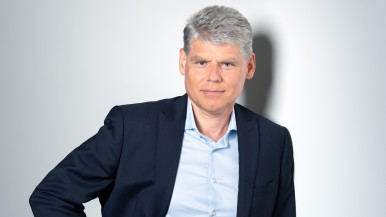
No4 Interview 24.10.2011 Consumer Goods and Building Technology Dialog Friedbert Klefenz and Ramona Günnewicht
Egbert Schneider,
Senior Vice President Engineering, Power Tools
Fritz Baumann,
retiree, BMS associate many
Quote: “It's just like in an orchestra. Simply fine-tuning a product's functionality is no longer enough these days.”
Egbert Schneider
Dialog:
Mr. Schneider, Mr. Baumann, Power Tools launches a wealth of innovative products every year. Which of them do you find especially intriguing?
Schneider: I'm very pleased with the success of our oscillating tool – a little device that uses rapid vibrations to perform a whole variety of sanding and cutting tasks. It's a proven idea that we have reinterpreted, enhancing costs and benefits to make it attractive for do-it-yourselfers as well. This is a great innovative product with huge market potential.
Baumann: During my career at Bosch, I set up plenty of production lines. That's why I'm most familiar with and can best appreciate process-related innovation.
This involves a lot of work. Especially when setting up a new line calls for various materials and machines from all over the world to be put together to form a functioning system.
Innovations are an essential part of the success of Power Tools. How do you achieve this innovative strength?
Schneider: One vital element is customer focus. For us, this means we need to understand the problems and challenges users face, and then come up with new tools based on that knowledge. Ideally, that involves a process of intense sparring. The marketing expert might say, for example: it would be great if we had a power tool just ten centimeters long. Customers would like that. And then the engineer, once he has thrown his hands into the air and yelled that it can't be done, takes up the challenge and works on producing the smallest possible model.
Baumann: But then manufacturing still has to be able to produce the innovations they want! If marketing and development say the motor also has to deliver 20 percent more output, then we have to think: can I get the additional copper wire that's required to actually fit inside this motor?
Schneider: Exactly. It's just like in an orchestra. Simply fine-tuning a product's functionality is no longer enough these days. Marketing and development, manufacturing, quality assurance, and purchasing all have to work in harmony. And someone has to make sure they play the right notes in the right order. That's the only way we can be fast enough to beat the competition from all over the world, especially Asian competitors. Today, it takes us only eleven and a half months on average to get a product from kick-off to readiness for series production.
Baumann: What really speeded things up was the competition from China. At some point, the world was suddenly flooded with cheap products from the Far East, and Bosch had to react. At our Asian locations, we moved away from a strong focus on automation and went back to performing many operations by hand or using simple machines.
Schneider: We were amazed at how cheaply devices are sold there. Of course, we noticed the shortcomings in quality in the first products from Asia. But we also saw that a quick learning process was taking place there. The challenge we were confronted with was: how can I guarantee the Bosch quality people expect while making my products at lower cost using simplified processes? Since then, however, we have found a way to hold our own in this and other markets without blindly joining in the cheap-segment price wars.
What does this involve?
Schneider: When somebody asks me today what an innovation is, I always pull out a leaflet from a DIY center. It shows pictures of five tools: in the middle there's a 3.6-volt Bosch Ixo for 49 euros. And then come the other brands: at the top left is a compound miter saw for 39 euros, under that an 18-volt cordless screwdriver with two nickel batteries for 18 euros 90, and at the very bottom a big hammer drill for 36 euros. Its message: If my products are boring and unattractive, then people won't pay a lot for them. But if they're interesting, if people want to have them because they say, “That's really cool, that Ixo,” they'll invest the 49 euros. The Ixo's success is partly due to the special package – the metal case – we sell it in, which brings me back to what we were just talking about. Try that in a purely tech-driven organization. You can hear them now: “A power tool in a cookie tin? Ridiculous!” Here again, we see how important it is for the various people and functions within our company to interact.
Mr. Baumann, while you were a Bosch associate during the 1980s and 1990s, the main challenges you faced must have been completely different, mustn't they?
Baumann: The pace has definitely picked up. When we set up an assembly line in the old days, we were given a year and a half from the order through to the start of production. Now lines are expected to be set up within six months. But you have to accept that times were different then. The challenges are completely different today.
And as a Bosch Management Support (BMS) associate, you are stepping up to those challenges?
Baumann: Yes, I've been working with BMS ever since I officially retired in 2006. A little while ago, I trained new associates in operations scheduling at Power Tools in Leinfelden. Before that, I spent two and a half years helping set up our plant in Engels, Russia, and getting the production lines there up and running. During that time, I worked an average of 23 days a month. BMS really looked after me very well throughout, taking care of all the administrative stuff like travel arrangements and insurance. Which left me with the job of supporting my colleagues.
So just putting your feet up and enjoying retirement is not for you?
Baumann: There are people who see retirement as turning in their badge and never looking back. I don't feel that way. I always really enjoyed my work at Bosch, and that's not something that simply stops on your last official day at work. Not only that – it's good to know you're still in demand.
Schneider: Your in-depth knowledge is absolutely essential to us. In many areas within Power Tools, we're trying to make knowledge management less dependent on individuals. But in some fields, seasoned associates' expertise is so important. Of course, the extent to which we can leverage this know-how depends very much on the individual case. You, Mr. Baumann, have the necessary skills at your command so that other associates acknowledge you as an expert. Plus, you're also very good at dealing with people. That's just one more reason we hope you'll help us again soon with a new project in China.
Baumann: Mutual acceptance is really the key. That's something the corporate culture at Bosch fosters. Of course, you can't afford to be preachy. After all, old hands like us can also learn a lot from the youngsters – when it comes to computers, for instance.
Mr. Schneider, even though your own retirement is still a long way off, does seeing Mr. Baumann's activities whet your appetite for working with BMS?
Schneider: Definitely. As long as I still enjoy my work and my skills are needed, Bosch can count on me. It's an interesting concept, not to suddenly plunge into retirement – a completely different chapter in your life – but to ease into it gently, and to be able to put the knowledge you accumulated during all those years to work. And it's a source of satisfaction as well.
More
Senior Vice President Engineering, Power Tools
Fritz Baumann,
retiree, BMS associate many
Quote: “It's just like in an orchestra. Simply fine-tuning a product's functionality is no longer enough these days.”
Egbert Schneider
Dialog:
Mr. Schneider, Mr. Baumann, Power Tools launches a wealth of innovative products every year. Which of them do you find especially intriguing?
Schneider: I'm very pleased with the success of our oscillating tool – a little device that uses rapid vibrations to perform a whole variety of sanding and cutting tasks. It's a proven idea that we have reinterpreted, enhancing costs and benefits to make it attractive for do-it-yourselfers as well. This is a great innovative product with huge market potential.
Baumann: During my career at Bosch, I set up plenty of production lines. That's why I'm most familiar with and can best appreciate process-related innovation.
This involves a lot of work. Especially when setting up a new line calls for various materials and machines from all over the world to be put together to form a functioning system.
Innovations are an essential part of the success of Power Tools. How do you achieve this innovative strength?
Schneider: One vital element is customer focus. For us, this means we need to understand the problems and challenges users face, and then come up with new tools based on that knowledge. Ideally, that involves a process of intense sparring. The marketing expert might say, for example: it would be great if we had a power tool just ten centimeters long. Customers would like that. And then the engineer, once he has thrown his hands into the air and yelled that it can't be done, takes up the challenge and works on producing the smallest possible model.
Baumann: But then manufacturing still has to be able to produce the innovations they want! If marketing and development say the motor also has to deliver 20 percent more output, then we have to think: can I get the additional copper wire that's required to actually fit inside this motor?
Schneider: Exactly. It's just like in an orchestra. Simply fine-tuning a product's functionality is no longer enough these days. Marketing and development, manufacturing, quality assurance, and purchasing all have to work in harmony. And someone has to make sure they play the right notes in the right order. That's the only way we can be fast enough to beat the competition from all over the world, especially Asian competitors. Today, it takes us only eleven and a half months on average to get a product from kick-off to readiness for series production.
Baumann: What really speeded things up was the competition from China. At some point, the world was suddenly flooded with cheap products from the Far East, and Bosch had to react. At our Asian locations, we moved away from a strong focus on automation and went back to performing many operations by hand or using simple machines.
Schneider: We were amazed at how cheaply devices are sold there. Of course, we noticed the shortcomings in quality in the first products from Asia. But we also saw that a quick learning process was taking place there. The challenge we were confronted with was: how can I guarantee the Bosch quality people expect while making my products at lower cost using simplified processes? Since then, however, we have found a way to hold our own in this and other markets without blindly joining in the cheap-segment price wars.
What does this involve?
Schneider: When somebody asks me today what an innovation is, I always pull out a leaflet from a DIY center. It shows pictures of five tools: in the middle there's a 3.6-volt Bosch Ixo for 49 euros. And then come the other brands: at the top left is a compound miter saw for 39 euros, under that an 18-volt cordless screwdriver with two nickel batteries for 18 euros 90, and at the very bottom a big hammer drill for 36 euros. Its message: If my products are boring and unattractive, then people won't pay a lot for them. But if they're interesting, if people want to have them because they say, “That's really cool, that Ixo,” they'll invest the 49 euros. The Ixo's success is partly due to the special package – the metal case – we sell it in, which brings me back to what we were just talking about. Try that in a purely tech-driven organization. You can hear them now: “A power tool in a cookie tin? Ridiculous!” Here again, we see how important it is for the various people and functions within our company to interact.
Mr. Baumann, while you were a Bosch associate during the 1980s and 1990s, the main challenges you faced must have been completely different, mustn't they?
Baumann: The pace has definitely picked up. When we set up an assembly line in the old days, we were given a year and a half from the order through to the start of production. Now lines are expected to be set up within six months. But you have to accept that times were different then. The challenges are completely different today.
And as a Bosch Management Support (BMS) associate, you are stepping up to those challenges?
Baumann: Yes, I've been working with BMS ever since I officially retired in 2006. A little while ago, I trained new associates in operations scheduling at Power Tools in Leinfelden. Before that, I spent two and a half years helping set up our plant in Engels, Russia, and getting the production lines there up and running. During that time, I worked an average of 23 days a month. BMS really looked after me very well throughout, taking care of all the administrative stuff like travel arrangements and insurance. Which left me with the job of supporting my colleagues.
So just putting your feet up and enjoying retirement is not for you?
Baumann: There are people who see retirement as turning in their badge and never looking back. I don't feel that way. I always really enjoyed my work at Bosch, and that's not something that simply stops on your last official day at work. Not only that – it's good to know you're still in demand.
Schneider: Your in-depth knowledge is absolutely essential to us. In many areas within Power Tools, we're trying to make knowledge management less dependent on individuals. But in some fields, seasoned associates' expertise is so important. Of course, the extent to which we can leverage this know-how depends very much on the individual case. You, Mr. Baumann, have the necessary skills at your command so that other associates acknowledge you as an expert. Plus, you're also very good at dealing with people. That's just one more reason we hope you'll help us again soon with a new project in China.
Baumann: Mutual acceptance is really the key. That's something the corporate culture at Bosch fosters. Of course, you can't afford to be preachy. After all, old hands like us can also learn a lot from the youngsters – when it comes to computers, for instance.
Mr. Schneider, even though your own retirement is still a long way off, does seeing Mr. Baumann's activities whet your appetite for working with BMS?
Schneider: Definitely. As long as I still enjoy my work and my skills are needed, Bosch can count on me. It's an interesting concept, not to suddenly plunge into retirement – a completely different chapter in your life – but to ease into it gently, and to be able to put the knowledge you accumulated during all those years to work. And it's a source of satisfaction as well.
Add to my press materials
- April 26, 2012
- Interview
- Business/economy
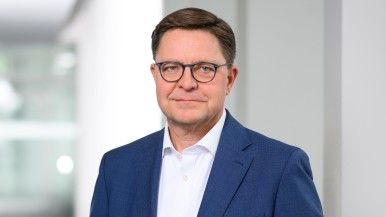
No3 Interview 06.10.2011 Industrial Technology Dialog Friedbert Klefenz and Ramona Günnewicht
Friedbert Klefenz,
president of the Packaging Technology division
Ramona Günnewicht,
industrial mechanic, Packaging Technology, Waiblingen, Germany
Quote: “I am positive that in ten years we will see a huge boom in Africa. Then that continent will be as economically important for us in Packaging Technology as Asia is today.”
Friedbert Klefenz
Dialog:
Ms. Günnewicht, Mr. Klefenz, can you pick up a bar of chocolate or a piece of candy in the supermarket without examining the packaging?
Günnewicht (laughs): Yes, I can still manage that.
Klefenz: I often do check whether the seams on the edges are cut properly and sealed straight. That's practically automatic with me: especially in other countries. whenever I visit our locations abroad, I always plan a trip to a local supermarket as well. There's a lot I want to know. What foods are sold there? How many of them are packaged? And what do the bags and boxes look like? Especially in the newer markets – China, India, and Central and South America – that tells you a lot. But even in Germany, I'm still interested in the quality of the packaging. After all, you can always learn something new.
Ms. Günnewicht, you have learned quite a lot in recent years.
Günnewicht: That's right. My first day at Bosch is still fresh in my mind. That was four years ago, and I had just started my training as an industrial mechanic. Back then, I could never have imagined that I would take such huge steps forward in my personal and professional growth, and later study mechanical engineering part-time.
What was your occupational training like?
Günnewicht: The master craftsmen really made sure we learned a lot. And there was always someone you could ask if you needed help. Another thing I really liked was that we were encouraged to start up our own development projects – and it was exciting to see all the ideas that emerged. Two of the people in my year, for example, developed a drawbar control system that allows a truck with a trailer to maneuver easily when parking. They won first prize nationwide in “Jugend forscht,” Germany's longest-running and best known competition for young researchers.
Klefenz: It's true that our apprenticeships focus strongly on research and development. Our apprentices have won a number of federal state and national prizes in “Jugend forscht.” This focus has a lot to do with our products. We sell only a very few standard products. Most of our machines are customized for our clients' needs. So our associates need to be flexible, constantly adapt to changing requirements, and come up with the right solutions.
And gain skills in a variety of areas?
Klefenz: Yes. Associates used to be mainly experts in their own special fields. But it's becoming more and more important to see the larger picture, too. Associates today need to be able to install complex systems and get them up and running, so they are trained to use other machines and related technologies if necessary. In the future, we want to integrate these skills into their initial training programs, because they are becoming ever more important in achieving one of our major strategic goals: to offer our customers machines at every link in their supply chain.
What exactly does that mean?
Klefenz: Take gummy bears, for example. Our machines can mix and boil the ingredients in large tanks. Then the gummy bear mass is poured into molds, and the bears cool down in the cooling tunnel. After weighing, they are first filled into bags and then put into the end packaging, such as boxes. Here, the entire process – from production to the packages ready for delivery – uses machines made by Bosch Packaging Technology. That's where we're constantly seeking and finding fresh solutions and approaches.
What major innovations has Packaging Technology come up with recently?
Klefenz: Ultrasonic sealing is one example. This technology is truly groundbreaking. Many foods are packaged in foils, and today these foils are sealed by applying external heat – like the kind of laminator you might have at home. But the heat means you have to maintain a certain distance to the product and make the packaging larger than would otherwise be necessary. Nobody wants to buy a candy bar that started melting while being wrapped. In ultrasonic sealing, the overlapping foils are made to vibrate at high frequencies. As a result of this vibration, the temperature needed for sealing is created inside the foils, so that they melt and adhere to each other exactly where they adjoin. The area around the candy bar, say, stays cool, and the package can be smaller. This is an innovation that saves huge amounts of material. And there are plenty of exciting changes happening in pharmaceuticals as well, not just in foods.
Can you give us some examples?
Klefenz: Weight checks that make use of x-rays, for instance. Or some high-tech processes in Pharma Liquid – when making insulin pens, for example, where it's vital that absolutely no oxygen gets in. We don't fill them with a regular pump. Instead, a laser scans the curvature of the meniscus to see if the pen is really full. It's a fascinating process, in which we fill ten cartridges per second.
Ms. Günnewicht, what innovations do you find the most fascinating?
Günnewicht: I can get excited about all kinds of packaging machines. At first, all you see is that somebody presses a button and a packaged product comes out at the end. But there are so many fascinating steps in between that I learned about over time. Piece by piece, the puzzle comes together – and eventually you see the whole picture.
Klefenz: You also have to bear in mind that different regions require different innovations. For the European market, we manufacture highly complex machines that cut down on material and energy use. That increases cost efficiency and goes easy on the environment. In emerging and developing countries, where only very few foodstuffs are packaged at present, we take an entirely different approach. In Europe, 65 to 70 percent of all foods are sold packaged, but in India, for example, it's only 10 percent at most. According to a study by the UN's Food and Agriculture Organization, 80 percent of foods there spoil on the way from the producer to the consumer. The situation is similar in Africa as well as in parts of China and South America. That's why we joined the Save Food initiative, which aims to raise awareness for this problem. At a recent trade show in India, for example, we presented a packaging machine so simple it can even be operated right next to the fields. Incidentally, India will be our largest bagging machine location worldwide this year.
How important are the markets outside Europe for Packaging Technology?
Klefenz: They are becoming more important all the time. And we need young, enthusiastic people for them, people who want to spend a while working outside their home country when they've completed their education. Ms. Günnewicht, when will you be graduating?
Günnewicht: If everything goes according to plan, in September 2013.
Klefenz: Just recently, we were looking for a young associate to go abroad for three years to take up a position with a degree of responsibility. Opportunities like that will come up more and more. And right now, at our Chinese site in Chengdu, we're setting up a training system based on the type of programs that exist in Germany. We can well imagine that apprentices there might come to Germany for half a year, and our apprentices in Waiblingen could get their first taste of working abroad over there.
Packaging Technology is investing mainly in Asia right now. What comes after that?
Klefenz: I am positive that in ten years we will see a huge boom in Africa. Then that continent will be as economically important for us in Packaging Technology as Asia is today. We are in the process of establishing two companies headquartered in Cairo that will supply first the Egyptian market and later customers in other African countries.
Ms. Günnewicht, where do you see yourself professionally in ten years' time?
Günnewicht: I would like to be a design engineer at Bosch. I'd be happy to work in another country, too.
Klefenz: With nearly 30 production and assembly sites around the world, I'm sure we can offer you a great job ...
More
president of the Packaging Technology division
Ramona Günnewicht,
industrial mechanic, Packaging Technology, Waiblingen, Germany
Quote: “I am positive that in ten years we will see a huge boom in Africa. Then that continent will be as economically important for us in Packaging Technology as Asia is today.”
Friedbert Klefenz
Dialog:
Ms. Günnewicht, Mr. Klefenz, can you pick up a bar of chocolate or a piece of candy in the supermarket without examining the packaging?
Günnewicht (laughs): Yes, I can still manage that.
Klefenz: I often do check whether the seams on the edges are cut properly and sealed straight. That's practically automatic with me: especially in other countries. whenever I visit our locations abroad, I always plan a trip to a local supermarket as well. There's a lot I want to know. What foods are sold there? How many of them are packaged? And what do the bags and boxes look like? Especially in the newer markets – China, India, and Central and South America – that tells you a lot. But even in Germany, I'm still interested in the quality of the packaging. After all, you can always learn something new.
Ms. Günnewicht, you have learned quite a lot in recent years.
Günnewicht: That's right. My first day at Bosch is still fresh in my mind. That was four years ago, and I had just started my training as an industrial mechanic. Back then, I could never have imagined that I would take such huge steps forward in my personal and professional growth, and later study mechanical engineering part-time.
What was your occupational training like?
Günnewicht: The master craftsmen really made sure we learned a lot. And there was always someone you could ask if you needed help. Another thing I really liked was that we were encouraged to start up our own development projects – and it was exciting to see all the ideas that emerged. Two of the people in my year, for example, developed a drawbar control system that allows a truck with a trailer to maneuver easily when parking. They won first prize nationwide in “Jugend forscht,” Germany's longest-running and best known competition for young researchers.
Klefenz: It's true that our apprenticeships focus strongly on research and development. Our apprentices have won a number of federal state and national prizes in “Jugend forscht.” This focus has a lot to do with our products. We sell only a very few standard products. Most of our machines are customized for our clients' needs. So our associates need to be flexible, constantly adapt to changing requirements, and come up with the right solutions.
And gain skills in a variety of areas?
Klefenz: Yes. Associates used to be mainly experts in their own special fields. But it's becoming more and more important to see the larger picture, too. Associates today need to be able to install complex systems and get them up and running, so they are trained to use other machines and related technologies if necessary. In the future, we want to integrate these skills into their initial training programs, because they are becoming ever more important in achieving one of our major strategic goals: to offer our customers machines at every link in their supply chain.
What exactly does that mean?
Klefenz: Take gummy bears, for example. Our machines can mix and boil the ingredients in large tanks. Then the gummy bear mass is poured into molds, and the bears cool down in the cooling tunnel. After weighing, they are first filled into bags and then put into the end packaging, such as boxes. Here, the entire process – from production to the packages ready for delivery – uses machines made by Bosch Packaging Technology. That's where we're constantly seeking and finding fresh solutions and approaches.
What major innovations has Packaging Technology come up with recently?
Klefenz: Ultrasonic sealing is one example. This technology is truly groundbreaking. Many foods are packaged in foils, and today these foils are sealed by applying external heat – like the kind of laminator you might have at home. But the heat means you have to maintain a certain distance to the product and make the packaging larger than would otherwise be necessary. Nobody wants to buy a candy bar that started melting while being wrapped. In ultrasonic sealing, the overlapping foils are made to vibrate at high frequencies. As a result of this vibration, the temperature needed for sealing is created inside the foils, so that they melt and adhere to each other exactly where they adjoin. The area around the candy bar, say, stays cool, and the package can be smaller. This is an innovation that saves huge amounts of material. And there are plenty of exciting changes happening in pharmaceuticals as well, not just in foods.
Can you give us some examples?
Klefenz: Weight checks that make use of x-rays, for instance. Or some high-tech processes in Pharma Liquid – when making insulin pens, for example, where it's vital that absolutely no oxygen gets in. We don't fill them with a regular pump. Instead, a laser scans the curvature of the meniscus to see if the pen is really full. It's a fascinating process, in which we fill ten cartridges per second.
Ms. Günnewicht, what innovations do you find the most fascinating?
Günnewicht: I can get excited about all kinds of packaging machines. At first, all you see is that somebody presses a button and a packaged product comes out at the end. But there are so many fascinating steps in between that I learned about over time. Piece by piece, the puzzle comes together – and eventually you see the whole picture.
Klefenz: You also have to bear in mind that different regions require different innovations. For the European market, we manufacture highly complex machines that cut down on material and energy use. That increases cost efficiency and goes easy on the environment. In emerging and developing countries, where only very few foodstuffs are packaged at present, we take an entirely different approach. In Europe, 65 to 70 percent of all foods are sold packaged, but in India, for example, it's only 10 percent at most. According to a study by the UN's Food and Agriculture Organization, 80 percent of foods there spoil on the way from the producer to the consumer. The situation is similar in Africa as well as in parts of China and South America. That's why we joined the Save Food initiative, which aims to raise awareness for this problem. At a recent trade show in India, for example, we presented a packaging machine so simple it can even be operated right next to the fields. Incidentally, India will be our largest bagging machine location worldwide this year.
How important are the markets outside Europe for Packaging Technology?
Klefenz: They are becoming more important all the time. And we need young, enthusiastic people for them, people who want to spend a while working outside their home country when they've completed their education. Ms. Günnewicht, when will you be graduating?
Günnewicht: If everything goes according to plan, in September 2013.
Klefenz: Just recently, we were looking for a young associate to go abroad for three years to take up a position with a degree of responsibility. Opportunities like that will come up more and more. And right now, at our Chinese site in Chengdu, we're setting up a training system based on the type of programs that exist in Germany. We can well imagine that apprentices there might come to Germany for half a year, and our apprentices in Waiblingen could get their first taste of working abroad over there.
Packaging Technology is investing mainly in Asia right now. What comes after that?
Klefenz: I am positive that in ten years we will see a huge boom in Africa. Then that continent will be as economically important for us in Packaging Technology as Asia is today. We are in the process of establishing two companies headquartered in Cairo that will supply first the Egyptian market and later customers in other African countries.
Ms. Günnewicht, where do you see yourself professionally in ten years' time?
Günnewicht: I would like to be a design engineer at Bosch. I'd be happy to work in another country, too.
Klefenz: With nearly 30 production and assembly sites around the world, I'm sure we can offer you a great job ...
Add to my press materials
- April 26, 2012
- Interview
- Business/economy
No2 Interview 15.11.2011 Automotive Technology Dialog Dr. Karl Nowak and Werner Traa
Dr. Karl Nowak
President of the corporate sector purchasing and logistics at Bosch
Werner Traa
Member of the executive board responsible for sales and marketing at Wieland-Werke AG in Ulm, Germany. Wieland-Werke has been a Bosch supplier since 1897
Zitat: “Our partnership is founded on trust, on innovative strength, and on the will to just go on getting better. But there are other reasons for our excellent relationship that are harder to grasp and explain.”
Werner Traa
Dialog:
Mr. Traa, Mr. Nowak, what does it take to be a Bosch supplier?
Karl Nowak: A good Bosch supplier is outstandingly competitive in terms of quality, delivery, and cost, is exceptionally innovative, and strives continuously to raise the bar. The best suppliers can be granted preferred-supplier status, which gives them an advantage when participating in tenders for new business. They work very closely with us, and are lastingly dependable partners. Wieland-Werke is an excellent example of this. At the moment, we have 450 preferred suppliers, and will further extend this network, especially in the growth markets.
Werner Traa: That’s very much how we like to see ourselves – as suppliers of quality. It’s also the reason we continuously invest in our production engineering to assure and further enhance the quality of our copper and copper-alloy ranges. We also constantly optimize our processes and procedures so that we can meet the requirements placed on delivery reliability and provide our products on competitive terms. What’s more, Bosch and Wieland share similar values. We cultivate a fair, trusting approach to relationships. Both companies pride themselves on being leaders in innovation and intend to pursue further growth in tandem.
Karl Nowak: To actively cultivate Bosch’s innovative ability and competitiveness, we harness external partners’ expertise in the very early stages of our product development process. It's only at the start of development that anything significant can be done about the cost of a product. This is why launched our “Genesis” program (generate with externals synergies and innovative solutions) on a wide scale in 2011. We use GENESIS to reinforce suppliers’ collaboration with purchasing, development, quality assurance, and manufacturing. In this way, we arrive jointly at more innovative solutions, better products, and more efficient processes. This calls for openness and mutual trust, which can only be built up over time. This alone is reason enough to establish long-term relationships with our partners.
Werner Traa: The name we use for this is “technical marketing.” Wieland staff are continually visiting the relevant people at Bosch to present new products and exchange information. These contacts are a matter of course at the expert level and don’t have to go through management. You have to give and take to achieve something together. Neither Wieland nor Bosch need worry about information ending up in the wrong hands. Intellectual property rights are mutually respected.
Karl Nowak: In the end of course, we have to ensure that the supplier that gets a particular order is objectively the most competitive one. So of course we have to consider the assessments and arguments of all the functional units, but in the end it’s purchasing that steers the order-awarding process. Only this will allow us to implement our purchasing guidelines and ensure healthy competition.
Werner Traa: We are confident going head to head with the competition, though we don’t claim to lead the industry when it comes to price. There’ll always be someone somewhere in the world who can make a product more cheaply. But that comes at the cost of many other services and also means sacrificing innovation. So our goal is to offer competitive overall costs.
Karl Nowak: That’s precisely the question we ask ourselves at Bosch – what price can we put on the value added we get out of our partnership with Wieland? From that perspective, the price tag for a product is just one link in the chain. If we buy more cheaply from a supplier who can’t keep up with our delivery schedule, we end up with additional storage expenses. Or the quality is inconsistent. That means having to return parts. Worst case scenario – we have to halt production or even recall products. Looking at overall cost takes the big picture into account.
What do you understand by fair treatment of each other?
Werner Traa: Part of it is sticking to contracts – something which unfortunately doesn’t always go without saying. Wieland and Bosch, however, don’t question agreements. By the same token, in a customer-supplier relationship as close as ours, it makes no sense to insist on sticking to contracts in hard times. This was especially apparent three years ago, during the economic and financial crisis. It was a difficult time for both companies. But we pulled together, were sympathetic to each other’s problems, and found a mutually acceptable solution.
Karl Nowak: The markets have become more volatile, and we have geared our purchasing strategy to this fact. Of course, we keep a close eye on how our partners react in a crisis. The main objective is for Bosch and its preferred suppliers to weather the storm and come out of it stronger than ever. After all, we rely on these companies. We depend on their expertise. But we also need their flexibility – flexibility that allows them to support us at short notice when problems crop up, as they sometimes do in complex supply chains. We also need to be able to turn to them when our customers’ requirements require sudden changes in plan. In the long term, we need them to be willing to join us in seizing opportunities in growth markets.
Werner Traa: Wieland has pursued a global strategy for many years now. That includes following its key customers into regions whenever necessary and putting down roots there. This spring, we’ll be opening two cutting centers in India and southern China. Essentially these are logistics hubs with production finishing and warehousing facilities. From there we can supply Bosch and a number of Bosch subcontractors with the small batches they need. And as far as solving problems at short notice goes, we are one of the few companies in our industry that have two production sites for their key products. So even when natural disasters strike like the ones recently in Japan and Thailand, we are still able to divert production and continue to deliver. That’s an important aspect of our partnership.
You have a lot in common, yet even so – collaboration stretching over a century sounds suspiciously like a record.
Karl Nowak: Bosch maintains many relationships that date back decades. In this particular case, a friendship already existed between the Wieland family and Robert Bosch. Today, we look back on 115 years of cooperation with Wieland, which has the supplier number three. Clearly, the chemistry between us has been right for a considerable time. and it has continued to evolve through the generations. This is very gratifying, particularly as generational changes in small and medium-sized companies often place a strain on both partners.
Werner Traa: We can’t let our performance slip. But you’re right, this relationship is something special. Our partnership is founded on trust, on innovative strength, and on the will to just go on getting better. But – aside from the practical aspects – there are other reasons for our excellent relationship that are harder to grasp and explain.
More
President of the corporate sector purchasing and logistics at Bosch
Werner Traa
Member of the executive board responsible for sales and marketing at Wieland-Werke AG in Ulm, Germany. Wieland-Werke has been a Bosch supplier since 1897
Zitat: “Our partnership is founded on trust, on innovative strength, and on the will to just go on getting better. But there are other reasons for our excellent relationship that are harder to grasp and explain.”
Werner Traa
Dialog:
Mr. Traa, Mr. Nowak, what does it take to be a Bosch supplier?
Karl Nowak: A good Bosch supplier is outstandingly competitive in terms of quality, delivery, and cost, is exceptionally innovative, and strives continuously to raise the bar. The best suppliers can be granted preferred-supplier status, which gives them an advantage when participating in tenders for new business. They work very closely with us, and are lastingly dependable partners. Wieland-Werke is an excellent example of this. At the moment, we have 450 preferred suppliers, and will further extend this network, especially in the growth markets.
Werner Traa: That’s very much how we like to see ourselves – as suppliers of quality. It’s also the reason we continuously invest in our production engineering to assure and further enhance the quality of our copper and copper-alloy ranges. We also constantly optimize our processes and procedures so that we can meet the requirements placed on delivery reliability and provide our products on competitive terms. What’s more, Bosch and Wieland share similar values. We cultivate a fair, trusting approach to relationships. Both companies pride themselves on being leaders in innovation and intend to pursue further growth in tandem.
Karl Nowak: To actively cultivate Bosch’s innovative ability and competitiveness, we harness external partners’ expertise in the very early stages of our product development process. It's only at the start of development that anything significant can be done about the cost of a product. This is why launched our “Genesis” program (generate with externals synergies and innovative solutions) on a wide scale in 2011. We use GENESIS to reinforce suppliers’ collaboration with purchasing, development, quality assurance, and manufacturing. In this way, we arrive jointly at more innovative solutions, better products, and more efficient processes. This calls for openness and mutual trust, which can only be built up over time. This alone is reason enough to establish long-term relationships with our partners.
Werner Traa: The name we use for this is “technical marketing.” Wieland staff are continually visiting the relevant people at Bosch to present new products and exchange information. These contacts are a matter of course at the expert level and don’t have to go through management. You have to give and take to achieve something together. Neither Wieland nor Bosch need worry about information ending up in the wrong hands. Intellectual property rights are mutually respected.
Karl Nowak: In the end of course, we have to ensure that the supplier that gets a particular order is objectively the most competitive one. So of course we have to consider the assessments and arguments of all the functional units, but in the end it’s purchasing that steers the order-awarding process. Only this will allow us to implement our purchasing guidelines and ensure healthy competition.
Werner Traa: We are confident going head to head with the competition, though we don’t claim to lead the industry when it comes to price. There’ll always be someone somewhere in the world who can make a product more cheaply. But that comes at the cost of many other services and also means sacrificing innovation. So our goal is to offer competitive overall costs.
Karl Nowak: That’s precisely the question we ask ourselves at Bosch – what price can we put on the value added we get out of our partnership with Wieland? From that perspective, the price tag for a product is just one link in the chain. If we buy more cheaply from a supplier who can’t keep up with our delivery schedule, we end up with additional storage expenses. Or the quality is inconsistent. That means having to return parts. Worst case scenario – we have to halt production or even recall products. Looking at overall cost takes the big picture into account.
What do you understand by fair treatment of each other?
Werner Traa: Part of it is sticking to contracts – something which unfortunately doesn’t always go without saying. Wieland and Bosch, however, don’t question agreements. By the same token, in a customer-supplier relationship as close as ours, it makes no sense to insist on sticking to contracts in hard times. This was especially apparent three years ago, during the economic and financial crisis. It was a difficult time for both companies. But we pulled together, were sympathetic to each other’s problems, and found a mutually acceptable solution.
Karl Nowak: The markets have become more volatile, and we have geared our purchasing strategy to this fact. Of course, we keep a close eye on how our partners react in a crisis. The main objective is for Bosch and its preferred suppliers to weather the storm and come out of it stronger than ever. After all, we rely on these companies. We depend on their expertise. But we also need their flexibility – flexibility that allows them to support us at short notice when problems crop up, as they sometimes do in complex supply chains. We also need to be able to turn to them when our customers’ requirements require sudden changes in plan. In the long term, we need them to be willing to join us in seizing opportunities in growth markets.
Werner Traa: Wieland has pursued a global strategy for many years now. That includes following its key customers into regions whenever necessary and putting down roots there. This spring, we’ll be opening two cutting centers in India and southern China. Essentially these are logistics hubs with production finishing and warehousing facilities. From there we can supply Bosch and a number of Bosch subcontractors with the small batches they need. And as far as solving problems at short notice goes, we are one of the few companies in our industry that have two production sites for their key products. So even when natural disasters strike like the ones recently in Japan and Thailand, we are still able to divert production and continue to deliver. That’s an important aspect of our partnership.
You have a lot in common, yet even so – collaboration stretching over a century sounds suspiciously like a record.
Karl Nowak: Bosch maintains many relationships that date back decades. In this particular case, a friendship already existed between the Wieland family and Robert Bosch. Today, we look back on 115 years of cooperation with Wieland, which has the supplier number three. Clearly, the chemistry between us has been right for a considerable time. and it has continued to evolve through the generations. This is very gratifying, particularly as generational changes in small and medium-sized companies often place a strain on both partners.
Werner Traa: We can’t let our performance slip. But you’re right, this relationship is something special. Our partnership is founded on trust, on innovative strength, and on the will to just go on getting better. But – aside from the practical aspects – there are other reasons for our excellent relationship that are harder to grasp and explain.
Add to my press materials
- April 26, 2012
- Interview
- Business/economy