

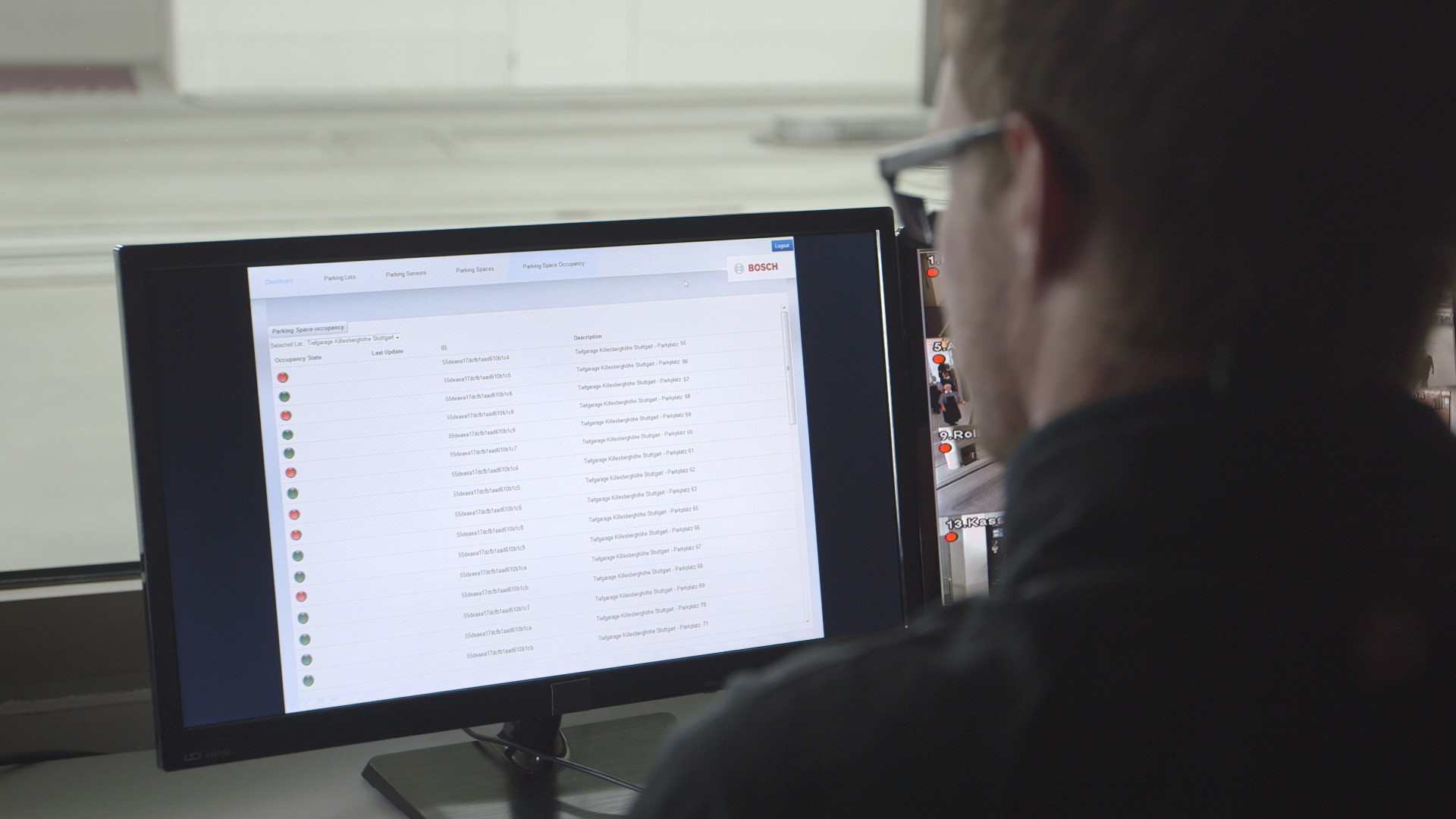
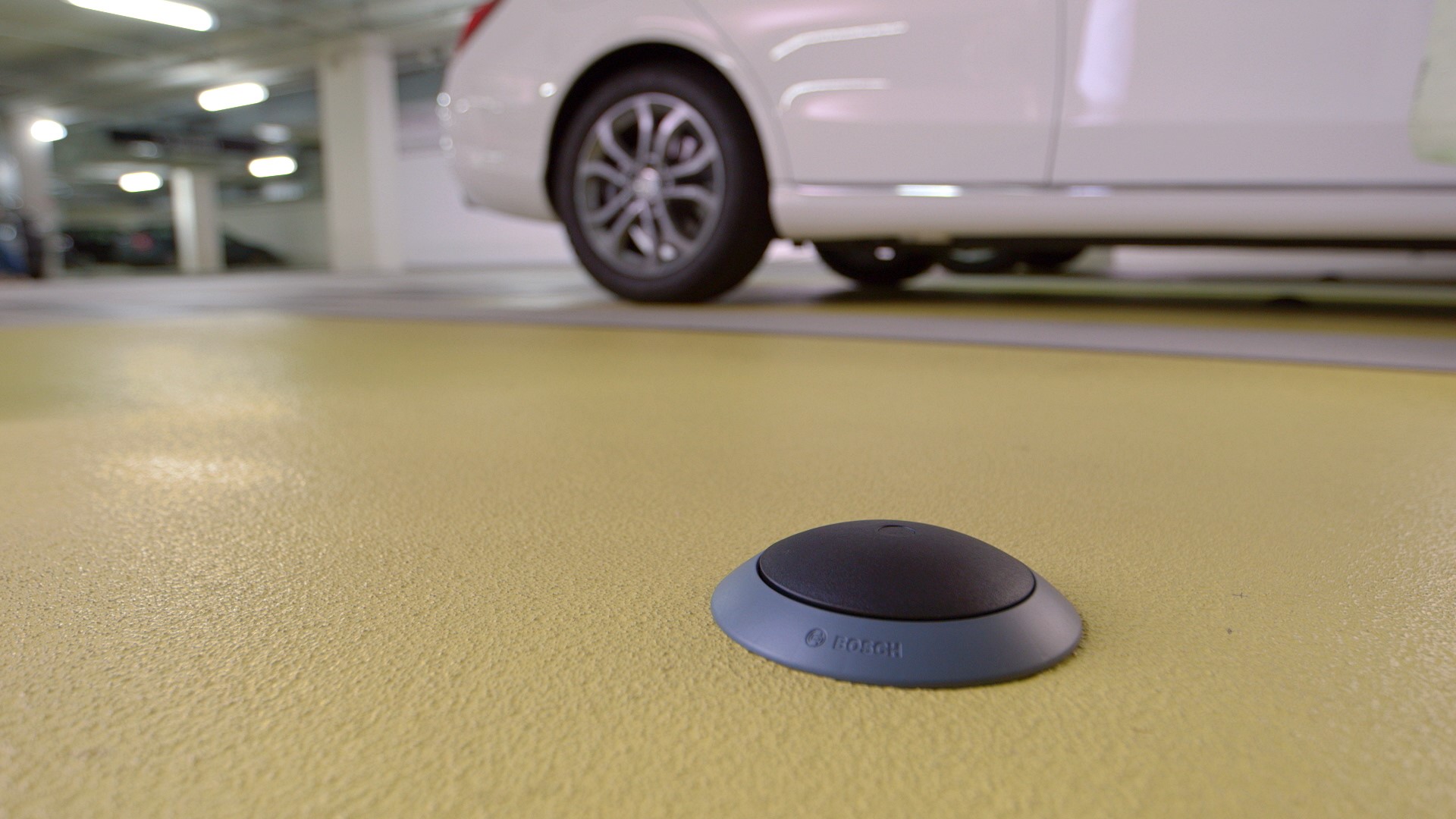
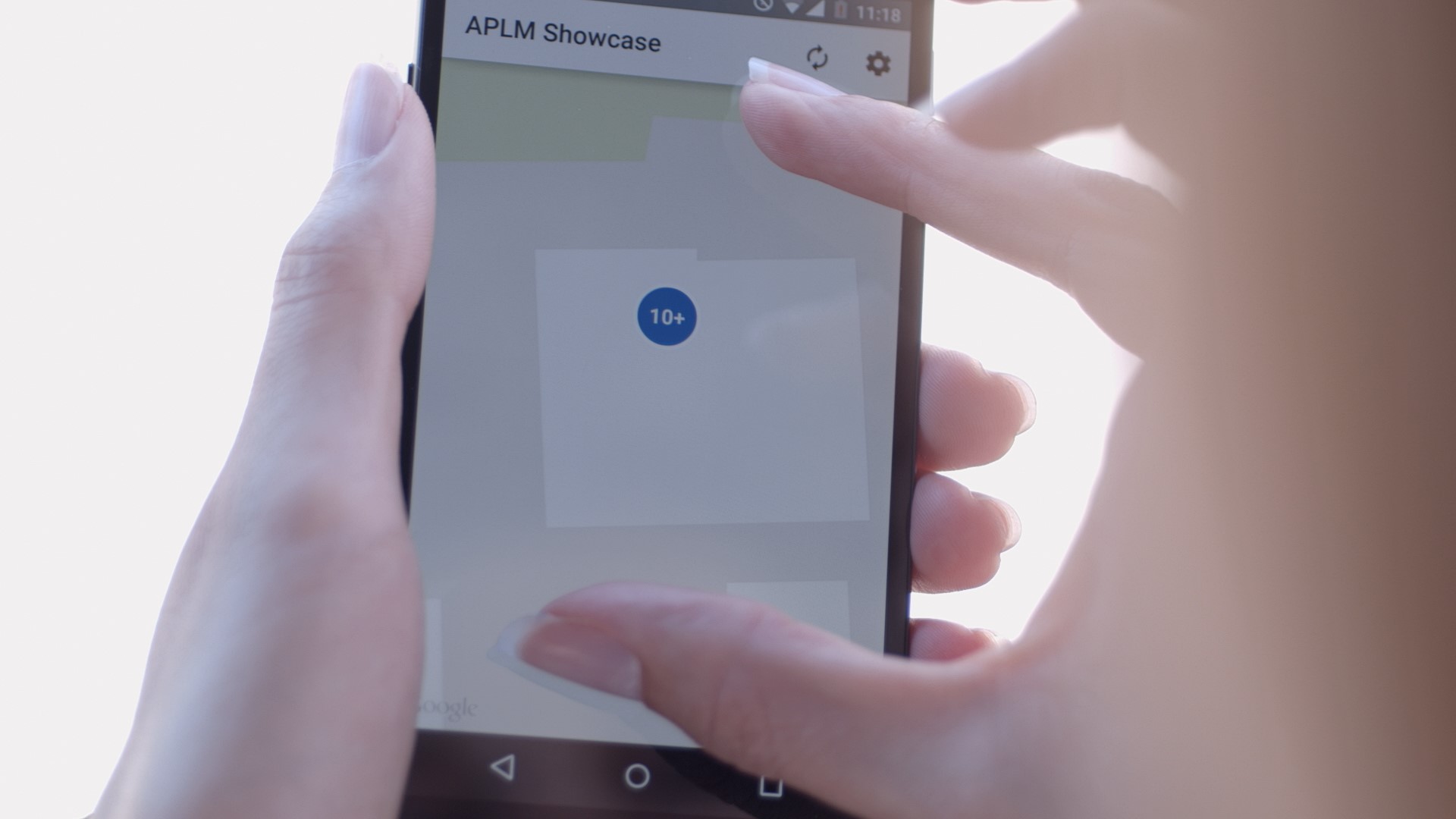
- Drivers spend up to 4.5 kilometers needlessly driving around in their search for a place to park - Active parking lot management is good for environment, wallet, and nerves - Bosch technology recognizes and reports how many parking spaces are free and where - Hoheisel: “Were relieving drivers of the search for a parking space” - The components of active parking lot management also set the stage for fully automated parking STUTTGART, Germany − The perfect parking space is situated close to where a driver wants to go, offers enough space for their car − and is unoccupied. To find that parking space, however, can be extremely frustrating − especially in urban areas. In Germany, the average search for a suitable free parking space takes ten minutes. According to a survey conducted by the European market leader in parking lot management, people drive up to 4.5 kilometers when look-ing for somewhere to park, resulting in vehicle costs of 1.35 euros per search. Thanks to active parking lot management from Bosch, drivers can find the per-fect parking spot without any detours or driving around unnecessarily. This smart technology recognizes which parking spaces in an urban area are free and reports where exactly they are. “Were relieving drivers of the often bur-densome search for a parking space,” says Dr. Dirk Hoheisel, member of the board of management of Robert Bosch GmbH. And thats not all: drivers can also use a smartphone app to guide them right to the parking space. All this saves time, money, and is good for the environment. Bosch is making parking spaces web-enabled with minimal effort The key to active parking lot management is the reliable detection of available parking spaces. Bosch has developed a special occupancy sensor that is scarcely bigger than a CD in terms of its circumference and measures around just three centimeters in height. The sensors are installed in parking garages and on-street parking spaces, either on or in the asphalt, as desired. The spe-cial thing about this technology is that the occupancy sensors operate wireless-ly and are powered by batteries, which eliminates the effort and expense of having to lay cables. Each battery has a service life of up to seven years. Thanks to their robust plastic housing, the sensors are capable of withstanding any type of weather conditions, in addition to the increased wear caused by heavy trucks and snow plows. Inside the housing, Bosch installs two different sensor tech-nologies that corroborate the information collected by the other. The benefit of this is enhanced, error-free reliability for detecting spaces. Parking forecast: drawing conclusions for the future from the past The occupancy sensor checks at regular intervals whether a parking space is available. Using a gateway, which is similar to an internet router, the Bosch sensor relays the encrypted information securely to a server, where a real-time parking map of all free and occupied spaces is created that can be accessed with the app or online. “Were making parking spaces web-enabled,” Hoheisel says. Meta-information on each parking space is available as well, including whether it is a space reserved for families, women, or the disabled, what the parking time costs, and if a charge spot for electric vehicles is available. More services are also possible, such as a payment function. Using the app, drivers can pay for their parking time conveniently cash-free. Active parking lot management is an excellent example of how Bosch is shap-ing the connected world. However, the service is not only for drivers, but also parking lot operators. “We can further improve the occupancy rate of heavily-used parking spaces,” Hoheisel says. The key to this is through intelligently evaluating the data. A web portal provides parking lot operators with a clear overview of which parking spaces were occupied by how many vehicles and when. During peak times, this information can direct drivers to spaces that are less frequently occupied, for example. The Bosch engineers are developing a parking forecast as well. Using past data, they hope to draw important conclusions for the future, which could considerably alleviate the scramble for parking spaces often seen during recurring major events, for example. Foundation for the fully automated parking function of tomorrow The components of active parking lot management, which include occupancy sensors, the gateway, and the real-time parking map, also set the stage for the fully automated parking function of tomorrow. In the not-too-distant future, driv-ers will simply leave their vehicles at the entrance to a parking garage. Using their smartphone, they will give the car the command to look for a parking space on its own. The car will be summoned back using the same procedure. Bosch calls this automated valet parking. To enable this service, self-driving cars need reliable information on free parking spaces − which Bosch can already supply. “Were going to gradually introduce active parking lot management into Boschs own parking spaces and parking garages,” Hoheisel says. As a result, associates and visitors will be able to find available parking spaces faster. Press photos : 1-BBM-21502, 1-BBM-21503, 1-BBM-21504 http://www.bosch-presse.de/presseforum/?locale=en Related links : www.bosch-connected-parking.com Bosch and Daimler automate parking http://bit.ly/1IvjWAj Mobility Solutions is the largest Bosch Group business sector. In 2014, its sales came to 33.3 billion euros, or 68 percent of total group sales. This makes the Bosch Group one of the leading automotive suppliers. The Mobility Solutions business sector combines the groups expertise in three mobility domains – automation, electrification, and connectivity – and offers its customers integrated mobility solutions. Its main areas of activity are injection technology and powertrain peripherals for internal-combustion engines, diverse solutions for powertrain electrification, vehicle safety systems, driver-assistance and automated functions, technology for user-friendly infotainment as well as vehicle-to-vehicle and vehicle-to-infrastructure com-munication, repair-shop concepts, and technology and services for the automotive aftermar-ket. Bosch is synonymous with important automotive innovations, such as electronic engine management, the ESP anti-skid system, and common-rail diesel technology. The Bosch Group is a leading global supplier of technology and services. It employs roughly 360,000 associates worldwide (as per April 1, 2015). The company generated sales of 49 billion euros in 2014.* Its operations are divided into four business sectors: Mobility Solutions, Industrial Technology, Consumer Goods, and Energy and Building Technology. The Bosch Group comprises Robert Bosch GmbH and its roughly 440 subsidiary and regional companies in some 60 countries. Including its sales and service partners, Bosch is represented in roughly 150 countries. This worldwide development, manufacturing, and sales network is the foundation for further growth. In 2014, Bosch applied for some 4,600 pa-tents worldwide. The Bosch Groups strategic objective is to create solutions for a connected life. Bosch improves quality of life worldwide with products and services that are innovative and spark enthusiasm. In short, Bosch creates technology that is “Invented for life.” Additional information is available online at www.bosch.com, www.bosch-press.com, http://twitter.com/BoschPresse *The sales figure disclosed for 2014 does not include the former joint ventures BSH Bosch und Siemens Hausgeräte GmbH (now BSH Hausgeräte GmbH) and ZF Lenksysteme GmbH (now Robert Bosch Automotive Steering GmbH), which have since been taken over completely.
Having established a regional presence in 1906 in North America, the Bosch Group employs 34,700 associates in more than 100 locations, as of December 31, 2020. According to preliminary figures, Bosch generated consolidated sales of $13.1 billion in the U.S., Canada and Mexico. For more information, visit www.bosch.us, www.bosch.ca and www.bosch.com.mx.
The Bosch Group is a leading global supplier of technology and services. It employs roughly 394,500 associates worldwide (as of December 31, 2020). According to preliminary figures, the company generated sales of $87.1 billion in 2020. Its operations are divided into four business sectors: Mobility Solutions, Industrial Technology, Consumer Goods, and Energy and Building Technology. As a leading IoT provider, Bosch offers innovative solutions for smart homes, Industry 4.0, and connected mobility. Bosch is pursuing a vision of mobility that is sustainable, safe, and exciting. It uses its expertise in sensor technology, software, and services, as well as its own IoT cloud, to offer its customers connected, cross-domain solutions from a single source. The Bosch Group’s strategic objective is to facilitate connected living with products and solutions that either contain artificial intelligence (AI) or have been developed or manufactured with its help. Bosch improves quality of life worldwide with products and services that are innovative and spark enthusiasm. In short, Bosch creates technology that is “Invented for life.” The Bosch Group comprises Robert Bosch GmbH and its roughly 440 subsidiary and regional companies in 60 countries. Including sales and service partners, Bosch’s global manufacturing, engineering, and sales network covers nearly every country in the world. The basis for the company’s future growth is its innovative strength. At 126 locations across the globe, Bosch employs some 73,000 associates in research and development, as well as roughly 30,000 software engineers.
Additional information is available online at www.bosch.us, www.iot.bosch.com, https://us.bosch-press.com, https://twitter.com/BoschPress
Exchange rate: 1 EUR = 1.2171