Search & find:
media, releases and events to support your reporting about the Bosch Group.

10.09.2019

Press release

Electrified mobility

Bosch and CATL collaborate on battery cells

Stuttgart, Germany: Bosch and Contemporary Amperex Technology Co. Limited (CATL) have concluded a long-term strategic cooperation agreement. The partners are going to jointly specify high-performance battery cells. CATL will then design, develop, and manufacture these cells in accordance with Bosch requirements. The cells are to be used in the 48-volt battery developed by Bosch. This battery is the core element of 48-volt hybrid powertrain systems, whose efficiency is making them globally ever more important. In joining this alliance, the supplier of technology and services is also securing its long-term sourcing for battery cells. “We have to understand battery cells, but we do not have to make them ourselves,” says Dr. Stefan Hartung, member of the board of management and chairman of the Mobility Solutions business sector. “With CATL, we have brought an established cell specialist for lithium-ion batteries on board as a partner. In combination with our systems know-how and expertise in battery management, we will extend our strong position in the 48-volt battery market.” CATL, one of the world's leading experts of lithium-ion battery is currently building a battery factory in Erfurt, Germany. For Bosch, this alliance is another step on the path to market leadership in electromobility. Numerous global automakers already use Bosch’s 48-volt battery.48-volt system destined to be the minimum standard in tomorrow’s automotive market Bosch’s portfolio for 48-volt systems extends beyond the 48-volt battery to encompass other system components such as DC/DC converters and electrical machines. With this technology, Bosch aims to gear up all classes of vehicles for future emissions requirements and offer affordable hybridization. Its 48-volt electrification augments the combustion engine with an electric motor. This motor is powered by the 48-volt battery, which in turn is charged by recovering energy expended during braking. This can cut fuel consumption by as much as 15 percent. If we want to improve efficiency, we can no longer afford to let brake energy dissipate unused,” Hartung says. “This 48-volt hybridization is sure to be the minimum standard in tomorrow’s automotive market.” The market for 48-volt solutions is growing worldwide. Bosch expects that by 2025, nearly 20 percent of new cars sold annually around the globe will have a 48-volt system and matching battery on board. Demand for 48-volt systems is rising, especially in Europe and China. Cost-effective and easy to integrate – the Bosch 48-volt battery The Bosch plant in Wuxi, China, started making the first generation of the 48-volt battery late last year. The USP of the latest version of this product is that the battery is compact and cooled passively. This means automakers can simply integrate it into their vehicle models, and do not require any additional cooling units. In addition, they can dispense with the long and costly effort of proprietary engineering work. “We are confident that our 48-volt battery will achieve a leading position in the market, and make the 48-volt hybrid affordable for the mass market,” Hartung says. Expertise across the e-mobility ecosystem Bosch is more broadly positioned in e-mobility than any other company. It aims to take the lead in the mass e-mobility market that will emerge in 2020 and beyond. The company is planning to increase its sales in this area more than tenfold by 2025, to five billion euros. Bosch electrical powertrain components already feature in more than a million vehicles around the world. The supplier of technology and services has carried out powertrain projects for 50 electricvehicle platforms. It is the market leader in China, the world’s biggest and fastestgrowing electric-vehicle market. Bosch technology can be found in practically every class of vehicle, from electric baby buggies, bicycles, and scooters to passenger cars and commercial vehicles. The company’s expertise thus extends across the entire e-mobility ecosystem. Bosch is partnering with various automakers to give e-vehicle drivers app-based access to some 40,000 charge spots in eight European countries.

02.04.2019

Press release

Electrified mobility

Bosch eBike Systems and Kimberley Jenneskens show limited edition cycling shorts ...

Have you spotted the cycling shorts yet? They’re one of the main fashion trends of 2019, which means that nearly every fashionable citizen of Amsterdam is wearing them. That is why Bosch eBike Systems and designer Kimberley Jenneskens joined forces in designing their own, special edition cycling shorts, which were revealed during the Amsterdam Fashion Week Studio 2019 on Saturday 9 March, 2019. And it weren’t just the models wearing the new, hip cycling shorts, but hostesses and influencers as well.The e-bike is more on-trend than ever – of all the bicycles in the Netherlands, about 40 percent is electric . And in Belgium, no less than 45 percent of all the bicycles is electric. Add this increasing popularity of e-bikes and the fashion item ‘cycling shorts’ to the success of designer Kimberly Jenneskens, and it is clear where this collaboration resulting in the Bosch cycling shorts came from. Both Bosch eBike Systems and Jenneskens are working on a sustainable, healthy future for mankind and mobility. On top of that, Bosch eBike Systems loves working with passionate and creative talents. Vineeta Diels, Marketing Manager at Bosch eBike Systems Benelux: “We really enjoyed making these cycling shorts together with Jenneskens. We have never made clothes before, and this really is an exception. But even though this is something that’s completely new to us, it does resemble the way we usually work. Meaning that we don’t actually make bicycles, but drive units, batteries and displays for electric bicycles. And just like the realization of these cycling shorts, we always collaborate with brands that breathe durability and quality. That way we can complement each other’s strengths.” Kimberley Jenneskens, owner and designer at Jenneskens: “I always focus on the future, and the way I see it, collaborating with Bosch eBike Systems is an important stepping stone. When collaborating with other brands, there needs to be a certain click and a common vision. This was definitely the case with Bosch eBike Systems. We’re aligned, so much so, that I was immediately convinced to work together – especially since I like connecting Jenneskens to tech brands. My ultimate goal is to make sure my brand is one hundred percent sustainable, recyclable and unisex. This collaboration is a step in the right direction.” Availability The cycling shorts are limited edition, only available during the Amsterdam Fashion Week 2019. They are only available as official Amsterdam Fashion Week merchandise and are not available through other points of sale.

17.09.2018

Press release

Electrified mobility

Bosch presents electromobility for semitrailers

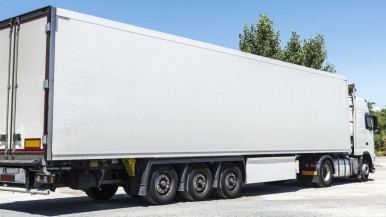
Bosch is electrifying semitrailers, and thus making electromobility possible for today’s semitrucks. At the IAA Commercial Vehicles in Hannover, Bosch will be presenting an electrified axle that can be integrated into semitrailers. The idea behind it is to integrate an electrical machine into the semitrailer’s axles, instead of simply allowing them to roll freely, as has been the case up to now. This means they can generate electricity during braking, and feed it into the trailer’s power units. In the case of a refrigerated trailer, the saving can be as much as 10,000 euros a year. If the cooling unit is operated using the power generated in this way, Bosch calculates that it can save up to 9,000 liters of diesel a year. An electrical start and acceleration boost function can help save additional fuel. Any fuel saving also reduces CO2 emissions. One further advantage, especially for deliveries by urban supermarkets, is that electric cooling units make significantly less noise than diesel-powered ones. Deliveries can thus be made early in the morning or late in the evening without disturbing the neighbors.“Bosch is making trucks’ rear axles electric and smart. Our electrification solution for trucks makes economic sense and shows how electromobility can work even in today’s trucks,” says Dr. Markus Heyn, member of the Robert Bosch GmbH board of management. In addition, the electrical axle is an important step toward automated trailer parking on logistics companies’ parking lots. Adding a powertrain to the axle means that the trailer can be shunted around the parking lot without a tractor. Bosch offers this technology either for new trailers or as a retrofit solution. The potential demand is huge. In Europe alone, roughly a quarter of a million trailers with a gross vehicle weight of more than 10 metric tons are newly registered every year. One in five of these is equipped with a refrigeration unit. Energy recuperation: passenger-car components work intermittently In contrast to many other commercial-vehicle projects, Bosch engineers are relying on passenger-car parts for the electrified axle. For example, the SMG180 electric motor already features in hundreds of thousands of hybrid and electric cars worldwide, including the German postal service ́s StreetScooters. Unlike in electric cars, the motors in the electrified axle work only intermittently, starting only if they can recuperate energy. This may be the case when driving downhill or braking, for example. As a result of this recuperation, which is an established technology in passenger cars, energy is no longer lost when braking, but is stored in a high-voltage battery. The electricity can be fed into the motors during hill starts, or power the trailer’s refrigeration unit, and in this way save a lot of fuel. Such demand-driven application has a further advantage: since the electric motors are inactive most of the time, recuperating energy or providing assistance when starting or on ascents for only a few seconds or minutes every hour, significantly less expensive production parts from passenger cars can be used in this trailer application. The motors are still powerful enough to move the trailer or to provide start assistance to construction vehicles. Automated parking at the depot: electric motor is an invaluable helper In addition, the electrified axle is an invaluable helper for automated driving – only when a motor is installed in the axle can a trailer maneuver independently at the depot. “Bosch’s electrified axle makes trailers independent. By electrifying trailers, Bosch is taking an important step toward automated parking at freight depots,” Heyn says. They also facilitate remote-controlled electric driving on private property such as freight companies’ premises or at ports. Up to now, truckers have had to do this task themselves, or a special trailer-shunting unit has done it for them. Now, however, the electric motor makes the trailer into an independent vehicle that can travel short distances. With the help of additional sensors attached to the trailer and installed at various points in the depot, it will be possible for goods trailers to park themselves. Electrified axle: Q&A What parts are needed to electrify an axle? Bosch supplies an inverter and the relevant vehicle control unit (VCU). The separate motor generator (SMG) is available for installation as a complete electric motor, or the active components – rotor, stator, and resolver – can be integrated into the axle. A battery system that can store the energy is also required. How much does an electrified axle cost? Bosch cannot provide an exact figure. However, the company’s view is that the system must pay back the original investment after two years’ operation at the latest. In view of the cost savings the axle offers in applications such as refrigerated trailers, Bosch is confident that this goal is realistic. Where can an electrified axle typically be used? The most obvious choice at present is in refrigerated trucks, especially for food deliveries in urban areas. Electrically powered refrigeration units are not only more economical over the medium term, but also make significantly less noise. And there are none of the emissions caused by combustion engines. The construction industry is very interested in the start assistance function in excavation pits, especially when they are muddy. How do you arrive at your estimate for fuel savings? The diesel engine that currently powers the refrigeration unit, and that is now being completely displaced by electricity, consumes between two and three liters of diesel an hour. On this basis, annual consumption is roughly 9,000 liters. In addition, there are potential savings resulting from the electrical assistance provided when starting, accelerating, and on ascents. The extra saving may be as much as four percent. Why does Bosch favor an axle with two electric motors? Two electric motors can recuperate significantly more energy, and offer a high additional benefit at relatively low extra cost, thus allowing greater savings to be made, In addition, a dual-motor axle is better for automatic maneuvering at a depot: having an electric motor at each end of the axle significantly reduces the trailer’s turning radius. If the customer wishes to save costs, electrification with just one motor is possible.

14.09.2018

Press release

Electrified mobility

Fully charged: Bosch is putting electric vans on the road

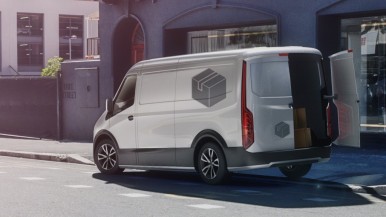
Ordered with two clicks and conveniently delivered to your door the same day: the boom in online shopping is stretching delivery traffic in major cities to its limits. Vans and heavy trucks squeeze their way through city centers, where a lack of loading zones often leads them to double park. The result: blocked roads, noise, and emissions. In cities around the world, this is also causing traffic jams and fueling discussions about driving bans. And it’s not just delivery services that are affected, but also tradespeople and other small companies that make customer visits in vans. “To keep pace with goods supply in cities, there’s no avoiding a rethink of delivery traffic,” says Dr. Markus Heyn, member of the board of management of Robert Bosch GmbH. This is one objective Bosch is looking to fulfill with its new electric powertrain for light commercial vehicles. The first vehicles to have this under the hood will launch in 2019.Quiet deliveries Deutsche Post has already initiated change in urban deliveries with its StreetScooter, which uses a Bosch drive system. Now Bosch is going a step further by launching an electrical powertrain suitable for the vast majority of delivery vehicles. The idea behind this electromobility campaign is for electric vans to handle last-mile deliveries from distribution centers to recipients. The kind of stop-and-go traffic this entails is one area in which electric vehicles are particularly efficient, because they can recuperate the energy from constant braking, which increases their range. Most delivery routes amount to less than 80 kilometers a day – a distance easily covered on a single battery charge. Fleets can then be recharged overnight at the depot. Any driving bans in city centers would not affect electric fleets, since their powertrains cause zero local emissions. And it’s not just cities that are keen to see package and courier services make resource-sparing deliveries. For 61 percent of Germans, whether an online retailer makes deliveries with electric vehicles is a key criterion in their choice (source PwC). One further advantage is that electric vehicles make less noise, which should also increase people’s willingness to accept deliveries later into the evening. This could relieve traffic at peak times and provide for more flexible delivery windows. “Bosch is bringing e-mobility to where it really makes sense – urban deliveries,” Heyn says. Ready for the mass market There are two versions of Bosch’s eCityTruck powertrain: one with a transmission and one without. The goal is to create solutions that are quick to integrate and accommodate automakers’ differing requirements. These powertrain solutions can be scaled for light commercial vehicles weighing two to 7.5 metric tons, making them suitable for a large section of the commercial vehicle market. How? Small vans are very common; approximately three-fourths of all commercial vehicles registered in Germany belong to this class, and that number is on the rise (source: Shell). “Bosch’s electrical powertrain for commercial vehicles has the potential to change the face of urban delivery traffic. We’re getting electric vans ready for the mass market,” Heyn says. With its new eCityTruck powertrain concept, Bosch has taken multiple components such as an electric motor and power electronics and combined them into one unit. This economizes on parts, making the powertrain not only far more efficient, but more affordable as well. Thanks to the easily integrated solution, customers no longer have the time-consuming task of developing new components. One further advantage for automakers, both established names and new players, is that the Bosch solution lets them bring vehicles to market quickly. Bosch already offers an all-in-one solution for passenger cars – the e-axle – which significantly shortens vehicle development times. By expanding its product portfolio to include light commercial vehicles, Bosch is taking another decisive step in supporting automakers with their electrification strategies. Bosch’s plans for the electrification of commercial vehicles go beyond vans. Together with the Nikola Motor Company, a U.S. start-up, Bosch is developing a powertrain that raises the bar for electric range. For Bosch, these powertrain technologies for delivery traffic are another milestone on the path toward achieving a leading global position in the electromobility mass market set to emerge after 2020, and toward making its vision of emissions-free, accident-free, and stress-free mobility a reality. Bosch sees the future of mobility as automated, connected, and electrified. More information about the electrical powertrain for commercial vehicles can be found in the relevant web special .