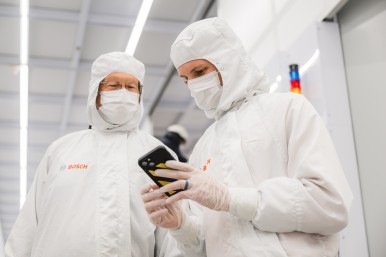
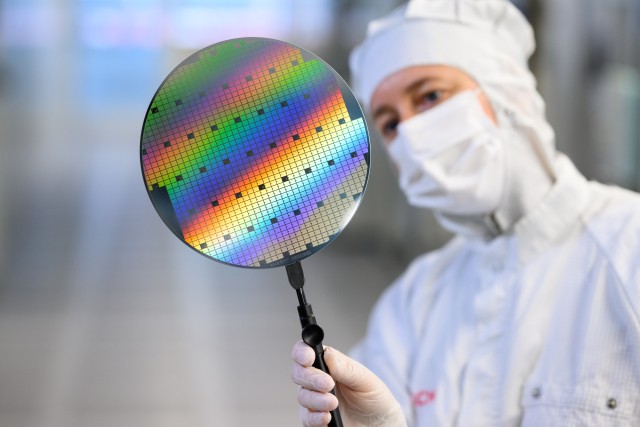


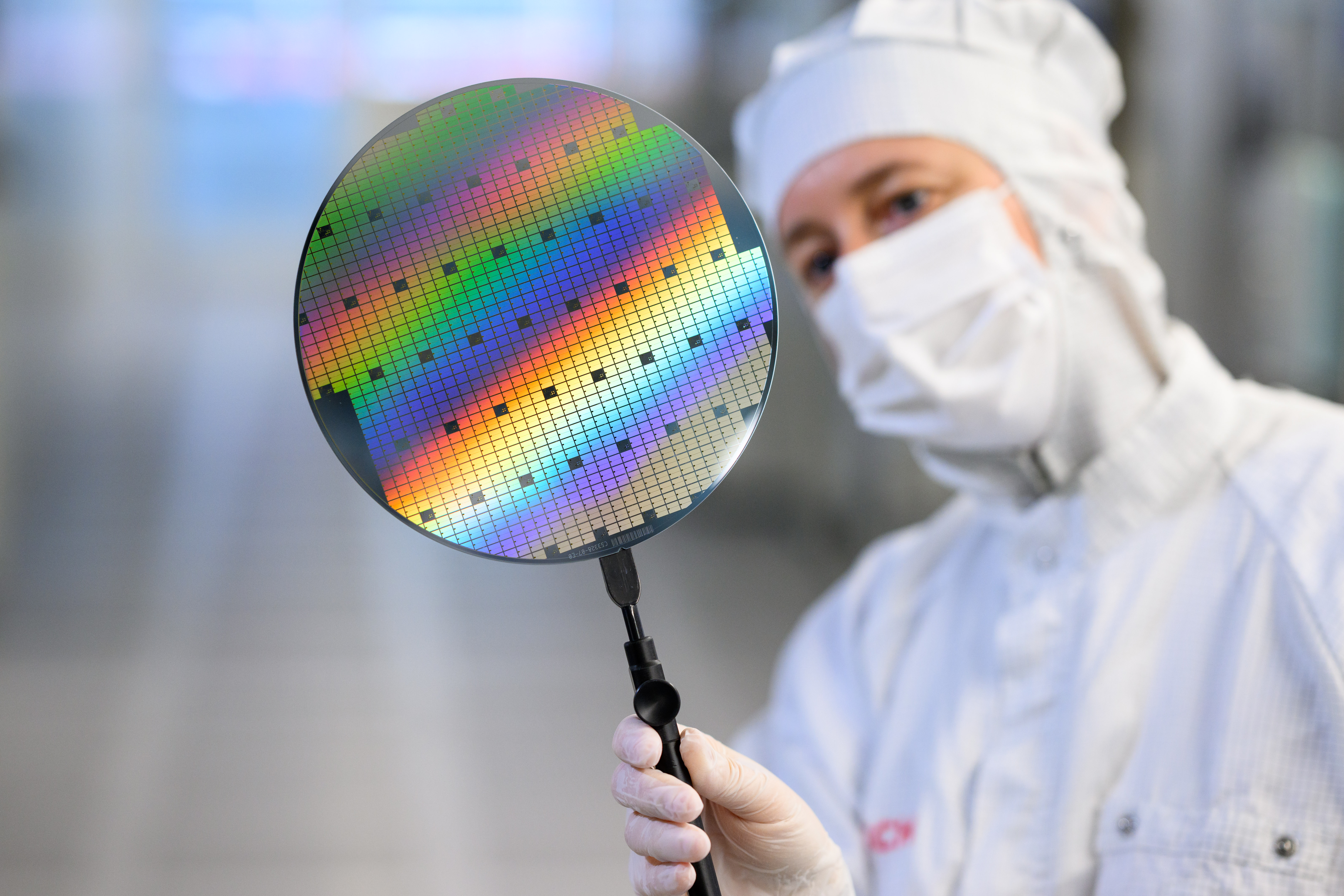
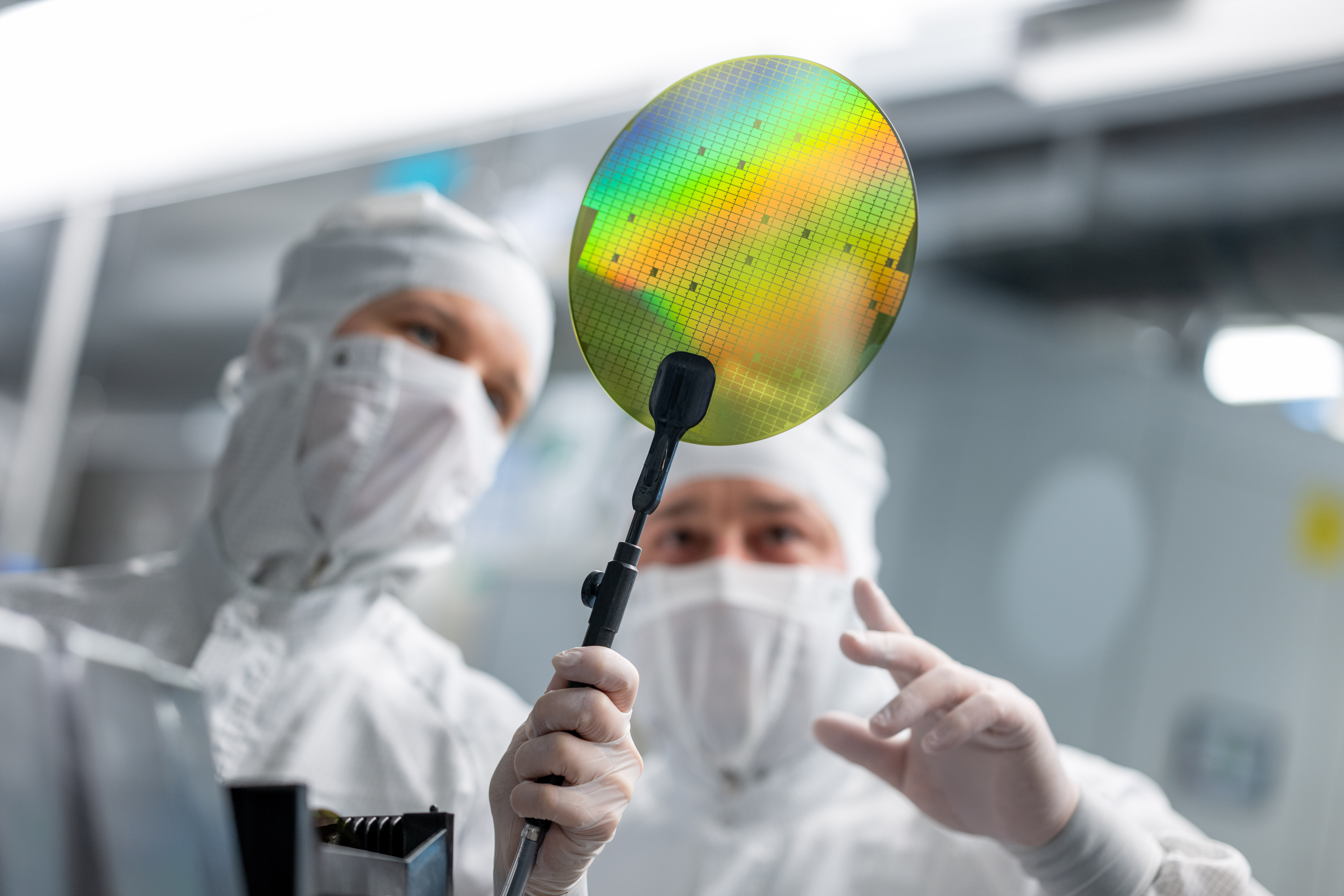
Farmington Hills, Mich.— Chips made of silicon carbide (SiC) are the key to making electric cars more efficient and increasing their range. Bosch has now taken the development of these chips to the next level: the company has started to introduce third-generation silicon carbide chips and is supplying samples to global automakers. This means that in the future, more and more electric vehicles will be equipped with Bosch’s cutting-edge third-generation SiC chips. “Silicon-carbide semiconductors are the key drivers of electromobility. They control the flow of energy and make it as efficient as possible. With our next-generation SiC chips, we’re systematically expanding our technological leadership in this field and helping our customers put even more powerful and efficient electric vehicles onto the road,” says Markus Heyn, member of the Bosch board of management and chairman of the Bosch Mobility business sector. “Our ambition is clear: we want to be a globally leading manufacturer of SiC chips.”



Press photos and infocharts are available on the Bosch Media Service at www.bosch-press.com.
Contact for press inquiries:
Megan Bonelli
Phone: +1 947 281-7062
E-Mail: megan.bonelli@us.bosch.com
About Bosch
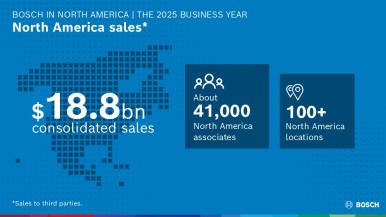
Having established a presence in North America in 1906, today the Bosch Group employs around 38,000 associates in more than 100 locations in the North American region (as of Dec. 31, 2024). According to preliminary figures, Bosch generated consolidated sales of $18.7 billion in the U.S., Mexico and Canada in 2025. For more information visit www.bosch.us, www.bosch.mx and www.bosch.ca.
The Bosch Group is a leading global supplier of technology and services. It employs roughly 412,000 associates worldwide (as of December 31, 2025). According to preliminary figures, the company generated sales of 91 billion euros in 2025. Its operations are divided into four business sectors: Mobility, Industrial Technology, Consumer Goods, and Energy and Building Technology. With its business activities, the company aims to use technology to help shape universal trends such as automation, electrification, digitalization, connectivity, and an orientation to sustainability. In this context, Bosch’s broad diversification across regions and industries strengthens its innovativeness and robustness. Bosch uses its proven expertise in sensor technology, software, and services to offer customers cross-domain solutions from a single source. It also applies its expertise in connectivity and artificial intelligence in order to develop and manufacture user-friendly, sustainable products. With technology that is “Invented for life,” Bosch wants to help improve quality of life and conserve natural resources. The Bosch Group comprises Robert Bosch GmbH and its roughly 490 subsidiary and regional companies in over 60 countries. Including sales and service partners, Bosch’s global manufacturing, engineering, and sales network covers nearly every country in the world. Bosch’s innovative strength is key to the company’s further development. At 136 locations across the globe, Bosch employs some 82,000 associates in research and development.
The company was set up in Stuttgart in 1886 by Robert Bosch (1861-1942) as “Workshop for Precision Mechanics and Electrical Engineering.” The special ownership structure of Robert Bosch GmbH guarantees the entrepreneurial freedom of the Bosch Group, making it possible for the company to plan over the long term and to undertake significant upfront investments in the safeguarding of its future. Ninety-four percent of the share capital of Robert Bosch GmbH is held by Robert Bosch Stiftung GmbH, a limited liability company with a charitable purpose. The remaining shares are held by Robert Bosch GmbH and by a company owned by the Bosch family. The majority of voting rights are held by Robert Bosch Industrietreuhand KG. It is entrusted with the task of safeguarding the company’s long-term existence and in particular its financial independence – in line with the mission handed down in the will of the company’s founder, Robert Bosch.
Additional information is available online at www.bosch-press.com, www.bosch.com.
Exchange rate: 1 EUR = 1.1297